
Quick Summary
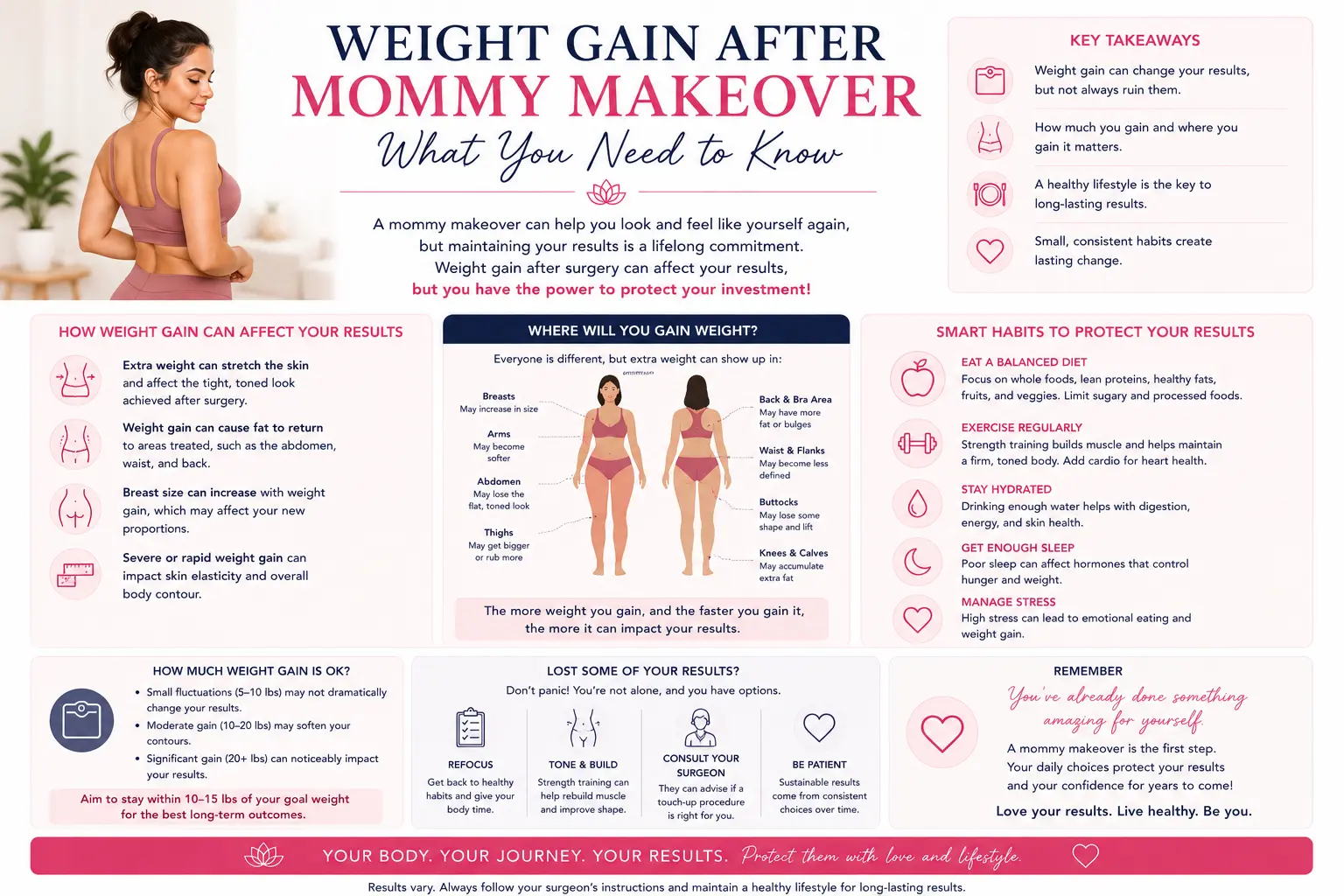
Weight gain after a mommy makeover can reverse surgical results, particularly in the abdomen and breasts. Plastic surgery patient guidance commonly advises staying within 10-15 lbs (4.5-7 kg) of your post-surgical weight to preserve results.
Temporary fluid weight of 10-15 lbs in the first two weeks is normal and resolves without intervention. This guide covers what causes weight gain, how much is harmful, and how to protect your results long-term.
Why Trust This Guide
This guide draws on patient guidance published by the American Society of Plastic Surgeons (ASPS), the British Association of Aesthetic Plastic Surgeons (BAAPS), and the International Society of Aesthetic Plastic Surgery (ISAPS). It was reviewed by Op. Dr. Alirza Jahangirov, a Plastic, Reconstructive and Aesthetic Surgeon with a PhD in Anatomy from Istanbul University Cerrahpaşa Faculty of Medicine, who has performed over 3,500 surgeries for patients from 47 countries at Carely Clinic in Istanbul.
What Happens to Your Mommy Makeover Results When You Gain Weight?
Weight gain above 10-15 lbs beyond your stable surgical weight can compromise mommy makeover results, particularly in the abdomen and breasts. Most plastic surgeons advise patients to maintain stable weight after a mommy makeover to preserve outcomes. Significant weight fluctuations can compromise the surgical result, particularly in the abdomen and breasts.
Revision surgery is frequently required after gains above 25 lbs (11 kg). Temporary post-operative swelling of 10-15 lbs in the first two weeks is normal and self-resolving.
Weight gain after a mommy makeover does not affect all areas equally. The procedures most vulnerable to fat redistribution are abdominoplasty (tummy tuck) and liposuction-treated zones. Breast implants and lifts can also shift in appearance, though the mechanism is different.
Understanding the risk. A mommy makeover is a body contouring procedure, not a permanent barrier to fat accumulation. When you gain weight, fat cells in untreated areas expand as normal. In liposuction-treated zones, where fat cell count has been reduced, fat may redistribute to adjacent untreated areas, creating new contour irregularities.
What Happens to Your Tummy Tuck
Abdominal muscle plication — the repair of diastasis recti performed during abdominoplasty — can loosen under sustained abdominal pressure from significant weight gain.
Fat above the repair. New fat deposits accumulate above and around the tightened abdominal wall, creating bulging that erases the flat, defined result. Patients who gain more than 20 lbs (9 kg) after abdominoplasty often require revision to restore the muscle repair, particularly when the gain is accompanied by abdominal pressure changes.
Learn more about tummy tuck surgery at Carely Clinic.
What Happens to Your Breast Results
Breast implants do not gain weight — but the surrounding breast tissue does. This changes the overall appearance of the result.
Implant position and shape. Significant weight gain can cause stretch marks on the skin envelope, alter the position of implants, and increase natural breast volume in ways that create asymmetry. Subsequent weight loss may not fully restore the original augmented shape, sometimes requiring implant revision or a repeat mastopexy (breast lift).
Read about breast augmentation options at Carely Clinic.
What Happens to Liposuction Areas
Liposuction permanently removes fat cells from treated zones, but remaining fat cells can still enlarge.
Redistribution risk. If significant weight is gained, the body preferentially stores new fat in untreated areas. Patients frequently report fat accumulating in zones adjacent to liposuction sites — for example, gaining weight in the upper abdomen after lower abdominal liposuction. This creates an uneven appearance that was not present before surgery.
Immediate Post-Op Weight: What Is Normal in the First Two Weeks?
A temporary weight gain of 10-15 lbs in the first two weeks after a mommy makeover is normal and expected. This reflects surgical fluid retention and intravenous fluids administered during the procedure, not fat accumulation. It resolves naturally within 4-6 weeks.
Understanding normal post-operative weight changes prevents unnecessary concern and protects patients from premature dietary restriction during the critical healing window.
Why Do You Gain Weight Immediately After Surgery?
The body’s immediate response to major surgery is fluid retention, which temporarily increases the number on the scale by 10-15 lbs.
Three causes. The intravenous fluids given during your procedure add volume. Surgical trauma triggers inflammatory fluid accumulation (oedema) in the treated tissues. Finally, reduced mobility in the first 1-2 weeks slows lymphatic drainage. All three factors are temporary and self-correcting.
When Does Post-Op Swelling Resolve?
Initial fluid weight typically reduces by weeks 3-4, with the majority resolved by week 6 in most patients.
Final result visibility. Complete swelling resolution — particularly for tummy tuck patients — can take 3-6 months. This means your true final result is not visible until around month 6. Weighing yourself daily in the first week is not recommended, as numbers will be temporarily misleading.
How Much Weight Gain Is Too Much After a Mommy Makeover?
There is no single threshold that applies to every patient, but most plastic surgeons use a 10-15 lb marker as the point where visible result changes begin. Beyond 25 lbs (11 kg), surgical revision is frequently required.
The table below provides a practical reference for how different levels of weight gain typically affect each procedure area.
| Weight Gained Post-Surgery | Tummy Tuck / Abdominoplasty | Breast Implants / Lift | Liposuction Zones | Likely Action Required |
|---|---|---|---|---|
| Up to 10 lbs (4.5 kg) | Minimal visible change | Little to no change | Minor softening of contours | Diet and lifestyle review |
| 10-15 lbs (7 kg) | Abdominal fullness returns; muscle repair under early stress | Breast volume increases; early stretch marks possible | Fat redistribution to adjacent zones begins | Surgical review; lifestyle intervention |
| 15-25 lbs (11 kg) | Noticeable abdominal bulge; skin tightening partially reversed | Implant aesthetics altered; shape asymmetry common | Visible contour irregularity in untreated zones | Revision consultation recommended |
| 25+ lbs | Muscle plication likely reversed; excess skin returning | Significant shape and volume changes; skin envelope distorted | Pronounced fat deposits in adjacent areas | Surgical revision typically required |
5 Habits That Protect Your Mommy Makeover Results Long-Term
Five habits — weight stability, structured exercise return, high-protein nutrition, sleep optimisation, and annual surgical reviews — are the strongest predictors of long-term mommy makeover result preservation.
1. Maintain weight within 10-15 lbs of your surgical weight. This is the single most evidence-backed protective factor. Most plastic surgeons recommend using the weight you were at the time of surgery as your anchor reference point.
2. Follow a structured exercise return protocol. Core work before week 8 stresses the abdominal repair. A staged return — walking at week 1, light cardio at week 6, resistance training at week 8-10, core exercises at week 12 — protects the muscle plication while preventing post-operative weight creep.
3. Adopt a high-protein, low-sodium diet. High-protein intake (1.2-1.6 g per kg of body weight) supports tissue repair and muscle maintenance. High sodium intake is associated with prolonged post-operative oedema after body contouring procedures. Alcohol and processed sugars increase inflammatory load and slow healing.
4. Prioritise sleep during recovery. Growth hormone — which drives tissue repair — is released primarily during deep sleep. Surgeons recommend 7-9 hours per night for the first 8 weeks. Sleep deprivation is also a documented trigger for cortisol-driven abdominal fat accumulation.
5. Book annual check-up appointments. Annual reviews with your plastic surgeon allow early detection of result changes before they require major revision. Early intervention — such as minor liposuction touch-up or revisional skin tightening — is significantly less involved than full revision.
When Can You Exercise After a Mommy Makeover? A Week-by-Week Timeline
Exercise return after a mommy makeover is staged over 12 weeks, protecting the abdominal muscle repair while preventing post-operative weight gain. The key milestones are: walking at day 3, light cardio at week 6, and full core training at week 12.
Resuming exercise too early is one of the most common causes of complications in the recovery period. The staged protocol below balances healing protection with the metabolic need to prevent weight gain.
| Recovery Stage | Permitted Activity | Avoid |
|---|---|---|
| Days 3-7 | Short, gentle walks (5-10 mins, 3x daily) | All lifting, bending, straining |
| Weeks 2-4 | Extended walks (20-30 mins); gentle lower leg movement | Upper body work, any abdominal engagement |
| Weeks 6-8 | Light cardio (cycling, swimming); upper body resistance (light) | Running, core work, heavy lifting |
| Weeks 8-12 | Running, full cardio, resistance training (cleared by surgeon) | High-impact core exercises, heavy abdominal loading |
| Week 12+ | Full exercise programme including core training (surgeon-cleared) | No restrictions if surgeon has confirmed full healing |
Warning Signs to Watch For After Your Mommy Makeover
Most mommy makeover complications present within the first 3 weeks. Knowing the five key warning signs — fever, wound changes, abnormal swelling, severe pain, and signs of DVT — allows for prompt intervention that prevents serious outcomes.
Complications from body contouring procedures are uncommon in high-volume centres, but they are time-sensitive when they do occur. The following signs require immediate contact with your surgical team or emergency care.
| Warning Sign | What It May Indicate | Action Required |
|---|---|---|
| Fever above 38.5°C (101.3°F) | Surgical site infection or systemic infection | Contact your surgical team immediately; do not wait |
| Wound separation or opening | Wound dehiscence — may need re-closure | Cover with clean gauze; contact clinic within 2 hours |
| Sudden or worsening swelling in one area | Seroma (fluid accumulation) or haematoma | Urgent clinic review; ultrasound may be required |
| Calf pain, redness, or warmth | Deep vein thrombosis (DVT) | Go to A&E/ER immediately — DVT is a medical emergency |
| Sudden chest pain or shortness of breath | Pulmonary embolism — a DVT complication | Call emergency services (999 / 911) immediately |
| Discharge with foul odour from incision | Wound infection — possible abscess | Urgent clinic review; antibiotics likely required |
Who Is NOT a Good Candidate for a Mommy Makeover?
Patients with a BMI above 30, uncontrolled systemic conditions, active smoking history within 6 weeks, or plans for future pregnancy are generally not suitable candidates.
Understanding contraindications is as important as understanding candidacy. A well-informed patient who defers surgery until the right conditions are met achieves significantly better long-term outcomes.
Absolute Contraindications
Certain conditions make the procedure unsafe regardless of desired outcome.
- Active smoking (within 6 weeks of surgery): Nicotine restricts blood supply to healing tissues, directly increasing risk of wound necrosis and infection. Surgeons typically require smoking cessation for a minimum of 6 weeks before surgery and 6 weeks after surgery to reduce wound healing complications.
- Uncontrolled diabetes (HbA1c above 8%): Impaired wound healing and elevated infection risk make surgery unsafe until blood glucose is controlled. Patients with well-controlled type 2 diabetes may be reconsidered on an individual basis.
- Bleeding disorders or anticoagulant therapy that cannot be paused: Increased haemorrhage risk makes combined procedures dangerous. Haematological clearance is required before any booking is confirmed.
- Active malignancy or significant cardiovascular disease: Major elective surgery is contraindicated until oncological or cardiac clearance has been obtained from the relevant specialist.
Relative Contraindications
These conditions do not disqualify surgery but require optimisation before proceeding.
- BMI above 30: Most plastic surgery clinics use a BMI below 30 as the standard threshold for elective body contouring procedures. Patients with a BMI of 30-35 may be considered after a documented 6-month stable weight period, with agreement between surgeon and anaesthesiologist.
- Plans for future pregnancy: Pregnancy after a mommy makeover reverses abdominal repair and breast lift results. Plastic surgery guidance generally recommends completing family planning before surgery. Patients who are undecided are advised to defer.
- Weight instability in the preceding 6 months: Fluctuations of more than 15 lbs in the 6 months before surgery indicate that the body has not reached a stable set point. Surgery performed on an unstable weight baseline produces less predictable and durable results.
Managing Expectations
A mommy makeover improves body contour — it does not guarantee a specific number on the scale or a return to a pre-pregnancy photograph.
Realistic outcomes. Results are long-lasting when weight is maintained, but they are not immune to ageing, hormonal changes after menopause, or future life events. Patients who approach the procedure as the start of a long-term lifestyle commitment consistently report higher satisfaction at 2-year follow-up than those who approach it as a one-time fix.
Frequently Asked Questions
Does weight gain ruin a mommy makeover?
Weight gain above 15 lbs can reverse tummy tuck results by re-stretching repaired abdominal muscles. Most plastic surgeons recommend maintaining stable weight within 10-15 lbs (4.5-7 kg) of your post-surgical baseline for lasting outcomes. Gains exceeding 25 lbs frequently require revision surgery to restore the original body contours.
How much weight can you gain after a mommy makeover before it affects results?
Most plastic surgeons consider gains of 10-15 lbs the threshold where visible result changes begin. Plastic surgery guidance generally advises staying within 10-15 lbs (4.5-7 kg) of your post-surgical weight to preserve tummy tuck and breast outcomes. Beyond 25 lbs, fat redistribution and skin re-stretching typically require surgical correction to address.
What happens if you gain weight after a tummy tuck?
Fat deposits accumulate above the tightened abdominal wall, creating bulges in previously contoured areas.Abdominal muscle plication, which corrects diastasis recti, can loosen under sustained abdominal pressure from weight gain. Patients who gain more than 20 lbs (9 kg) after abdominoplasty most often need revision to restore the repair.
Can you gain weight after breast augmentation?
Yes, weight gain after breast augmentation enlarges the surrounding breast tissue and can alter implant appearance. Implant position and shape may shift, and stretch marks can develop on the surrounding skin envelope. Subsequent weight loss may not fully restore the original augmented shape, sometimes requiring implant revision.
How do you maintain mommy makeover results long-term?
Staying within 10-15 lbs of your surgical weight is the single most effective way to maintain results. Consistent resistance training and a protein-rich diet are widely recognised as the strongest protective factors for long-term outcomes. Annual check-ups with your plastic surgeon allow early detection of any result changes requiring intervention.
How soon after a mommy makeover can you exercise?
Light walking is permitted from day 3, but strenuous activity must wait at least 6 weeks. Core exercises and abdominal training are restricted for 8-12 weeks to protect the muscle repair. Your surgeon will clear each exercise stage individually based on healing progress at follow-up appointments.
Is weight gain normal immediately after mommy makeover surgery?
Yes, patients typically gain 10-15 lbs in the first two weeks due to surgical fluid retention. This temporary increase resolves naturally within 4-6 weeks and is not a sign of fat accumulation. Daily weighing in the first week is not recommended, as numbers will be temporarily misleading.
What foods should you avoid after a mommy makeover?
High-sodium foods, alcohol, and processed sugars increase post-operative swelling and slow wound healing significantly. High sodium intake is associated with prolonged post-operative oedema after body contouring procedures. Surgeons recommend a high-protein, low-carbohydrate diet for the first 6-8 weeks to support tissue repair.
When can you start dieting after a mommy makeover?
Calorie restriction should not begin until at least 8 weeks post-surgery to support full wound healing. A high-protein maintenance diet is appropriate from week 3, but deficit-based dieting risks nutrient depletion during recovery. Most surgeons advise waiting until 3 months post-surgery before pursuing any structured weight reduction programme.
Can pregnancy after a mommy makeover ruin results?
Pregnancy after a mommy makeover will significantly alter results, as the abdomen stretches to accommodate the growing baby. Plastic surgery patient guidance generally recommends completing family planning before surgery to avoid undoing tummy tuck and breast lift corrections. Revision surgery after post-makeover pregnancy is common and may require a complete abdominal and breast repair.
How much does a mommy makeover cost in Turkey?
Mommy makeover packages in Turkey typically cost £4,000-£6,000 ($5,000-$7,500 / €4,500-€7,000) all-inclusive.This represents a saving of 65-75% compared to equivalent procedures in the UK, USA, or Germany. Carely Clinic all-inclusive packages cover surgery, anaesthesia, accommodation, transfers, compression garments, and aftercare.
Who is not a good candidate for a mommy makeover?
Patients with a BMI above 30, active smokers, and those planning future pregnancies are generally not suitable candidates. Uncontrolled diabetes, bleeding disorders, and significant cardiovascular disease are absolute contraindications for elective body contouring surgery. Surgeons advise against surgery for patients who have not maintained stable weight for 6 months.
Conclusion
Weight stability is the single most important factor in preserving mommy makeover results. Staying within 10-15 lbs of your surgical weight, following a structured exercise return, and attending annual reviews protects your investment long-term.
Weight gain after a mommy makeover does not automatically ruin results, but it does create a predictable and progressive risk. Gains of up to 10 lbs have minimal visible impact. Gains of 10-25 lbs begin to reverse tummy tuck tightening, alter breast implant aesthetics, and redistribute fat to untreated areas. Beyond 25 lbs, revision surgery becomes likely. Temporary post-operative fluid weight of 10-15 lbs in the first two weeks is normal and resolves without intervention.
The protective strategy is straightforward: maintain weight within 10-15 lbs of your surgical baseline, follow the staged 12-week exercise return protocol, eat a high-protein low-sodium diet during recovery, and attend annual surgical reviews. Patients who follow this approach preserve their results long-term and rarely require revision.
If you are considering a mommy makeover at Carely Clinic in Istanbul, book a consultation with Op. Dr. Jahangirov to discuss your goals and get an individualised assessment of your candidacy and expected outcomes.
Individual outcomes vary. This guide provides general medical education based on international guidelines and published research. Consult qualified medical professionals for personalised advice.
Medical Review: Op. Dr. Alirza Jahangirov