
Quick Summary
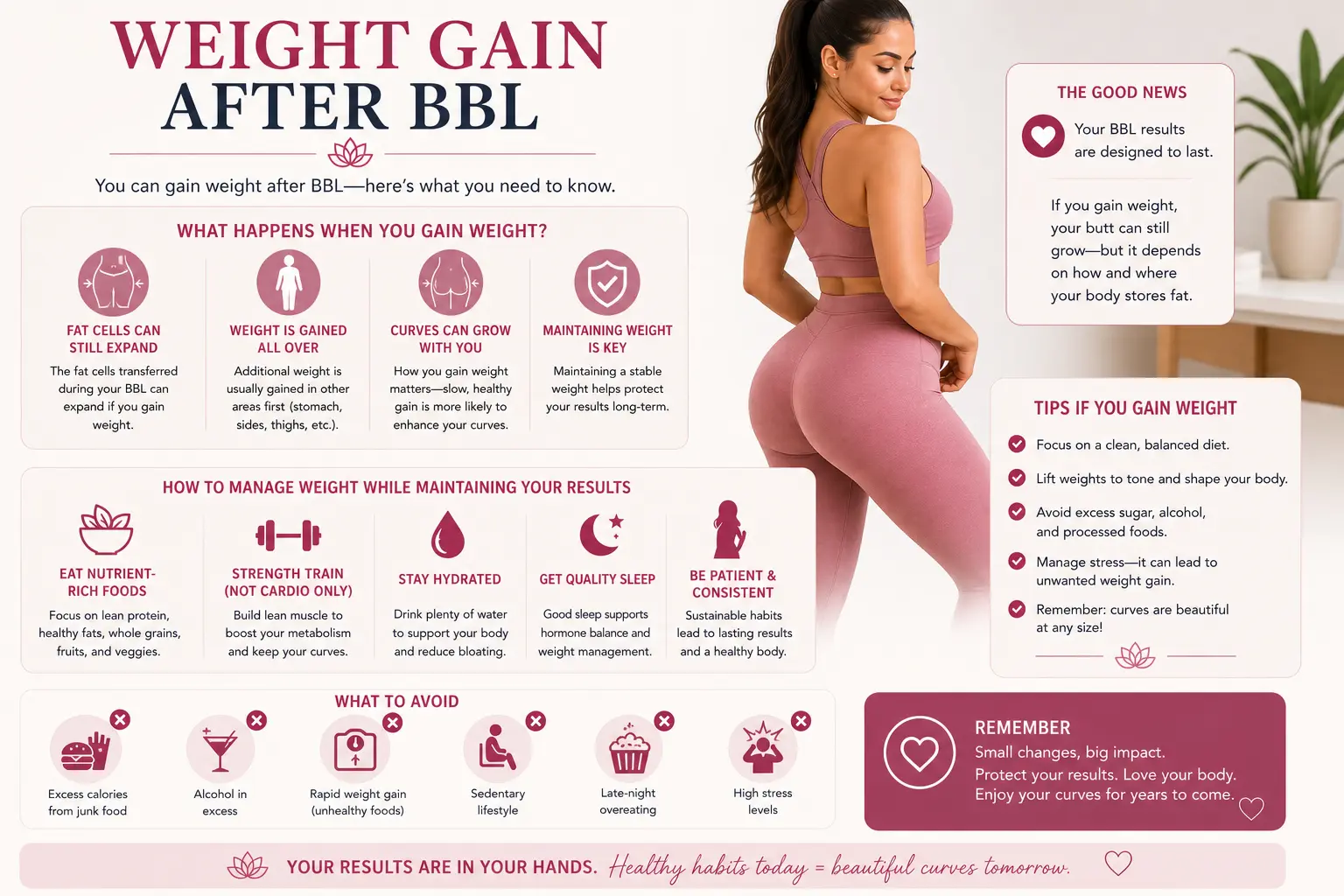
A BBL transfers your own fat to the buttocks, and those cells respond to weight changes like any other fat in your body. Gaining up to 5 kg (11 lbs) typically adds fullness without ruining your shape. Gaining more than 7-10 kg (15-22 lbs) can distort proportions. Published research indicates 50-70% of transferred fat cells survive long term.
What Happens When You Gain Weight After a BBL?
A BBL transfers live fat cells to the buttocks, and those cells respond to weight changes exactly like fat elsewhere. Gaining up to 5 kg typically produces fuller, rounder results. Gaining more than 7-10 kg can lead to disproportionate enlargement and loss of the sculpted waist-to-hip ratio.
Published research indicates 50-70% of transferred fat survives long term once vascularised. Standard surgical practice requires patients to maintain a stable weight for at least 6 months before surgery. Patients who stay within 5 kg of their surgical weight typically preserve results long term.
The sections below cover the biology, the tipping points, and a phased maintenance plan for international BBL patients.
Why Trust This Guide
This guide draws on guidance from the American Society of Plastic Surgeons (ASPS), International Society of Aesthetic Plastic Surgery (ISAPS) global data, peer-reviewed findings from Aesthetic Surgery Journal, and clinical practice in body contouring. It is medically reviewed by Op. Dr. Alirza Jahangirov, Plastic, Reconstructive & Aesthetic Surgeon at Carely Clinic in Istanbul.
The Science Behind BBL Fat Cells: Why Weight Matters
Transferred fat cells are permanently integrated into the buttocks. They are live tissue with a blood supply. Biologically, they behave identically to fat cells that were always there.
A Brazilian Butt Lift — also known as gluteal fat grafting — is an autologous fat transfer procedure. Fat is harvested by liposuction from donor areas such as the abdomen, flanks, and thighs. It is purified, then injected in precise layers into the buttocks and hips.
Once the transferred fat cells establish a new blood supply — a process that takes 6-8 weeks post-surgery — they become permanent. They are not implants. They are not foreign material. They are your own living tissue, and they follow the same biological rules as every other fat cell in your body.
Fat Cell Biology After Transfer
Fat cells do not multiply or disappear with weight fluctuations. They expand when you gain weight and contract when you lose weight. The number of cells stays fixed after surgery; only their size changes.
This is the foundational fact every BBL patient must understand. Gaining 5 kg after your procedure does not add new cells. It makes existing cells — both in the buttocks and throughout the rest of your body — larger.
Why Donor Areas Gain Differently
Liposuctioned areas have fewer fat cells. Because liposuction permanently removes cells from the abdomen, flanks, or thighs, those regions have reduced capacity to store fat if you gain weight later.
Weight gain after BBL surgery therefore tends to accumulate more noticeably in untreated areas — the chest, upper arms, or face — rather than the previously suctioned zones. This is why some patients notice unexpected fat distribution in new areas after significant post-BBL weight gain.
How Much Weight Gain Is Too Much After a BBL?
There is no single universal threshold, but clinical evidence places the tipping point at 7-10 kg (15-22 lbs). Below this range, most patients retain their BBL proportions. Above it, distortion is common.
The degree of impact depends on how quickly the weight is gained and where your genetics predispose you to store new fat. Here is how results typically change across three weight ranges:
Gradual Gain (Under 5 kg / 11 lbs)
Small gains often enhance BBL results. Transferred fat cells expand proportionally with the rest of the body. Most patients report a fuller, rounder appearance that still fits within the aesthetic intent of the surgery.
The sculpted waist-to-hip ratio created by liposuction during the BBL procedure generally remains intact. Clinical observation suggests that minor weight increases can actually improve shape perception in patients whose original result was understated.
Moderate Gain (5-10 kg / 11-22 lbs)
This is the caution zone. Proportions begin to shift. The buttocks expand further, but so do untreated areas like the waist and lower back, which can begin to fill in the contour definition created by liposuction.
Whether results are noticeably affected depends heavily on individual fat distribution genetics. Some patients in this range maintain attractive results. Others begin to lose the hourglass contour that the procedure created.
Significant Gain (Over 10 kg / 22 lbs)
Results are at serious risk. Rapid significant weight gain introduces unpredictability. The buttocks may grow disproportionately. Donor areas that previously appeared slimmer may regain fat in irregular patterns.
At this level, a revision procedure — including repeat body contouring or revision BBL — may be required to restore the original surgical outcome.
5 Factors That Determine How Weight Gain Affects Your BBL
The impact of weight gain on BBL results is not uniform. Five biological and behavioural variables determine whether modest weight gain enhances results or compromises them significantly.
1. Rate of weight gain. Rapid gain is more damaging than gradual gain. When weight increases quickly, fat is deposited unevenly, sometimes creating asymmetry between treated and untreated areas. Slow, gradual gain gives the body time to distribute fat more uniformly.
2. Individual genetic fat distribution pattern. Where your body naturally stores fat is genetically determined. If you gain weight primarily in your abdomen and arms, your BBL results will be affected differently than if you store fat in your hips and thighs.
3. Percentage of fat graft survival. Published research indicates 50-70% of transferred fat cells survive long term. Higher graft survival means more cells are present to respond to weight gain. Lower survival means the buttocks may gain less volume relative to other areas.
4. Time elapsed since surgery. In the first 6 months post-surgery, fat cells are still establishing vascular connections. Weight gain during this period can interfere with graft survival and alter the distribution of surviving cells. Post-6-months, the graft is stable and behaves more predictably.
5. Skin elasticity. Patients with good skin elasticity tolerate volume changes — in either direction — more gracefully than those with reduced elasticity. Skin laxity from prior significant weight loss can limit how well the skin adapts to post-BBL volume changes.
Expert Insight
“Gluteal fat grafting outcomes are highly dependent on post-operative weight stability. Standard clinical practice considers the optimal window for BBL to be when a patient has been at a stable, maintainable weight for at least 6 months. Patients who plan major weight changes within 12 months of surgery are not appropriate candidates.”
— Reflecting current clinical guidance on BBL patient selection
Pregnancy and Weight Gain After a BBL
Pregnancy after BBL causes significant weight gain and redistribution that will alter results. Most surgeons recommend completing pregnancies before undergoing a BBL for the most durable long-term outcome.
This is a topic that the majority of online BBL guides entirely omit — and it affects a substantial number of patients who have their BBL in their mid-20s and later become pregnant.
During pregnancy, the body undergoes dramatic hormonal and fat distribution changes. Weight gain of 10-16 kg is normal over a full-term pregnancy. Transferred fat cells in the buttocks will expand accordingly, as will fat in previously liposuctioned areas as new cells develop.
BBL After Pregnancy: Can You Revise?
A revision BBL is possible after pregnancy, once weight has returned to pre-pregnancy levels. Most plastic surgeons — including those at Carely Clinic — recommend waiting 12 months after breastfeeding ends before considering any revision, as hormonal normalisation takes time and weight fluctuates during this period.
Patients who have a BBL before planned pregnancies should be counselled to accept that the procedure represents a starting point, not a permanent guarantee. Revision options exist and can restore much of the original outcome.
Warning Signs Your BBL Results Are Being Compromised
Beyond aesthetic changes, certain physical signs in the early post-op period signal that something more serious may be occurring. Seek medical attention promptly for any of the following.
In the context of weight gain and BBL, most concerns are aesthetic. However, in the first 6-8 weeks post-surgery, certain symptoms require immediate medical attention unrelated to weight gain:
| Warning Sign | What It May Indicate | Action Required |
|---|---|---|
| Fever above 38.5°C (101.3°F) | Infection or systemic inflammatory response | Contact your surgical team immediately |
| Sudden chest pain or breathlessness | Pulmonary fat embolism — medical emergency | Call emergency services (999 UK / 112 EU / 911 US) |
| Calf swelling, redness, or warmth | Deep vein thrombosis (DVT) | Emergency medical evaluation — do not fly |
| Wound opening or discharge at incision sites | Wound dehiscence or infection | Contact clinic within 24 hours for assessment |
| Asymmetry that worsens after week 8 | Uneven fat survival or seroma development | Schedule follow-up with your surgeon at 3 months |
| Sudden increase in pain beyond week 2 | Haematoma, seroma, or internal complication | Same-day surgical team contact required |
Who Is NOT a Good Candidate for BBL?
BBL is not appropriate for everyone. Certain medical conditions, weight patterns, and lifestyle factors make the procedure inadvisable, and surgeons have a responsibility to identify and decline these cases.
Understanding contraindications before surgery — not after — is how Carely Clinic approaches patient selection for all plastic surgery procedures.
Absolute Contraindications
These are non-negotiable medical reasons the procedure cannot be safely performed:
- BMI above 32-35: Higher BMI increases anaesthesia risk, wound-healing complications, and fat embolism risk. Most board-certified surgeons apply a BMI ceiling of 32. Most surgeons consider BMI 23-30 as the optimal range.
- Active bleeding disorder or anticoagulant therapy: Fat grafting requires controlled haemostasis. Patients on therapeutic anticoagulants face significantly elevated haematoma and surgical risk.
- Uncontrolled diabetes: Poor glucose control impairs wound healing and increases infection risk at both liposuction and injection sites.
- Active infection anywhere in the body: Systemic infection at the time of surgery raises the risk of bacterial seeding at the graft site.
- Insufficient donor fat: Patients with very low body fat may not have adequate volume for a safe and meaningful fat harvest. A minimum of approximately 1 litre of pure purified fat is required for meaningful results.
Relative Contraindications
These require optimisation before proceeding:
- BMI 30-32: Medical clearance, optimised blood pressure, and glucose control are required. Surgery may be delayed until BMI falls below 30.
- History of significant weight fluctuation: Patients who have gained and lost more than 15 kg multiple times are at higher risk of unpredictable post-BBL fat distribution. A period of demonstrated weight stability (12 months) may be required.
- Planned pregnancy within 12 months: Results are very likely to change with pregnancy. Patients should be fully counselled before proceeding.
- Active smoking: Nicotine significantly reduces fat graft survival by impairing microvascular circulation. Most surgeons recommend smoking cessation at least 6 weeks before and after surgery.
Managing Expectations
A BBL enhances, it does not eliminate, the need for lifestyle maintenance. Patients should enter the procedure understanding that transferred fat responds to all future weight changes. Results lasting 10 years are achievable — and are consistently seen at Carely Clinic among patients who maintain weight stability — but they are not guaranteed without ongoing commitment.
Phased BBL Maintenance Plan: Weeks 1 Through 12 Months
The 12 months after a BBL are divided into three phases, each requiring a different approach to nutrition, activity, and weight monitoring to protect graft survival and long-term shape.
Among international patients who return home after surgery, a common post-operative error is returning to high-intensity training too early — typically before week 8 — which increases caloric expenditure without equivalent dietary adjustment and can trigger weight loss that compromises graft survival during the critical vascularisation window.
Weeks 1-6: Recovery Phase
Prioritise wound healing and graft establishment — not weight loss. Exercise is restricted to gentle walking. Caloric intake should be sufficient to support healing: approximately maintenance calories, with emphasis on protein (1.6-2.0g per kg of body weight daily, in line with general post-surgical nutritional guidance).
Avoid sitting directly on the buttocks for 2-4 weeks as directed by your surgeon. Compression garments are worn 23 hours per day during this phase to reduce swelling and support contouring.
Months 2-6: Stabilisation Phase
Light activity resumes at week 6-8 with your surgeon’s clearance. Swimming and low-impact cycling are appropriate before full gym training. The goal is weight maintenance, not loss. Fat graft survival is being finalised during this window.
From months 2-6, begin gradual incorporation of glute-strengthening exercises. Squats, lunges, and hip thrusts add underlying muscle tone that enhances the lifted appearance of the BBL result. Avoid excessive cardiovascular training that drives a caloric deficit below maintenance.
6 Months and Beyond: Long-Term Maintenance
By 6 months, graft survival is established and final results are visible. Full return to exercise is appropriate. The goal shifts to permanent weight stability — staying within 5 kg of your surgical weight indefinitely.
Regular resistance training targeting the lower body supports and enhances BBL results by building gluteal muscle beneath the transferred fat layer. Patients who combine stable weight with consistent lower-body training report the most durable aesthetic outcomes at 5-10 year follow-up.
Frequently Asked Questions
What happens if I gain weight after a BBL?
Transferred fat cells expand with weight gain, just like any other fat cells in your body. Published research indicates 50-70% of grafted fat survives long term and responds to all weight changes. Gradual gains under 5 kg typically enhance fullness, while gains above 10 kg can distort proportions.
How much weight gain will ruin my BBL results?
There is no single number, but gaining more than 7-10 kg (15-22 lbs) typically causes noticeable distortion. Clinical observation indicates that gains above 15-20 lbs often reduce the sculpted waist-to-hip ratio. Rapid gain is more damaging than gradual gain, as the body stores new fat unevenly across treated areas.
Does weight gain go to your butt after a BBL?
Weight gain distributes across your whole body, not only to the buttocks, after a BBL procedure. Donor areas with fewer cells post-liposuction tend to gain proportionally less than untreated regions. The buttocks, with more fat cells after grafting, may gain more than other areas in relative terms.
Will I gain weight right after a BBL?
Post-surgical swelling causes temporary scale increases of 2-4 kg (4-9 lbs) within the first 1-2 weeks. This is not fat gain; it is fluid accumulation and the body’s normal inflammatory healing response. Most post-op swelling resolves by week 6, and final results are visible by 3-6 months post-surgery.
How long do BBL results last?
BBL results can last 10 or more years when weight stays within 5 kg of surgical weight. Clinical observation indicates that, patients who maintain BMI stability have the best long-term outcome predictability. Ageing, pregnancy, and hormonal changes can affect fat distribution regardless of effort to maintain weight.
What foods should I avoid after a BBL?
Processed foods, high-sugar drinks, fried foods, and alcohol should be limited to prevent post-BBL weight gain.Most surgeons recommend prioritising lean proteins, whole grains, and healthy fats for fat cell survival. Patients should aim for caloric maintenance rather than a caloric deficit in the first 6 weeks post-surgery.
Does fat come back after a BBL?
The fat cells transferred during a BBL are permanent residents of the buttocks once they establish blood supply.Surviving cells, around 50-70% of those transferred, behave like native fat and can expand or shrink. Weight loss can reduce their volume significantly, while weight gain causes them to expand beyond the surgical shape.
Can I have a second BBL if weight gain affects my results?
A revision BBL is possible once weight is stable, usually at least 12 months after the original surgery. Revision success depends on available donor fat in non-treated areas and the quality of skin elasticity. Surgeons at board-certified clinics in Turkey and the UK routinely perform revision BBL for international patients.
What happens if I lose weight after a BBL?
Losing weight causes transferred fat cells to shrink, reducing buttock volume and potentially reversing BBL results. Losses of 10 kg or more can cause skin laxity and deflation in the buttock area post-BBL. A moderate, stable weight loss of 1-3 kg can actually refine contours without compromising overall BBL shape.
How do I maintain my BBL results long term?
Staying within 5 kg of your surgical weight is the most important factor for preserving BBL results. Most surgeons recommend 3-5 moderate exercise sessions per week, with emphasis on glute strengthening from month 3 onward. Avoiding crash diets, rapid weight gain cycles, and excessive alcohol intake all protect your BBL investment.
Conclusion
Weight gain after a BBL does not automatically ruin results. The outcome depends on how much, how fast, and where your body stores new fat.
The single most important takeaway from this guide: a BBL is living surgery. The transferred fat cells are permanently integrated into your body, responding to every nutritional choice, every exercise session, and every weight fluctuation for the rest of your life. This is both the procedure’s greatest strength — natural, permanent-feeling results — and its key vulnerability to weight change.
Gains under 5 kg often improve results. Gains of 7-10 kg require careful monitoring. Gains above 10 kg risk distorting the proportions your surgeon created. From that point, stable weight is your most powerful tool.
Individual outcomes vary. This guide provides general medical education based on international guidelines and published research. Consult qualified medical professionals for personalised advice.
Medical Review: Op. Dr. Alirza Jahangirov