
Quick Summary
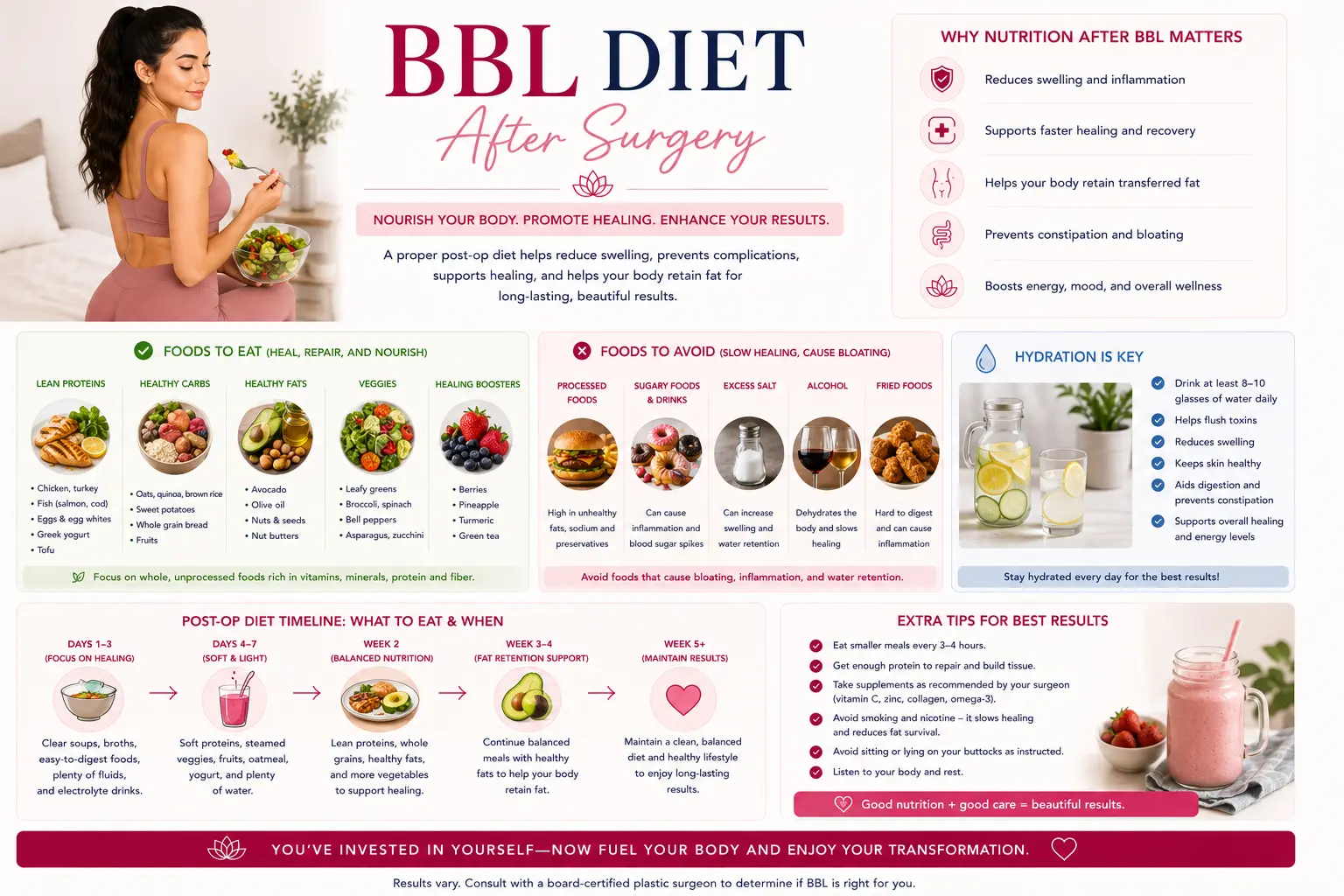
After a BBL, your diet directly determines how much transferred fat survives. Aim for at least 2,000 nutrient-rich calories daily, prioritising protein, healthy fats, and anti-inflammatory foods. Between 30-50% of fat grafts naturally reabsorb; correct nutrition can tip that balance in your favour.
This guide covers exactly what to eat, what to avoid, and a phase-by-phase plan for the first 6 months.
What Is the BBL Diet and Why Does It Matter?
After a Brazilian butt lift, diet is one of the most critical factors in fat graft survival. ASPS (US) guidelines and clinical consensus recommend at least 2,000 calories daily from nutrient-dense sources during the first 3-6 months post-surgery. Between 30-50% of fat grafts naturally reabsorb — proper nutrition reduces that figure.
Prioritise lean proteins such as chicken, fish, and legumes for tissue repair; healthy fats from avocados, nuts, and olive oil to nourish transferred cells; and anti-inflammatory foods like berries, leafy greens, and salmon. ISAPS and ASPS both confirm that calorie restriction post-fat transfer worsens graft outcomes.
Avoid processed foods, alcohol, refined sugars, and excessive sodium. Focus on whole foods, adequate hydration, and a targeted supplement plan for at least 6-8 weeks.
Why Trust This Guide
This guide draws on clinical guidance from the American Society of Plastic Surgeons (ASPS, US), International Society of Aesthetic Plastic Surgery (ISAPS, global), and peer-reviewed post-operative nutrition research. It is medically reviewed by Op. Dr. Alirza Jahangirov, a Plastic, Reconstructive & Aesthetic Surgeon at Carely Clinic in Istanbul.
5 Nutrients That Directly Affect BBL Fat Graft Survival
Five specific nutrients — protein, healthy fats, vitamin C, zinc, and fibre — are most directly linked to fat graft survival and post-operative wound healing. Prioritising these in your diet for 6 months gives transferred fat cells the best environment to integrate permanently.
Your body is doing two jobs simultaneously after a BBL: healing the liposuction donor sites and keeping newly transferred fat cells alive. Both require different nutrients, and both timelines run concurrently for the first 6-8 weeks.
Protein
Protein is the primary building block for tissue repair after surgery. Every meal should contain a source of lean protein — targeting 60-80 grams daily across 4-6 small meals keeps amino acid availability constant for wound healing. Chicken breast, salmon, eggs, Greek yogurt, legumes, and tofu are all suitable choices.
Healthy Fats (Omega-3 and Monounsaturated)
Omega-3 fatty acids from salmon, mackerel, walnuts, and flaxseeds reduce systemic inflammation — one of the main threats to graft survival. Monounsaturated fats from avocados, olive oil, and almonds directly nourish transferred fat cells and support cell membrane integrity.
Vitamin C
Vitamin C drives collagen synthesis, which is essential for skin elasticity and wound closure at both the liposuction and injection sites. Citrus fruits, strawberries, bell peppers, and broccoli are reliable dietary sources; a supplement of 500-1,000mg daily is commonly recommended in the first 6 weeks.
Zinc
Zinc supports immune function and accelerates wound healing at the cellular level. Pumpkin seeds, beef, chickpeas, and cashews are strong dietary sources. Zinc is widely recognised in surgical recovery literature as one of the micronutrients most consistently depleted during the healing process.
Fibre
Post-operative constipation is extremely common after BBL surgery, caused by anaesthetic medications and reduced mobility. A fibre intake of 25-30 grams daily from whole grains, fruits, vegetables, and legumes reduces this risk significantly, improving comfort during the early recovery weeks.
The Best Foods to Eat After BBL Surgery
The best post-BBL foods combine high protein, anti-inflammatory fats, immune-supporting vitamins, and gut-friendly fibre. Every food choice in the first 6 months either reinforces or undermines the fat graft survival rate.
These are the core food groups to build every meal around during your recovery:
- Lean proteins: Skinless chicken breast, turkey, salmon, tuna, eggs, cottage cheese, Greek yogurt, lentils, chickpeas, and tofu
- Healthy fats: Avocados, extra virgin olive oil, walnuts, almonds, chia seeds, flaxseeds, and full-fat natural yogurt
- Anti-inflammatory foods: Blueberries, strawberries, raspberries, spinach, kale, Swiss chard, turmeric, and ginger
- Whole grains: Brown rice, quinoa, oats, wholegrain bread, and sweet potato
- Hydrating foods: Watermelon, cucumber, oranges, and coconut water
Expert Insight
“Post-operative nutrition after fat transfer procedures is fundamentally different from standard healthy eating. The goal is not restriction but strategic nourishment — sufficient calories, quality fats, and consistent protein to give transferred fat cells a viable environment to survive.”
— American Society of Plastic Surgeons (ASPS) Post-Operative Care Guidelines
Foods to Avoid After a BBL (and Why They Damage Results)
Processed foods, alcohol, refined sugars, fried items, and high-sodium foods all trigger the inflammation and circulatory disruption that are the primary enemies of fat graft survival. Avoiding these for 6-8 weeks is non-negotiable.
The following categories cause direct, documented harm to BBL recovery outcomes:
- Processed meats and fast food: Loaded with trans fats and preservatives that drive systemic inflammation, reducing blood flow to grafted areas
- Refined sugars and white bread: Cause blood sugar spikes that trigger inflammatory cytokines — the same pathway that increases fat cell reabsorption
- Fried foods: High in trans fats, which impair healthy circulation and interfere with fat cell integration
- Alcohol: Impairs microcirculation essential for graft survival, dehydrates tissues, and stresses the liver during the post-anaesthetic period — avoid for a minimum of 2-3 weeks, ideally 6 weeks
- High-sodium foods: Canned soups, processed meats, and salted snacks cause fluid retention and swelling, prolonging recovery
- Excessive caffeine: More than 2 cups of coffee daily promotes dehydration and can interfere with sleep, which is critical to healing
Your Week-by-Week BBL Diet After Surgery
Your nutritional needs change significantly across the first 6 months after a BBL. The three phases — early recovery, active healing, and long-term stabilisation — each require a distinct dietary approach to protect fat grafts at each stage.
Week 1: Clear Liquids to Soft Foods (Days 1-7)
In the first 24-48 hours after surgery, your digestive system is still slowed by general anaesthesia. Small, easy-to-digest portions prevent nausea while keeping the body nourished.
Suitable foods in Week 1 include broth, protein shakes, smoothies, yogurt, scrambled eggs, mashed sweet potato, and soft fruits. Prioritise fluid intake: at least 2-2.5 litres of water daily, supplemented with coconut water or low-sugar electrolyte drinks.
Weeks 2-6: Building Nutrient Density
From Week 2 onwards, introduce full meals across 4-6 sittings daily. This is the most critical window for fat graft survival — the phase when transferred fat cells are establishing their blood supply connection.
Target at least 2,000 calories daily. Each meal should include a protein source, a healthy fat, and a vegetable or whole grain. Calorie restriction at this stage directly increases the risk of fat graft reabsorption.
Months 2-6: Feeding the Fat Long-Term
By Month 2, most patients feel significantly more comfortable and mobile, making it tempting to return to normal eating patterns or begin dieting. Resist this. Fat grafts remain in the integration process until Month 6.
Continue prioritising protein and healthy fats, maintain adequate calories, and avoid restrictive diets. Gradual reintroduction of normal foods is fine; sudden calorie reduction is not.
The following table summarises the phased approach:
| Phase | Timeframe | Daily Calorie Target | Key Focus | Avoid |
|---|---|---|---|---|
| Phase 1 | Days 1-7 | 1,500-2,000 | Liquids, soft foods, hydration | Solids, alcohol, heavy meals |
| Phase 2 | Weeks 2-6 | 2,000-2,500 | Protein, healthy fats, anti-inflammatory foods | Calorie restriction, processed foods, alcohol |
| Phase 3 | Months 2-6 | 2,000+ | Sustained nutrition, weight stability | Crash diets, significant weight loss |
| Phase 4 | Month 6 onwards | Normal balanced diet | Weight stability, long-term maintenance | Major weight fluctuations |
A Sample One-Day Meal Plan for BBL Recovery
This sample day provides approximately 2,100-2,300 calories built around protein, healthy fats, anti-inflammatory nutrients, and fibre. Use it as a template for Weeks 2-6 of recovery when full meals can be tolerated.
This practical daily template covers Phases 2 and 3 and can be adjusted up or down in portion size based on your individual calorie target:
- Breakfast: 2 scrambled eggs with wilted spinach, 1 avocado on wholegrain toast, 1 glass of orange juice
- Mid-morning snack: Greek yogurt with blueberries and a tablespoon of chia seeds, plus a protein shake if needed
- Lunch: Grilled salmon fillet with quinoa, roasted sweet potato, and a side salad of kale, tomatoes, and olive oil dressing
- Afternoon snack: Handful of walnuts and almonds with sliced apple or watermelon for hydration
- Dinner: Skinless chicken breast with brown rice, steamed broccoli, and a drizzle of extra virgin olive oil; turmeric added to rice for anti-inflammatory benefit
- Evening: Chamomile or ginger herbal tea; full-fat natural yogurt if calorie target not yet met
Prep these meals before your surgery date. Having high-protein, nutrient-dense options ready in your fridge significantly reduces the temptation to reach for processed convenience foods during low-energy recovery days.
Patients who prepare meal plans in advance and maintain caloric consistency through Weeks 2-4 are more likely to follow the protocol consistently, reducing the risk of dropping below recommended calorie targets during low-energy recovery days.
Vitamins and Supplements for BBL Recovery
Three supplements — a comprehensive multivitamin, omega-3 fish oil, and vitamin C — form the core post-BBL supplement stack recommended by most plastic surgeons worldwide, including ASPS-affiliated practitioners. Always confirm with your surgeon before starting.
Multivitamin
A broad-spectrum multivitamin covering vitamins A, B-complex, C, D, and K, plus zinc, calcium, and magnesium is the baseline supplement. Each component plays a specific role: vitamin A for tissue regeneration, B vitamins for energy metabolism, vitamin D for immune regulation, and magnesium for reducing muscle discomfort from post-operative rest.
Omega-3 Fish Oil
Omega-3 supplementation (1,000-2,000mg daily of combined EPA and DHA) reduces post-surgical inflammation and supports fat cell membrane integrity. Note: stop fish oil 1-2 weeks before surgery as it can affect bleeding; resume from Week 2 post-operatively under your surgeon’s guidance.
Vitamin C
500-1,000mg of vitamin C daily for the first 6 weeks accelerates collagen production at wound sites. Collagen is the structural protein that helps liposuction incision sites close cleanly and strengthens the surrounding tissue as fat grafts integrate. Dietary sources alone are often insufficient in the early post-operative period.
Warning Signs to Watch For During BBL Recovery
Most BBL complications present within the first 2-4 weeks. Knowing which symptoms require immediate medical attention — versus normal post-operative discomfort — is essential for both patient safety and protecting your results.
Not every symptom after BBL surgery is a cause for concern, but some require urgent medical review. The table below identifies the key warning signs, what they may indicate, and the appropriate response:
| Warning Sign | What It May Indicate | Action Required |
|---|---|---|
| Fever above 38.5°C (101.3°F) | Post-operative infection or systemic inflammatory response | Contact your surgical team immediately; do not wait |
| Wound separation or opening at incision sites | Dehiscence — possible sign of poor healing or infection | Photograph, cover with a clean dressing, contact clinic same day |
| Increasing redness, warmth, or purulent discharge | Localised wound infection | Seek assessment within 24 hours; antibiotic treatment may be needed |
| Sudden sharp pain or pressure in the buttock area | Haematoma (blood pooling) or seroma (fluid collection) | Do not massage the area; contact surgical team for same-day review |
| Calf pain, swelling, or redness in one leg | Deep vein thrombosis (DVT) — serious and requires immediate attention | Go to A&E / ER immediately; do not wait for a clinic appointment |
| Shortness of breath or chest pain | Pulmonary embolism — rare but life-threatening emergency | Call emergency services (999 / 112 / 911) immediately |
How This Applies in Turkey
Istanbul is one of the highest-volume BBL destinations globally, with ISAPS data confirming Turkey ranks in the top 5 worldwide for body contouring procedures.
Turkey’s position in aesthetic surgery is substantive, not marketing. According to 2025 ISAPS global statistics, Turkish surgeons perform tens of thousands of body contouring procedures annually, with Istanbul concentrating the highest density of ISAPS-registered plastic surgeons in the region. Turkish plastic surgeons train under European Board of Plastic, Reconstructive and Aesthetic Surgery (EBOPRAS) standards — the same framework governing BAAPS-affiliated UK surgeons.
For UK and US patients weighing up costs, all-inclusive BBL packages in Istanbul range from approximately £3,200-£4,800 / $4,200-$6,500 / €3,300-€4,800, compared to £8,000-£12,000 / $10,000-$15,000 in the UK and USA. Packages typically include surgical fees, anaesthesia, JCI-accredited hospital stay, pre-operative testing, post-operative compression garments, hotel accommodation, and airport transfers — making the true cost comparison more substantial than headline prices suggest.
At Carely Clinic Istanbul, BBL surgery is performed by Op. Dr. Alirza Jahangirov and the Carely surgical team, with comprehensive post-operative monitoring protocols built around international patient needs.
When Can You Fly After BBL Surgery?
Most patients are cleared for long-haul flights — including London-Istanbul and New York-Istanbul routes — at the fit-to-fly review between Days 5-7 post-surgery. DVT risk during long flights is a genuine consideration: wear compression stockings, move regularly during the flight, stay well hydrated, and avoid alcohol in the 24 hours before travel. UK patients typically return home within 7 days of surgery; US patients may opt for a 10-day stay to allow slightly longer local monitoring.
Frequently Asked Questions
What should I eat after BBL surgery to help fat survive?
Prioritise lean proteins, healthy fats, and anti-inflammatory whole foods for at least 6 months post-surgery. ASPS guidelines confirm that nutrient-dense diets — particularly protein and omega-3 rich foods — support fat graft integration. Patients who maintain at least 2,000 calories daily from quality sources typically retain more transferred fat long-term.
How many calories should I eat after a BBL?
Most plastic surgeons recommend a minimum of 2,000 calories per day until fat grafts fully stabilise. Your metabolic rate rises after surgery, so extra calories fuel healing rather than causing unwanted weight gain elsewhere. Calorie restriction during the first 6-8 weeks actively stresses fat grafts and can increase reabsorption rates.
What foods should I avoid after a Brazilian butt lift?
Avoid processed foods, refined sugars, alcohol, fried foods, and high-sodium items during the full recovery period.These foods trigger inflammation, impair circulation to grafted areas, and dehydrate the tissues surrounding new fat cells. Alcohol is particularly harmful — it impairs microcirculation and liver function for at least 2-3 weeks post-surgery.
How long do I need to “feed the fat” after BBL?
The “feed the fat” phase lasts approximately 3-6 months, until fat grafts fully integrate into your body. Clinical research on autologous fat grafting indicates that fat cell integration takes up to 6 months to complete fully. The first 6-8 weeks carry the highest risk; fat grafts are most vulnerable to reabsorption during this window.
Can I diet or lose weight after BBL surgery?
You should not restrict calories or attempt to lose weight for at least 6-8 weeks after BBL surgery. Newly transferred fat has no independent blood supply for 2-3 weeks; restriction during this period risks graft death. After 6 months, gradual, controlled weight management is acceptable but significant weight loss will reduce BBL volume.
What vitamins and supplements help BBL recovery?
Key supplements include vitamin C for collagen production, zinc for wound healing, and omega-3 fatty acids to reduce inflammation. A multivitamin covering vitamins A, B-complex, D, and K alongside magnesium and calcium supports tissue recovery broadly. Always consult your surgeon before beginning supplements, as some can affect bleeding or interact with post-operative medications.
Can I drink alcohol after a BBL?
Alcohol should be avoided for a minimum of 2-3 weeks after BBL surgery, and ideally for 6 weeks. Alcohol dehydrates healing tissues, impairs microcirculation essential for fat graft survival, and reduces immune function during recovery. It also stresses the liver, which processes anaesthetic agents and medication during the early post-operative weeks.
What should I eat in the first 24-48 hours after BBL surgery?
Begin with clear liquids including broth and smoothies for the first 24-48 hours, then advance to soft foods. General anaesthesia slows digestion considerably, so large solid meals in the immediate post-op period typically cause nausea. Prioritise hydration and small frequent portions; protein shakes are ideal for meeting nutritional needs without overwhelming your stomach.
Does drinking water affect BBL results?
Adequate water intake directly supports circulation to newly grafted fat cells and maintains skin elasticity during healing. Aim for 2-3 litres daily; dehydration reduces blood volume and can compromise nutrient delivery to the surgical sites. Herbal teas and coconut water are excellent additions; avoid caffeinated drinks that promote fluid loss during recovery.
Can losing weight ruin my BBL results?
Significant post-BBL weight loss will reduce buttock volume, as transferred fat cells respond identically to natural fat cells. Moderate fluctuations of up to 4-5kg are generally tolerated without dramatically altering your final shape or symmetry. Maintaining a stable weight after the 6-month mark is the most reliable strategy for protecting long-term results.
How long does it take for BBL fat grafts to stabilise?
Fat grafts typically stabilise within 3-6 months, with final results fully visible and settled by month six. Surviving fat cells integrate with local blood vessels and become permanent tissue over this 3-6 month period. Results seen at 6 months are generally considered permanent, provided weight remains stable from that point forward.
What is the best meal plan for BBL recovery?
Structure 4-6 small daily meals around lean protein, healthy fats, whole grains, and colourful vegetables post-surgery. This pattern maintains steady nutrient delivery, avoids digestive overload, and keeps energy stable during limited-mobility recovery weeks. Meal prepping before surgery and having high-protein snacks available reduces the chance of reaching for processed convenience foods.
Conclusion
Your BBL diet is active treatment, not optional aftercare. Follow the phased nutrition plan for 6 months, avoid calorie restriction, and let your body secure those fat grafts.
The three most important dietary rules after a BBL are simple: eat enough (at least 2,000 calories daily), eat strategically (prioritise protein, healthy fats, and anti-inflammatory foods), and avoid the foods that sabotage graft survival (alcohol, processed foods, refined sugar, and excessive sodium). Research consistently shows that patients who follow structured post-operative nutrition protocols retain significantly more transferred fat at the 6-month mark.
For patients considering a BBL in Istanbul at Carely Clinic, Op. Dr. Alirza Jahangirov’s team provides a detailed, personalised post-operative nutrition guide as part of the standard care package — covering the phased approach outlined in this article, supplement guidance, hydration targets, and remote follow-up from Week 1 through Month 6. UK and US patients travelling for surgery receive the same protocol supported by WhatsApp monitoring, ensuring no patient navigates the “feed the fat” phase without direct clinical guidance.
Your next step is a free consultation to assess your candidacy, understand what realistic results look like for your anatomy, and receive a personalised recovery plan. Book your BBL consultation at Carely Clinic today.
Individual outcomes vary. This guide provides general medical education based on international guidelines and published research. Consult qualified medical professionals for personalised advice.
Medical Review: Op. Dr. Alirza Jahangirov