
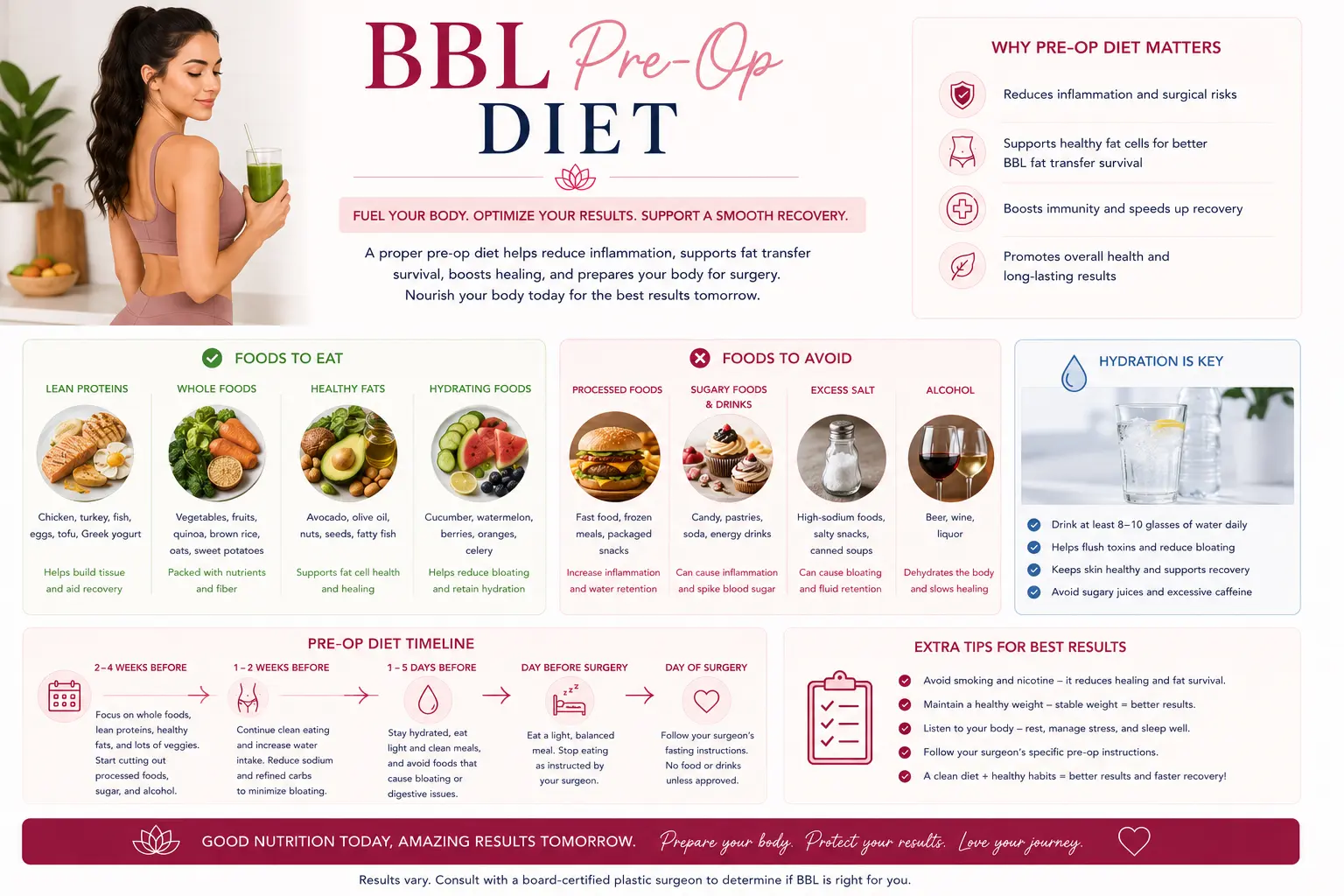
Quick Summary
The optimal BBL pre-op diet is high in lean protein, complex carbohydrates, and anti-inflammatory foods, starting 4 weeks before surgery. Standard pre-operative nutrition guidance recommends 1.2-1.6g of protein per kg of bodyweight daily and 2.5 litres of water per day.
This guide covers what to eat, what to avoid, supplement protocols, and the 48-hour final countdown before your procedure.
What Is the BBL Pre-Op Diet and Why Does It Matter?
The ideal BBL pre-op diet begins 4 weeks before surgery and centres on three goals: reducing surgical inflammation, supporting fat graft survival, and maintaining a stable weight for optimal donor fat availability. Patients should target 1.2-1.6g of protein per kg of bodyweight daily, drink 2.5 litres of water, and prioritise anti-inflammatory whole foods. Per 2024 ASPS guidelines, nutritional preparation significantly improves healing outcomes.
Foods to avoid include omega-3 supplements, vitamin E, fish oil, alcohol, refined sugars, and excessive sodium — all of which increase bleeding risk or impair fat cell viability. Most surgeons require nicotine cessation, including vaping, at least 4 weeks before surgery. Patients travelling to Istanbul from the UK or US should begin dietary preparation before departure.
The 48 hours immediately before surgery require a light, low-sodium diet, full fasting from midnight, and no supplements, alcohol, or blood-thinning medications.
Why Trust This Guide
This guide draws on 2024 ASPS pre-surgical nutrition guidance (US), 2023 BAAPS pre-operative recommendations (UK), and peer-reviewed studies from Plastic and Reconstructive Surgery journal. It was medically reviewed by Op. Dr. Alirza Jahangirov, a Plastic, Reconstructive & Aesthetic Surgeon at Carely Clinic in Istanbul.
What to Eat Before BBL Surgery: The 4-Week Plan
Starting dietary changes 4 weeks before surgery allows your body to build iron stores, protein reserves, and anti-inflammatory capacity — all critical for fat graft survival and anaesthesia safety.
A BBL pre-op diet is not about restriction. The goal is nutritional density: building the biochemical reserves your body will draw on during surgery and the weeks of recovery that follow. Think of it as loading your body the way an athlete loads before competition.
The week-by-week approach below is the most practical framework, and one that the top-ranking articles consistently fail to provide in a structured format.
Week 4: Foundation Phase (4 weeks before surgery)
Begin clean eating and supplement protocol now. This week is the least restrictive but the most important for long-term preparation.
Focus on whole, unprocessed foods. Prioritise lean proteins (chicken breast, eggs, fish, Greek yogurt, legumes), complex carbohydrates (brown rice, oats, quinoa, sweet potato), and a full spectrum of coloured vegetables. Begin your iron, folic acid, and vitamin C supplements this week — not the week before surgery — as iron stores take months to fully replenish if you are starting from a deficiency.
Week 3: Anti-Inflammatory Focus
Load your diet with anti-inflammatory foods to prepare your immune system for surgical stress.
Add turmeric, ginger, berries, leafy greens, and green tea. These provide curcumin and catechins that reduce baseline inflammatory markers. Clinical research indicates that patients with lower systemic inflammation at surgery experience faster wound healing and improved fat graft take rates.
Week 2: Supplement Cessation Begins
Stop all blood-thinning supplements and medications at the 2-week mark.
This includes vitamin E, fish oil, omega-3 supplements, aspirin, ibuprofen (NSAIDs), and all herbal supplements. These substances prolong clotting time and increase intraoperative bleeding, which is why standard pre-operative protocols require their cessation. Continue iron, vitamin C, and folic acid. Begin reducing sodium intake and cutting processed foods completely.
Week 1: Low-Sodium, High-Protein Final Push
The final 7 days are about reducing fluid retention and maximising tissue readiness.
Cut sodium aggressively — aim below 1,500mg per day. High salt intake causes fluid retention that worsens post-operative swelling and can complicate surgical markings. Hydration target is 2.5 litres of water daily; cut caffeine and eliminate alcohol entirely this week. Continue protein targets. Avoid gas-producing vegetables (broccoli, cabbage, cauliflower, onions) in the final 3 days.
Below is the complete week-by-week overview in one reference table:
| Timeframe | Diet Focus | Key Actions | What to Stop |
|---|---|---|---|
| Week 4 | Whole food foundation | Start iron, folic acid, vitamin C supplements; hit protein targets; drink 2.5L water daily | Processed food, fast food, smoking/nicotine |
| Week 3 | Anti-inflammatory loading | Add turmeric, ginger, berries, green tea; maintain protein; continue supplements | Refined sugars, alcohol (reduce significantly) |
| Week 2 | Supplement cessation + sodium reduction | Cut sodium below 2,000mg/day; maintain hydration and protein | Vitamin E, fish oil, omega-3s, aspirin, ibuprofen, all NSAIDs, herbal supplements |
| Week 1 | Low-sodium, high-protein final push | Sodium below 1,500mg/day; 2.5L water; light digestible meals final 3 days | Alcohol completely; caffeine; gas-producing vegetables; all supplements except iron/C/folate |
| Night before | Light, digestible dinner only | Plain grilled protein + rice or steamed vegetables; drink final water by 8pm | High-fat foods, beans, cruciferous vegetables, anything gas-producing |
| From midnight | Complete fasting | Nothing by mouth — no food, water, or chewing gum | Everything — fasting is non-negotiable for anaesthesia safety |
Foods and Supplements to Avoid Before a BBL
Two categories of food increase your surgical risk most significantly: blood-thinning substances that prolong intraoperative bleeding, and inflammatory foods that impair your immune response and fat cell viability. Avoid both starting 2 weeks before your procedure.
Blood-thinning foods and supplements to stop 2 weeks before surgery:
- Vitamin E: Found in nuts, seeds, and vegetable oils in high concentrations. Vitamin E significantly prolongs clotting time; stop supplements and reduce dietary intake.
- Fish oil and omega-3 supplements: These are healthy long-term, but in the pre-operative window they thin the blood and increase bruising risk.
- Aspirin, ibuprofen, naproxen (NSAIDs): Non-steroidal anti-inflammatory drugs inhibit platelet aggregation. Use paracetamol (acetaminophen) instead.
- Herbal supplements: Garlic supplements, ginkgo biloba, St John’s Wort, and ginger supplements all affect bleeding time. Culinary use of these as flavouring is generally acceptable; concentrated supplement forms must stop.
- Alcohol: Stop completely at least 7-10 days before surgery. Alcohol thins blood, impairs anaesthesia, and delays fat graft integration.
Inflammatory foods that impair recovery:
Refined sugars, white flour products, fried foods, and processed meats trigger inflammatory cascades that worsen post-operative swelling and slow tissue repair. High-sodium foods, including packaged soups, ready meals, and salted snacks, cause fluid retention that complicates surgical results and prolongs healing.
5 Supplements That Support BBL Preparation
A targeted supplement protocol — begun 4 weeks before surgery — addresses the specific nutritional demands of fat transfer surgery, including blood oxygenation, immune readiness, and tissue repair.
Iron and Folic Acid
Iron is the most time-sensitive supplement for BBL patients; begin supplementation as early as possible.
Iron produces haemoglobin, the protein that carries oxygen to healing tissues and transferred fat cells. A commonly used protocol is ferrous gluconate 325mg three times daily, though dosing should be confirmed with your GP or surgeon. Folic acid at 0.4mg daily supports red blood cell production and cell growth, working alongside iron to optimise your blood profile before surgery. Importantly, iron deficiency can take 4-6 months to correct fully — begin immediately upon booking your procedure.
Vitamin C
Vitamin C serves a dual role: it enhances iron absorption and accelerates wound healing.
The standard pre-BBL dose is 250mg three times daily, taken alongside iron supplements. Vitamin C is an antioxidant that supports collagen synthesis and immune function — both critical in the immediate post-surgical period. Vitamin C also helps protect against oxidative stress triggered by the physiological response to surgery.
Vitamin D
Adequate vitamin D levels support immune function, reduce inflammation, and aid muscle recovery.
Many patients — particularly those in the UK and Northern Europe — are deficient in vitamin D. A pre-operative blood test can confirm your status. If deficient, a short course of vitamin D3 supplementation in the 4-week window before surgery can reduce your inflammatory response and support faster post-operative recovery. Discuss dosage with your surgeon or GP.
Arnica Montana
Arnica is an optional supplement that reduces bruising and swelling, particularly useful for BBL patients with extensive liposuction donor sites.
Begin arnica tablets (standard homeopathic dosing) 2 days before surgery and continue until the bottle is complete, Begin arnica tablets (standard homeopathic dosing) 2 days before surgery and continue until the bottle is complete. Arnica does not carry the bleeding risk of omega-3 or vitamin E supplements. Arnica does not carry the bleeding risk of omega-3 or vitamin E supplements. It is available over the counter in the UK and the US without a prescription.
Expert Insight
“Patients often ask which single dietary change matters most before a BBL. The answer is protein. A body that is protein-adequate before surgery heals measurably faster, retains more grafted fat, and tolerates anaesthesia with fewer metabolic complications. Everything else is secondary.”
— General clinical consensus on pre-operative surgical nutrition
The 48-72 Hour Final Diet Countdown Before Surgery
The final 72 hours before your BBL require specific dietary adjustments that move from nutrient loading to digestive simplification — culminating in a complete fast from midnight on surgery eve.
What to Eat on Surgery Eve
Dinner the night before BBL should be plain, light, and protein-forward.
Good options include grilled chicken breast or baked fish with plain rice or steamed courgette, broccoli-free (no gas-producing vegetables). Avoid anything fried, heavily seasoned, or rich in fat. Take your final drink of water by 8-9pm. Do not eat after midnight.
Complete Fasting Protocol
From midnight before your surgery, maintain a complete fast — no food, water, chewing gum, or medication not approved by your surgeon.
This is non-negotiable for general anaesthesia safety. Stomach contents during surgery carry a risk of aspiration — inhalation of gastric material — which is a serious anaesthetic complication. Your anaesthesiologist will confirm exact fasting times at your pre-operative appointment. In most JCI-accredited Istanbul hospitals, the standard is nothing by mouth from midnight for a morning surgery, or 6 hours before a late-afternoon procedure.
Does Your Diet Affect BBL Fat Survival?
Yes — directly and measurably. Your nutritional status before surgery and your calorie intake in the weeks after surgery are among the most significant controllable factors in determining how much transferred fat your body retains long-term.
How fat transfer works: During a BBL, fat cells are harvested via liposuction, processed through centrifugation or filtration, and re-injected into the gluteal tissue. These cells have no blood supply when they are first transplanted. Over the 8-12 weeks following surgery, they develop new vascular connections — a process called vascular ingrowth. If the body is nutritionally depleted during this period, it will reabsorb the fat rather than sustain it.
What supports fat survival:
- High protein intake (1.2-1.6g/kg daily) to support tissue repair and immune function
- Adequate total calorie intake — most surgeons recommend a minimum of 1,800-2,000 calories daily for the first 8 weeks post-surgery
- Anti-inflammatory foods that reduce the oxidative stress response to surgery
- Proper hydration that maintains blood flow and microcirculation to grafted areas
What impairs fat survival:
Caloric restriction is the most common patient mistake post-BBL. Many patients, conscious of weight gain, immediately return to a low-calorie diet — which starves the grafted cells. Smoking and nicotine are equally damaging: both constrict blood vessels and reduce oxygen delivery to the newly transplanted fat.
The single most predictable post-operative dietary failure is caloric restriction in the first 6 weeks. Patients who maintain adequate protein and calorie intake are more likely to retain transferred fat and report satisfaction with their results at 6-month review.
Who Is NOT a Good Candidate for BBL?
BBL candidacy is assessed on body composition, medical history, and realistic goals. Certain conditions are absolute exclusions; others require medical optimisation before a date can be confirmed. A frank pre-operative consultation determines which category applies to you.
Absolute Contraindications
These conditions are absolute exclusions from BBL surgery and cannot be overridden by dietary preparation or medical optimisation.
The procedure cannot be performed in these cases:
- Active infection anywhere in the body: Surgery during active infection significantly elevates the risk of systemic sepsis and surgical site infection. Surgery must be postponed until full resolution.
- Uncontrolled bleeding disorders: Patients with haemophilia, von Willebrand disease, or those on mandatory long-term anticoagulation (e.g., warfarin for mechanical heart valves) are not suitable for fat transfer surgery.
- Active malignancy: Patients currently undergoing cancer treatment or with uncontrolled malignancy are excluded until oncological clearance is obtained.
- Severe BMI extremes: BMI below approximately 18 (insufficient donor fat) or above 35-38 (significantly elevated anaesthetic and DVT risk) typically exclude surgery at most accredited centres. Your surgeon will assess on a case-by-case basis.
- Pregnancy or recent childbirth: Surgery is not performed during pregnancy. A minimum of 6 months post-delivery and cessation of breastfeeding is standard before considering any elective procedure.
Relative Contraindications
These cases may be optimised before surgery rather than excluded entirely.
These cases may allow BBL after appropriate preparation:
- Controlled type 2 diabetes (HbA1c above 7.5%): Elevated blood sugar impairs wound healing and increases infection risk. Patients can proceed after achieving an HbA1c below 7.5% through medication adjustment and dietary control.
- Active smoking or nicotine use: Nicotine constricts blood vessels and directly reduces fat graft survival. Most surgeons require patients to be nicotine-free — including patches and vaping — for a minimum of 4 weeks before surgery.
- Iron-deficiency anaemia: Low haemoglobin increases anaesthetic risk. A 4-8 week course of iron supplementation (ferrous gluconate 325mg, 3x daily) plus dietary correction can resolve mild-to-moderate deficiency.
- BMI 33-35 with well-controlled comorbidities: Patients in this range may proceed after full medical clearance, DVT risk stratification, and informed consent regarding elevated anaesthetic risk.
Managing Expectations
BBL results are permanent in structure but respond to weight fluctuation like any other body fat.
Transferred fat behaves identically to the fat in its original donor site. Weight gain distributes fat to the buttocks; significant weight loss reduces volume. Patients should be within 10-15 pounds of their goal weight before booking surgery and commit to weight stability afterwards. Minor asymmetries that persist at 6 months may be addressed with a small revision fat transfer if needed.
Warning Signs to Watch For After BBL
Knowing the difference between expected healing and a complication requiring urgent attention is essential for all BBL patients — particularly those who have returned home after travelling to Turkey for surgery.
Normal post-BBL symptoms include swelling, bruising, temporary numbness, mild asymmetry, and small amounts of clear-to-pink drainage from incision points in the first 48-72 hours. These are expected and do not require emergency care. The signs below are different.
| Warning Sign | What It May Indicate | Action Required |
|---|---|---|
| Fever above 38.5°C (101.3°F) | Surgical site infection or systemic infection | Contact your surgeon or A&E immediately; do not wait |
| Sudden one-sided calf pain or swelling | Deep vein thrombosis (DVT) | Seek emergency medical care immediately; do not massage the area |
| Chest pain or shortness of breath | Pulmonary embolism (PE) or fat embolism | Call emergency services (999 UK / 911 US / 112 EU) immediately |
| Wound separation or opening | Wound dehiscence; risk of infection | Cover with clean dressing; contact your surgeon same day |
| Foul-smelling or purulent drainage | Surgical site infection | Contact your surgeon immediately; photograph the site for remote assessment |
| Sudden increase in pain after initial improvement | Haematoma, seroma, or infection | Contact surgeon same day; do not increase pain medication without guidance |
| Rapidly spreading redness or warmth around incision | Cellulitis or abscess forming | Seek urgent care within hours; spreading infection requires antibiotics |
Patients who have returned to the UK or US after surgery in Istanbul should contact Carely Clinic’s 24/7 patient support team via WhatsApp in the first instance, alongside seeking local emergency care for any life-threatening symptoms.
How This Applies in Turkey
Istanbul is among the highest-volume BBL destinations globally. Pre-op dietary preparation for international patients must begin at home, weeks before the flight to Turkey, not in the hotel room.
Turkey is one of the world’s leading medical tourism destinations, with Istanbul home to a high concentration of internationally accredited hospitals and plastic surgery centres. Turkish plastic surgeons train under European Board of Plastic Surgery (EBOPRAS) standards, and many hold active ISAPS membership. High procedural volumes in major centres support refined techniques and consistent outcomes over time.
BBL Turkey cost context: All-inclusive BBL packages at accredited Istanbul clinics typically range from £2,800 to £4,200 / $3,500 to $5,200 / €3,300 to €4,800 — representing 60-70% savings versus equivalent procedures in the UK, US, or Western Europe.
Carely Clinic’s all-inclusive BBL package starts from €3,300 and includes surgeon fees, anaesthesia, one night hospital monitoring, 6 nights hotel, VIP transfers, pre-operative tests, compression garments, and daily nurse visits. Flights to Istanbul are not included.
What this means for pre-op diet: UK and US patients travelling to Istanbul must complete weeks 4, 3, and 2 of the dietary protocol at home. By the time you board your flight, your supplement protocol should already be under way and your blood-thinning substances should already be stopped.
Learn more about the BBL procedure at Carely Clinic.
When Can You Fly After BBL?
Most patients receive fit-to-fly clearance 7-10 days after BBL surgery in Istanbul, subject to the surgeon’s post-operative assessment.
Long-haul flights after BBL carry a specific DVT risk because prolonged sitting compresses the newly operated lower body. Carely Clinic’s standard protocol is to perform a fit-to-fly assessment at day 7, with most UK and US patients cleared for their return flight by day 7-10. On the flight, patients are advised to wear compression stockings, stand and walk every 45-60 minutes, and maintain hydration.
A BBL pillow is recommended for use on the seat to avoid pressure on the grafted buttocks during transit.
Frequently Asked Questions
What should I eat before a Brazilian butt lift?
The ideal BBL pre-op diet includes lean protein, complex carbohydrates, anti-inflammatory vegetables, and 2.5 litres of water daily. Protein intake of 1.2-1.6g per kg supports tissue repair and fat graft survival. Starting this diet 4 weeks before surgery gives your body adequate time to optimise nutritional stores.
What foods should I avoid before BBL surgery?
Avoid omega-3 supplements, vitamin E, fish oil, alcohol, refined sugars, and excessive sodium at least 2 weeks before surgery. These substances increase bleeding risk, impair circulation, and reduce the viability of transferred fat cells during grafting. Per published pre-surgical protocols, nicotine including vaping must stop at least 4 weeks before your BBL date.
How long before a BBL should I change my diet?
Most board-certified plastic surgeons recommend beginning dietary changes at least 4 weeks before your scheduled BBL surgery. Most surgeons recommend a 4-week window to build iron, protein, and vitamin stores before surgery. Patients with iron deficiency may need 8-12 weeks, as iron stores take months to replenish fully.
Can I eat normally before BBL surgery?
Eat clean, high-protein whole foods for 4 weeks before surgery, reducing sodium and processed foods progressively. In the final 48 hours, shift to light digestible meals and avoid foods that cause bloating or gas. From midnight before your surgery date, a complete fast including water is required for safe general anaesthesia.
What vitamins should I take before a BBL?
Key supplements include ferrous gluconate 325mg three times daily, vitamin C 250mg, and folic acid 0.4mg.Vitamin C improves iron absorption and supports wound healing.
Should I lose weight before my BBL?
Weight should be stable before BBL; surgeons need sufficient donor fat reserves, which intentional weight loss eliminates. Patients should be within 10-15 pounds of goal weight and stable.
How much water should I drink before a BBL?
Aim for 2.5 litres (84 fl oz) of water daily starting 4 weeks before your BBL surgery date. Good hydration improves circulation, reduces post-operative swelling, and supports the viability of transferred fat cells during recovery. Avoid caffeine, alcohol, and sugary drinks, which cause dehydration and counteract the effects of adequate water intake.
Can I drink alcohol before BBL surgery?
Stop alcohol at least 7-10 days before BBL surgery, as it increases bleeding risk and impairs anaesthesia safety.Alcohol slows tissue healing and reduces fat graft survival rates, directly affecting the permanence of BBL results. Many accredited centres recommend 2 full weeks without alcohol to maximise safety margins and optimise surgical outcomes.
What supplements should I stop taking before a BBL?
Stop vitamin E, fish oil, omega-3s, aspirin, ibuprofen, and herbal supplements at least 2 weeks before BBL surgery.These substances thin the blood and prolong clotting time, increasing intraoperative bleeding and post-surgical bruising significantly. Use paracetamol as your pre-operative painkiller and confirm your full supplement list directly with your surgeon.
Does diet affect BBL fat survival?
Yes. Adequate protein and calories are essential for transferred fat cells to establish blood supply and survive.Caloric restriction after BBL triggers fat reabsorption, reducing graft survival.
What can I eat the night before my BBL?
Eat a light dinner the night before BBL: grilled protein with plain rice or steamed vegetables and minimal salt.Avoid high-fat meals, beans, and cruciferous vegetables, which cause gas and complicate the effects of general anaesthesia. After midnight, maintain complete fasting including water and gum before general anaesthesia on the day of your procedure.
Does being underweight affect BBL results?
Patients with very low body fat may lack sufficient donor fat, limiting achievable volume and final BBL symmetry. Most surgeons recommend a BMI above approximately 22 with measurable localised fat deposits before proceeding with BBL. Underweight patients are typically advised to pursue healthy weight gain through nutrition counselling before booking a BBL procedure.
Conclusion
Your pre-op diet is one of the most controllable factors affecting BBL fat survival. Start 4 weeks out, hit your protein targets, stop blood-thinning supplements 2 weeks before surgery, and fast from midnight.
The four-week protocol outlined in this guide gives your body what it needs to enter surgery in optimal condition: adequate iron and haemoglobin for oxygenation, protein reserves for tissue repair, reduced systemic inflammation, and a digestive system prepared for anaesthesia. Every element of this diet directly influences both surgical safety and the permanence of your results.
For patients travelling to Istanbul from the UK or US, the key message is timing. Start weeks 4 and 3 at home, continue through week 2 before departure, and arrive in Istanbul with your body already optimised — not hoping to catch up in a hotel room.
To discuss your specific pre-operative requirements with Op. Dr. Jahangirov, including personalised supplement protocols based on your blood work, book a free virtual consultation through Carely Clinic’s BBL page or via the doctor’s profile.
Explore the full body contouring service at Carely Clinic and the complete plastic surgery offer in Istanbul.
Individual outcomes vary. This guide provides general medical education based on international guidelines and published research. Consult qualified medical professionals for personalised advice.
Medical Review: Op. Dr. Alirza Jahangirov