
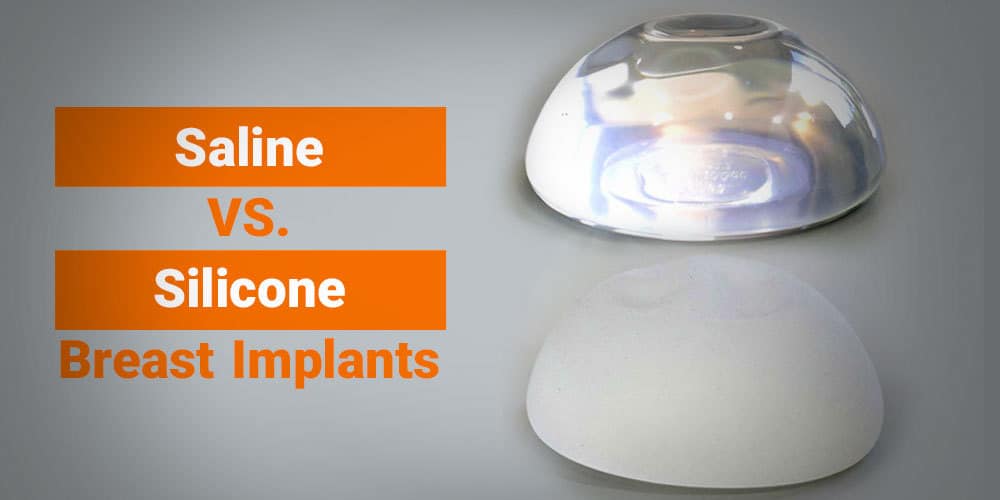
Quick Summary:
Silicone implants feel closer to natural breast tissue and account for roughly 84% of augmentations worldwide, while saline implants cost £300–£600 less and offer visible rupture detection. The FDA approves silicone for patients aged 22+ and saline from age 18. This guide compares feel, safety, rupture risk, cost, longevity, and which type suits different body types and goals.
Silicone vs Saline Implants: Quick Comparison
| Factor | Silicone | Saline |
|---|---|---|
| Fill material | Cohesive silicone gel | Sterile salt water |
| Natural feel | Closer to natural tissue | Firmer, especially upper pole |
| Rupture detection | Silent — requires MRI | Immediate visible deflation |
| Rippling risk | 5–8% in thin patients | 18–22% in thin patients |
| Minimum FDA age (USA) | 22 years | 18 years |
| Cost difference (UK) | £300–£600 more | Lower baseline cost |
| Global market share | ~84% of augmentations | ~16% of augmentations |
| Lifespan | 10–20+ years | 10–20+ years |
| Best for | Thin patients, natural result | Patients preferring simple rupture monitoring |
| Incision size | Slightly larger (pre-filled) | Smaller (filled after placement) |
Why Trust This Guide
This guide draws on 2024 ISAPS Global Survey data, FDA device safety reports, and peer-reviewed studies from Plastic and Reconstructive Surgery and the Aesthetic Surgery Journal, including a 2024 matched-cohort outcomes analysis.
Carely Clinic’s editorial team reviews all content for clinical accuracy and updates articles when FDA guidance or major guidelines change. This is medical education content — not a substitute for personalized surgical consultation.
What Are Silicone Implants?
Silicone implants are pre-filled, factory-sealed devices containing cohesive silicone gel — the same material used across the majority of breast augmentations performed globally, accounting for roughly 84% of all procedures in 2024 according to ISAPS.
How Silicone Implants Are Made
Silicone implants consist of a solid elastomer shell filled with cohesive silicone gel during manufacturing, creating a sealed, pre-sized device.
The gel formulation has evolved significantly since first-generation silicone implants. Modern fifth-generation devices — the current standard — use a thicker, form-stable gel that resists migration even if the outer shell is compromised. This cohesive design is the basis for “gummy bear” implants, which represent the highest-cohesion variant within the silicone category.
Because the implant arrives pre-filled, the surgeon must create a slightly larger incision than for saline. Most placements use either an inframammary fold (under the breast crease) or periareolar approach to accommodate the fixed device size.
Silicone Implant Feel and Movement
Silicone gel closely mimics the weight, softness, and movement of natural breast tissue — particularly in round, smooth devices.
This tactile similarity is the primary reason silicone dominates global augmentation volume. In patients with limited natural breast tissue, the gel’s density reduces the likelihood of visible rippling or edge palpability — two aesthetic concerns that are more common with saline. The movement of a silicone implant within its pocket also mirrors natural breast ptosis (sag) more convincingly over time.
What Are Saline Implants?
Saline implants use a silicone outer shell identical to silicone devices, but are filled with sterile salt water after the shell is placed in the surgical pocket — a distinction that has meaningful implications for incision size, feel, and rupture behaviour.
How Saline Implants Are Filled
Saline shells are inserted empty or partially filled through a small incision, then inflated to the target volume via a fill valve once positioned correctly.
This filling-after-placement approach allows surgeons to use a shorter incision — sometimes as small as 3–4cm — compared to silicone placement. It also permits minor volume adjustment during surgery, which can be useful when correcting mild asymmetry. Once filled to target volume, the valve is sealed and the implant behaves as a fixed device.
Saline Implant Feel and Movement
Saline implants feel firmer than silicone, particularly in the upper breast pole, due to the lower viscosity of the salt water fill.
This difference in feel is most noticeable in patients with limited natural tissue to soften the implant edges. In patients with moderate glandular tissue, the distinction is less pronounced — the surrounding tissue provides natural cushioning that masks the saline’s firmer texture. Movement also tends to be slightly more pronounced, which some patients find less aesthetically convincing than silicone’s more restrained dynamic.
Feel and Natural Appearance
Silicone consistently rates higher for natural feel and appearance across patient satisfaction studies, with 84% of global augmentation patients choosing silicone — though saline achieves comparable aesthetics in patients with sufficient natural breast tissue.
Aesthetic outcome depends substantially on tissue coverage. In patients with 2cm or more of natural breast tissue overlying the implant, both options produce similar visual results. The divergence becomes significant below this threshold: saline rippling rates of 18–22% compare unfavourably to silicone’s 5–8% in thin-tissue patients, per a 2023 study in the Aesthetic Surgery Journal.
Surface texture also plays a role in appearance. Smooth implants — available in both silicone and saline — allow slight movement within the pocket, producing a more dynamic, natural look. Textured implants grip tissue more firmly, which reduces rotation risk but creates a more static result. For cosmetic augmentation, smooth implants are the current standard recommendation due to both aesthetics and the BIA-ALCL safety data discussed below.
For patients comparing implant shapes alongside this material decision, our round vs teardrop implant guide provides a detailed breakdown of how profile and projection interact with tissue coverage.
Safety and Rupture Risk
Both silicone and saline implants carry a 2–4% major complication rate at accredited centres, with the primary safety difference being rupture behaviour — saline ruptures visibly while silicone ruptures silently.
Silent Rupture: The Key Silicone Risk
Silicone shell rupture is typically undetectable without imaging — the cohesive gel holds its shape even when the outer shell is compromised.
This is called “silent rupture” and represents the most significant safety consideration specific to silicone devices. Because the implant does not visibly change, patients may have a ruptured silicone implant for months or years without knowing. The FDA addresses this directly in its device guidance: patients with silicone implants should undergo MRI screening at 5–6 years post-surgery and every 2–3 years thereafter. Contrast-enhanced ultrasound is an alternative where MRI is unavailable, though MRI remains the gold standard for detection accuracy.
At Carely Clinic, we provide all silicone implant patients with a written MRI screening schedule at discharge, along with documentation of their specific device model and serial number to support long-term monitoring.
Saline Rupture: Visible and Self-Correcting
Saline rupture causes visible, rapid deflation as the sterile salt water is absorbed harmlessly by surrounding tissue — typically within 24–72 hours.
The immediate visual signal is both an advantage and a disadvantage. On the positive side, detection requires no imaging and no scheduled monitoring programme — patients know immediately when replacement is needed. The deflation itself poses no health risk; salt water is biologically inert and the body absorbs it without complication. The practical downside is the sudden aesthetic change, which patients typically find distressing and prompting urgent surgical consultation.
What Causes Capsular Contracture?
Capsular contracture — hardening of the scar tissue around the implant — affects 2–4% of patients and represents the most common complication for both implant types.
It occurs when the body’s normal healing response produces a fibrous capsule that tightens progressively around the implant. The condition is graded on the Baker scale from I (normal, soft) to IV (hard, painful, visibly distorted). Risk factors include subglandular placement, contamination during surgery, and haematoma formation — factors independent of whether the implant is silicone or saline. Current evidence does not indicate a statistically significant difference in capsular contracture rates between the two fill types at accredited centres using standardised technique.
The BIA-ALCL risk — a rare lymphoma linked to textured implant surfaces — applies equally to textured silicone and textured saline devices, since the risk is surface-specific, not fill-specific. The FDA’s tracking data through 2024 records 1,380 BIA-ALCL Medical Device Reports globally, with 73% involving textured surfaces. Most surgeons now recommend smooth implants for cosmetic augmentation to eliminate this risk entirely.
Cost Comparison
Silicone implants cost £300–£600 more than saline in the UK and US on average, with the gap narrowing considerably in Turkish all-inclusive packages where both types are available at significant savings.
In the UK, cosmetic breast augmentation with silicone typically ranges from £5,500–£9,000 at private clinics; saline procedures run approximately £5,000–£8,000. In the United States, silicone augmentation averages $7,000–$12,000 compared to $5,000–$10,000 for saline, inclusive of surgeon fees, anaesthesia, and facility costs.
Turkey offers a substantially different pricing structure. All-inclusive packages using premium silicone brands at JCI-accredited Istanbul hospitals typically range from €3,500–€5,500 — a 50–65% reduction versus UK equivalents. Turkish packages at this price point generally include the implants, surgery, anaesthesia, hospital stay, airport transfers, and hotel accommodation for the recovery period.
The price premium for silicone over saline is proportionally smaller in Turkish packages than in UK or US pricing, making silicone a more accessible choice for international patients. For a detailed breakdown of what Turkish packages typically include and exclude, see our breast augmentation in Turkey cost guide.
Longevity and Replacement Timeline
Neither silicone nor saline implants are lifetime devices — both carry an estimated functional lifespan of 10–20 years, with approximately 20% of patients requiring revision surgery within the first decade.
The FDA does not mandate routine replacement on a fixed schedule for either type. Replacement is indicated when complications develop — rupture, capsular contracture, significant positional change, or patient-reported dissatisfaction with size or shape. Elective size change is also a common reason for revision, unrelated to device failure.
Manufacturer warranties vary. Most major brands including Mentor, Allergan, and Motiva offer limited lifetime warranty coverage for rupture, with some covering a portion of reoperation costs within a defined period. Patients should review warranty terms at the time of device selection and retain documentation of the implant model and lot number, as warranty claims require this information.
Saline devices do not require the MRI monitoring programme recommended for silicone, which reduces the long-term follow-up cost differential slightly. However, this is typically a secondary factor in the total cost-of-ownership comparison for most patients.
Expert Insight
“The most durable outcome in breast augmentation comes from matching the implant type and volume to the patient’s existing tissue envelope — not from selecting the ‘best’ brand or fill type in isolation. Adequate tissue coverage is the single greatest predictor of ripple-free, long-term results.”
— Based on ASPS Quality Improvement Guidelines, 2024
Who Should Choose Silicone?
Silicone is the stronger choice for most cosmetic augmentation patients — particularly those with limited natural tissue, those prioritising a natural feel, and patients seeking reconstruction after mastectomy.
Thin Patients: Which Implant Suits Best?
Silicone reduces visible rippling to 5–8% versus 18–22% with saline in patients with under 2cm of natural tissue coverage.
For patients with a low BMI, minimal glandular tissue, or a lean chest wall, silicone’s cohesive gel provides essential coverage over implant edges. The tactile and visual difference between the two options is most pronounced in this population — saline rippling in the lateral (outer) breast is one of the most common revision drivers in thin patients. Surgeons at Carely Clinic assess tissue pinch thickness at consultation to quantify this risk and guide implant selection accordingly.
Reconstruction Patients: Which Is Preferred?
Silicone is the preferred fill type in post-mastectomy reconstruction due to its closer approximation of natural breast tissue weight and drape.
In reconstruction, the native breast tissue has been removed, leaving the implant sitting beneath skin and, ideally, a muscle or ADM (acellular dermal matrix) layer. This limited tissue coverage makes saline’s firmer feel and higher rippling rate particularly unfavourable. According to 2024 ASPS reconstructive procedure data, silicone accounts for over 90% of implant-based reconstruction cases in the United States and Europe for this reason.
Who Should Choose Saline?
Saline is a reasonable choice for patients with sufficient natural tissue coverage, those seeking the lowest upfront cost, or those who prefer straightforward rupture detection without an MRI monitoring programme.
Saline performs well aesthetically when the patient has moderate to generous glandular tissue — typically a B cup or larger pre-operatively — that provides natural cushioning over implant edges. In this scenario, feel and appearance differences versus silicone become minimal, and the simpler rupture monitoring profile becomes a meaningful advantage for some patients.
Patients aged 18–21 in the United States are also directed toward saline for cosmetic purposes, since the FDA restricts silicone augmentation to patients aged 22 and older. This is not a safety finding about silicone — it reflects the FDA’s position that cosmetic augmentation in this age group warrants conservative device selection while breast development may still be ongoing.
Age Requirements and FDA Eligibility Rules
FDA rules set the minimum age for silicone augmentation at 22 years and saline at 18 years in the US, while UK guidance applies an 18-year minimum for all cosmetic breast procedures regardless of implant type.
USA Age and Approval Rules
The FDA approves silicone implants for cosmetic augmentation from age 22 and saline from age 18, with both types approved at any age for reconstructive indications.
This age distinction reflects the FDA’s original pre-market approval conditions for silicone devices, established when long-term safety data in younger patients was limited. It does not reflect a conclusion that silicone is unsafe for patients aged 18–21 — patients in this range routinely receive silicone implants for reconstructive purposes without age restriction. The practical effect for cosmetic patients under 22 is that saline becomes the default option in the United States until they reach the silicone eligibility threshold.
UK Age and Regulatory Rules
UK regulatory guidance under the MHRA sets 18 as the minimum age for cosmetic breast augmentation, with no distinction between silicone and saline under current rules.
BAAPS (British Association of Aesthetic Plastic Surgeons) guidelines additionally recommend a minimum 2-week “cooling off” period between consultation and surgery for all cosmetic breast procedures, regardless of implant type. UK surgeons are also required to provide standardised written information about implant risks, warranty terms, and long-term monitoring requirements at the point of consultation — a requirement that applies equally to both fill types.
How This Applies in Turkey
Turkey ranks among the top 5 countries globally for breast augmentation volume, performing over 50,000 procedures annually — with silicone gel implants used in approximately 90% of cases at accredited Istanbul clinics.
Turkish breast surgery centres use premium internationally certified implant brands — principally Mentor (FDA and CE-marked) and Motiva (CE-marked, ISO 13485 certified) — rather than lower-cost unbranded devices. This matters for patients comparing Turkish pricing to domestic options, as the implant quality baseline is consistent with what they would receive in the UK or US.
Istanbul hospitals accredited by JCI (Joint Commission International) follow the same infection control, anaesthesia, and surgical safety protocols as accredited centres in Western Europe and North America. Turkey’s surgical volume — consistently high across cosmetic procedures — means Istanbul-based plastic surgeons typically accumulate procedure numbers that exceed the annual caseload of most UK private surgeons within a shorter timeframe.
All-inclusive augmentation packages in Turkey typically range from €3,500–€5,500 for silicone and €3,200–€4,800 for saline, with both tiers including the implants, surgeon and anaesthesiologist fees, hospital stay, airport transfers, and hotel accommodation for the standard 6-night recovery period.
At Carely Clinic, our breast augmentation patients receive a pre-arrival consultation to confirm implant selection and sizing, same-day pre-operative assessments on arrival, and a structured remote follow-up programme covering the 12 months post-surgery. Our approach to silicone patients includes providing the written MRI screening schedule recommended by FDA device guidelines before discharge.
Learn more about breast augmentation at Carely Clinic.
Silicone vs Saline: Summary Comparison Table
A structured comparison of silicone and saline implants across 12 clinical and practical factors — covering feel, safety, cost, monitoring requirements, and candidate suitability.
| Factor | Silicone | Saline |
|---|---|---|
| Fill material | Cohesive silicone gel (pre-filled) | Sterile saline (filled intraoperatively) |
| Natural feel rating | Higher — mimics natural tissue | Firmer, especially upper pole |
| Rippling rate (thin patients) | 5–8% | 18–22% |
| Rupture detection | Silent — MRI required | Visible deflation within 24–72 hours |
| FDA monitoring | MRI at 5–6 years, then every 2–3 years | No imaging programme required |
| Major complication rate | 2–4% at accredited centres | 2–4% at accredited centres |
| Capsular contracture rate | 2–4% | 2–4% |
| BIA-ALCL risk | Smooth: none confirmed. Textured: linked to 73% of 1,380 cases | Same — surface-specific, not fill-specific |
| Min. age (USA, cosmetic) | 22 years | 18 years |
| Min. age (UK, cosmetic) | 18 years | 18 years |
| USA cost range | $7,000–$12,000 | $5,000–$10,000 |
| UK cost range | £5,500–£9,000 | £5,000–£8,000 |
| Turkey all-inclusive range | €3,500–€5,500 | €3,200–€4,800 |
| Estimated lifespan | 10–20+ years | 10–20+ years |
| Best candidate | Thin patients, reconstruction, natural feel priority | Patients with adequate tissue, simple monitoring preference |
Expert Insight
“Saline and silicone implants have equivalent complication rates at accredited centres — the choice is primarily driven by tissue coverage, rupture monitoring preference, and age eligibility rules rather than absolute safety differences.”
— Based on ASPS Quality Improvement Registry Data, 2024
Frequently Asked Questions
What is the difference between silicone and saline breast implants?
Silicone implants are pre-filled with cohesive silicone gel, while saline implants are filled with sterile salt water after placement through a smaller incision. Silicone feels closer to natural breast tissue and accounts for 84% of augmentations globally according to the 2024 ISAPS survey. Saline costs £300–£600 less on average but feels firmer, particularly in patients with minimal natural breast tissue.
Which breast implants look more natural, silicone or saline?
Silicone implants look and feel more natural in the majority of patients, particularly those with limited natural breast tissue where saline rippling is most visible. In a 2023 matched-cohort study in Plastic and Reconstructive Surgery, patients and surgeons both rated silicone outcomes as more natural in 78% of thin-tissue cases. Saline achieves comparable aesthetics in patients with moderate to generous natural breast tissue that masks the implant edges.
Are silicone implants safer than saline?
Neither implant type is universally safer — both carry a 2–4% major complication rate at accredited centres, according to ASPS quality improvement data. Saline offers one safety advantage: rupture is immediately visible as the implant deflates, while silicone rupture is silent and requires MRI to detect. The FDA recommends MRI screening for silicone implants at 5–6 years post-surgery and every 2–3 years thereafter.
How can you tell if a breast implant has ruptured?
Saline rupture is self-evident — the implant deflates visibly within hours and the harmless salt water is absorbed by the body. Silicone rupture is typically “silent,” meaning the implant maintains its shape even when the shell is compromised due to the cohesive gel not dispersing. The FDA recommends routine MRI screening for silicone implants starting at 5–6 years post-surgery to detect silent rupture before symptoms develop.
Do silicone implants feel more natural than saline?
Yes — silicone gel more closely mimics the weight and movement of natural breast tissue, which is why 84% of augmentation patients globally choose silicone, per 2024 ISAPS data. Saline implants feel firmer, particularly in the upper pole, and are more prone to visible rippling in patients with less than 2cm of natural tissue coverage. Most surgeons recommend silicone for thin patients specifically because of this tactile difference.
How long do silicone and saline implants last?
Modern silicone and saline implants are not lifetime devices — most manufacturers estimate a functional lifespan of 10–20 years, though many last longer without complications. The FDA does not mandate routine replacement on a fixed schedule; replacement is recommended only when complications such as rupture, capsular contracture, or significant positional change occur. According to ASPS data, approximately 20% of patients require revision surgery within 10 years for either implant type.
What happens if a saline implant ruptures?
When a saline implant ruptures, it deflates noticeably within 24–72 hours as the sterile salt water is absorbed harmlessly by surrounding tissue. The deflation is visible and unmistakable, making diagnosis straightforward without imaging. Surgical replacement is typically scheduled as an elective procedure within weeks; the rupture itself poses no systemic health risk according to FDA device guidance.
What is the minimum age for silicone implants in the UK and US?
The FDA approves silicone breast implants for cosmetic augmentation in patients aged 22 and older, and saline implants from age 18 in the United States. In the UK, the NHS and BAAPS recommend a minimum age of 18 for all cosmetic breast augmentation, with no distinction between implant types under current MHRA guidance. Patients aged 18–21 in the US seeking augmentation are typically offered saline implants for cosmetic purposes.
Are silicone implants more expensive than saline?
Yes — silicone implants cost £300–£600 more than saline on average in the UK and US, primarily due to higher manufacturing costs for the cohesive gel filler. In Turkey, all-inclusive breast augmentation packages using premium silicone brands such as Mentor or Motiva typically range from €3,500–€5,500, compared to £8,000–£12,000 for equivalent procedures in the UK. The price gap between silicone and saline narrows significantly in Turkish pricing packages.
Can you breastfeed with silicone or saline implants?
Both silicone and saline implants are generally compatible with breastfeeding, as neither material has been shown to contaminate breast milk in peer-reviewed studies. Breastfeeding success depends more on surgical technique — specifically incision placement and whether glandular tissue was disrupted — than on implant type. Patients planning future breastfeeding should discuss periareolar versus inframammary incision placement with their surgeon before choosing an approach.
What is the difference between smooth and textured implants?
Smooth implants have a uniform outer shell that allows movement within the implant pocket, while textured implants have a roughened surface designed to reduce migration and rotation. The FDA has linked textured implant surfaces to BIA-ALCL, a rare lymphoma, tracking 1,380 cases globally as of 2024 — which led Allergan to recall its BIOCELL textured line in 2019. Most surgeons now default to smooth round implants for cosmetic augmentation to eliminate BIA-ALCL surface risk.
Which implant type is better for thin patients or those with little natural tissue?
Silicone is the preferred choice for thin patients, as its cohesive gel minimises visible rippling that commonly occurs with saline when tissue coverage is under 2cm. A 2023 study in the Aesthetic Surgery Journal found rippling rates of 18–22% with saline versus 5–8% with silicone in patients with minimal natural breast tissue. Most board-certified surgeons strongly recommend silicone for patients with a low BMI or limited glandular tissue for this reason.
Conclusion
Silicone implants feel more natural and suit thin patients best; saline costs less and offers immediate rupture detection. Surgeon selection and facility accreditation remain the strongest predictors of outcome for either type.
For most cosmetic augmentation patients — particularly those with limited natural breast tissue — silicone’s lower rippling rate and more natural feel make it the dominant choice, reflected in its 84% global market share. Saline remains a well-founded option for patients with adequate tissue coverage, those preferring simpler rupture monitoring without an MRI programme, and patients under 22 in the United States where FDA rules restrict silicone for cosmetic use.
Both options are supported by decades of clinical data, and neither carries a universally superior safety profile when performed by qualified surgeons at accredited facilities. The decision is best made in consultation with a board-certified plastic surgeon who can assess tissue coverage, size goals, and monitoring preference together.
Individual requirements and outcomes vary. This guide provides general information based on international guidelines and published research. Consult qualified medical professionals for personalized advice.
If you are considering breast augmentation and want to understand which implant type suits your anatomy and goals, contact Carely Clinic for a no-obligation consultation with our surgical team. We serve patients from across the UK, Europe, and beyond at our JCI-accredited facility in Istanbul.
Medical Review: Dr. Alirza Jahangirov