
Quick Summary
Preparing for BBL surgery requires 4-6 weeks of structured steps: quitting smoking, stopping blood-thinning medications 2 weeks before surgery, completing medical clearance bloodwork, and stabilising your weight for optimal fat graft survival rates of 60-80%.
These protocols reflect widely accepted pre-operative practice and align with safety standards from leading international plastic surgery societies.
This guide covers every preparation phase from your first consultation through the morning of surgery.
What Does Preparing for BBL Surgery Actually Involve?
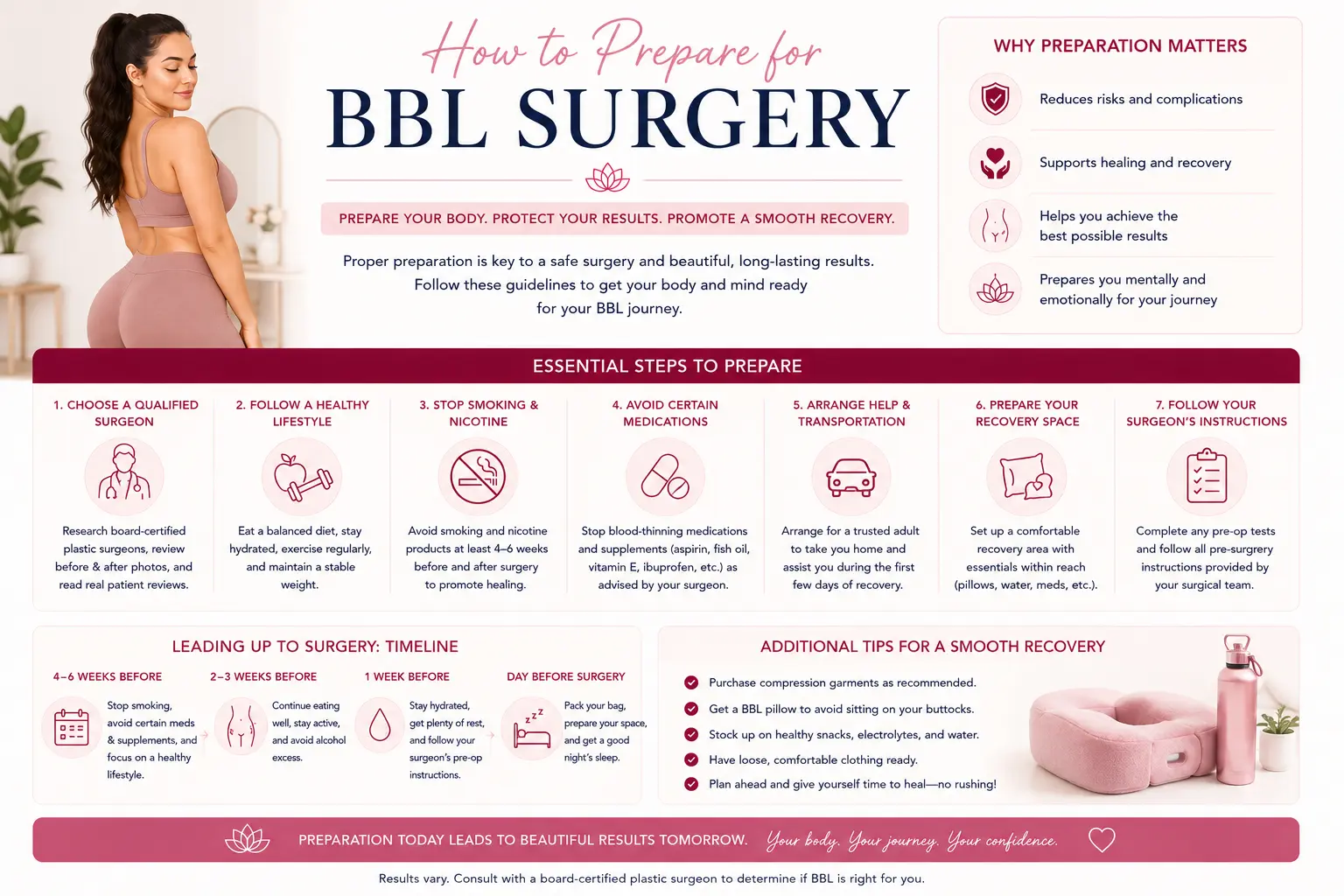
BBL preparation begins 4-6 weeks before surgery, not 4 days before. Preparing for BBL surgery starts 4-6 weeks before your procedure and covers four core areas: medical clearance, lifestyle modifications, medication management, and home recovery set-up.
Standard surgical practice requires patients to stop smoking at least 4 weeks before surgery, avoid blood thinners for 2 weeks, and achieve stable body weight to support fat graft survival rates typically in the 60-80% range.
For international patients travelling to Istanbul from the UK or US, pre-operative lab work, BMI assessment, and a virtual consultation are completed 2-4 weeks before travel. Turkey is one of the leading global destinations for BBL surgery, with JCI-accredited facilities at significantly lower cost than UK or US providers.
This guide covers every preparation phase week by week so you arrive at surgery day informed, safe, and ready.
Why Trust This Guide
This guide draws on guidance from the American Society of Plastic Surgeons (ASPS), the International Society of Aesthetic Plastic Surgery (ISAPS), the ASERF Multi-Society Gluteal Fat Grafting Task Force, and peer-reviewed research published in the Aesthetic Surgery Journal. It has been reviewed by Op. Dr. Alirza Jahangirov, Plastic, Reconstructive & Aesthetic Surgeon at Carely Clinic in Istanbul.
Your BBL Preparation Timeline: 6 Weeks to Surgery Day
The 6-week preparation window is non-negotiable — each phase has a specific biological purpose. Compressing this timeline increases the risk of complications including reduced fat graft survival, excessive bleeding, and delayed wound healing. Follow each phase as a clinical protocol, not a suggestion.
6 Weeks Before Surgery
At 6 weeks out, the focus is lifestyle foundations: quit smoking and nicotine completely, begin a high-protein diet, and schedule your surgical consultation and medical clearance appointment with your GP or primary care physician.
Start eliminating processed foods, alcohol, and high-sodium meals. Alcohol dehydrates tissue and inhibits the immune response needed for post-operative healing. Alcohol cessation at least 2 weeks before surgery is the minimum; 6 weeks is preferable.
4 Weeks Before Surgery
At 4 weeks, the focus shifts to medical confirmation and risk elimination. Complete your pre-operative blood work and any specialist referrals your surgeon requests. If you are over 40, an EKG is standard practice. This is also the point at which any body weight fluctuation should be brought under control — your surgeon needs to assess donor fat availability based on a stable weight.
Begin researching your recovery equipment now. A BBL pillow (also called a booty pillow), a high-quality faja compression garment, and loose front-opening clothing should all be ordered at this stage, not the week before surgery.
2 Weeks Before Surgery
At 2 weeks, medication management is the priority. Stop all blood-thinning medications and supplements including aspirin, ibuprofen, naproxen, fish oil, vitamin E, and herbal supplements such as garlic extract and ginkgo biloba. These increase bleeding risk during liposuction and fat transfer and can compromise fat cell viability.
Increase daily water intake to at least 2 litres. Hydration directly supports the fat grafting process by maintaining healthy cell membranes in the harvested fat. Eat iron-rich foods — lean red meat, lentils, spinach — to support haemoglobin levels ahead of surgery.
The Day Before Surgery
The day before surgery is a practical preparation day, not a lifestyle change day. Fill all your prescriptions (antibiotics, pain medication, stool softener) in advance. Prepare your recovery space: place your BBL pillow, set up your sleeping area on your stomach or side, and arrange your entertainment within arm’s reach.
Do not eat or drink anything after midnight before your surgery date. This is a hard rule — failure to comply results in procedure cancellation for patient safety under anaesthesia guidelines.
Shower the night before using any antibacterial soap provided by your clinic. Remove all nail polish, jewellery, and piercings. Lay out your surgery-day outfit: loose, front-opening trousers and a button-front or zip-front top.
Surgery Morning
Arrive with a responsible adult who will drive you home and stay for at least 48 hours. Do not wear make-up, deodorant, hair products, or cosmetic creams. Take any morning medications your surgeon has specifically approved with a small sip of water only.
Leave your valuables at home. Bring your photo ID, insurance documents or payment confirmation, and a list of all medications and allergies for the anaesthesiology team.
Medical Clearance and Pre-Operative Tests
Every BBL patient requires medical clearance completed 2-4 weeks before their surgery date. This is non-negotiable regardless of age or health status, per ASPS (US) and ISAPS (global) surgical safety protocols. Medical clearance exists to catch conditions that could interact with general anaesthesia or compromise the fat grafting process.
Blood Work and EKG
Standard pre-operative bloods include a full blood count, clotting screen, metabolic panel, and blood group. Low haemoglobin indicates anaemia, which increases surgical risk. Your surgeon will not proceed if haemoglobin levels are below the safe threshold. A basic metabolic panel screens kidney and liver function, both relevant to anaesthesia clearance and post-operative medication metabolism.
Patients aged 40 and over require an EKG as standard. Patients with a history of diabetes, hypertension, or cardiac conditions may require a specialist cardiology clearance as well. Your GP or primary care doctor handles these referrals — request them at least 4 weeks before surgery to allow time for results.
Expert Insight
“The ASERF Multi-Society Gluteal Fat Grafting Task Force’s updated 2020 survey data showed zero deaths among 12,800 procedures where 96% of surgeons injected fat exclusively above the gluteal muscle. Subcutaneous-only technique and rigorous pre-operative screening are the two factors most directly within a patient’s and surgeon’s control.”
— Based on the ASERF Multi-Society Gluteal Fat Grafting Task Force published research
5 Lifestyle Changes That Directly Affect Your BBL Results
These five changes are not optional wellness advice — each has a direct, documented effect on fat graft survival and recovery outcomes.
Quit Smoking and Nicotine
Nicotine must be eliminated at least 4-6 weeks before surgery — not reduced, eliminated. Nicotine causes vasoconstriction, meaning it narrows the blood vessels that supply oxygen to newly transplanted fat cells. Without adequate blood supply, transplanted fat cells die — reducing your final BBL result and potentially causing fat necrosis. This applies to cigarettes, e-cigarettes, vapes, patches, and nicotine gum.
Stabilise Your Weight
Fat graft survival depends on stable body weight in the 3-6 months surrounding surgery. Significant weight loss after your BBL causes the transplanted fat cells to shrink, reducing your result. Significant weight gain adds new fat throughout the body, potentially altering the contoured shape your surgeon creates. Reach a weight you can comfortably maintain before your procedure.
Rapid pre-surgery weight loss is counterproductive. Crash diets reduce available donor fat, compromise immune function, and lower haemoglobin. Maintain your regular caloric intake but improve nutritional quality — more lean protein, iron, and vitamin C; less alcohol, processed foods, and sodium.
Stay hydrated consistently. Aim for 8-10 glasses of water per day. Hydration supports healthy fat cell membranes, which directly affects how well the harvested fat survives the transfer process.
Maintain moderate regular exercise up to 7-10 days before your surgery date. Cardiovascular fitness improves circulation, supports immune function, and aids post-operative recovery. Stop all strenuous workouts in the final week to reduce inflammation and bleeding risk.
Prioritise sleep. The body’s repair mechanisms — including immune response, hormone regulation, and cellular repair — are maximised during deep sleep. Aim for 7-9 hours per night in the 4-6 weeks before surgery.
Medications and Supplements to Stop Before BBL Surgery
Stop all of the following at least 14 days before your procedure unless your surgeon specifically approves continuation.
- Aspirin and NSAIDs: Ibuprofen (Nurofen, Advil), naproxen (Aleve), and aspirin all inhibit platelet function and increase bleeding risk during liposuction and fat harvesting.
- Fish oil and omega-3 supplements: These are blood-thinning agents and must be stopped 2 weeks before surgery.
- Vitamin E: High-dose vitamin E increases bleeding tendency. Standard multivitamin doses may be continued — confirm with your surgeon.
- Herbal supplements: Garlic extract, gingko biloba, ginseng, St. John’s Wort, and turmeric all affect clotting and should be discontinued.
- Alcohol: Stop at least 2 weeks before surgery. Alcohol impairs immune function and dehydrates tissue.
- Phentermine and appetite suppressants: These increase heart rate and must not be taken until at least 6 weeks post-operatively.
Arnica, bromelain, and vitamin C are generally considered safe and may support recovery — confirm with your surgical team before taking any supplement.
Always provide your surgeon with a complete and honest list of every medication, supplement, and herbal product at your pre-operative appointment. What seems minor to you may be clinically significant.
What to Buy Before Your BBL: Recovery Essentials Checklist
Your recovery equipment should be ordered at least 2-3 weeks before surgery, not after. Post-operative mobility is limited and online delivery windows may not accommodate last-minute orders.
| Item | Purpose | When to Use |
|---|---|---|
| BBL pillow (booty pillow) | Transfers sitting pressure to thighs, away from transplanted fat | Any time sitting is required during first 6 weeks |
| Faja compression garment (Stage 1) | Reduces swelling, supports liposuction sites, shapes contours | 24/7 for first 4-6 weeks post-surgery |
| Faja (Stage 2 / softer garment) | Continued compression as swelling reduces | Weeks 4-12 post-surgery |
| Compression stockings (DVT socks) | Prevents deep vein thrombosis, especially during travel | First 5-7 days post-surgery and during return flight |
| Loose button-front or zip-front clothing | Avoids pulling tight fabric over incision and donor sites | Surgery day and first 2 weeks post-operatively |
| Stool softener (e.g. Dulcolax, Miralax) | Prevents constipation caused by pain medication | Begin the day after surgery |
| Oral thermometer | Monitoring for fever above 38.5°C (101.3°F) post-operatively | First 14 days post-surgery |
| High-protein snacks and meal prep supplies | Supports healing without requiring you to cook while immobile | Stock before surgery for first week recovery |
Who Is NOT a Good Candidate for BBL Surgery?
Understanding contraindications is as important as understanding the procedure itself. Patients who proceed without meeting candidacy criteria face elevated complication rates and significantly poorer results. A thorough pre-operative assessment with a board-certified plastic surgeon determines individual suitability per ASPS (US) and BAAPS (UK) patient selection guidelines.
Absolute Contraindications
These conditions make BBL surgery medically inadvisable regardless of patient preference.
- Insufficient donor fat: The procedure requires harvestable fat in the abdomen, flanks, thighs, or lower back. Patients with very low body fat — typically BMI below 20-22 with no identifiable donor sites — cannot proceed without inadequate fat for meaningful transfer.
- Active smoking: Active smokers face a significantly elevated risk of fat necrosis, wound dehiscence, and infection. Surgery cannot proceed until a minimum 4-week cessation period is completed and confirmed.
- Uncontrolled diabetes: Uncontrolled blood glucose impairs wound healing and fat cell survival. Patients must demonstrate stable HbA1c levels, reviewed by their endocrinologist before surgical clearance is granted.
- Active infection or skin condition in the surgical area: Any localised infection at planned liposuction or injection sites is an absolute contraindication until fully resolved.
- Bleeding disorders or anticoagulant therapy: Conditions such as haemophilia or patients on warfarin therapy require haematology clearance. The risk of uncontrolled intraoperative bleeding is unacceptable without specialist input.
- Pregnancy or breastfeeding: BBL surgery cannot be performed during pregnancy. Patients who are breastfeeding should wait until they have weaned and their body has stabilised post-partum.
Relative Contraindications
These conditions do not automatically exclude a patient but require optimisation before surgery is safe.
- BMI above 30: Higher BMI increases anaesthetic risk, reduces fat cell viability during the grafting process, and complicates compression garment effectiveness. Many surgeons recommend weight reduction before scheduling. Most surgeons consider a BMI of 22-28 as the optimal candidacy range for BBL.
- Controlled type 2 diabetes: Patients with well-controlled diabetes and documented HbA1c below 7.5% may be considered with additional pre-operative monitoring and adjusted surgical protocols.
- Prior liposuction in donor areas: Scar tissue from previous liposuction affects fat quality and available volume. The surgeon assesses harvesting viability at consultation — often possible but with reduced predictability.
- Connective tissue disorders: Conditions such as Ehlers-Danlos syndrome affect skin elasticity and healing. These cases require specialist review before any body contouring procedure.
Managing Expectations
Realistic expectations are part of clinical candidacy. The average fat retention rate after BBL is 60-80%, meaning 20-40% of transferred fat is reabsorbed by the body during the first 3-6 months. This range is widely cited across plastic surgery literature. Final results are not visible until 6 months post-operatively when all swelling has resolved and surviving fat has fully integrated.
Patients hoping to increase buttock size by more than one to two cup sizes in a single procedure may require a second session to achieve their goal safely, as overfilling increases the risk of fat necrosis.
Warning Signs to Watch For After BBL Surgery
Most post-BBL symptoms are normal and expected — but a small number indicate serious complications requiring immediate medical attention. Knowing the difference protects your recovery and your result. If you are unsure whether a symptom is normal, contact your surgical team directly. When in doubt, err on the side of caution.
| Warning Sign | What It May Indicate | Action Required |
|---|---|---|
| Fever above 38.5°C / 101.3°F persisting beyond 48 hours | Infection, atelectasis (lung collapse), or deep tissue inflammation | Contact your surgeon immediately; go to A&E if surgeon is unreachable |
| Wound separation or opening at incision sites | Dehiscence — may indicate infection or excessive tension on closure | Contact your surgeon within hours; cover loosely with clean gauze |
| Increasing redness, warmth, or pus at any surgical site | Localised infection requiring antibiotic treatment | Contact your surgeon same day for assessment |
| Sudden chest pain or difficulty breathing | Pulmonary fat embolism or DVT — a medical emergency | Call 999 (UK) / 911 (US) / 112 (EU) immediately — do not wait |
| Swelling, redness, or pain in one leg | Deep vein thrombosis (DVT) — particularly relevant for patients who have travelled | Go to A&E or Emergency Department immediately |
| Sudden severe increase in pain after initial improvement | Fat necrosis, seroma, or haematoma forming | Contact your surgeon within 24 hours for imaging assessment |
| Hard, painful lump developing under the skin | Seroma (fluid collection), haematoma, or fat necrosis | Report at your next follow-up or sooner if rapidly enlarging |
| Foul-smelling drainage from incision sites | Deep infection — may require drainage and antibiotic therapy | Contact your surgeon immediately |
Note: Some clear or lightly blood-tinged fluid drainage in the first 24-48 hours post-surgery is normal, particularly from liposuction sites. Slight fever in the first 48 hours is also common as a natural response to surgical trauma. Monitor closely and follow your surgeon’s specific guidance.
How This Applies in Turkey
Turkey is one of Europe’s leading destinations for BBL surgery, with Istanbul clinics treating significant numbers of UK and US patients annually within an established medical tourism sector.
Why Istanbul for BBL? Turkish plastic surgeons complete a comprehensive specialisation programme with access to high case volumes through the country’s active aesthetic surgery sector. Carely Clinic’s surgical team includes experienced plastic and reconstructive surgeons trained in core body contouring techniques.
Cost comparison. A BBL procedure in the UK typically costs £6,000-£10,000 ($7,500-$13,000 / €7,000-€12,000). In the US, the cost ranges from $8,000-$15,000. At Carely Clinic Istanbul, all-inclusive BBL packages are available from £2,800-£4,500 ($3,500-$5,600 / €3,300-€5,200), including surgeon’s fees, anaesthesia, JCI-accredited hospital facility, accommodation, transfers, and a compression garment. This represents a 50-65% saving against comparable UK and US providers for a procedure performed at a JCI-accredited facility.
What Carely’s package includes for international patients. The pre-operative workup — blood tests, ECG, and anaesthesiology review — is completed on the day before surgery in Istanbul, removing the need for UK or US patients to travel multiple times. A dedicated patient coordinator manages all logistics from airport to clinic to hotel.
Learn more about BBL surgery at Carely Clinic.
When Can You Fly After BBL Surgery?
Most patients receive clearance to fly home 7 days after BBL surgery, provided recovery is progressing normally and no complications are present.
For UK patients (approximately 3-4 hours from Istanbul) and US patients (10-12 hours), DVT prevention on the return flight is essential. Wear your compression stockings for the entire duration of the flight. Walk the aisle for 5 minutes every hour. Perform ankle rotation exercises while seated. Drink water consistently and avoid alcohol during the flight.
Do not fly earlier than 5-7 days without explicit written clearance from your surgeon. Cabin pressure changes and prolonged immobility are contraindicated in the immediate post-operative period. Plan your return travel dates before arriving in Istanbul so your surgeon can time clearance appropriately.
Frequently Asked Questions
What should I do to prepare my body for a BBL?
BBL body preparation takes 4-6 weeks and centres on 4 key actions. Stop smoking, avoid NSAIDs, stabilise weight, and complete blood work. Patients who follow these steps achieve fat survival rates of 60-80%.
How long before BBL should I stop smoking?
Stop all tobacco and nicotine products at least 4-6 weeks before BBL surgery. Nicotine constricts blood vessels and reduces oxygen supply to transplanted fat cells, decreasing survival rates. Even nicotine patches and e-cigarettes carry the same risk and must be discontinued completely.
What medications should I avoid before BBL surgery?
Stop aspirin, ibuprofen, naproxen, fish oil, and vitamin E at least 14 days before surgery. These medications thin the blood, increasing bruising risk and potentially compromising fat graft survival, These medications thin the blood, increasing bruising risk and potentially compromising fat graft survival. Always give your surgeon a full medication list at your pre-operative appointment, including herbal supplements.
What should I eat before BBL surgery?
Focus on lean protein, iron-rich foods, and complex carbohydrates in the 4-6 weeks before surgery. Higher protein intake is linked to improved wound healing outcomes in surgical literature. Fast completely from midnight on the night before your surgery date, as instructed by your surgical team.
How do I set up my recovery area at home?
Set up your recovery area before surgery day with a BBL pillow, loose clothing, and filled prescriptions. You must avoid sitting directly on your buttocks for 14 days minimum, Most surgeons require avoiding direct sitting on the buttocks for at least 14 days. Arrange an adult carer for the first 48-72 hours and stock easy-to-prepare, high-protein foods in advance.
What do I need to buy before BBL surgery?
Purchase a BBL pillow, faja compression garment, loose button-front clothing, and stool softener before surgery.The faja should be worn 24 hours a day for the first 4-6 weeks post-operatively to reduce swelling. Your clinic will advise on specific garment sizing, but ordering in advance avoids post-operative stress.
How long does BBL preparation take?
Full BBL preparation takes 4-6 weeks from consultation to surgery day. Medical clearance, lab work, and lifestyle changes are all completed within this preparation window. Starting earlier than 4 weeks gives patients more time to reach a stable weight and optimise nutrition.
Can I exercise before BBL surgery?
Moderate exercise is encouraged in the early preparation phase but must stop 7 days before surgery. Light activity improves circulation and supports fat cell health, but strenuous workouts increase bleeding risk. Consult your surgeon about resuming exercise after surgery, typically cleared at 6-8 weeks post-operatively.
What tests are required before BBL surgery?
Standard pre-operative blood work includes a full blood count, clotting screen, and metabolic panel. Patients over 40 typically require an EKG as well, per standard surgical clearance protocols. These tests are usually completed 2-4 weeks before surgery and reviewed by your anaesthetist in advance.
What should I wear to BBL surgery?
Wear loose, comfortable clothing on surgery day, with a front-opening top for easy post-operative dressing.Remove all jewellery, cosmetics, nail polish, and deodorant before arriving at the clinic on the day. Your clinic will provide or advise on the compression garment you will leave wearing after the procedure.
Can I fly for BBL surgery in Turkey?
Yes, patients from the UK and US routinely travel to Istanbul for BBL surgery at JCI-accredited clinics. Most surgeons clear patients to fly home 7 days after surgery, provided recovery is progressing normally. Wearing compression stockings and walking every hour during the flight significantly reduces DVT risk on the return journey.
Who is not a good candidate for BBL surgery?
Patients with a BMI above 30, active smokers, or insufficient donor fat are not suitable for BBL. Uncontrolled diabetes, bleeding disorders, and active infection are absolute contraindications.
Conclusion
BBL preparation is a 4-6 week process, not an afterthought. The patients who follow pre-operative protocols consistently achieve higher fat survival rates, smoother recoveries, and results that last.
The core preparation steps are consistent across US and UK clinical guidelines: medical clearance 2-4 weeks before surgery, complete nicotine cessation at least 4 weeks out, stopping blood-thinning medications and supplements 2 weeks before, stable weight maintenance, and a recovery-ready home environment set up before the procedure. Fat graft survival rates of 60-80% are achievable when these protocols are followed.
If you are considering BBL surgery in Istanbul, the pre-operative workup is handled during your clinic admission day, making the process streamlined for international patients. Op. Dr. Alirza Jahangirov and the Carely Clinic team provide personalised pre-operative guidance from your first virtual consultation through to your return home.
Book a free consultation with Carely Clinic to discuss your BBL candidacy, available donor sites, and a preparation plan tailored to your timeline.
Individual outcomes vary. This guide provides general medical education based on international guidelines and published research. Consult qualified medical professionals for personalised advice.
Medical Review: Op. Dr. Alirza Jahangirov