
Quick Summary
Rhinoplasty cast removal typically occurs 5-8 days after surgery during a brief, painless clinic appointment where your surgeon gently peels away the nasal splint to reveal your initial results.
According to facial plastic surgery guidelines, the procedure takes only minutes, involves mild pressure sensation rather than pain, and marks the beginning of a 12-18 month gradual refinement process as swelling subsides.
This guide covers everything from what happens during cast removal to managing swelling, post-removal care instructions, activity restrictions, and realistic expectations for your healing timeline.
Why Trust This Guide
This guide draws from peer-reviewed research published in journals including Aesthetic Surgery Journal, international guidelines from the American Society of Plastic Surgeons (ASPS), and clinical protocols from board-certified facial plastic surgeons with decades of combined experience.
Carely Clinic’s medical team has reviewed this content to ensure accuracy and practical relevance for patients considering or recovering from rhinoplasty procedures at JCI-accredited facilities.
When Is the Cast Removed After Rhinoplasty?
The nasal cast is typically removed 5-8 days after rhinoplasty surgery during a scheduled follow-up appointment, with most surgeons preferring the 7-day mark to allow adequate initial healing.
The exact timing depends on several factors including the surgical technique used, whether nasal bones were fractured during the procedure, and your individual healing progress. Surgeons who perform osteotomies (controlled bone fractures) may wait slightly longer to ensure adequate stabilization before removing external support.
Open rhinoplasty procedures, which involve an external incision at the columella, may sometimes require cast retention for the full 8 days due to greater surgical manipulation. Closed rhinoplasty techniques with internal incisions may allow for removal at the earlier end of the range.
Why the Timing Matters
The cast serves three critical functions: protection from accidental trauma, compression to minimize swelling and bleeding, and positioning to maintain the surgeon’s structural modifications. Premature removal—even by a day or two—can potentially impact surgical outcomes by exposing the fragile healing structures before they’ve stabilized.
If your cast becomes loose or falls off early, contact your surgical team immediately. Do not attempt to reattach it yourself, as improper positioning could affect your healing nose.
What Happens During the Cast Removal Appointment?
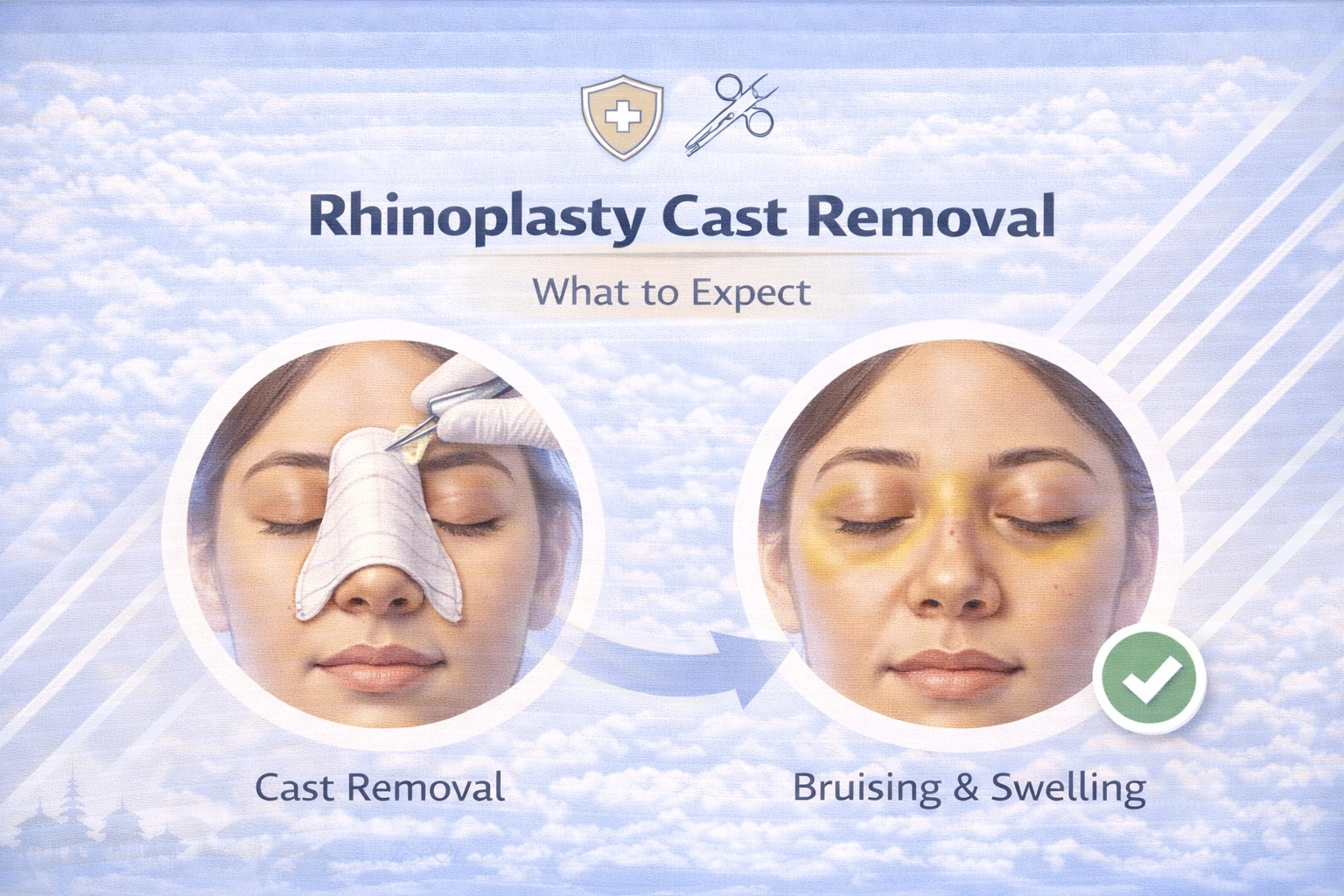
Cast removal is a quick, straightforward procedure performed during a follow-up clinic visit that typically takes only 5-10 minutes from start to finish.
Your surgeon or a trained clinical team member will examine your nose, checking for proper healing and ensuring the cast is ready for removal. The process follows a systematic approach designed for patient comfort.
Step-by-Step Process
Preparation: Some surgeons apply an adhesive dissolver solution to the cast edges, allowing the splint to separate more easily from your skin. This minimizes any tugging sensation during removal.
Cast Removal: Using gentle technique, the medical professional carefully peels away the tape securing the cast, then lifts the splint from your nose. Most patients describe feeling mild pressure or a strange tugging sensation rather than actual discomfort.
Examination: Once the cast is removed, your surgeon inspects the nasal shape, evaluates swelling levels, checks incision sites, and assesses early contour development. If any sutures remain (particularly from open rhinoplasty), these may be trimmed or removed at this appointment.
Post-Removal Instructions: You’ll receive guidance on cleaning protocols, whether continued taping is recommended, when you can resume specific activities, and scheduling for future follow-up appointments.
What to Expect at This First Look
Your nose will appear swollen and potentially bruised immediately after cast removal. This is completely normal and expected—what you see is not your final result. The nose you observe at day 7 represents merely the starting point of a gradual refinement process.
Does Rhinoplasty Cast Removal Hurt?
Cast removal is typically painless, with most patients describing the sensation as mild pressure or gentle tugging rather than actual pain.
The cast adheres to your skin using medical-grade adhesive that naturally loosens over the healing period due to your skin’s natural oils and the recovery process. This makes removal relatively effortless when performed at the appropriate time.
Managing Any Discomfort
Some surgeons recommend specific preparation steps to make cast removal even more comfortable. Wetting the cast area thoroughly during a shower the night before and morning of your appointment helps soften the adhesive and allows the cast to lift away with minimal resistance.
The anticipation often exceeds the actual experience. Many patients report feeling surprised by how quick and uneventful the process turns out to be. If you’ve undergone dental procedures or had bandages removed from other surgical sites, cast removal is typically less eventful than these experiences.
The Emotional Component
While physical discomfort is minimal, the emotional experience of cast removal day varies significantly among patients. Excitement about seeing initial results mixes with nervousness about the unknown. Some patients experience immediate satisfaction, while others need time to adjust to their new appearance—particularly given the expected swelling.
What Your Nose Looks Like Immediately After Cast Removal
Immediately after cast removal, your nose will appear swollen, shiny, and potentially asymmetric—this represents normal healing, not your final result.
The tight compression of the cast actually holds swelling at bay during the first week. Once removed, the nose skin—no longer constrained—naturally wants to swell as part of the healing response. Many patients find their nose looks more swollen in the days immediately following cast removal than it did with the cast still in place.
Common Immediate Observations
Swelling: The nose will appear puffy, particularly at the tip and along the bridge. The tip characteristically holds onto swelling longer than other areas.
Asymmetry: Some degree of asymmetry is normal during early healing. Different parts of the nose swell at different rates, and one side may appear larger than the other temporarily.
Upturned Tip: The nasal tip often appears overly rotated upward immediately after surgery. This is expected—the tip will naturally drop to its final position over the following weeks and months.
Skin Texture: The nose skin may appear oily, shiny, or have a different texture than usual. Minor skin irregularities are common and resolve during healing.
Bruising: Residual yellow or green bruising around the eyes and cheeks may still be present, though this typically resolves within 10-14 days post-surgery.
The Critical Reminder
Do not judge your surgical outcome based on what you see at cast removal. The nose you observe at day 7-8 represents perhaps 20-30% of your journey toward final results. True outcomes become apparent at 6-12 months, with some subtle refinements continuing up to 18 months.
Swelling Timeline After Cast Removal
Full rhinoplasty results take 12-18 months to emerge, with approximately 50% of swelling resolving by one month, 70-80% by three months, and 90% by six months post-surgery.
Understanding this timeline helps set realistic expectations and reduces anxiety during the recovery process. Swelling doesn’t decrease linearly—it fluctuates daily based on activity levels, sleep position, salt intake, and other factors.
Week-by-Week Breakdown
Week 1 (Cast Removal): Swelling may actually increase after cast removal as the constraining pressure is eliminated. The nose appears puffy and undefined. Most patients see noticeable bruising, particularly under the eyes.
Weeks 2-3: Bruising resolves for most patients. Swelling begins decreasing, though the nose still appears noticeably larger than the intended result. Most patients feel comfortable returning to work or social activities, though subtle puffiness remains visible to them.
Week 4: Approximately 50% of swelling has resolved. The nose begins showing hints of its eventual shape. Patients often feel encouraged as they notice daily improvements.
Months 2-3: The bridge and upper nose show significant definition. The tip remains the most swollen area. Most patients see dramatic improvements during this phase, with refinements becoming visible week to week.
Months 4-6: Approximately 80-90% of swelling has resolved. The nose contour becomes increasingly refined. Numbness and tingling sensations typically resolve during this period.
Months 6-12: Final 10% of swelling gradually resolves. Subtle refinements continue, particularly at the nasal tip. By 12 months, most patients see their definitive result.
Beyond 12 Months: Patients with thick nasal skin may experience subtle changes up to 18 months or longer. Some surgeons note that complete resolution may take 3-5 years in certain cases, though changes after the first year are typically imperceptible to others.
Factors Affecting Swelling Duration
Skin Thickness: Patients with thicker nasal skin experience more prolonged swelling than those with thin skin. Thick-skinned patients should expect a longer timeline to final results.
Surgical Technique: Open rhinoplasty typically causes more swelling than closed techniques due to the additional incision and tissue manipulation.
Tip Work: Extensive tip modifications result in longer-lasting swelling compared to bridge-only procedures.
Individual Healing: Genetics, age, overall health, and adherence to post-operative instructions all influence recovery speed.
Nose Taping After Cast Removal
Many surgeons recommend continued nose taping for 2-6 weeks after cast removal to help reduce swelling fluctuations and encourage the skin to conform smoothly to the new nasal framework.
Taping provides gentle compression that mimics the cast’s supportive function during the critical early healing phase when swelling is most dynamic.
Benefits of Post-Removal Taping
Swelling Reduction: Light, consistent pressure helps minimize daily swelling fluctuations, particularly the morning puffiness many patients experience.
Shape Support: Taping encourages the nasal skin envelope to redrape smoothly over the underlying bone and cartilage structures.
Fluid Management: Compression assists with proper fluid drainage, reducing the risk of prolonged puffiness or asymmetry.
Psychological Comfort: Many patients report feeling more secure with tape in place, serving as a gentle reminder to protect their healing nose.
Taping Technique
Your surgeon will provide specific instructions, but general principles include:
- Use medical-grade paper tape (3M Micropore is commonly recommended)
- Apply strips starting at the tip and working upward along the bridge
- Overlap strips slightly for consistent coverage
- Avoid taping directly over the nostrils
- Change tape every 2-3 days or when it loses adhesion
- Remove tape gently, preferably while damp after a shower
Duration Recommendations
Week 1-2 Post-Cast Removal: Many surgeons recommend continuous taping (24 hours), with tape changed every 2-3 days.
Weeks 3-4: Nighttime taping becomes the focus, as morning swelling tends to be more pronounced.
Beyond Week 4: Taping may continue at night for patients with thicker skin or more significant tip work. Some protocols extend to 2-3 months.
Not all surgeons recommend taping—some feel it provides minimal benefit and may cause skin irritation. Always follow your specific surgeon’s guidance rather than general recommendations.
Post-Cast Removal Care Instructions
After cast removal, careful adherence to post-operative instructions protects your surgical investment and optimizes healing outcomes.
Your nose remains fragile for several weeks after the cast comes off. The underlying bone and cartilage framework is still stabilizing, and the nasal skin hasn’t yet fully adapted to its new structure.
Cleaning and Hygiene
External Cleaning: Gently wash your nose with mild soap and water. Pat dry rather than rubbing. Avoid scrubbing or applying pressure to the nasal skin.
Internal Care: Continue saline spray or rinse as directed by your surgeon. This helps keep the nasal passages moist, promotes healing, and aids in clearing crusting.
Crusting Management: Dried blood and mucus may accumulate inside the nostrils. Soften crusts with saline spray and gently remove with cotton swabs coated in antibiotic ointment or petroleum jelly. Never pick or force dried material.
What to Avoid
Nose Blowing: Avoid blowing your nose for at least 2-3 weeks after surgery. The pressure can disrupt healing tissues and potentially cause bleeding. If you must sneeze, sneeze with your mouth open.
Touching: Minimize unnecessary touching of your nose. Every contact risks displacing still-healing structures.
Hot Water: Avoid hot showers, saunas, and steam rooms for several weeks. Heat increases blood flow and can worsen swelling.
Sun Exposure: Protect your nose from sun exposure, particularly if any bruising remains. Sun can cause permanent discoloration of healing tissues.
Supporting Your Recovery
Sleep Position: Continue sleeping with your head elevated at 30-45 degrees for at least 2 weeks after surgery. Use multiple pillows or a wedge pillow to maintain elevation. Sleep on your back to avoid putting pressure on the nose.
Hydration and Diet: Stay well-hydrated and eat anti-inflammatory foods. Avoid excessive salt, which promotes swelling. Foods high in bromelain (pineapple) and vitamin C may support healing.
Ice Application: Cold compresses applied to the cheeks (not directly on the nose) during the first 48-72 hours can help reduce swelling. After the first week, ice provides minimal additional benefit.
Activity Restrictions and When They Lift
After cast removal, activity restrictions continue for several weeks as your nasal structures complete their stabilization and early healing phase.
The timeline for resuming normal activities depends on your specific surgical modifications and individual healing progress. These general guidelines apply to most rhinoplasty patients.
Glasses and Eyewear
Restriction Period: Avoid wearing glasses that rest on the nasal bridge for 4-6 weeks after surgery. The pressure from glasses frames can create permanent indentations or shift healing nasal bones.
Alternatives: Use contact lenses during the restriction period. If glasses are essential, tape them to your forehead or use specialized eyeglass holders that suspend frames from the forehead without touching the nose. Some surgeons recommend products like “Rhinoshield” specifically designed for post-rhinoplasty patients.
Exercise and Physical Activity
Week 1-2: Avoid all strenuous activity. Light walking around your home is acceptable and can help prevent blood clots.
Week 3-4: Gradually increase activity with leisurely walking. Avoid anything that raises your heart rate significantly.
Week 4-6: Light exercise may resume with surgeon approval. Avoid activities that involve bending over, straining, or lifting more than 10-15 pounds.
Week 6-8: Most non-contact activities can resume. Swimming is typically permitted after 2 months.
Month 3+: Contact sports may resume after 3 months, though your surgeon may recommend protective measures for high-risk activities.
Return to Work and Social Activities
Desk Work: Most patients return to office work 7-14 days after surgery, once the cast is removed and most visible bruising has resolved.
Public-Facing Roles: If your work involves significant face-to-face interaction or video appearances, you may prefer waiting 2-3 weeks until swelling and bruising become less noticeable.
Major Events: Avoid scheduling important photographs, job interviews, or major social events for at least 4-6 weeks. Many surgeons recommend waiting 1-3 months for events requiring optimal appearance.
Other Important Restrictions
Facial Expressions: Minimize extreme facial movements (wide smiling, laughing) for the first few weeks. These movements can affect tip position during early healing.
Dental Work: Postpone non-essential dental procedures for 2-3 months. The pressure and manipulation involved in dental work can impact healing nasal structures.
Air Travel: Flying is generally permitted after cast removal, though some surgeons recommend waiting 2 weeks due to cabin pressure changes and dehydration.
How This Applies in Turkey
International protocols from organizations like ASPS apply equally at Turkey’s JCI-accredited medical facilities, where board-certified surgeons follow identical clinical standards as Western institutions for rhinoplasty cast removal and post-operative care.
The key differences for international patients choosing Turkey relate to cost accessibility and treatment logistics. Rhinoplasty in Turkey costs €2,500-€4,500 for primary cases compared to $9,000-$15,000 in the USA and £6,500-£9,000 in the UK—representing savings of 50-70% while maintaining international quality standards.
Practical Considerations for Medical Tourists
International patients should plan to remain in Turkey for at least 7-10 days to allow for cast removal and initial follow-up before returning home. All-inclusive packages typically cover the surgery itself, hospital stay, hotel accommodation, airport transfers, and post-operative appointments including cast removal.
At Carely Clinic in Istanbul, rhinoplasty procedures are performed by board-certified surgeons at JCI-accredited partner hospitals. Cast removal and follow-up care are included in comprehensive packages, ensuring international patients receive complete treatment cycles before departure. Learn more about Rhinoplasty at Carely Clinic.
Recovery Summary Table
| Timeline | Milestone | What to Expect |
|---|---|---|
| Day 1-7 | Cast in place | Swelling peaks at day 2-3; keep cast dry; sleep elevated |
| Day 7-8 | Cast removal | Quick, painless procedure; first look at results; taping may begin |
| Week 2 | Bruising resolves | Most patients return to work; visible bruising fades |
| Week 3 | Activity increases | Normal sneezing/nose blowing permitted; light exercise possible |
| Week 4-6 | 50% swelling resolved | Nose shape becomes more visible; glasses may resume at week 6 |
| Month 2-3 | Major improvements | 70-80% swelling resolved; contact sports permitted at month 3 |
| Month 6 | Near-final results | 90% swelling resolved; tip refinement continues |
| Month 12-18 | Final results | Complete healing; definitive outcome visible |
Frequently Asked Questions
Is rhinoplasty cast removal painful?
Cast removal involves only mild pressure or gentle tugging sensations rather than actual pain, taking less than 10 minutes to complete. The medical-grade adhesive naturally loosens over the 7-day healing period due to your skin’s natural oils, making removal effortless. Many surgeons apply adhesive dissolver solutions before removal to further minimize any tugging sensation.
Can I remove my rhinoplasty cast myself at home?
Only remove your cast at home if your surgeon provides explicit instructions to do so, as professional removal allows proper healing assessment and complication screening. Self-removal risks improper technique that could affect your surgical outcome. If your cast loosens or falls off early, contact your surgical team immediately rather than attempting reattachment.
What if my cast falls off before my appointment?
Contact your clinic immediately without attempting to reattach the cast, as early loss may require professional assessment to ensure healing structures remain protected. Your surgical team will advise whether you need an earlier appointment or can wait until your scheduled follow-up. Do not panic—early cast loss is manageable with proper clinical guidance.
Can I shower with my cast on?
Keep your rhinoplasty cast completely dry during showers by covering it with plastic wrap taped to your forehead. Avoid direct water spray on your face for the first 5-7 days while the cast remains in place. Some surgeons recommend thoroughly wetting the cast during showers the night before and morning of removal day to soften adhesive for easier removal.
How long after cast removal can I wear glasses?
Avoid wearing glasses that rest on your nasal bridge for 4-6 weeks after rhinoplasty to prevent permanent indentations in healing bone structures. Use contact lenses during this period or tape glasses to your forehead using specialized eyeglass support devices. Premature glasses use can create visible deformities in your final result.
When can I blow my nose after cast removal?
Wait at least 2-3 weeks after rhinoplasty before blowing your nose, as the internal pressure can disrupt healing tissues and trigger bleeding. Use saline spray to moisten passages and soften crusting instead of blowing. When sneezing during early recovery, keep your mouth open to avoid pressure buildup inside the nasal cavity.
Why does my nose look more swollen after cast removal?
Your nose appears more swollen after cast removal because the compression from the splint was holding swelling in check for 7 days. Once this constraint is eliminated, the nasal skin naturally swells as part of the normal healing response. This temporary increase in puffiness begins improving within 3-5 days and is completely expected.
How long until I see my final rhinoplasty results?
Final rhinoplasty results become visible at 12-18 months post-surgery, with approximately 80-90% of your outcome apparent by 6 months. Swelling resolves gradually—50% by one month, 70-80% by three months, and 90% by six months. Patients with thick nasal skin may experience subtle refinements continuing up to 2 years after surgery.
Is nose taping necessary after cast removal?
Nose taping for 2-6 weeks after cast removal helps reduce swelling fluctuations and encourages skin to conform to the new nasal framework, though practices vary by surgeon. Many facial plastic surgeons recommend nighttime taping using medical-grade paper tape to manage morning puffiness. Always follow your specific surgeon’s taping protocol rather than general recommendations.
When can I exercise after cast removal?
Light walking is permitted immediately after cast removal, but avoid strenuous exercise for 3-4 weeks to prevent increased swelling and bleeding risk. Moderate cardio may resume at week 4-6 with surgeon approval, while contact sports require waiting 3 months for complete bone healing. Gradual activity increases help prevent complications while supporting healthy recovery.
What should I do if I accidentally bump my nose after cast removal?
Monitor for unusual pain, significant asymmetry, breathing difficulty, or visible deformity after any nasal impact, and contact your surgeon if these symptoms develop. Minor bumps typically cause only temporary increased swelling without structural damage. Apply cold compresses to the cheeks and avoid touching the nose further while observing for concerning changes.
Can I fly after cast removal?
Air travel is generally safe after cast removal, though some surgeons recommend waiting 2 weeks due to cabin pressure changes and air travel’s dehydrating effects. Stay well-hydrated during flights and use saline spray frequently to prevent nasal dryness. Schedule flights to allow rest time before important events, as air travel can temporarily increase facial swelling.
Conclusion
Rhinoplasty cast removal marks an exciting milestone in your surgical journey, offering the first glimpse of your new nasal contour after 5-8 days of patient waiting.
The removal process itself is quick and painless, typically completed in under 10 minutes during a routine follow-up appointment. Understanding that immediate post-removal appearance reflects swelling rather than final results helps set realistic expectations. Your nose will continue refining for 12-18 months, with the most dramatic improvements visible between months 1-6.
Following post-operative instructions—including activity restrictions, glasses avoidance, nose protection, and potentially continued taping—supports optimal healing outcomes. Patience during recovery is your greatest ally, as rushing activities or becoming discouraged by temporary swelling can undermine both your healing and emotional well-being.
Individual recovery experiences vary. This guide provides general information based on international clinical guidelines. Consult your surgeon for personalized advice specific to your procedure and health status.
For patients seeking rhinoplasty at internationally accredited facilities with comprehensive care packages, Carely Clinic offers board-certified surgical expertise and complete support throughout your transformation journey. Schedule a consultation to discuss your goals.