
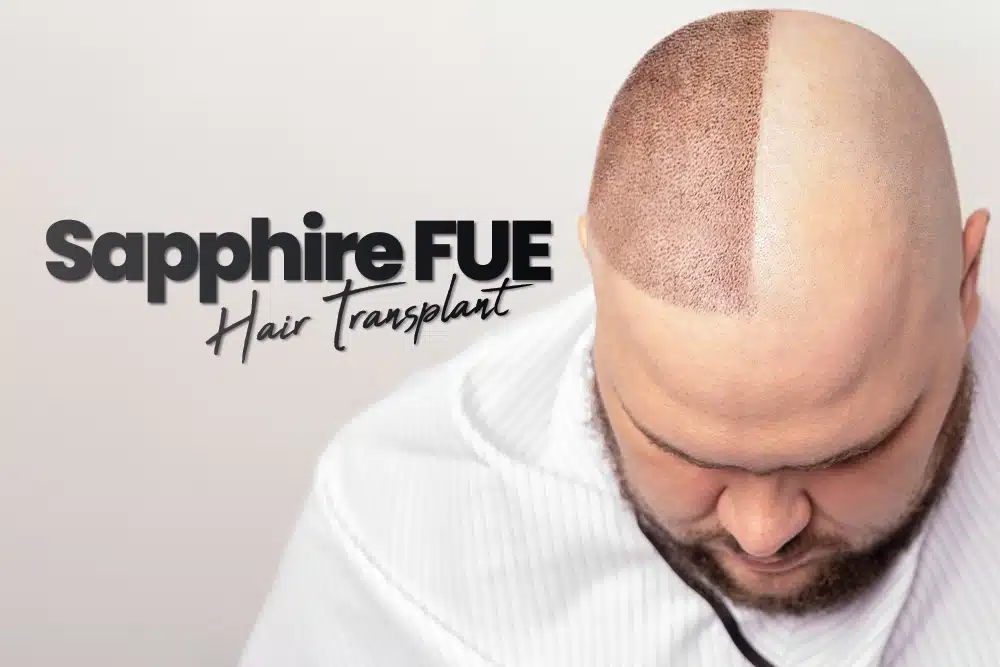
Quick Summary:
Sapphire FUE uses synthetic sapphire crystal blades instead of steel to create recipient site incisions during hair transplantation, enabling 20-25% faster healing and up to 97% graft survival rates.
According to clinical studies published in dermatological journals, sapphire blades create V-shaped microchannels that reduce tissue trauma by 30% compared to traditional steel blades, resulting in higher hair density and more natural results.
This guide covers sapphire blade technology, how it compares to standard FUE and DHI methods, recovery timelines, cost comparisons, and what to expect from treatment in Turkey.
Why Trust This Guide
This guide synthesises clinical research from peer-reviewed journals including the International Journal of Trichology and Surgery for Obesity and Related Diseases, combined with practice census data from the International Society of Hair Restoration Surgery (ISHRS).
Our content team collaborates with board-certified hair restoration surgeons at JCI-accredited facilities, ensuring all information reflects current medical standards and evidence-based best practices for hair transplantation procedures.
What Is Sapphire FUE Hair Transplant?
Sapphire FUE is an advanced hair transplantation technique that uses blades made from synthetic sapphire crystals rather than traditional steel to create recipient site incisions during the Follicular Unit Extraction process.
The technique follows the same fundamental principles as standard FUE—individual hair follicles are extracted from the donor area (typically the back and sides of the head) and transplanted into thinning or balding areas. What distinguishes sapphire FUE is the incision-making phase, where the sharper, smoother sapphire blades create smaller, more precise channels for graft placement.
Sapphire crystal ranks 9 on the Mohs hardness scale (second only to diamond), giving these blades exceptional durability and edge retention. Research published in the Journal of Dermatological Surgery demonstrates that sapphire blades maintain their sharpness throughout extended procedures, unlike steel blades which can dull over time and cause increased tissue trauma.
The introduction of sapphire blades to FUE surgery in 2016 represented a significant refinement in hair restoration technology. Since then, the technique has gained widespread adoption, particularly in Turkey, which performs approximately 60% of all international hair transplant procedures according to ISHRS data.
How Sapphire Blades Work
Sapphire blades create V-shaped microchannels measuring 0.25mm in width—30% narrower than incisions made with traditional 0.8mm steel blades according to comparative studies.
The precision of sapphire blade technology stems from several material properties. First, the crystalline structure of synthetic sapphire allows for an exceptionally fine cutting edge that produces clean incisions without tearing tissue. Second, the smooth, non-porous surface of sapphire reduces friction during incision creation, minimising cellular damage at wound margins.
During the procedure, surgeons use sapphire blades ranging from 1.0mm to 1.5mm depending on the patient’s hair follicle characteristics. These blades come in various widths to accommodate different graft sizes, ensuring each incision matches the extracted follicular unit precisely. This customisation helps achieve optimal graft-to-channel fit, which directly influences survival rates.
The V-shaped geometry of sapphire incisions (compared to U-shaped steel blade cuts) offers several advantages. The narrower entry point reduces surface wound area while allowing adequate depth for secure graft placement. This configuration also enables surgeons to position incisions closer together, facilitating higher-density transplantation in patients with sufficient donor supply.
Sapphire’s chemical inertness is another crucial factor. Unlike steel, sapphire does not oxidise, corrode, or react with tissue fluids. This biocompatibility reduces inflammatory responses and eliminates the risk of metal-related allergic reactions that occasionally occur with steel instruments.
Sapphire FUE vs Steel Blade FUE {#sapphire-vs-steel}
The primary difference between sapphire FUE and classic FUE lies in the blade material used for creating recipient channels—sapphire crystals versus surgical steel—which affects healing time, tissue trauma, and achievable density.
| Factor | Sapphire FUE | Steel Blade FUE |
|---|---|---|
| Incision Size | 0.25-0.5mm (V-shaped) | 0.8-1.2mm (U-shaped) |
| Healing Time | 5-7 days for initial healing | 7-10 days for initial healing |
| Graft Survival Rate | 90-97% | 85-95% |
| Follicular Damage Rate | 1.8% | 5.6% |
| Density Potential | Higher (closer graft placement) | Standard |
| Blade Durability | Maintains sharpness throughout procedure | May dull during extended procedures |
| Tissue Trauma | Minimal (reduced inflammation) | Moderate |
| Scarring | Minimal, virtually invisible | Minimal but slightly more visible |
| Cost (Turkey) | €2,500-€5,500 | €1,500-€4,000 |
A comparative study of 200 FUE procedures found that follicular damage rates using sapphire blades averaged 1.8%, significantly lower than the 5.6% observed with traditional steel blades and 3.2% with microneedles. Patient satisfaction surveys from the same research showed 95% satisfaction rates for sapphire blade procedures compared to 85% for steel.
Steel blades remain effective instruments for hair transplantation, and experienced surgeons achieve excellent results with both technologies. However, sapphire FUE offers measurable advantages in precision, healing, and density potential that make it the preferred option for patients seeking optimal outcomes.
Sapphire FUE vs DHI
Sapphire FUE and Direct Hair Implantation represent different approaches to graft placement—sapphire FUE creates channels before implantation, while DHI uses a Choi pen to extract and implant simultaneously without pre-made incisions.
Both techniques achieve graft survival rates exceeding 90-95% when performed by experienced surgeons at reputable clinics. The critical factor for success is not the technique itself but the skill of the medical team, graft handling protocols, and post-operative care adherence.
Sapphire FUE excels in situations requiring high-density transplantation across larger areas. The ability to create numerous precise channels in advance allows surgeons to plan and execute strategic graft distribution efficiently. This makes sapphire FUE particularly suitable for patients with Norwood 4-6 hair loss patterns requiring 3,000-5,000+ grafts.
DHI offers advantages for smaller procedures and situations requiring preservation of existing hair. The Choi implanter pen eliminates the need for channel creation, reducing the time grafts spend outside the body. This can be beneficial for hairline refinement, eyebrow transplants, or adding density to areas with remaining native hair.
Some clinics now offer “hybrid” procedures combining both techniques—using sapphire FUE for frontal zone density and DHI for natural hairline detailing. This approach leverages the strengths of each method for comprehensive restoration.
Benefits of Sapphire Technology
Sapphire blade technology provides faster healing, reduced tissue trauma, higher achievable density, and improved graft survival compared to traditional steel blade FUE according to peer-reviewed clinical research.
Faster Healing and Recovery
Studies published in dermatological journals demonstrate that patients undergoing sapphire FUE heal approximately 20-25% faster than those receiving steel blade procedures. The smaller, cleaner incisions produce less inflammation and reduced scabbing, with initial wound closure typically occurring within 5-7 days rather than 7-10 days.
Higher Graft Survival Rates
The precision of sapphire incisions contributes to graft survival rates of 90-97% at leading clinics. Exact-fit channels prevent grafts from shifting position or changing angle post-implantation, issues that can compromise survival with less precise incision methods. Research indicates sapphire FUE can improve graft survival by 12-15% due to minimal skin trauma and consistent incision depth.
Increased Density Potential
The narrow V-shaped profile of sapphire incisions allows surgeons to place grafts closer together without compromising adjacent tissue. For patients with adequate donor supply, this enables denser packing and fuller coverage, particularly important for hairline restoration where naturalness depends on appropriate density gradients.
Reduced Bleeding and Swelling
Sapphire’s extreme sharpness and smooth surface minimise blood vessel disruption during incision creation. Patients typically experience less intraoperative bleeding and reduced post-operative swelling—particularly in the forehead area, where swelling after traditional FUE can be more pronounced.
Lower Infection Risk
The non-porous, biocompatible surface of sapphire blades does not harbour bacteria as readily as metal instruments. Combined with reduced tissue trauma, this contributes to lower infection rates and fewer post-operative complications.
Natural Angle and Direction Control
Sapphire blades offer surgeons enhanced control over incision angle and depth. This precision is essential for creating natural hair growth patterns, as transplanted hair must emerge at angles matching native follicles in each scalp region.
Who Is a Good Candidate?
Ideal candidates for sapphire FUE have stable hair loss patterns, sufficient donor area density exceeding 70 follicular units per square centimetre, and realistic expectations about achievable results.
Hair Loss Stage
Sapphire FUE effectively treats patients across Norwood stages 2-7, though optimal candidacy typically falls within stages 3-5. Stage 3 patients often achieve the highest satisfaction rates (approximately 98%) because moderate hair loss requires fewer grafts while yielding dramatic visual improvement.
Patients at advanced stages (Norwood 6-7) may still benefit from sapphire FUE, but outcomes depend heavily on donor area capacity. These cases often require multiple sessions and may incorporate beard or body hair transplantation to supplement limited scalp donor supply.
Donor Area Quality
The back and sides of the scalp (occipital and parietal regions) must contain adequate density to provide grafts without visible thinning. Surgeons assess donor area characteristics during consultation, evaluating hair calibre, density, and extent of the “safe zone” resistant to androgenetic alopecia.
Age Considerations
While no strict age limit exists, patients in their mid-20s and older generally make better candidates because hair loss patterns become more predictable. Younger patients (under 25) with aggressive hair loss may not be ideal candidates until their loss stabilises, as premature transplantation can result in unnatural patterns as native hair continues receding.
Health Requirements
Good candidates are in overall good health without conditions that impair healing, such as uncontrolled diabetes, bleeding disorders, or active scalp infections. Smokers should quit at least 4 weeks before surgery, as smoking significantly reduces graft survival rates and delays healing.
Expectations
Understanding that hair transplantation redistributes existing hair rather than creating new follicles is essential. Patients expecting complete restoration to original density may be disappointed, while those seeking meaningful improvement with natural appearance typically achieve high satisfaction.
The Sapphire FUE Procedure
A sapphire FUE procedure takes 5-8 hours depending on graft count, beginning with donor area extraction and concluding with precise implantation into sapphire-created channels.
Pre-Procedure Consultation
Before surgery, patients undergo comprehensive evaluation including scalp analysis, medical history review, and discussion of goals. The surgeon designs the hairline and treatment plan, determining graft numbers (typically 2,000-5,000 for most cases) and distribution strategy.
Day of Surgery
Step 1: Preparation
The scalp is cleaned and the donor area shaved to approximately 1mm length. The surgeon marks the extraction zone and recipient area design.
Step 2: Local Anaesthesia
Local anaesthetic is administered to both donor and recipient areas. Modern clinics often use needle-free injection systems or sedation options for enhanced comfort.
Step 3: Graft Extraction
Using a micromotor with punches of 0.6-0.8mm diameter, the surgeon extracts individual follicular units from the donor area. Each graft is carefully removed and placed in a holding solution to maintain viability.
Step 4: Channel Creation
This is where sapphire technology comes into play. The surgeon uses sapphire blades to create recipient channels at precise angles and depths matching natural hair growth patterns. The V-shaped incisions are positioned according to the pre-planned design.
Step 5: Graft Implantation
Extracted follicular units are meticulously placed into the prepared channels. Technicians work under magnification to ensure proper orientation and depth for each graft.
Step 6: Post-Procedure Care
The scalp is cleaned and bandaged. Patients receive detailed aftercare instructions, medications (typically antibiotics and anti-inflammatory drugs), and a follow-up schedule.
Recovery Timeline
Full recovery from sapphire FUE takes 12-18 months for final results, with most patients returning to normal activities within 1-2 weeks and visible hair growth beginning around month 3.
Days 1-3: Immediate Post-Operative Phase
Mild swelling, redness, and tiny scabs form around transplanted grafts. Some discomfort and tightness are normal and manageable with prescribed medication. Patients should sleep with head elevated and avoid touching the recipient area.
Days 4-10: Initial Healing
Scabs begin falling off naturally (usually by days 7-10). Redness fades progressively. Most patients feel comfortable returning to desk jobs by day 3-5, though strenuous activity should be avoided for 2 weeks.
Weeks 2-4: Shock Loss Phase
Transplanted hairs shed—this is completely normal and expected. The follicles remain intact beneath the surface and will produce new growth. Some patients also experience temporary shedding of native hair near the transplant zone.
Months 2-3: Early Growth
Fine, thin hair begins emerging from transplanted follicles. Growth may appear patchy or uneven at this stage.
Months 4-6: Progressive Growth
Hair becomes denser and more visible. Approximately 40-50% of transplanted hair is actively growing. Texture may still be finer than eventual results.
Months 6-9: Significant Improvement
Around 60-70% of transplanted hair has penetrated the scalp. Hair thickness and calibre continue improving. Most patients notice substantial cosmetic improvement at this stage.
Months 12-18: Final Results
Full density achieved as 80-90% of grafts reach maturity. Hair has normalised in texture and can be styled freely. Final results remain permanent.
Expert Insight
“Patients undergoing Sapphire FUE returned to non-strenuous daily activities within 2-3 days, thanks to reduced trauma and faster healing associated with sapphire blade technology.”
— International Journal of Trichology (2020)
Results and Success Rates
Hair transplants achieve 90-98% graft survival rates at accredited facilities, with sapphire FUE offering outcomes at the higher end of this range due to superior incision precision.
The ISHRS reports that patients across all hair transplant methods experience high satisfaction, with 90% stating their primary motivation was to feel more attractive and 63% seeking to appear younger for workplace competitiveness.
Success depends on multiple factors beyond technique selection:
Surgeon Experience: The skill of the operating surgeon directly impacts graft survival, natural appearance, and complication rates. Surgeons who perform high volumes of procedures (15+ per month) typically achieve superior outcomes.
Graft Handling: The time grafts spend outside the body, storage solution quality, and handling protocols significantly affect survival. Best practices limit out-of-body time and maintain grafts at optimal temperature.
Post-Operative Compliance: Patient adherence to aftercare instructions—including washing protocols, activity restrictions, and medication use—correlates directly with results. Smokers face notably lower graft survival rates.
Realistic Planning: Conservative hairline placement and appropriate graft distribution considering potential future loss leads to natural, lasting results. Overly aggressive designs may appear unnatural as hair loss progresses.
Clinical outcomes typically show:
- 90-97% graft survival at 12 months
- 60-70% visible growth at 6 months
- 80%+ of follicles entering active growth phase by month 12
- High patient satisfaction (8+ out of 10) in follow-up surveys
How This Applies in Turkey
International guidelines from ISHRS and leading medical organisations apply equally at Turkey’s JCI-accredited facilities, which follow identical clinical protocols and safety standards as American and European institutions.
Turkey has emerged as the global leader in hair transplantation, performing approximately 428,000 international transplant procedures in 2023—a 22% increase from the previous year according to Turkish Ministry of Health data. The country accounts for nearly 60% of all hair transplants worldwide, with Istanbul serving as the primary hub.
The key differences are cost and accessibility. Sapphire FUE in Turkey costs €2,500-€5,500 all-inclusive compared to $8,000-$20,000 in the USA and £6,000-£15,000 in the UK. International patients typically complete the entire process within 3-5 days, compared to extended waiting periods in countries with insurance-based systems.
Turkey’s cost advantage stems from lower operating expenses, favourable exchange rates, and high clinic volumes—not reduced quality. Leading Turkish clinics operate state-of-the-art facilities with advanced technology, and their surgeons often perform more procedures annually than counterparts in Western countries, contributing to exceptional skill development.
At Carely Clinic in Istanbul, sapphire FUE is performed by board-certified surgeons at JCI-accredited partner hospitals. All-inclusive packages cover the procedure, pre-operative testing, medications, airport transfers, hotel accommodation, and post-operative follow-up care.
Learn more about Hair Transplant at Carely Clinic.
Cost Comparison
Sapphire FUE costs €2,500-€5,500 in Turkey compared to $8,000-$20,000 in the USA and £6,000-£15,000 in the UK, representing savings of 50-80% for comparable quality procedures.
| Country | Sapphire FUE Cost | What’s Included | Cost Per Graft |
|---|---|---|---|
| Turkey | €2,500-€5,500 | All-inclusive (procedure, hotel, transfers, medications, aftercare) | €0.50-€1.50 |
| United Kingdom | £6,000-£15,000 | Procedure only (aftercare, medications extra) | £2.50-£4.00 |
| United States | $8,000-$20,000 | Procedure only (aftercare, medications extra) | $3.00-$6.00 |
| Germany | €5,000-€12,000 | Procedure only | €2.00-€4.00 |
| India | $1,800-$5,000 | Varies by clinic | $1.00-$2.00 |
What’s Included in Turkish Packages
Most reputable Turkish clinics operate on all-inclusive pricing models. A typical package covers:
- Procedure: Sapphire FUE with unlimited grafts (up to donor capacity)
- Accommodation: 2-3 nights at 4-5 star hotel
- Transfers: VIP airport pickup and hotel-clinic transportation
- Medications: Pre-operative and post-operative prescriptions
- Aftercare: Follow-up consultations and washing demonstrations
- PRP Treatment: Often included or available at minimal additional cost
- Translation: Multilingual coordinator throughout stay
Factors Affecting Cost
Graft Count: While Turkish clinics typically offer fixed packages regardless of graft number, clinics charging per-graft may cost more for extensive procedures (4,000+ grafts).
Technique: Sapphire FUE costs slightly more than standard FUE due to blade costs. DHI may carry a premium for smaller, detailed procedures.
Clinic Reputation: Established clinics with experienced surgeons may charge at the higher end of ranges.
Package Inclusions: Verify what’s included—some clinics exclude PRP, sedation options, or extended hotel stays.
Frequently Asked Questions
Is sapphire FUE better than regular FUE?
Sapphire FUE offers measurable improvements over steel blade FUE including 20-25% faster healing, lower follicular damage rates (1.8% vs 5.6%), and higher achievable density due to smaller, more precise incisions.
How long does a sapphire FUE procedure take?
A typical sapphire FUE session takes 5-8 hours depending on graft count, with procedures of 1,500-2,000 grafts averaging 5-6 hours and larger sessions of 4,000+ grafts requiring 7-8 hours. The procedure is performed under local anaesthesia with optional sedation for comfort.
When will I see results from sapphire FUE?
Initial thin hair growth begins around month 3, with significant improvement visible by month 6 when approximately 60-70% of grafts are growing. Final results with full density and normalised hair texture typically develop between 12-18 months post-procedure.
Does sapphire FUE leave scars?
Sapphire FUE creates minimal, virtually invisible scarring in the recipient area due to the tiny V-shaped incisions. The donor area will have microscopic extraction points that heal within 7-10 days and become undetectable even with short haircuts.
How many grafts can be transplanted with sapphire FUE?
Most patients receive 2,000-5,000 grafts in a single session depending on donor area capacity and hair loss extent. Some clinics perform “mega sessions” of 5,000+ grafts, though this requires exceptional donor density and may be split across two days.
Is sapphire FUE painful?
The procedure is performed under local anaesthesia, making it essentially painless during surgery. Patients may experience mild discomfort, tightness, or tingling for 1-3 days post-operatively, manageable with standard pain medication. Most patients describe the experience as uncomfortable rather than painful.
Can women have sapphire FUE?
Yes, sapphire FUE effectively treats female pattern hair loss, traction alopecia, and other conditions causing hair thinning in women. The technique works well for hairline lowering, adding density to thinning areas, and restoring hair lost to trauma or scarring.
What is shock loss after sapphire FUE?
Shock loss is temporary shedding of transplanted (and sometimes surrounding native) hair occurring 2-4 weeks post-procedure. This is a normal part of the hair growth cycle—the follicles remain intact and will produce new growth within 3-4 months. Approximately 80-90% of patients experience some degree of shock loss.
How do I choose a sapphire FUE clinic?
Look for JCI accreditation or equivalent international certification, board-certified surgeons with documented experience, transparent before/after galleries from verified patients, clear pricing with no hidden costs, and comprehensive aftercare protocols. Avoid clinics offering prices significantly below market rates or those unwilling to provide surgeon credentials.
Can sapphire FUE be combined with other treatments?
Yes, sapphire FUE is commonly combined with PRP (Platelet-Rich Plasma) therapy to enhance graft survival and stimulate growth. Studies suggest PRP can increase final hair density by 15-30% when used alongside transplantation. Many clinics include PRP sessions as part of standard packages.
What happens if sapphire FUE doesn’t work?
When performed by qualified surgeons on appropriate candidates, sapphire FUE has high success rates (90-97% graft survival). Suboptimal results typically stem from poor candidate selection, inadequate technique, or non-compliance with aftercare. Reputable clinics offer follow-up care and may perform touch-up procedures if results fall below expectations.
How long do sapphire FUE results last?
Results from sapphire FUE are permanent because transplanted follicles come from areas genetically resistant to androgenetic alopecia. However, native hair in non-transplanted areas may continue thinning, which is why many surgeons recommend ongoing finasteride or minoxidil therapy to protect remaining hair.
Conclusion {#conclusion}
Sapphire FUE represents the current gold standard in hair transplantation technology, combining the established FUE method with precision sapphire crystal blades that enable smaller incisions, faster healing, and higher achievable density. Clinical evidence supports graft survival rates of 90-97% and patient satisfaction rates exceeding 95% at experienced clinics.
The technique is suitable for patients across Norwood stages 2-7 with adequate donor hair, stable loss patterns, and realistic expectations. Recovery is manageable—most patients return to normal activities within 1-2 weeks—with final results developing over 12-18 months.
Turkey remains the global leader for sapphire FUE procedures, offering costs 50-80% lower than Western countries at JCI-accredited facilities with internationally trained surgeons. All-inclusive packages eliminate logistical concerns, making treatment accessible for international patients.
Individual requirements and outcomes vary. This guide provides general information based on international guidelines and peer-reviewed research. Consult qualified medical professionals for personalised advice regarding hair transplantation.
If you’re considering sapphire FUE for hair restoration, our team at Carely Clinic is available to discuss your specific situation and provide a personalised assessment.