
Quick Summary
Piezo rhinoplasty uses ultrasonic vibrations at 25-29 kHz to precisely sculpt nasal bones without damaging surrounding soft tissues, blood vessels, or nerves. According to systematic reviews published in Aesthetic Plastic Surgery, this technique reduces post-operative swelling by up to 52% and bruising by up to 71% compared to traditional hammer-and-chisel methods. This guide covers how piezo rhinoplasty works, who qualifies, recovery expectations, costs across countries, and what to consider when choosing this advanced technique.
Why Trust This Guide
This content synthesizes peer-reviewed research from sources including systematic reviews published in Aesthetic Plastic Surgery, PRS Global Open, and the Journal of Clinical Medicine. Clinical guidelines and safety data come from board-certified facial plastic surgeons and JCI-accredited medical institutions.
Carely Clinic is committed to providing accurate, transparent medical information. All content undergoes review by qualified medical professionals before publication to ensure you receive reliable guidance for your healthcare decisions.
What Is Piezo Rhinoplasty?
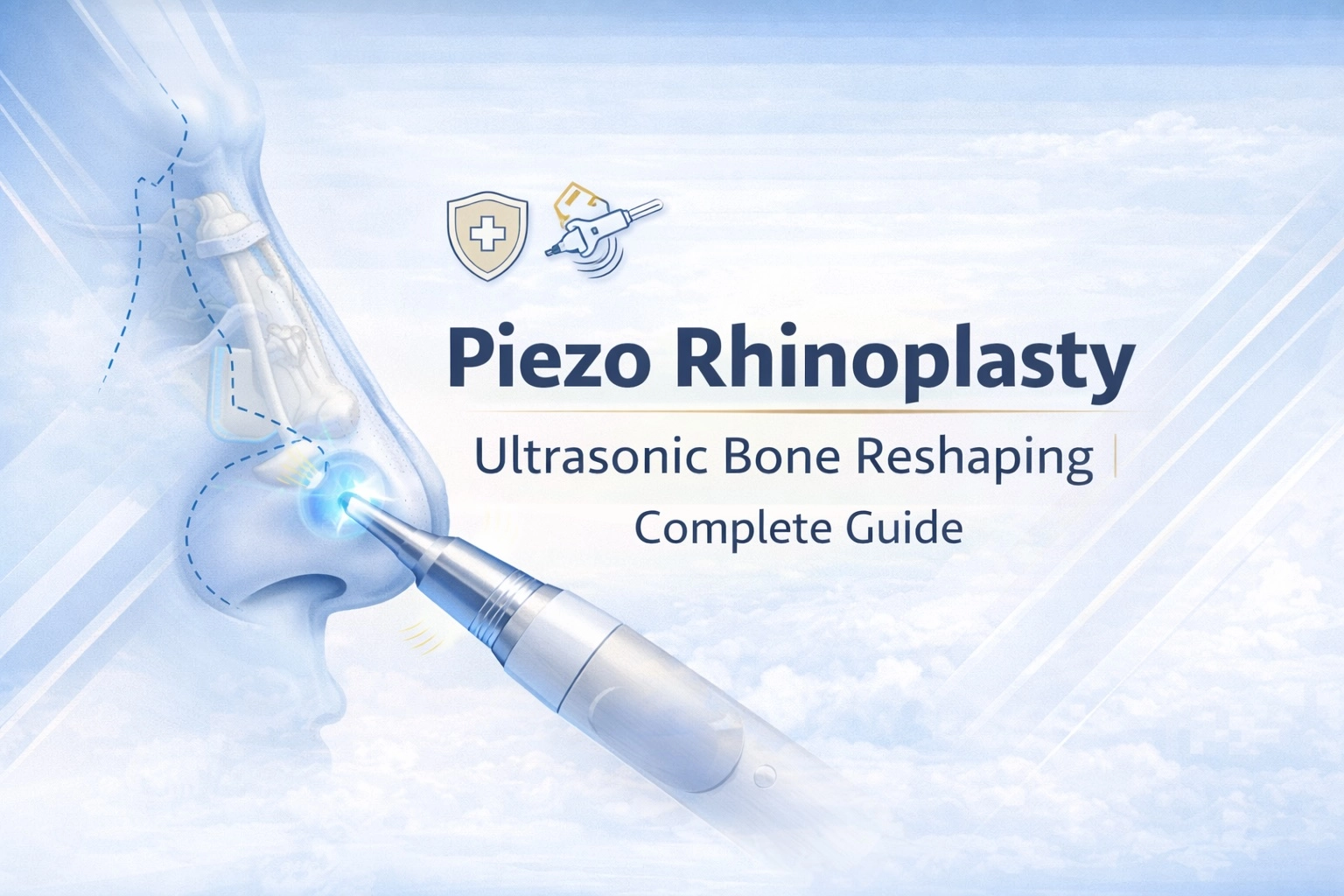
Piezo rhinoplasty is an advanced nose surgery technique that uses ultrasonic energy vibrating at 25-29 kHz to reshape nasal bones with precision while leaving soft tissues completely intact.
Unlike traditional rhinoplasty that relies on manual chisels, hammers, and rasps to break and reshape nasal bones, piezo rhinoplasty employs a specialized instrument called a piezotome. This device generates controlled ultrasonic vibrations that selectively cut through bone and dense cartilage without affecting surrounding structures like skin, blood vessels, nerves, or mucosa.
The technology originated in oral and maxillofacial surgery and was first adapted for rhinoplasty in the mid-2000s by surgeons in Europe. Since then, it has gained significant traction among facial plastic surgeons worldwide, particularly for patients seeking precise bone modifications with faster recovery times.
The term “piezoelectric” refers to the physical phenomenon where certain crystals generate electrical charge when mechanical stress is applied—and conversely, produce mechanical vibration when electrical current passes through them. In surgical applications, this allows for remarkably controlled bone cutting at the microscopic level.
How Ultrasonic Bone Reshaping Works
The piezotome device transmits ultrasonic vibrations to specialized surgical tips that oscillate at frequencies between 25,000 and 29,000 cycles per second (25-29 kHz), which selectively affects only hard tissues like bone and dense cartilage.
The key scientific principle behind piezo rhinoplasty is frequency selectivity. At this ultrasonic frequency range, the vibrating surgical tip creates micro-cuts in mineralized bone tissue while simply bouncing off softer structures like blood vessels, nerves, and mucous membranes. This happens because different tissues have different densities and respond differently to ultrasonic energy.
During surgery, the piezotome is equipped with various interchangeable tips designed for specific purposes. Curved scrapers remove bony humps, straight rasps smooth uneven surfaces, and fine cutting tips create precise osteotomies (controlled bone cuts) for repositioning the nasal bones. Continuous saline irrigation keeps the surgical site cool and clears debris, preventing thermal damage to surrounding tissues.
The surgeon works under direct visualization, typically through an open rhinoplasty approach, sculpting the bone in incremental passes rather than creating sudden fractures. This graduated technique gives the surgeon unprecedented control over the final nasal contour and eliminates the unpredictability of traditional osteotomies where bones can fracture in unintended directions.
Piezo vs Traditional Rhinoplasty
The primary difference is that piezo rhinoplasty sculpts bone through controlled ultrasonic vibration rather than mechanical force, resulting in significantly less trauma to surrounding tissues and faster recovery.
Traditional rhinoplasty has been performed for over a century using essentially the same instruments: surgical chisels (osteotomes), hammers, and metal rasps. While effective, these tools work through blunt mechanical force that can inadvertently damage nearby soft tissues, cause unpredictable bone fractures, and result in significant post-operative swelling and bruising.
Piezo rhinoplasty represents a paradigm shift in how surgeons approach the bony framework of the nose. Rather than breaking bones and hoping they heal in the desired position, surgeons can now sculpt and reposition bones with the precision of a sculptor working with clay.
| Factor | Piezo Rhinoplasty | Traditional Rhinoplasty |
|---|---|---|
| Bone cutting method | Ultrasonic vibration (25-29 kHz) | Hammer, chisel, and rasps |
| Soft tissue impact | Preserved—ultrasound only affects bone | Can damage blood vessels, nerves, mucosa |
| Post-operative bruising | Reduced by up to 71% | Often extensive around eyes and cheeks |
| Post-operative swelling | Reduced by up to 52% | Significant for 2-3 weeks |
| Precision level | Highly precise with direct visualization | Less predictable bone cuts |
| Risk of splinter fractures | Eliminated | Possible with chisel technique |
| Mucosal injury rate | Significantly reduced | Higher due to mechanical trauma |
| Surgery duration | 2-3 hours (may be 20-30% longer) | 1.5-2.5 hours |
| Return to social activities | Often 5-7 days | Typically 10-14 days |
| Cost | €200-€500 higher due to equipment | Standard rhinoplasty pricing |
The clinical evidence strongly favors piezo rhinoplasty for post-operative recovery. A systematic review published in Aesthetic Plastic Surgery analyzing eight randomized controlled trials found statistically significant reductions in both swelling and bruising with piezosurgery compared to conventional osteotomies.
Benefits of Piezo Rhinoplasty
Systematic reviews of randomized controlled trials demonstrate that piezo rhinoplasty reduces post-operative edema by 52%, bruising by 71%, and pain scores compared to traditional techniques.
The advantages of piezo rhinoplasty extend beyond simply “less bruising.” Understanding these benefits helps patients make informed decisions about which surgical approach best suits their needs.
Precision and control. The ultrasonic device allows surgeons to make micro-adjustments impossible with traditional instruments. For dorsal hump reduction, surgeons can remove bone in millimeter-thin layers, achieving exactly the profile they envision rather than relying on the unpredictable results of chisel techniques.
Tissue preservation. Because ultrasonic energy only affects hard tissues, the blood vessels, nerves, and mucous membranes surrounding the nasal bones remain completely intact. This means less bleeding during surgery, preserved blood supply to healing tissues, and reduced risk of long-term numbness.
Faster aesthetic recovery. While complete healing still takes 6-12 months regardless of technique, patients often look socially presentable much sooner after piezo rhinoplasty. Many patients report minimal visible bruising by the time their splint is removed at day 5-7.
Reduced pain. Clinical studies consistently show lower pain scores and reduced analgesic requirements following piezo rhinoplasty. Most patients find that over-the-counter pain medication is sufficient.
Predictable results. The elimination of splinter fractures and uncontrolled bone breaks means surgeons can achieve more predictable outcomes. Research indicates maintained correction rates of approximately 87% at two-year follow-up compared to 61% with traditional methods.
Expert Insight
“The piezotome tool can reshape the nasal bridge without breaking the bone and can be instrumental in preserving the character of the nasal bridge, supporting the preservation rhinoplasty philosophy.”
— Frankel Facial Plastic Surgery, Cleveland
Who Is a Good Candidate?
Ideal candidates for piezo rhinoplasty are patients requiring nasal bone modifications such as dorsal hump reduction, bridge narrowing, or correction of asymmetry who want to minimize recovery time.
Piezo rhinoplasty is particularly effective for specific nasal concerns that primarily involve the bony structure of the nose:
You may be an ideal candidate if you want to address:
- Dorsal hump (bump on the bridge)
- Wide nasal bridge requiring narrowing
- Crooked or deviated nasal bones
- Bony asymmetry of the nose
- Irregular bone contours after previous surgery
- Combined functional and cosmetic concerns affecting the bony vault
Piezo rhinoplasty may not be suitable if:
- Your concerns are limited to the nasal tip (soft cartilage work)
- You only need cartilage grafting without bone modification
- You have active nasal infections or uncontrolled medical conditions
- You are a smoker unwilling to quit for the required period
It’s important to understand that piezo rhinoplasty is a tool for addressing the bony framework—it doesn’t replace traditional cartilage techniques. Most comprehensive rhinoplasties combine piezo technology for the bone work with conventional suturing and grafting techniques for tip refinement. Your surgeon will determine the optimal combination based on your anatomy and goals.
General rhinoplasty requirements also apply:
- Age 18 or older (nasal growth should be complete)
- Good overall health without conditions that impair healing
- Non-smoker or willing to quit 4-6 weeks before and after surgery
- Realistic expectations about outcomes
- No history of uncontrolled bleeding disorders
The Procedure: Step by Step
Piezo rhinoplasty takes 2-3 hours under general anesthesia, beginning with an open approach incision followed by systematic bone reshaping with ultrasonic instruments and concluding with splint placement.
Pre-operative preparation
In the weeks before surgery, you’ll complete medical evaluations, stop smoking, avoid blood-thinning medications, and arrange for someone to drive you home and assist during the first 24-48 hours of recovery.
Day of surgery
- Anesthesia. General anesthesia is administered for patient comfort. The longer operative time and continuous saline irrigation make local anesthesia impractical for most piezo procedures.
- Incision. The surgeon typically uses an open rhinoplasty approach, creating a small incision across the columella (the tissue between the nostrils) and inside the nostrils. This provides direct visualization of the nasal bones—essential for precise piezo work.
- Exposure. The nasal skin is carefully elevated to reveal the bone and cartilage framework beneath. With piezo rhinoplasty, dissection often extends more extensively to accommodate the ultrasonic instruments.
- Bone reshaping. The piezotome, equipped with appropriate surgical tips, sculpts the nasal bones. For dorsal hump reduction, the bony cap is gradually removed using scraper attachments. For narrowing the nose, precise osteotomies reposition the nasal sidewalls. Continuous irrigation prevents thermal damage.
- Cartilage work. If tip refinement or cartilage grafting is needed, the surgeon completes this using traditional techniques—the piezotome only affects bone.
- Closure. Incisions are meticulously closed with fine sutures. A nasal splint is placed externally to support the new bone position during initial healing.
Recovery Timeline
Most patients return to desk work within 1-2 weeks, resume normal activities at 4-6 weeks, and see final results between 6-12 months after piezo rhinoplasty.
One of the most appealing aspects of piezo rhinoplasty is the accelerated early recovery. Here’s what to expect:
Days 1-3: Initial recovery
Expect mild swelling and potential minor bruising, though significantly less than with traditional rhinoplasty. Some patients report almost no visible bruising. Keep your head elevated, apply cold compresses gently, and take prescribed medications. Post-surgical drainage is normal.
Days 5-7: Splint removal
Your surgeon removes the external splint and sutures. Many patients are pleased to find minimal or no visible bruising at this stage. You’ll see your new nasal profile, though swelling will still obscure the final result. Some surgeons apply a second lighter taping for an additional 4-5 days.
Weeks 1-2: Early healing
Most patients feel comfortable returning to non-strenuous work and social activities. Swelling continues to decrease daily. Avoid anything that might bump your nose, and sleep on your back with your head elevated.
Weeks 2-4: Progressive improvement
Swelling reduces significantly—approximately 50% or more resolves during this period. Light activities can resume. Most people who see you won’t notice you’ve had surgery. Avoid glasses resting on your nose until cleared by your surgeon (typically 6 weeks).
Months 1-3: Continued refinement
The nasal shape becomes increasingly defined. Subtle swelling at the tip may persist. You can resume most exercise, though contact sports should wait. Follow recommended massage techniques if provided by your surgeon.
Months 3-12: Final results
Residual micro-swelling, especially at the nasal tip, gradually resolves. The final contour becomes visible by 6-12 months. Patients with thicker skin may take longer to see complete results.
Piezo Rhinoplasty Cost by Country
Piezo rhinoplasty in Turkey costs €2,700-€4,500 all-inclusive compared to $15,000-$25,000 in the USA and £10,000-£18,000 in the UK, representing savings of 60-75%.
The cost of piezo rhinoplasty varies significantly based on location, surgeon experience, facility accreditation, and case complexity. Ultrasonic equipment adds approximately €200-€500 to standard rhinoplasty pricing due to the specialized instruments required.
| Country | Price Range | What’s Typically Included |
|---|---|---|
| Turkey | €2,700-€4,500 / $2,900-$5,000 | Surgery, anesthesia, hospital stay, transfers, accommodation, follow-ups |
| USA | $15,000-$25,000 | Surgery, anesthesia, facility fees; follow-ups may be separate |
| UK | £10,000-£18,000 | Surgery, anesthesia, facility; consultations may be additional |
| Canada | CAD $14,000-$20,000 | Surgery, anesthesia, facility fees |
| Australia | AUD $12,000-$18,000 | Surgery, anesthesia, hospital costs |
| Germany | €8,000-€15,000 | Surgery, facility, basic aftercare |
Why does pricing vary so much?
The price differences reflect operating costs, surgeon fee structures, and healthcare system economics rather than quality differences. Turkish surgeons perform extremely high volumes of rhinoplasty procedures—the country is among the top three globally for rhinoplasty volume—leading to efficient systems and competitive pricing. Lower facility overhead and favorable exchange rates contribute to accessibility without compromising surgical standards.
What affects your individual cost?
- Surgeon experience and specialization
- Case complexity (primary vs. revision)
- Need for grafting materials
- Combined procedures (septoplasty, turbinate reduction)
- Facility accreditation level
How This Applies in Turkey
International surgical guidelines for piezo rhinoplasty apply equally at Turkey’s JCI-accredited facilities, which follow identical safety protocols and quality standards as American and European hospitals.
Turkey has emerged as a global leader in rhinoplasty, attracting international patients seeking high-quality surgical outcomes at accessible prices. Several factors contribute to Turkey’s prominence in piezo rhinoplasty specifically:
Surgeon expertise. Turkish facial plastic surgeons perform thousands of rhinoplasty procedures annually, with many adopting ultrasonic techniques early in their development. This high volume translates to significant experience with diverse nasal anatomies and complex cases.
Accreditation and standards. Many Turkish hospitals hold Joint Commission International (JCI) accreditation—the same standard applied to top medical institutions worldwide. The Turkish Ministry of Health requires International Health Tourism Authorization Certificates for facilities serving international patients, adding another layer of oversight.
Cost advantage. Piezo rhinoplasty in Turkey typically costs €2,700-€4,500, including comprehensive packages that cover surgery, anesthesia, hospital stay, airport transfers, accommodation, and follow-up appointments. This represents savings of 60-75% compared to equivalent procedures in the USA or UK.
All-inclusive approach. Turkish clinics have refined the medical tourism experience, offering seamless coordination from initial consultation through recovery. International patients typically complete the process within 7-10 days: arrival and pre-operative testing, surgery, initial recovery, and follow-up before returning home.
At Carely Clinic in Istanbul, piezo rhinoplasty is performed by board-certified plastic surgeons at JCI-accredited partner hospitals. Packages include pre-operative consultation, surgery with general anesthesia, post-operative care, accommodation, transfers, and translation services.
Learn more about Rhinoplasty at Carely Clinic.
Risks and Safety Considerations
Piezo rhinoplasty carries the same general risks as traditional rhinoplasty including infection, bleeding, and unsatisfactory results, though systematic reviews show reduced complication rates due to minimized tissue trauma.
All surgical procedures carry inherent risks, and rhinoplasty is no exception. Understanding potential complications helps you make an informed decision and recognize warning signs during recovery.
General rhinoplasty risks (apply to both piezo and traditional):
- Infection (rare, less than 1% at accredited facilities)
- Bleeding or hematoma
- Adverse reaction to anesthesia
- Asymmetry requiring revision
- Breathing difficulties
- Numbness (usually temporary)
- Scarring concerns
- Dissatisfaction with aesthetic outcome
Piezo-specific considerations:
- Thermal injury to bone if irrigation protocols are inadequate (rare, less than 0.5%)
- Device malfunction requiring conversion to traditional technique
- Potentially longer operative time (20-30% increase in some cases)
- Higher equipment costs
What the evidence shows:
A 2024 meta-analysis published in the Journal of Clinical Medicine comparing 12 randomized controlled trials (292 piezo cases vs. 338 conventional cases) found that piezosurgery demonstrated significant reductions in post-operative edema, ecchymosis, complications, and pain without extending operative time beyond clinically meaningful limits.
Choosing safety:
The most important factor in surgical safety is selecting a qualified, experienced surgeon operating in an accredited facility. When evaluating surgeons for piezo rhinoplasty, consider:
- Board certification in facial plastic surgery or plastic surgery
- Specific training and experience with ultrasonic techniques
- Operating privileges at JCI-accredited or equivalent facilities
- Transparent communication about risks and expected outcomes
- Before-and-after portfolio demonstrating consistent results
Frequently Asked Questions
How long does piezo rhinoplasty take?
Piezo rhinoplasty takes 2-3 hours under general anesthesia. The procedure is 20-30% longer than traditional rhinoplasty because the ultrasonic technique requires methodical, layer-by-layer bone sculpting rather than forceful fracturing. This additional time allows surgeons to achieve more precise results with better control over the final nasal contour.
Is piezo rhinoplasty more painful than traditional rhinoplasty?
Piezo rhinoplasty is less painful than traditional rhinoplasty, with clinical studies showing lower pain scores and reduced analgesic requirements. Most patients manage post-operative discomfort with over-the-counter pain medication rather than prescription narcotics. The reduced trauma to surrounding soft tissues accounts for the decreased pain levels.
Will I have visible bruising after piezo rhinoplasty?
Most patients experience minimal or no visible bruising with piezo rhinoplasty by the time their splint is removed at 5-7 days. Studies show up to 71% reduction in bruising compared to traditional techniques because ultrasonic vibrations only affect bone while completely preserving blood vessels and soft tissues.
Can piezo rhinoplasty fix my nasal tip?
Piezo rhinoplasty cannot directly reshape the nasal tip because ultrasonic energy only affects hard tissues like bone and dense cartilage, not the soft cartilage forming the tip. Comprehensive rhinoplasty combines piezo techniques for bone work with traditional suturing and grafting methods for tip refinement in a single procedure.
How long until I see final results?
Final results from piezo rhinoplasty become fully apparent in 6-12 months as residual swelling completely resolves. You’ll notice immediate changes when your splint is removed at 5-7 days, with approximately 50% of swelling gone by 4 weeks. Patients with thicker skin may require up to 18 months for complete settling.
Is piezo rhinoplasty permanent?
Yes, piezo rhinoplasty results are permanent with research showing 87% maintained correction at two-year follow-up compared to 61% with traditional methods. The bone reshaping is permanent, though normal aging will gradually affect your nose over decades as with any rhinoplasty technique.
Can piezo rhinoplasty be done with a closed technique?
Piezo rhinoplasty can be performed using a closed technique in some cases, though it was initially developed for open rhinoplasty. Advancements in surgical access and understanding now allow experienced surgeons to use ultrasonic instruments through limited incisions depending on specific goals and anatomy. Your surgeon will recommend the approach best suited to your case.
What’s the minimum age for piezo rhinoplasty?
The minimum age for piezo rhinoplasty is 18 years old to ensure nasal growth is complete. Some surgeons may consider patients aged 16-17 with documented parental consent for functional concerns affecting breathing, but purely cosmetic procedures typically require full skeletal maturity.
Why doesn’t every surgeon use piezo technology?
Not all surgeons use piezo technology because of the significant equipment investment (€5,000-€7,000 for the device plus €150-€200 per replacement tip), the learning curve required to master ultrasonic techniques, and because not all rhinoplasty cases involve bone modification. Traditional techniques remain effective for cartilage-only procedures and tip work.
How do I know if I need piezo or traditional rhinoplasty?
You need piezo rhinoplasty if your concerns involve dorsal hump reduction, bridge narrowing, or bone straightening where the ultrasonic technique offers significant advantages in precision and recovery. Traditional techniques are equally appropriate if your concerns are limited to tip work or cartilage refinement without bone modification. A consultation with a qualified surgeon will determine the optimal approach.
Conclusion
Piezo rhinoplasty represents a genuine advancement in nasal surgery, offering patients who need bone modification a more precise procedure with significantly reduced bruising, swelling, and recovery time compared to traditional hammer-and-chisel techniques. Systematic reviews confirm these benefits, with studies showing up to 71% reduction in bruising and 52% reduction in swelling.
The technique is particularly valuable for patients seeking dorsal hump reduction, bridge narrowing, or correction of bony asymmetry. When combined with traditional cartilage techniques, it allows surgeons to address comprehensive nasal concerns while minimizing the visible signs of recent surgery.
For international patients, Turkey offers access to experienced surgeons and JCI-accredited facilities at 60-75% lower cost than the USA or UK, with comprehensive packages that simplify the medical travel experience.
Next steps:
If you’re considering piezo rhinoplasty, schedule a consultation with a board-certified surgeon experienced in ultrasonic techniques. Bring photos of your concerns and be prepared to discuss your goals, medical history, and recovery timeline. A thorough consultation will help determine whether piezo rhinoplasty is the right choice for achieving your desired outcome.
Individual requirements and outcomes vary. This guide provides general information based on international medical literature and clinical guidelines. Consult qualified medical professionals for personalized advice about your specific situation.