
Quick Summary:
Gummy bear implants are highly cohesive silicone gel devices that hold their shape even if the outer shell ruptures — FDA-approved since 2012 for patients aged 22 and older. They make up the majority of silicone implants used today.
The key safety variable is surface texture, not the gel itself. Smooth-surface cohesive gel implants carry no known BIA-ALCL risk; textured variants account for 73% of the 1,380 BIA-ALCL cases tracked by the FDA as of mid-2024.
This guide covers how they work, pros and cons, candidacy, cost, and Turkey.
What Are Gummy Bear Implants?
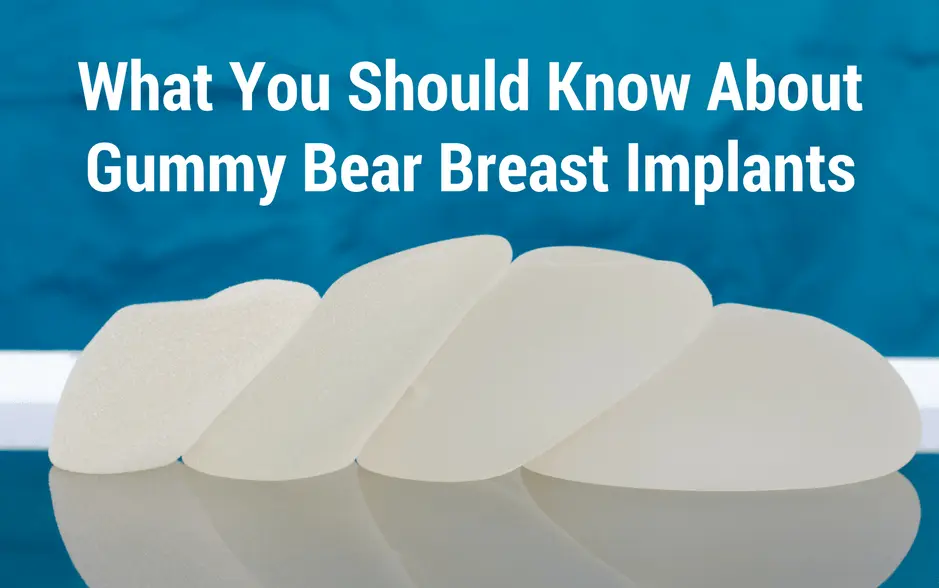
Gummy bear implants are highly cohesive silicone gel breast implants — FDA-approved since 2012 — that retain their shape under pressure and hold together even if the outer shell is compromised. The nickname describes their form-stable consistency.
Unlike earlier silicone devices where gel could flow freely within the shell, gummy bear implants use a cross-linked gel that behaves more like a solid. The term was coined by a California plastic surgeon who noticed that a cut implant maintained its shape, much like sliced gummy bear candy.
As of 2026, the designation has become less clinically distinct. Most experts now agree that all modern silicone implants sit somewhere on a cohesivity spectrum — from soft-cohesive to highly cohesive — meaning the “gummy bear” label refers to the firmer end of that spectrum rather than a separate implant category.
The “Gummy Bear” Name Explained
A California surgeon coined the term after observing that a cut implant held its shape like gummy candy — a reference to gel cohesivity, not ingredients.
The name has become widespread in patient-facing communications since the mid-2000s. Its clinical meaning has blurred over time because gel formulations have improved across all silicone implant lines. Patients asking about “gummy bear implants” are typically seeking the firmer, more form-stable options from major brands.
How Cohesive Gel Differs From Standard Silicone
Highly cohesive gel uses tighter molecular cross-linking than standard silicone, producing a semi-solid fill that resists migration if the shell is breached.
First- and second-generation silicone implants used a thin, fluid gel that could leak into surrounding tissue upon rupture. Today’s fifth-generation cohesive gel formulations are engineered to stay in place. Per a 2025 ISAPS survey of 2,900+ board-certified surgeons, silicone gel implants — the majority of which now use cohesive technology — account for 88% of all breast augmentations performed worldwide.
How Gummy Bear Implants Work
Gummy bear implants consist of a silicone outer shell filled with a dense, cross-linked silicone gel that maintains a specific shape — round or teardrop — independent of body position or physical compression.
The cross-linking process bonds silicone molecules more tightly than in softer variants. This creates a gel that behaves more like a firmed elastomer than a liquid. When compressed, the implant springs back to its original form.
Because the implant is pre-formed and cannot be deflated for insertion, placement requires a somewhat longer incision than saline devices. The implant is inserted intact through the inframammary fold — the crease beneath the breast — and positioned in a pocket either in front of or behind the pectoral muscle.
Round vs. Teardrop Gummy Bear Options
Round cohesive gel implants deliver uniform upper-pole fullness; teardrop variants slope naturally upward, mimicking the breast’s anatomical profile.
Round options are more commonly used in cosmetic augmentation, accounting for approximately 70% of implant choices globally. They carry no rotation risk and can use smooth or textured shells. Teardrop (anatomical) gummy bear implants are preferred for reconstruction and for patients seeking a subtler, more natural-looking enhancement — but they always require textured shells to prevent rotation, which introduces BIA-ALCL surface considerations covered below.
Gummy Bear Implants vs. Regular Silicone: Key Differences
All current silicone implants are cohesive to some degree; “gummy bear” refers to the highly cohesive end of the spectrum — firmer, more shape-stable, and less prone to rippling than softer silicone variants.
The practical differences patients notice are gel firmness and shape retention. A highly cohesive implant feels slightly firmer to the touch — most noticeable in patients with minimal natural breast tissue. Softer silicone implants conform more to body position, feeling more fluid when lying down.
The rupture behaviour is the most clinically significant difference. Highly cohesive gel stays in place if the shell is breached, while softer silicone can slowly migrate. Both types produce “silent” ruptures with no obvious symptoms, requiring periodic imaging for detection.
Pros and Cons of Gummy Bear Implants
Gummy bear implants offer superior shape retention, lower rippling risk, and more predictable long-term contour compared to saline or softer silicone — offset by a firmer feel, longer incision, and higher cost.
Advantages of Gummy Bear Implants
Cohesive gel implants reduce visible rippling by approximately 30–40% compared to saline in patients with thin tissue coverage.
Key clinical advantages include:
Form stability means the implant maintains its shape over years without the “bottoming out” or upper-pole collapse that can affect softer devices. Lower rippling risk makes them the preferred choice for thin patients where implant edges might otherwise be visible through skin. Rupture containment — cohesive gel stays within the implant pocket if the shell is breached, reducing the risk of gel migration seen in older-generation devices. Lower capsular contracture incidence — textured variants in particular show reduced capsular contracture rates versus smooth round implants, with evidence that tissue integration reduces scar capsule formation.
Expert Insight
“Form-stable implants are less likely to fold, ripple, or collapse, leading to a more predictable long-term result — the gel settles to a lesser degree, maintaining upper breast fullness over time.”
— Donald Mowlds, MD, Board-Certified Plastic Surgeon
Disadvantages and Limitations
Gummy bear implants require a longer incision than saline devices and typically cost $500–$1,500 more than standard silicone in the US.
Key limitations include:
A longer incision is required because the implant cannot be inserted deflated — the additional scar length is small but may be more visible in some patients. Teardrop rotation risk: if an anatomical implant rotates, the asymmetric shape is visible and corrective surgery is needed. Firmer feel: some patients describe highly cohesive implants as less natural-feeling than softer silicone, particularly when lying down. Cost premium: gummy bear variants are the most expensive implant type due to manufacturing complexity.
Are Gummy Bear Implants Safe? BIA-ALCL and Surface Texture
The safety profile of gummy bear implants is strong — the key variable is surface texture, not the cohesive gel itself. Smooth-surface cohesive gel implants carry no confirmed independent BIA-ALCL risk.
This is one of the most misunderstood points in consumer content on this topic, so it deserves a detailed explanation.
BIA-ALCL: What the 2024 FDA Data Actually Shows
The FDA has tracked 1,380 BIA-ALCL cases globally as of 30 June 2024, with 73% involving textured-surface implants and 64 associated deaths recorded.
BIA-ALCL (breast implant-associated anaplastic large cell lymphoma) is a rare T-cell lymphoma found in the scar tissue surrounding the implant — not in breast tissue itself. It is not breast cancer. The median time from implant placement to diagnosis is 9 years, and the most common presentation is late-onset fluid accumulation (seroma) around the implant.
The overall population risk of BIA-ALCL is approximately 1 in 30,000 across all implant types per ASPS data. For patients with Allergan BIOCELL textured implants — which were recalled in 2019 and now removed from market — the risk was estimated at 1:443 to 1:3,345. For other textured implants the risk is significantly lower.
When BIA-ALCL is caught at an early, localised stage, the standard treatment is implant removal plus capsulectomy (removal of the surrounding scar tissue). Most patients do not require chemotherapy. Survival rates are high when treated promptly.
Smooth vs. Textured Surface: The Real Safety Variable
No confirmed cases of BIA-ALCL have been recorded in patients with an exclusive history of smooth implants — making surface texture the decisive safety factor, not gel type.
This distinction matters enormously for patients considering gummy bear implants. Round cohesive gel implants are available with smooth shells and carry no known BIA-ALCL risk. Teardrop gummy bear implants always use textured shells (to prevent rotation), and therefore carry the textured-surface BIA-ALCL consideration.
According to a 2024 systematic review in PMC covering 2020–2024 literature, textured surface — rather than fill material — is the dominant risk factor, with silicone vs. saline fill reflecting general implant prevalence rather than an independent risk variable.
The FDA’s 2020 boxed warning on breast implants confirms: BIA-ALCL occurs more commonly in patients with textured implants than smooth. Patients should discuss surface choice explicitly with their surgeon and confirm which type is being used.
Who Is a Good Candidate?
Gummy bear implants suit patients aged 22 or older with minimal breast tissue, stable weight, no significant asymmetry, and a preference for predictable long-term shape over the softest possible feel.
Ideal Candidates
Thin women with little natural breast coverage benefit most because cohesive gel minimises visible rippling that can occur with saline or soft silicone in patients with limited tissue.
Additional factors that support candidacy include being a non-smoker or willing to stop smoking 4–6 weeks before and after surgery, having realistic expectations about the firmer feel of highly cohesive gel, and not being pregnant or breastfeeding. Women undergoing reconstruction after mastectomy are also eligible at any age, as the FDA’s age restriction applies only to cosmetic augmentation.
Who Should Choose a Different Implant Type
Patients prioritising the softest feel or maximum volume increase may prefer softer cohesive silicone options or — if eligible — saline.
Round implants with smooth shells are the lower-risk surface choice for patients who want to eliminate textured-surface considerations entirely. Patients seeking a larger volume increase may find that round implants provide more upper-pole fullness. Those with significant asymmetry or excess skin may need a combined lift procedure before implants are appropriate, regardless of implant type.
Gummy Bear Implant Cost by Country
Gummy bear breast augmentation costs $8,000–$16,000 in the US and £6,000–£10,000 in the UK, compared to €3,400–€5,200 all-inclusive in Turkey — a 60–70% saving.
US and UK Cost Ranges
US gummy bear augmentation averages $10,000–$14,000 including surgeon, anaesthesia, facility, and implants; the UK equivalent runs £6,500–£10,000, with teardrop variants adding £400–£600 to the base cost.
These figures do not include aftercare, compression garments, or follow-up imaging — costs that are typically bundled into Turkish all-inclusive packages. According to 2025 market data, standard silicone augmentation in the US averages $8,000–$12,000, with gummy bear variants sitting at the higher end due to implant manufacturing costs.
Turkey Cost and What’s Included
Breast augmentation with fifth-generation cohesive gel implants in Istanbul ranges from €3,400–€5,200 all-inclusive, per 2026 clinic pricing data — compared to €6,500–€9,000 in the UK for equivalent implant brands.
Turkish all-inclusive packages typically cover: surgeon and anaesthetist fees, hospital stay (1–2 nights), premium implants from brands such as Mentor, Allergan, or Motiva, airport transfers, hotel accommodation (5–6 nights), compression garments, medications, and remote follow-up consultations. The price differential reflects lower operating and labour costs, not a difference in implant quality. The same fifth-generation Mentor or Motiva implants used in London or New York are available in Istanbul at the same specification.
For a full breakdown of what is included in breast augmentation packages at Carely Clinic, visit our breast augmentation page.
Brands and Types Available in 2026
The three FDA-approved gummy bear implant manufacturers are Allergan (Natrelle), Mentor, and Sientra, each offering multiple cohesivity levels, profiles, and sizes across round and anatomical shapes.
Allergan, Mentor, and Sientra: Key Differences
Allergan’s Inspira and Natrelle lines offer round smooth cohesive options; Mentor offers MemoryGel and MemoryShape; Sientra’s HSC and HSC+ lines provide varying firmness levels.
The 2019 recall of Allergan’s BIOCELL textured line removed the highest BIA-ALCL-risk devices from market. Allergan’s remaining smooth-surface silicone lines — including Inspira — are not affected by the recall and continue to be widely used. Mentor’s MemoryGel smooth round implants are among the most commonly chosen in the UK and Europe. Motiva implants, manufactured by Establishment Labs and widely used in Turkey and Europe, offer a responsive gel that adapts to body position and come exclusively with smooth surfaces.
It is worth noting that Motiva received FDA clearance in 2021 for specific models — patients comparing brands should confirm the approval status of specific models with their surgeon, as this detail is frequently misreported in competitor content.
Expert Insight
“As of 2025, gummy bear implants maintain full FDA approval, with three major manufacturers — Allergan, Mentor, and Sientra — offering various models for both cosmetic augmentation and reconstruction. The FDA continues to monitor all breast implants through its Medical Device Reporting system.”
— 2025 Clinical Review, Orange County Plastic Surgery
What to Expect: Surgery, Recovery, and Longevity
Gummy bear augmentation takes 60–90 minutes under general anaesthesia; most patients return to desk work within 7–10 days and resume full activity at 6 weeks, with final results visible at 3–6 months.
Surgery Day: What Happens
The procedure is performed under general anaesthesia via an inframammary incision; the pre-formed implant is placed in a pocket above or below the pectoral muscle and the incision is closed in layers.
The inframammary approach is standard for gummy bear implants — particularly teardrop shapes — because it allows precise pocket creation and correct orientation. Submuscular (behind the muscle) placement is often preferred for thinner patients as it provides additional tissue coverage over the implant. Submammary (above the muscle) placement is selected when adequate soft-tissue coverage exists, or when the patient is an athlete where muscle distortion is a concern.
Recovery Timeline
Most patients experience manageable discomfort for 3–5 days, controlled swelling for 3–4 weeks, and return to light exercise around the 4–6-week mark.
Week 1: Rest, prescribed pain medication, and wearing a supportive surgical bra. Swelling and bruising are normal. Week 2–3: Return to desk work and light daily activities; no lifting above elbow height. Week 4–6: Most swelling resolved; light cardiovascular exercise cleared by surgeon. Months 3–6: Implants settle into final position; results fully visible as tissue relaxes around the implant.
International patients travelling to Turkey should plan a stay of at least 7–10 days before flying home. Our team at Carely Clinic provides a detailed day-by-day protocol for international patients, including fit-to-fly clearance criteria.
How Long Do They Last?
Modern cohesive gel implants demonstrate structural integrity for 10–20 years in most patients, with 2025 data from long-term studies showing cumulative rupture rates below 10% at the 10-year mark.
They are not classified as lifetime devices. The FDA recommends MRI or ultrasound screening starting at 5–6 years post-surgery, then every 2–3 years, to detect silent ruptures. Patients should also monitor for any changes in breast shape, firmness, or symmetry and report them promptly to their surgeon. Annual clinical examination is recommended as standard ongoing care.
Gummy Bear Implant Summary Table
The table below compares gummy bear implants against saline and standard silicone across the factors patients most frequently ask about.
| Factor | Gummy Bear (Highly Cohesive) | Standard Silicone | Saline |
|---|---|---|---|
| FDA Approval Age | 22+ (cosmetic) | 22+ (cosmetic) | 18+ (cosmetic) |
| Shape | Round or teardrop | Primarily round | Round |
| Feel | Firmer, form-stable | Natural, fluid movement | Firm, less natural |
| Rippling Risk | Low | Low–moderate | Higher |
| Rupture Detection | Silent (imaging needed) | Silent (imaging needed) | Visible (deflation) |
| Gel Migration on Rupture | Minimal — gel holds | Low with modern gel | None (saline absorbed) |
| Rotation Risk | Yes (teardrop only) | No | No |
| BIA-ALCL Risk | Smooth: none known; Textured: low but real | Smooth: none known | Smooth: none known |
| Incision Length | Slightly longer | Standard | Shortest |
| Longevity | 10–20+ years | 10–20 years | 10–15 years |
| US Cost (all-in) | $10,000–$16,000 | $8,000–$12,000 | $6,000–$10,000 |
| Turkey Cost (all-in) | €3,400–€5,200 | €3,200–€4,800 | €2,800–€3,800 |
How Gummy Bear Implants Apply in Turkey
Turkey performed an estimated 48,179 breast augmentations in 2024 per ISAPS data, with Istanbul clinics offering fifth-generation cohesive gel packages at €3,400–€5,200 — 60–70% below UK and US pricing.
Turkey ranks among the top global medical tourism destinations for breast augmentation. According to 2025 ISAPS data, Turkey accounts for nearly half of all cosmetic procedures performed for foreign patients in its region — and international patient demand for breast surgery specifically has grown significantly in line with the broader 42.5% increase in global cosmetic procedures recorded over the past four years.
Istanbul’s JCI-accredited hospitals and EBOPRAS-certified plastic surgeons use the same fifth-generation implant brands — Mentor, Allergan, and Motiva — available in London and New York. The price differential is driven by lower operating costs, surgical facility overheads, and exchange rate advantages relative to the British pound and US dollar.
All-inclusive packages from Istanbul clinics typically cover surgeon and anaesthesia fees, 1–2 nights in hospital, 5–6 nights hotel accommodation with breakfast, VIP airport transfers, pre-operative testing, the implants themselves from approved manufacturers, and remote post-operative follow-up. Patients should request itemised quotes to confirm what is included before comparing figures.
At Carely Clinic in Istanbul, our plastic surgeons hold EBOPRAS certification and have completed extensive volume training in breast augmentation techniques. Our approach for cosmetic augmentation defaults to smooth round cohesive gel implants to eliminate BIA-ALCL surface risk, with teardrop options available for reconstruction cases and patients with documented clinical indications, always following full informed-consent discussions using current FDA data.
International patients typically spend 7–10 days in Istanbul, with pre-operative assessments completed on arrival day. Remote follow-up consultations are conducted via our patient coordination team after patients return home.
Learn more about breast augmentation at Carely Clinic or read our breast implant types guide for a broader comparison.
Frequently Asked Questions
What exactly are gummy bear implants?
Gummy bear implants are highly cohesive silicone gel breast implants that maintain their shape even when the outer shell is cut or ruptured, unlike earlier silicone devices where gel could migrate. The nickname was coined by a California surgeon who noted that the cut implant resembled sliced gummy bear candy — a reference to form stability, not ingredient similarity. They are FDA-approved for cosmetic augmentation in patients aged 22 and older, and for reconstruction at any age.
Are gummy bear implants safer than regular silicone implants?
Modern gummy bear implants and standard cohesive silicone implants are clinically comparable in safety, since virtually all silicone implants sold today use some level of cohesive gel technology. The more meaningful safety variable is surface texture: smooth-surface implants carry no known BIA-ALCL risk, while textured surfaces are linked to 73% of the 1,380 BIA-ALCL cases tracked by the FDA as of mid-2024. Patients should confirm with their surgeon whether smooth or textured shells are being used, regardless of the gel cohesivity level.
How long do gummy bear implants last?
Long-term data show that modern cohesive gel implants maintain structural integrity for 10–20 years in most cases, with some studies noting durability beyond 20–25 years for earlier highly-cohesive models. Modern gummy bear implants have a cumulative rupture rate below 10% at 10 years for most FDA-approved models, per 2025 data. They are not classified as lifetime devices, and the FDA recommends MRI or ultrasound screening at 5–6 years post-surgery, then every 2–3 years.
What are the disadvantages of gummy bear implants?
Gummy bear implants require a slightly longer incision than saline or softer silicone because they must be inserted intact rather than filled in-situ, which can increase visible scar risk at the incision site. They are the most expensive implant type, typically costing $500–$1,500 more than standard silicone in the US and £400–£600 more in the UK. Some patients find the firmer texture less natural-feeling than softer silicone options, and teardrop-shaped variants carry a rotation risk that may require corrective surgery.
Do gummy bear implants feel different from regular implants?
Highly cohesive gummy bear implants feel firmer than standard silicone because the denser cross-linked gel resists compression more noticeably under thin breast tissue. For patients with adequate natural breast coverage, the difference in feel is minimal and many report a natural result; the distinction is most perceptible in very slim patients with little overlying tissue. Softer cohesive gel variants — which technically also qualify as “gummy bear” — offer a middle ground between the firmest form-stable devices and traditional silicone.
Who is a good candidate for gummy bear implants?
Ideal candidates are women aged 22 or older, at a stable weight, non-smokers or willing to quit 4–6 weeks before and after surgery, without significant breast asymmetry or excess skin. Thin patients with minimal natural breast tissue benefit most, because the form-stable gel reduces visible rippling that can occur with saline or softer silicone in patients with limited coverage. Women requiring reconstruction following mastectomy or cancer treatment are also strong candidates at any age.
What is the difference between gummy bear implants and regular silicone?
The core difference is gel cohesivity: gummy bear implants use a more tightly cross-linked silicone gel that holds its shape under pressure, while older or softer silicone implants use a more fluid gel that conforms to body position. As of 2026, most leading manufacturers produce implants across a spectrum from soft-cohesive to highly cohesive, meaning all modern silicone implants are technically some form of cohesive gel. The term “gummy bear” now generally refers to the firmer, more form-stable end of this spectrum.
Do gummy bear implants cause cancer?
Gummy bear implants do not cause breast cancer; however, textured-surface implants of any gel type are associated with BIA-ALCL, a rare T-cell lymphoma found in the scar tissue around the implant, not in breast tissue itself. The FDA has tracked 1,380 BIA-ALCL cases globally as of mid-2024, with 73% involving textured implants; smooth-surface gummy bear implants have no confirmed independent BIA-ALCL risk. BIA-ALCL is highly treatable when caught early — the standard treatment is implant and capsule removal, without chemotherapy in most cases.
How much do gummy bear implants cost?
Gummy bear breast augmentation costs $8,000–$16,000 in the US and £6,000–£10,000 in the UK, with gummy bear variants typically running $500–$1,500 above standard silicone due to the advanced manufacturing process. In Turkey, all-inclusive packages for breast augmentation with fifth-generation cohesive gel implants range from €3,400–€5,200, covering surgery, hospital stay, accommodation, transfers, and follow-up. The 60–70% price differential reflects Turkey’s lower operating and labour costs, not a difference in implant quality or brand availability.
Can gummy bear implants rotate?
Teardrop-shaped gummy bear implants carry a rotation risk because the asymmetric shape is noticeable if the implant shifts, which is why manufacturers always use textured shells on anatomical devices to grip surrounding tissue. Round gummy bear implants do not present a rotation problem, since a round implant looks the same regardless of orientation. If teardrop rotation does occur and distorts the breast shape, corrective surgery is required to reposition the implant.
What happens if a gummy bear implant ruptures?
Unlike older silicone implants where gel could migrate into surrounding tissue, cohesive gel in gummy bear implants holds together even if the outer shell is breached, staying roughly in position within the implant pocket. Most ruptures are “silent” — producing no obvious symptoms — which is why the FDA recommends periodic MRI or ultrasound screening starting 5–6 years after surgery. A ruptured implant requires surgical replacement, but the cohesive gel significantly reduces the risk of silicone migration compared to first- or second-generation devices.
Do gummy bear implants require a bigger incision?
Yes — because cohesive gel implants cannot be inserted deflated and inflated in-situ like saline devices, surgeons must make a slightly longer incision to accommodate the pre-formed implant shell, typically via the inframammary fold (under-breast crease). The additional length is usually a few millimetres compared to softer implants, and for most patients the resulting scar fades significantly within 12–18 months. Transaxillary (armpit) and periareolar (around the nipple) incisions are generally not recommended for shaped teardrop variants due to the precision required for correct positioning.
Conclusion
Gummy bear implants are safe, FDA-approved devices with a strong 10–20-year longevity record; the key decision variables are surface texture choice, candidacy fit, and surgeon experience at accredited centres.
Highly cohesive silicone gel implants offer a strong combination of shape retention, low rippling risk, and long-term structural integrity. The most important safety decision is not between gel cohesivity levels — it is between smooth and textured surfaces. Smooth-surface round cohesive gel implants carry no known BIA-ALCL risk; textured surfaces carry a low but real risk that patients deserve to understand fully before surgery.
For patients considering this procedure, the next step is a consultation with a board-certified plastic surgeon who can assess tissue coverage, recommend a shape and profile suited to your anatomy, and walk you through current FDA safety data and implant brand options.
Individual requirements and outcomes vary. This guide provides general information based on international guidelines and published research. Consult qualified medical professionals for personalised advice.
If you’re considering breast augmentation with cohesive gel implants, Carely Clinic’s team in Istanbul offers consultations with EBOPRAS-certified surgeons and all-inclusive packages at a fraction of UK and US costs. Book a free consultation with Carely Clinic or explore before-and-after breast augmentation results.
Medical Review: Dr. Alirza Jahangirov