
Quick Summary:
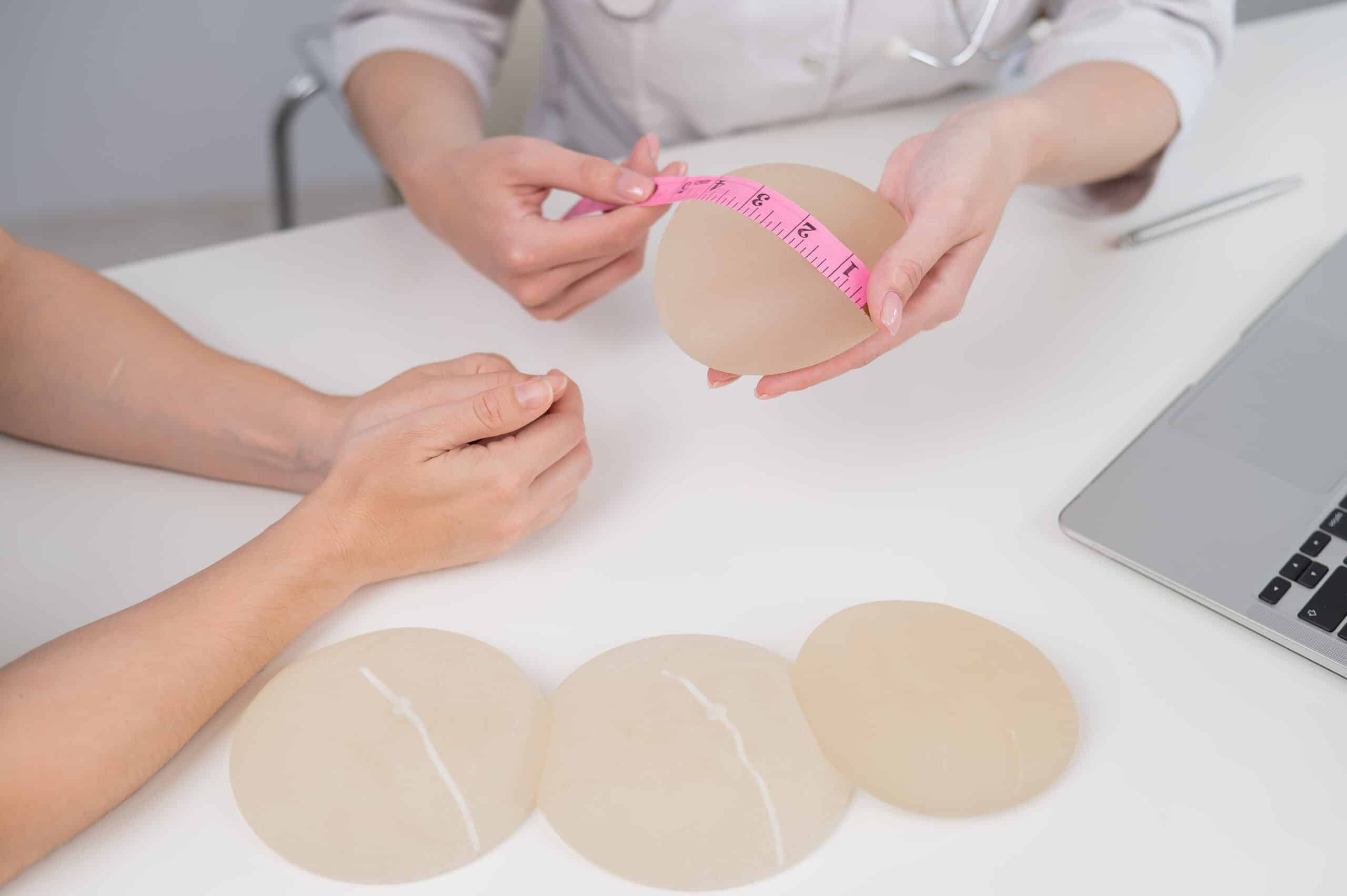
Breast implants sizes are measured in cubic centimeters (cc), not cup sizes, with most patients choosing 300-400cc implants that increase breast size by 1-2 cups. According to the American Society of Plastic Surgeons, the ideal size depends on your body frame, chest width, existing breast tissue, and lifestyle goals—not simply achieving a target cup size.
This comprehensive guide covers implant sizing, cc-to-cup-size conversions, profiles, shapes, materials, and how to make the best decision for your body type.
Why Trust This Guide
This guide draws from medical literature published in Plastic and Reconstructive Surgery, official ASPS guidelines, FDA breast implant safety data, and peer-reviewed clinical studies on augmentation outcomes.
Carely Clinic’s surgical team reviews all content for medical accuracy, ensuring information reflects current best practices and international standards for breast augmentation procedures.
How Are Breast Implants Measured?
Breast implants are measured in cubic centimeters (cc) rather than bra cup sizes, allowing surgeons to select precise volumes and correct asymmetry between breasts. As a general guideline, approximately 150-200cc translates to one cup size increase.
Cup sizes vary significantly between bra manufacturers and even between styles from the same brand. A B cup in one brand might be a C cup in another, making cup sizes unreliable for surgical planning.
The cc measurement provides standardization that cup sizes cannot offer. Implants range from as small as 100cc for subtle enhancements to 800cc or more for dramatic transformations. Your surgeon will take detailed measurements of your chest width, existing breast tissue, and skin elasticity to recommend appropriate volume ranges.
Breast Implant Size Chart: CC to Cup Size
Small breast implants ranging from 100-250cc typically create subtle enhancement, increasing breast size by approximately one cup size. This range suits patients with narrow chest measurements seeking natural-appearing results.
Medium implants between 250-400cc offer moderate enhancement, usually increasing breast size by one to two cups. This range represents the most popular choice among augmentation patients, providing noticeable but proportionate results.
Large implants above 400cc provide significant enhancement, typically increasing bust size by two to three cups or more. These sizes suit patients with wider chests who desire fuller results.
| Implant Size (cc) | Approximate Cup Increase | Best For |
|---|---|---|
| 100-200cc | ½ to 1 cup | Subtle, natural enhancement |
| 200-300cc | 1 to 1½ cups | Moderate increase, narrow frames |
| 300-400cc | 1½ to 2 cups | Most popular range, balanced results |
| 400-500cc | 2 to 2½ cups | Fuller appearance, wider chests |
| 500cc+ | 2½+ cups | Dramatic transformation |
Important Note: These conversions are approximate. Final results vary based on your existing breast tissue, chest width, skin elasticity, and implant profile selection.
What Is the Most Common Breast Implant Size?
The most commonly selected breast implant sizes range from 300cc to 400cc, typically resulting in a 1½ to 2 cup size increase while maintaining natural-looking proportions. This range represents the “sweet spot” balancing noticeable enhancement with body harmony.
According to recent ASPS data, 70% of patients now choose implants that increase their size by only 1-2 cup sizes, compared to 40% five years ago. This represents a significant shift toward more modest, natural-appearing results.
Trends in breast augmentation have evolved considerably. While larger implants were popular in previous decades, current preferences favor moderate-sized implants leading to B and C cup results. Studies show patients choosing moderate sizes report higher long-term satisfaction rates.
Expert Insight
“Patients choosing moderate implant sizes between 300-400cc report higher long-term satisfaction rates and fewer activity restrictions. Clinical studies show these sizes result in 40% fewer limitations during physical activities.”
— ASPS Clinical Practice Guidelines
Understanding Breast Implant Profiles
Breast implant profile determines how far the implant projects forward from your chest wall—two implants with identical cc volumes can look dramatically different depending on their profile selection.
Profile describes the relationship between implant base width and forward projection. A narrower base creates more projection, while a wider base distributes volume more horizontally. Understanding profiles helps match implant characteristics to your body type and aesthetic goals.
Low Profile Implants
Low profile implants have the widest base diameter and provide minimal forward projection. These implants suit women with wider chest frames seeking subtle, natural enhancement without excessive projection. They create fuller cleavage due to wider distribution but less upper pole fullness.
Moderate Profile Implants
Moderate profile implants provide balanced projection and represent the most versatile option. They yield natural-looking results and suit most body types. Many surgeons consider moderate profile the “universal” choice that works well for average-sized chests.
Moderate Plus Profile
Moderate plus profile falls between moderate and high, offering slightly more projection while maintaining reasonable width. This profile has become increasingly popular as a “happy medium” for women wanting noticeable enhancement without dramatic results.
High Profile Implants
High profile implants have narrow bases and maximum projection, creating fuller, rounder appearances. They suit petite women with narrow chest walls who want significant enhancement without excessive width. However, high-profile implants may appear less natural on some patients.
Ultra-High Profile
Ultra-high profile provides maximum projection with the narrowest base. These implants create the most dramatic “push-up” effect and suit patients wanting prominent, augmented appearances. They require 100% fill, making breasts firmer.
| Profile | Base Width | Projection | Best For |
|---|---|---|---|
| Low | Widest | Minimal | Wide chests, subtle enhancement |
| Moderate | Medium | Moderate | Most body types, natural look |
| Moderate Plus | Medium-Narrow | Moderate-High | Average frames wanting more projection |
| High | Narrow | Maximum | Narrow chests, fuller appearance |
| Ultra-High | Narrowest | Maximum | Dramatic transformation |
Silicone vs Saline Implants
Silicone implants are the most popular choice today, comprising over 85% of breast augmentations due to their natural feel and lower rippling rates. They contain cohesive silicone gel that mimics natural breast tissue texture.
According to the American Society of Plastic Surgeons, silicone implants are favored because they are lighter weight than saline and both feel and look more natural. Modern cohesive gel silicone implants—sometimes called “gummy bear” implants—maintain their shape and have significantly improved since earlier generations.
Silicone Implant Advantages
Silicone implants provide a softer, more natural feel that closely resembles breast tissue. They show less visible rippling or wrinkling, particularly beneficial for thin patients with minimal natural breast tissue. Studies report 95% patient satisfaction rates with cohesive gel implants.
Silicone Implant Considerations
Silicone implants require slightly larger incisions since they come pre-filled. If rupture occurs, the gel typically stays within the capsule, making detection more difficult. The FDA recommends MRI screening 3 years after implantation and every 2 years thereafter.
Patients must be at least 22 years old for silicone implants used for cosmetic augmentation, per FDA regulations.
Saline Implant Advantages
Saline implants consist of silicone shells filled with sterile saltwater solution. They allow smaller incisions since shells are inserted empty then filled, and offer more incision location options. If rupture occurs, saline safely absorbs into the body with immediate visible deflation.
Saline implants are FDA-approved for patients 18 and older and cost approximately $1,000 less than silicone options.
Saline Implant Considerations
Saline implants feel firmer than natural tissue and show higher rates of visible rippling, particularly in thin patients. They may create a “water sloshing” sensation and appear less natural in patients with minimal existing breast tissue.
| Factor | Silicone | Saline |
|---|---|---|
| Feel | More natural, softer | Firmer |
| Rippling | Less visible | More visible |
| Incision Size | Larger (pre-filled) | Smaller (filled after placement) |
| Rupture Detection | Requires MRI | Immediately visible |
| Minimum Age | 22 years | 18 years |
| Cost | Higher (~$1,000 more) | Lower |
Round vs Teardrop Implant Shapes
Round breast implants are symmetrical and provide uniform fullness in all directions, making them the most popular choice for cosmetic augmentation. They cannot rotate out of position and create more upper pole fullness with enhanced cleavage.
Teardrop (anatomical) implants mimic natural breast shape with less volume at the top tapering to fuller projection at the bottom. They require textured surfaces to prevent rotation and suit patients seeking subtle, natural-appearing results.
Round Implant Benefits
Round implants offer consistent results regardless of positioning within the breast pocket. They provide more upper breast fullness and cleavage enhancement. Since they’re symmetrical, any rotation doesn’t affect breast appearance.
Round implants cost less than anatomical shapes and come in both smooth and textured surface options. They remain the preferred choice for patients wanting fuller, rounder appearances.
Teardrop Implant Benefits
Teardrop implants create more natural-looking results, particularly for patients with minimal existing breast tissue. They’re often preferred for breast reconstruction due to their anatomical silhouette.
The sloped design provides less upper pole fullness, avoiding the “obviously augmented” appearance some patients wish to prevent.
Important Safety Note
All teardrop implants require textured surfaces to maintain their orientation. Textured implants have been associated with a rare form of cancer called breast implant-associated anaplastic large cell lymphoma (BIA-ALCL). While the risk is extremely low, the FDA issued warnings in 2019 that led many surgeons to discontinue textured implant use.
Most plastic surgeons now recommend smooth round implants for breast augmentation due to their excellent safety profile and satisfactory aesthetic outcomes.
How to Choose the Right Size for Your Body
Choosing the right breast implant size requires balancing multiple factors including body frame, chest width, existing breast tissue, lifestyle considerations, and aesthetic goals. No single “perfect size” exists—the best implant is one tailored to your unique anatomy.
Consider Your Body Frame
Your height, weight, shoulder width, and hip measurements influence what size will look proportionate. Smaller-framed women often achieve their goals with 250-350cc implants, while larger frames may require 400cc or more for similar visual impact.
Women with narrow chest walls benefit from higher-profile implants that provide projection without excessive width. Wider chest frames suit moderate or low-profile implants for balanced proportions.
Assess Your Existing Breast Tissue
The amount of natural breast tissue affects both implant size selection and final results. Patients with minimal tissue often need larger implants to achieve visible enhancement, while those with more tissue may achieve their goals with smaller volumes.
Thin patients with little tissue coverage may see more visible rippling, making silicone implants and submuscular placement preferable.
Factor in Your Lifestyle
Active women, particularly athletes and fitness enthusiasts, often prefer moderate sizes that don’t interfere with physical activities. Studies indicate moderate-sized implants result in 40% fewer activity restrictions compared to larger sizes.
Consider how different sizes will feel during exercise, affect your clothing choices, and impact daily comfort over years of wear.
The Rice Test Method
Before consultation, try the “rice test” at home to visualize different volumes. Fill plastic bags with rice, place them in a bra representing your goal size, and adjust amounts until you achieve desired fullness. Measure the rice volume and convert to cc using approximately 200cc per cup size increase.
Use 3D Imaging Technology
Many surgeons offer VECTRA or similar 3D imaging during consultations. These systems create visual simulations showing how different implant sizes will look on your specific body, helping set realistic expectations before surgery.
Risks and Safety Considerations
Breast augmentation is generally safe when performed by board-certified plastic surgeons at accredited facilities, with mortality rates of approximately 0.03-0.1% and major complication rates around 2-3%.
Capsular contracture remains the most common long-term complication, occurring when scar tissue around the implant tightens and hardens. According to published research, overall incidence ranges from 3.6% to 10.6%, with submuscular placement showing lower rates than subglandular positioning.
Common Complications
The most frequent complications following breast augmentation include capsular contracture, asymmetry, implant malposition, hematoma, and infection. Capsular contracture is the most common reason for reoperation within 4-10 years of primary augmentation.
Risk factors for capsular contracture include smooth implants (vs. textured), subglandular placement (vs. submuscular), larger implant volumes, smoking, and hematoma formation.
Implant Lifespan
Breast implants are not lifetime devices. Up to 20% of patients have their implants removed or replaced within 8-10 years due to rupture, capsular contracture, or aesthetic changes. Modern cohesive gel implants demonstrate improved durability with potential lifespans exceeding 15-20 years.
Kaplan-Meier estimated rupture rates at 10 years range from 6.6% to 24.2% depending on implant type and manufacturer studies.
When to Seek Medical Attention
Contact your surgeon immediately if you experience severe pain, excessive swelling, unusual discharge, fever, or sudden changes in breast shape or size. Early intervention prevents many complications from worsening.
Expert Insight
“Submuscular implant placement provides greater muscle coverage, better preserves blood supply, and shows significantly lower capsular contracture rates compared to subglandular positioning—particularly important for patients with minimal natural breast tissue.”
— Plastic and Reconstructive Surgery Journal
How This Applies in Turkey
International guidelines from ASPS, ISAPS, and FDA apply equally at Turkey’s JCI-accredited medical facilities. Turkish hospitals follow identical clinical protocols and safety standards as American and European institutions, using the same FDA-approved implant brands including Mentor, Allergan, and Motiva.
The key difference is cost and accessibility. Breast augmentation in Turkey costs €3,400-€5,200 all-inclusive compared to $6,500-$15,000 in the USA and £4,500-£8,200 in the UK—representing 50-70% savings. This price difference reflects lower operating costs, not lower quality of care.
Turkey welcomed over 750,000 medical tourists in 2024, with breast procedures ranking as the second-largest surgical category. International patients typically complete the entire process within 7 days, including consultation, surgery, recovery, and fit-to-fly assessment.
At Carely Clinic in Istanbul, breast augmentation is performed by board-certified plastic surgeons at JCI-accredited partner hospitals. All-inclusive packages include premium FDA-approved implants, hospital stay, transfers, accommodations, and comprehensive aftercare. Learn more about Breast Augmentation at Carely Clinic.
| Country | Price Range | Typically Includes |
|---|---|---|
| Turkey | €3,400-€5,200 | All-inclusive (surgery, implants, hospital, hotel, transfers) |
| USA | $6,500-$15,000 | Surgery and implants only |
| UK | £4,500-£8,200 | Surgery and implants only |
| Australia | A$12,000-A$15,500 | Surgery and implants only |
Recovery Timeline
Full recovery from breast augmentation takes approximately 4-6 weeks, with most patients returning to desk work within 1-2 weeks and resuming normal activities at 4-6 weeks post-surgery.
Days 1-3: Immediate Recovery
The first 72 hours involve the most significant swelling, bruising, and discomfort. Breasts appear high and firm, sometimes with a “squarish” shape. Pain medication manages discomfort while you rest with upper body elevated. Avoid raising arms above shoulder level.
Week 1: Early Recovery
Bruising and pain begin fading. Most patients return to work or school 4-7 days after surgery for desk jobs. Continue wearing surgical bra as directed. Avoid submerging breasts in water, heavy lifting, or strenuous activity.
Weeks 2-4: Progressive Healing
Swelling continues subsiding with implants beginning to “drop and fluff” into more natural positions. Light activity resumes around day 10-14, though no heavy exercise. By week 4, most patients feel significantly better and can resume regular activities with clearance.
Weeks 4-6: Near-Complete Recovery
Most swelling resolves with implants settling into final positions. Strenuous exercise and heavy lifting may resume after surgeon approval around week 6. Sleeping positions become less restricted.
Months 3-12: Final Results
Full settling takes 3-6 months as implants achieve their final position and breasts soften. Scars continue fading for up to 12 months. Regular follow-up appointments monitor healing and implant condition.
Frequently Asked Questions
What size breast implant is most common?
The most common breast implant size ranges from 300-400cc, which typically increases breast size by 1½ to 2 cups. According to 2024 ASPS data, 70% of patients now choose implants that increase size by only 1-2 cups, compared to 40% five years ago. This range provides noticeable enhancement while maintaining natural proportions and consistently achieves patient satisfaction rates above 90%.
How many cc is a C cup implant?
A C cup typically requires 200-350cc depending on your starting breast size. Patients starting as an A cup generally need 300-350cc to reach a full C cup, while those starting as a B cup require approximately 150-200cc. Your chest width, existing tissue, and desired fullness also influence the exact volume needed to achieve C cup results.
Can I choose my own implant size?
You communicate your desired outcome, and your board-certified surgeon recommends specific implant specifications to safely achieve it. Surgeons evaluate your chest wall measurements, tissue characteristics, skin elasticity, and lifestyle factors when suggesting appropriate sizes, profiles, and placement options. Final implant selection balances your aesthetic goals with anatomical limitations to ensure safe, proportionate results.
Will bigger implants look more fake?
Final appearance depends on implant size relative to your body frame rather than absolute cc volume. Implants proportionate to your chest width, shoulder breadth, and existing tissue appear natural regardless of size. Studies show that implants exceeding your natural breast base width by more than 1-2cm significantly increase visible implant edges and unnatural appearance, particularly when lying down.
How do I know if implants are too big for my frame?
Warning signs include implants extending beyond your natural breast borders, visible rippling or implant edges, persistent back or shoulder pain, difficulty finding properly fitting bras and clothing, and unnatural appearance when lying flat. Surgeons typically recommend maximum implant base widths 1-2cm less than your measured breast base to prevent these complications.
Do breast implants feel different from natural breasts?
Modern cohesive gel silicone implants closely mimic natural breast tissue, with 88% of patients reporting they cannot detect implant feel when touching their breasts. Submuscular placement with adequate tissue coverage produces the most natural feel. Saline implants feel approximately 15-20% firmer than natural tissue and may create noticeable rippling in patients with minimal breast tissue.
How long do breast implants last?
Modern breast implants are not lifetime devices but demonstrate improved longevity with potential lifespans of 15-20+ years. Clinical data shows 10-20% of patients require revision within 8-10 years due to capsular contracture, rupture, or aesthetic changes. Mentor’s 10-year studies report Kaplan-Meier estimated rupture rates of 6.6% for shaped implants and 24.2% for round gel implants.
What happens if my implant ruptures?
Saline implant rupture causes immediate visible deflation within 24-48 hours as sterile saltwater safely absorbs into your body, requiring surgical removal of the deflated shell. Silicone ruptures often remain undetected without symptoms as cohesive gel stays within the fibrous capsule. The FDA recommends MRI screening 3 years post-surgery and every 2 years thereafter to detect silent silicone ruptures.
Can I breastfeed with implants?
Most women with breast implants breastfeed successfully, with studies showing 85-90% successful breastfeeding rates following submuscular placement with inframammary incisions. Periareolar incisions that transect milk ducts may reduce breastfeeding success to approximately 60-70%. Implants themselves do not affect milk production, though surgical technique and incision location influence ductal preservation.
At what age can I get breast implants?
The FDA approves saline implants for cosmetic augmentation at age 18 and silicone implants at age 22. However, many implant manufacturers will not honor product warranties for patients receiving silicone implants under age 22, even though the procedure is legally permitted. Breast reconstruction following mastectomy has no age restrictions for either implant type.
How much do breast implants cost in Turkey compared to other countries?
Breast augmentation in Turkey costs €3,400-€5,200 all-inclusive, representing 50-70% savings compared to USA prices of $6,500-$15,000 and UK prices of £4,500-£8,200. Turkish packages include FDA-approved implants, surgery, hospital stay, medications, 6-night hotel accommodation, and all transfers. Western country pricing typically covers only surgery and implants, with additional fees for anesthesia, facility use, and overnight stays.
What’s the difference between implant profiles?
Breast implant profile determines forward projection from your chest wall—low profile has widest base with minimal projection, moderate profile offers balanced projection for most body types, and high profile has narrowest base with maximum projection. Two 400cc implants with different profiles create dramatically different appearances. Your chest width determines appropriate profile, with narrow chests requiring high-profile and wide chests needing low or moderate-profile implants.
Conclusion
Selecting the right breast implant size involves understanding cc measurements rather than cup sizes, considering your body frame and chest width, choosing appropriate profiles, and selecting between silicone and saline materials. The most popular range of 300-400cc provides balanced enhancement for most patients, though optimal size varies based on individual anatomy and goals.
Key factors in your decision include starting breast tissue, lifestyle considerations, desired appearance, and long-term expectations. Working with a board-certified plastic surgeon ensures you receive personalized recommendations based on detailed measurements and realistic outcome predictions.
Disclaimer: Individual requirements and outcomes vary. This guide provides general information based on international medical guidelines and clinical research. Consult qualified medical professionals for personalized advice regarding breast augmentation procedures.
Ready to explore your breast augmentation options? Carely Clinic offers complimentary consultations with board-certified surgeons who can assess your anatomy, discuss implant choices, and provide personalized recommendations for achieving your aesthetic goals.
Medical Review: Dr. Aliraz Jahangirov