
Quick Summar
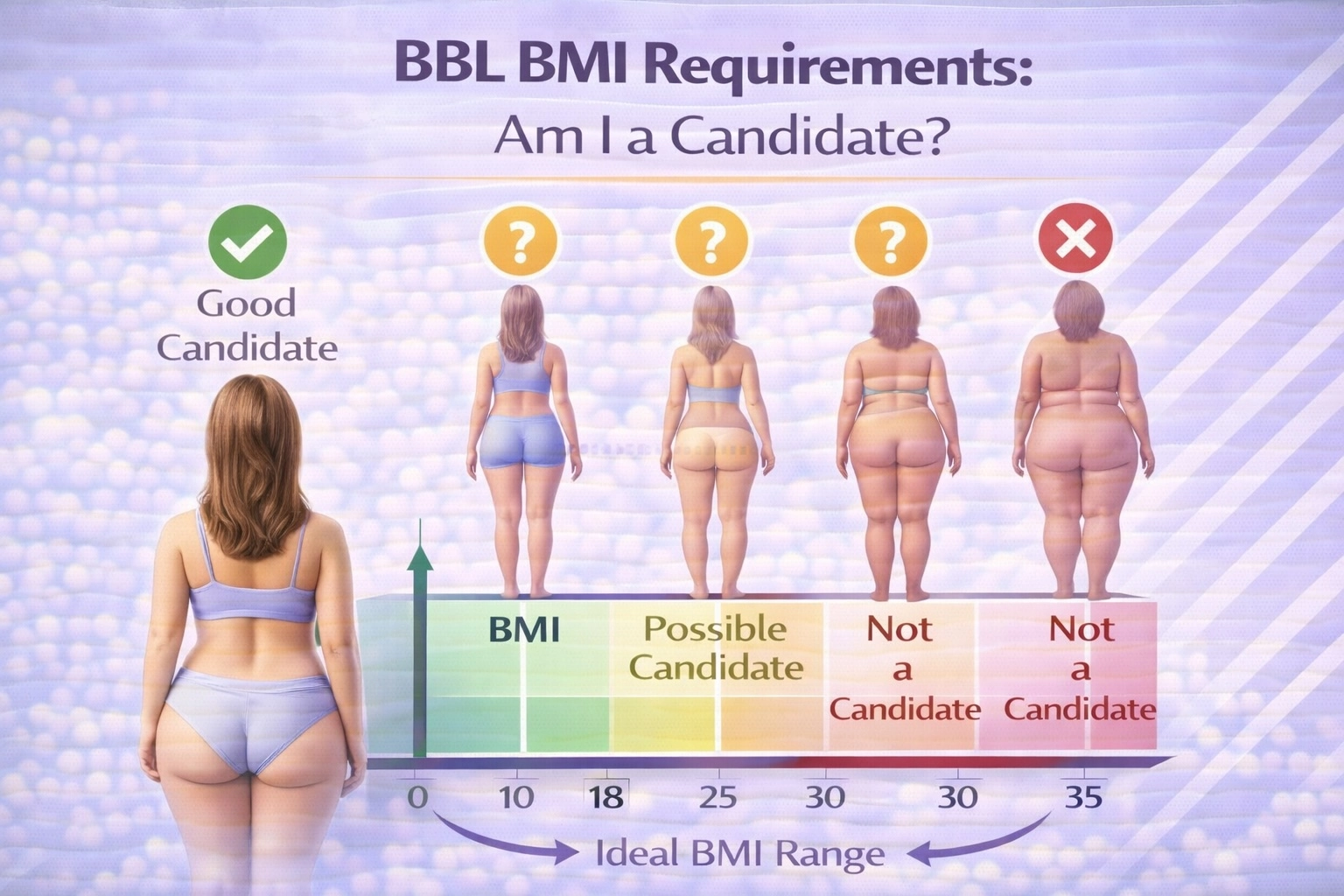
BBL BMI Requirements: Am I a Candidate? the ideal BMI for BBL surgery ranges from 25 to 30, providing sufficient fat for transfer while minimizing surgical risks. Surgeons typically accept candidates with BMI under 35, though some may work with BMI up to 38–40 on a case-by-case basis depending on overall health.
According to plastic surgery guidelines, candidates must also have adequate fat deposits in donor areas, be in good general health, and maintain stable weight for at least six months before surgery.
This guide covers all BBL eligibility criteria including BMI thresholds, age requirements, health conditions that affect candidacy, and how to prepare if you’re outside the ideal range.
Why Trust This Guide
This guide is based on current plastic surgery standards from the American Society of Plastic Surgeons (ASPS), International Society of Aesthetic Plastic Surgery (ISAPS), and peer-reviewed research published in journals including Aesthetic Surgery Journal and Plastic and Reconstructive Surgery.
At Carely Clinic, our board-certified surgeons evaluate each patient individually, combining international medical guidelines with personalized assessment to ensure both safety and optimal aesthetic outcomes.
What BMI Do You Need for a BBL?
The ideal BMI for Brazilian Butt Lift surgery falls between 25 and 30, which provides sufficient fat deposits for harvesting while keeping surgical risks at acceptable levels. Most plastic surgeons accept candidates with BMI under 35 without additional requirements.
This “sweet spot” represents the optimal balance between having enough adipose tissue for effective liposuction and fat transfer while ensuring your body can handle the surgical process efficiently. Patients within this range typically experience smoother recoveries, better fat retention rates, and more predictable aesthetic results.
However, BMI requirements vary by surgeon and facility. Some experienced surgeons who specialize in working with higher BMI patients accept candidates with BMI up to 38 or even 40, using specialized techniques and protocols to manage associated risks. The key factors surgeons evaluate alongside BMI include your overall health status, fat distribution patterns, and the presence of any comorbid conditions.
Understanding BMI Ranges for BBL
Different BMI ranges present unique considerations for BBL candidacy. Understanding where you fall helps set realistic expectations about your surgical options.
BMI 18.5–24.9: Potentially Underweight for Traditional BBL
Patients with BMI below 25 may have insufficient fat for a traditional BBL procedure. The primary concern is limited fat availability in donor areas like the abdomen, flanks, thighs, or back—the regions surgeons harvest fat from during liposuction.
If you fall into this range, you have several options. Some surgeons offer “Skinny BBL” procedures designed specifically for leaner patients with BMI between 19 and 24, using modified techniques to maximize results with limited fat. Alternative procedures like buttock implants or Sculptra injections may also achieve your aesthetic goals. In some cases, surgeons recommend medically supervised weight gain to reach the fat threshold needed for traditional BBL.
BMI 25–30: Ideal Candidate Range
This range represents the optimal BMI for BBL surgery. Patients typically have adequate fat deposits for harvesting while maintaining manageable surgical risks. Fat cells from this range tend to be healthier and more viable for transfer, leading to better fat retention rates—typically 60–80% long-term survival.
Recovery times are generally shorter, the surgical process is more straightforward, and final results tend to be more predictable and aesthetically pleasing. If you fall within this range and meet other health requirements, you’re likely an excellent BBL candidate.
BMI 30–35: Acceptable with Evaluation
Most plastic surgeons consider patients with BMI between 30 and 35 acceptable candidates for BBL, though additional evaluation may be required. Your surgeon will assess your overall health profile, paying particular attention to cardiovascular function, diabetes status, and blood pressure control.
If you have no significant health conditions, you’ll likely be approved for surgery. However, surgeons often recommend losing some weight before the procedure—not to meet an arbitrary threshold, but because lower BMI correlates with reduced surgical complications and often produces tighter, more defined results.
BMI 35–40: Case-by-Case Evaluation
At BMI levels between 35 and 40, eligibility depends heavily on individual health factors. Surgeons evaluate candidates individually, often requiring comprehensive medical clearance and cardiac assessment before approval.
Patients with controlled health conditions and no comorbidities may still qualify, particularly with experienced surgeons who specialize in plus-size procedures. However, if you have conditions like uncontrolled diabetes, high blood pressure, or heart problems, surgeons will typically recommend weight loss before considering surgery.
Some jurisdictions have specific regulations—for example, Florida law requires patients with BMI over 40 to undergo BBL under local anesthesia only rather than general anesthesia, due to increased complication risks.
BMI Over 40: Generally Not Recommended
Most surgeons do not perform BBL on patients with BMI exceeding 40 due to significantly elevated complication rates. The risks include longer anesthesia time, higher infection rates, compromised wound healing, and increased cardiovascular stress.
If your BMI exceeds 40, the standard recommendation is to achieve meaningful weight loss before considering cosmetic surgery. This isn’t just about meeting a number—it’s about ensuring your body can safely undergo and recover from a significant surgical procedure.
Why BMI Matters for BBL Surgery
BMI serves as a critical metric in BBL candidacy because it directly impacts both surgical safety and aesthetic outcomes. Understanding why surgeons emphasize BMI requirements helps you appreciate the medical reasoning behind these guidelines.
Safety Considerations
Higher BMI correlates with increased surgical risks across multiple dimensions. Patients with elevated BMI face longer anesthesia times, which increases cardiovascular stress. The risk of blood clots (deep vein thrombosis) rises, as does the likelihood of wound healing complications and surgical site infections.
BBL carries the highest mortality rate among cosmetic procedures—historically estimated at approximately 1 in 3,000 cases, though improved techniques have reduced this to approximately 1 in 15,000 to 1 in 20,000 at experienced centers following current safety protocols. The primary cause of BBL-related deaths is fat embolism, where fat enters the bloodstream and travels to the lungs or brain. Higher BMI compounds these risks.
Fat Quality and Survival
BMI affects the quality and viability of harvested fat cells. Patients within the ideal BMI range tend to have healthier fat cells that survive the transfer process more successfully. After BBL, your body naturally reabsorbs some transferred fat—typically 20–40% in the first few months. The remaining 60–80% of fat cells establish blood supply and become permanent.
Fat from patients with extreme BMI (either very low or very high) may have lower survival rates, affecting final results. Healthier fat cells integrate better with surrounding tissue, leading to more natural-looking, longer-lasting outcomes.
Surgical Precision
BMI impacts the surgeon’s ability to work precisely during the procedure. In the ideal BMI range, anatomical landmarks are clearer, making it easier to harvest fat evenly and inject it accurately into the buttocks. This precision matters because proper fat placement is crucial both for aesthetic results and for avoiding the dangerous complication of injecting fat too deeply into or below the gluteal muscle.
Other BBL Eligibility Requirements
BMI is just one factor in BBL candidacy. Surgeons evaluate multiple criteria to ensure you’re a suitable candidate for safe, successful surgery.
Age Requirements
The minimum age for BBL is 18 years old in most jurisdictions, ensuring patients have reached legal adulthood and physical maturity. However, most surgeons recommend waiting until your mid-twenties, when body development is fully complete and emotional readiness is typically established.
Research indicates the most favorable age range for BBL is between 26 and 35 years old, when patients demonstrate peak healing capacity and optimal skin elasticity. Patients aged 36–45 remain good candidates, though skin laxity and healing speed may require additional evaluation.
Some clinics set upper age limits—for example, certain facilities require patients to be 50 or younger for BBL procedures due to increased risks associated with aging, including compromised healing and cardiovascular concerns.
Adequate Fat Deposits
You must have sufficient fat in donor areas—typically the abdomen, flanks (love handles), thighs, or lower back—to harvest for transfer. During consultation, your surgeon will examine these areas to determine if you have enough fat to achieve your desired results.
The amount of fat needed varies based on your goals and body type. A standard BBL typically requires transferring 300–500cc of fat per buttock, though this varies significantly by individual case. Your fat distribution pattern matters as much as total body fat—someone with most fat concentrated in the buttocks may not be an ideal candidate despite adequate overall body fat.
Good General Health
Candidates should be in good physical health without serious underlying conditions that could affect surgery or recovery. During your pre-operative evaluation, your surgeon will review your complete medical history and may require lab tests, EKG, or medical clearance from your primary physician.
Health conditions that may require additional evaluation or adjustment include controlled high blood pressure (hypertension), well-managed diabetes, thyroid conditions, and a history of blood clots. These don’t automatically disqualify you but require careful management.
Stable Weight
You should maintain stable weight for at least six months before surgery, ideally at or near your goal weight. Significant weight fluctuations after BBL affect results because transferred fat cells behave like normal fat—they expand with weight gain and shrink with weight loss.
Rapid weight changes can distort your results, create asymmetry, or diminish the volume you achieved. Surgeons want to ensure you’ve demonstrated weight stability before investing in a procedure whose results depend on maintaining that stability.
Non-Smoker Status
Smoking significantly impairs healing and increases complication risks. Nicotine restricts blood vessels, reducing blood flow to tissues and impeding the oxygen supply that transferred fat cells need to survive.
Most surgeons require patients to quit smoking at least 2–4 weeks before surgery and remain smoke-free for the same period afterward. Some require longer cessation periods. Cigarette smoking roughly doubles your chances of experiencing complications like blood clots, infection, and wound healing problems.
Realistic Expectations
Mental and emotional readiness matters as much as physical criteria. Surgeons evaluate whether you have realistic expectations about what BBL can achieve. The procedure enhances and reshapes your buttocks using your own fat—it won’t transform you into a different person or replicate celebrity results exactly.
During consultation, your surgeon will discuss achievable outcomes based on your specific body type, fat availability, and aesthetic goals. Patients with unrealistic expectations or body image concerns that surgery won’t address may be counseled to reconsider or seek additional support before proceeding.
What Disqualifies You From BBL?
Certain conditions may prevent you from undergoing BBL surgery or require resolution before you can proceed safely.
Medical Conditions That May Disqualify You
Uncontrolled diabetes poses significant risks for any surgery due to impaired wound healing and increased infection susceptibility. If your diabetes is well-managed with stable blood sugar levels, you may still qualify with appropriate precautions.
Uncontrolled high blood pressure increases cardiovascular risks during surgery. Controlled hypertension with medication is generally acceptable, but uncontrolled blood pressure typically requires medical management before surgical clearance.
Blood clotting disorders such as hemophilia or history of deep vein thrombosis (DVT) or pulmonary embolism increase the risk of dangerous clots during and after surgery. Your surgeon will carefully evaluate clotting history and may require hematology consultation.
Heart disease or significant cardiovascular conditions require thorough cardiac evaluation. Depending on severity, heart conditions may disqualify you or require surgical clearance from a cardiologist.
Autoimmune disorders can affect healing and increase complication risks. Each case requires individual evaluation based on the specific condition and its management.
Active infections anywhere in the body must be resolved before surgery to prevent spread to surgical sites.
Severe respiratory conditions like uncontrolled asthma or COPD can interfere with anesthesia and recovery.
Lifestyle Factors
Active smoking is a contraindication for most surgeons. If you cannot commit to cessation before and after surgery, most surgeons will decline to operate.
Current use of blood thinners including aspirin, ibuprofen, and certain supplements must be discontinued before surgery as directed by your surgeon—typically 2 weeks prior. If you require blood thinners for medical conditions, you’ll need coordination between your surgeon and prescribing physician.
Excessive alcohol consumption should be reduced or eliminated in the weeks surrounding surgery due to effects on bleeding, healing, and medication interactions.
Significant recent weight changes may prompt surgeons to delay surgery until your weight stabilizes.
Insufficient Fat for Transfer
If you don’t have adequate fat deposits in donor areas, traditional BBL may not be feasible regardless of other qualifications. Your surgeon will assess fat availability during consultation and discuss alternatives if needed.
What If Your BMI Is Too High or Too Low?
If you don’t currently meet BMI requirements, you have pathways to become a candidate.
If Your BMI Is Too High
Weight loss before surgery is the standard recommendation. Even modest weight loss of 10–20 pounds can significantly reduce surgical risks and often improves results. Lower BMI typically produces tighter, more defined outcomes.
Focus on sustainable lifestyle changes rather than crash diets—surgeons want to see stable weight loss maintained over months, not rapid drops that might rebound. Consider working with a nutritionist or weight management specialist.
Some surgeons offer bariatric surgery referrals for patients with BMI over 40 who want to eventually pursue cosmetic procedures. After significant weight loss, patients often become excellent BBL candidates.
If Your BMI Is Too Low
Medically supervised weight gain may allow you to reach the fat threshold needed for BBL. This requires careful planning with healthcare providers to ensure healthy weight gain rather than simply consuming excess calories.
Alternative procedures may achieve your aesthetic goals without requiring fat transfer. Buttock implants provide permanent volume enhancement using silicone implants. Sculptra injections stimulate collagen production for gradual, natural-looking enhancement over multiple sessions.
Skinny BBL techniques developed by some surgeons optimize results for leaner patients, extracting maximum fat from available donor sites and using specialized processing to maximize fat cell survival.
How This Applies in Turkey
International guidelines for BBL candidacy apply at Turkey’s JCI-accredited medical facilities, which follow identical clinical protocols and safety standards as American and European institutions.
The primary differences are cost and accessibility. BBL surgery in Turkey costs €3,500–€6,000 compared to $8,000–$15,000 in the USA and £6,000–£10,000 in the UK—representing savings of 50–70%. International patients typically complete the entire process within 7–10 days, compared to longer timelines in countries with insurance requirements or extended waitlists.
At Carely Clinic in Istanbul, BBL is performed by board-certified plastic surgeons at JCI-accredited partner hospitals following current safety protocols, including subcutaneous-only fat injection and appropriate candidate screening. All-inclusive packages typically include pre-operative consultations, surgery and hospital stay, post-operative care, accommodations, airport transfers, compression garments, and follow-up appointments.
Learn more about Brazilian Butt Lift at Carely Clinic.
BBL Requirements Summary Table
| Requirement | Ideal Criteria | Acceptable Range | Notes |
|---|---|---|---|
| BMI | 25–30 | Under 35 (up to 40 case-by-case) | Varies by surgeon; health factors considered |
| Age | 26–35 years | 18–50 years | Minimum 18; upper limits vary by clinic |
| Fat Deposits | Adequate in multiple donor areas | Sufficient in at least 2-3 areas | Abdomen, flanks, thighs, lower back |
| Weight Stability | 6+ months stable at goal weight | 3+ months within 5–10 lbs | Fluctuations affect long-term results |
| Smoking Status | Non-smoker | Quit 4+ weeks before surgery | Must remain smoke-free during recovery |
| General Health | No significant conditions | Well-controlled conditions acceptable | Medical clearance may be required |
| Blood Pressure | Normal (under 120/80) | Controlled with medication | Uncontrolled hypertension disqualifying |
| Diabetes | No diabetes | Well-controlled Type 2 | Stable blood sugar required |
What to Expect: BBL Timeline
Before Surgery (2–4 Weeks)
- Initial consultation: BMI assessment, fat availability evaluation, health history review
- Medical clearance: Lab tests, EKG if indicated, primary physician clearance
- Pre-operative instructions: Stop smoking, discontinue blood thinners, avoid certain supplements
- Lifestyle preparation: Maintain stable weight, optimize nutrition, arrange recovery support
Surgery Day
BBL surgery typically takes 2–4 hours under general anesthesia. The procedure involves liposuction to harvest fat from donor areas, fat processing and purification, and strategic fat injection into the buttocks in multiple layers using subcutaneous-only technique for safety.
Recovery Timeline
- Week 1: Complete rest, no sitting directly on buttocks, sleep on stomach or side, wear compression garments 24/7
- Weeks 2–6: Gradual introduction of sitting using BBL pillow, continue compression garments, light walking permitted
- Week 6+: Return to normal activities including exercise, final results becoming visible
- Months 3–6: Full results apparent as swelling completely resolves; 60–80% of transferred fat survives long-term
Expert Insight
“BMI alone does not automatically rule out someone for BBL surgery. The most important factors are overall health status, airway condition for anesthesia safety, and the surgeon’s experience with diverse patient types. A thorough in-person evaluation is essential.”
— Adapted from clinical practice guidelines, American Society of Plastic Surgeons
Frequently Asked Questions
What is the maximum BMI for BBL surgery?
The maximum BMI for BBL surgery is typically 35, though experienced surgeons may accept patients up to BMI 38–40 on a case-by-case basis. Surgeons specializing in plus-size procedures evaluate overall health status and absence of serious conditions when considering higher BMI candidates. BMI over 40 generally requires weight loss before most surgeons will approve surgery.
Can I get a BBL if my BMI is 35?
Yes, you can get a BBL with BMI of 35 if you have no other significant health conditions. Many surgeons approve candidates at BMI 35, though they may recommend losing weight before surgery to reduce complications. BMI 35 alone does not prevent the procedure when overall health is good.
What happens if I’m too skinny for a BBL?
If you’re too skinny for BBL (BMI under 22–24), alternatives include Skinny BBL techniques, buttock implants, or Sculptra injections. Skinny BBL maximizes results with limited fat, while implants provide permanent enhancement without requiring fat transfer. Medically supervised weight gain may help you qualify for traditional BBL if preferred.
Does BMI affect BBL results?
Yes, BMI affects BBL results because patients in the ideal range (25–30) typically have healthier fat cells with better survival rates. Very high or very low BMI may correlate with lower fat retention, though surgical technique and post-operative care matter more. Optimal BMI generally produces longer-lasting, more predictable outcomes.
How long do BBL results last?
BBL results last 10+ years with 60–80% of transferred fat surviving permanently once established. The surviving fat becomes a permanent part of your body that responds to weight changes like natural fat. Results longevity depends on maintaining stable weight, with significant fluctuations potentially affecting appearance over time.
Can I get a BBL with diabetes?
Yes, you can get a BBL with well-controlled Type 2 diabetes after providing documentation of stable blood sugar levels. Your surgeon will require medical clearance from your endocrinologist or primary physician to verify diabetes management. Uncontrolled diabetes increases infection risks and typically disqualifies you until blood sugar is properly managed.
What BMI do I need for BBL in Turkey?
Turkish JCI-accredited clinics typically require BMI under 35 for BBL, following the same international standards as American and European hospitals. Some experienced surgeons accept higher BMI patients with appropriate health screening based on individual evaluation. The candidacy criteria in Turkey match global guidelines for patient safety.
How do I calculate my BMI?
BMI is calculated by dividing your weight in kilograms by your height in meters squared (kg/m²). For pounds and inches, multiply weight by 703 then divide by height in inches squared. Online BMI calculators from the CDC provide quick, accurate results that you can share during consultation.
Can high blood pressure disqualify me from BBL?
Uncontrolled high blood pressure can disqualify you from BBL due to increased cardiovascular risks during surgery. However, well-controlled blood pressure with medication is generally acceptable with medical clearance from your prescribing physician. You’ll need to continue blood pressure medication as directed, even on surgery day.
How much weight should I lose before BBL?
If your BMI exceeds 35, losing enough weight to bring BMI under 35 is typically recommended before BBL surgery. Even losing 10–20 pounds can meaningfully reduce surgical risks and improve results when BMI is borderline. Aim for stable, sustained weight loss over several months rather than crash dieting before surgery.
Conclusion
BBL candidacy depends on multiple factors working together, with BMI serving as an important but not exclusive criterion. The ideal BMI range of 25–30 provides optimal conditions for safe surgery and lasting results, though candidates with BMI up to 35—and sometimes higher—may qualify depending on overall health status and surgeon expertise.
Beyond BMI, successful BBL candidates maintain stable weight, have adequate fat deposits in donor areas, don’t smoke, and have no uncontrolled health conditions that would increase surgical risks. Meeting these criteria positions you for the safest possible procedure and best aesthetic outcomes.
If you’re considering BBL and wondering whether you qualify, the most accurate assessment comes from consultation with a board-certified plastic surgeon who can evaluate your individual anatomy, health profile, and goals. Every body is different, and personalized evaluation provides answers that general guidelines cannot.
Disclaimer: Individual requirements and outcomes vary. This guide provides general information based on international plastic surgery guidelines and should not replace consultation with qualified medical professionals. All surgical procedures carry risks, and candidacy determination requires comprehensive in-person evaluation.
For personalized eligibility assessment and to learn more about BBL at Carely Clinic, contact our international patient coordinators for a free consultation.
Medical Review: Dr. Aliraz Jahangirov