
Quick Summary
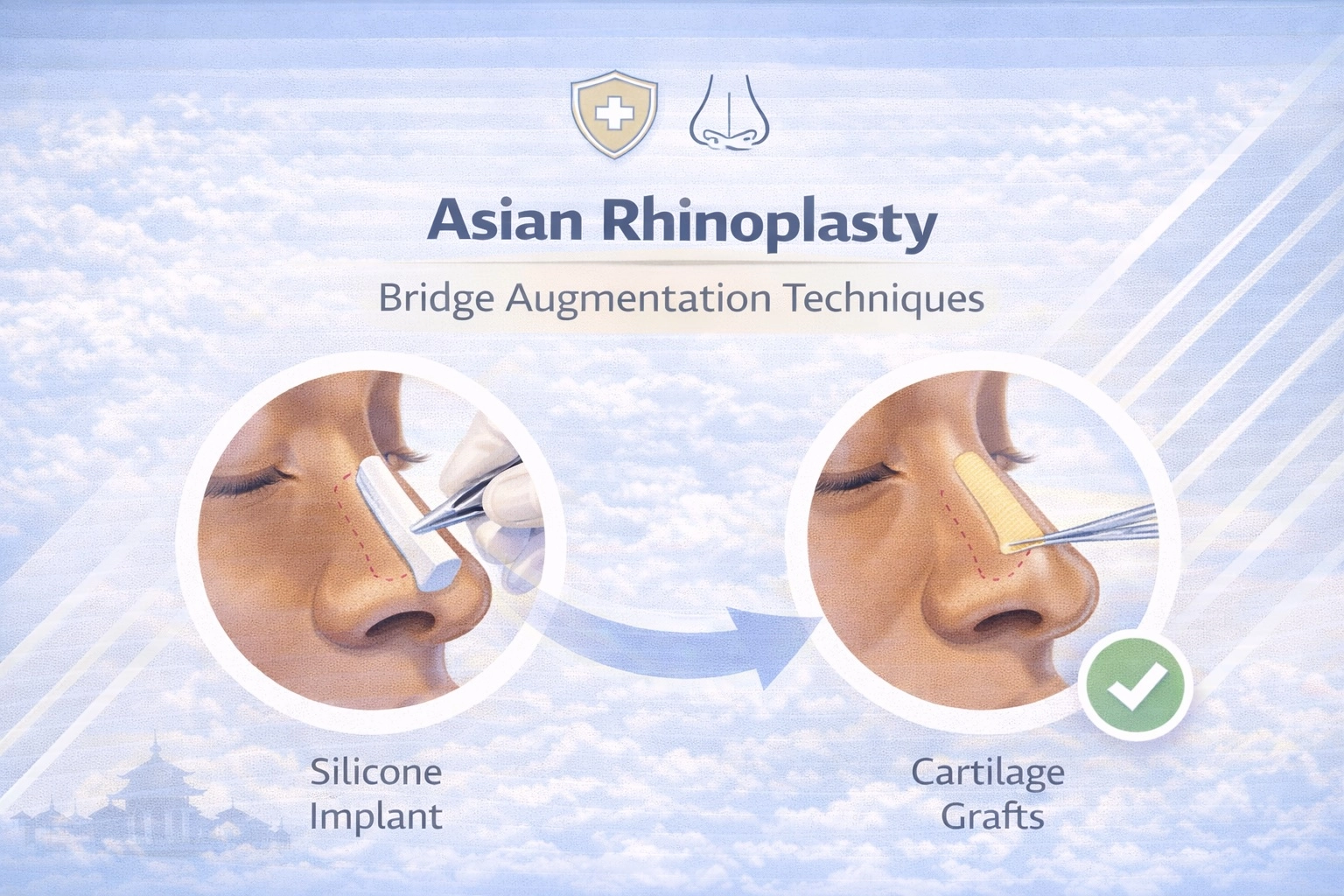
Asian rhinoplasty bridge augmentation uses silicone implants, Gore-Tex, or autologous cartilage grafts to elevate the nasal dorsum by 3-8mm, creating enhanced profile definition while preserving ethnic identity.
According to the 2024 ISAPS Global Survey, over 1 million rhinoplasty procedures were performed worldwide, with Asian augmentation techniques representing a significant portion of facial procedures.
This guide covers all bridge augmentation methods including implant types, cartilage grafting options, diced cartilage fascia (DCF) techniques, recovery timelines, and cost comparisons across countries.
Why Trust This Guide
This comprehensive guide draws from peer-reviewed research published in journals including Aesthetic Plastic Surgery and Plastic and Reconstructive Surgery, alongside clinical guidelines from the International Society of Aesthetic Plastic Surgery (ISAPS).
Carely Clinic’s medical team has synthesized current evidence on Asian rhinoplasty techniques, complication rates, and recovery protocols to provide patients with accurate, balanced information for informed decision-making.
What Is Asian Rhinoplasty Bridge Augmentation?
Asian rhinoplasty bridge augmentation elevates the nasal dorsum by 3-8mm using implants or cartilage grafts, creating enhanced profile definition while respecting the patient’s natural facial harmony and ethnic features.
Unlike traditional reduction rhinoplasty common in Western procedures, Asian rhinoplasty focuses primarily on augmentation—building structure where it may be less pronounced. The goal is to raise the nasal bridge height, improve tip projection, and refine nasal contours without creating an artificial or ethnically incongruent appearance.
This specialized approach recognizes that Asian nasal anatomy differs significantly from Caucasian anatomy, requiring techniques specifically adapted to thicker skin envelopes, softer cartilage structures, and distinct aesthetic preferences. Surgeons trained in Asian rhinoplasty understand that successful outcomes depend on subtle enhancement rather than dramatic transformation.
The procedure addresses common concerns including a low nasal bridge, rounded or undefined tip, and wide alar base while preserving the patient’s cultural identity and natural proportions.
Asian Nasal Anatomy: Understanding Key Differences
Asian noses typically feature a lower nasal bridge, thicker skin envelope, and softer cartilage framework compared to Caucasian noses, requiring augmentation-focused techniques rather than reduction approaches.
Understanding these anatomical distinctions is essential for achieving natural-looking results. The Asian nose presents several characteristics that influence surgical planning and technique selection.
Upper Third (Nasal Bridge)
The nasal bridge in Asian patients is generally lower and flatter, creating a less defined profile from the lateral view. This reduced dorsal height often creates the appearance of a wider nose from the frontal view and can make the radix (the area between the eyes) appear underdeveloped.
Middle Third (Dorsum)
The cartilaginous dorsum typically shows less projection compared to the bony dorsum. Some patients, particularly those of Japanese descent, may present with a subtle convex dorsum despite the overall lower profile.
Lower Third (Nasal Tip)
The nasal tip frequently appears rounded or bulbous with less definition, often lacking a clear supratip break. The lower lateral cartilages tend to be weaker and smaller, providing less natural structural support. Additionally, the labionasal angle is often sharper, and the nasal base is typically wider relative to nasal height.
Skin Characteristics
Perhaps most significantly, Asian nasal skin is generally thicker with a denser fibromuscular layer and more sebaceous glands. This thicker skin envelope can obscure fine surgical refinements and requires special consideration when choosing augmentation materials and techniques.
Bridge Augmentation Materials Compared
Bridge augmentation materials fall into two main categories: alloplastic implants like silicone and Gore-Tex, and autologous grafts using the patient’s own cartilage from the septum, ear, or rib.
Each material offers distinct advantages and potential drawbacks that influence surgical planning based on individual patient anatomy, aesthetic goals, and long-term considerations.
Alloplastic (Synthetic) Materials
Synthetic implants offer predictable shape, immediate structural support, and elimination of donor site morbidity. They are readily available in various sizes and can be easily customized during surgery. However, they carry risks of extrusion, infection, and capsular contracture over the long term.
Autologous (Patient’s Own Tissue) Materials
Using the patient’s own tissue eliminates rejection risk and provides natural integration with surrounding structures. Cartilage grafts can be harvested from the nasal septum, ear, or rib depending on the amount needed. The primary considerations include donor site morbidity, longer operative time, and potential for cartilage warping.
Hybrid Approaches
Many experienced surgeons now combine both approaches—using autologous cartilage for the nasal tip where natural feel is critical, while employing implants for dorsal augmentation where predictable shape is advantageous.
Silicone Implants for Dorsal Augmentation
Silicone implant augmentation is the most widely performed dorsal augmentation technique in Asia, with complication rates of 4-10% when performed by experienced surgeons using proper techniques.
Solid silicone implants have been used for Asian rhinoplasty for decades and remain popular due to their predictable results, ease of placement, and reversibility. The material is biocompatible, chemically stable, and can be precisely carved to match individual patient anatomy.
Advantages of Silicone Implants
Silicone offers several practical benefits that explain its popularity in Asian rhinoplasty. The procedure is relatively straightforward, can often be performed through a closed approach with incisions hidden inside the nose, and does not require harvesting tissue from another body site. Results are immediately visible, and if necessary, the implant can be removed or replaced in the future.
For patients with thicker skin—common among Asian individuals—silicone implants can achieve adequate height augmentation without the implant edges becoming visible. The material maintains its shape well over time, providing stable long-term results when properly placed.
Implant Types and Shapes
Modern silicone implants come in various configurations. The I-shaped implant focuses on dorsal augmentation only, while the L-shaped implant extends to include columellar support. Many surgeons now prefer I-shaped implants combined with autologous cartilage for tip work, as this reduces pressure on the nasal tip skin and lowers extrusion risk.
Custom carving during surgery allows the surgeon to precisely tailor the implant to each patient’s anatomy, adjusting height, width, and contour for optimal results.
Complication Considerations
Research on silicone implant rhinoplasty indicates overall complication rates between 4% and 10%. The most common complications include implant deviation or malposition, followed by capsular contracture, skin thinning, and in rare cases, extrusion through the skin.
Extrusion and infection rates remain relatively low at less than 1% in experienced hands. However, these risks persist throughout the life of the implant, and some complications may not appear until years after the initial surgery.
Proper surgical technique—including precise pocket dissection, appropriate implant sizing, and avoiding excessive tension on the nasal tip—significantly reduces complication risk.
Gore-Tex (ePTFE) Implants
Gore-Tex (expanded polytetrafluoroethylene) implants offer tissue integration through their microporous structure, with systematic reviews showing overall complication rates of approximately 5.3% compared to 9.2% for silicone.
Gore-Tex has been used in rhinoplasty for over 30 years, having originally been developed for vascular surgery. Its porous structure allows tissue ingrowth, which provides better stability and a more natural feel compared to silicone.
Tissue Integration Characteristics
Unlike silicone, which remains encapsulated by scar tissue, Gore-Tex’s microporous texture permits the body’s tissues to grow into the implant over time. This integration helps anchor the implant in place, reducing the risk of shifting or migration. The material also tends to feel softer and more natural to the touch.
Advantages Over Silicone
Studies comparing Gore-Tex to silicone have found lower rates of malposition and deviation with Gore-Tex implants. The porous structure creates better fixation, and the softer material may cause less pressure on overlying skin, potentially reducing long-term skin thinning.
Disadvantages and Considerations
Gore-Tex implants are more expensive than silicone and require more complex surgical technique. The material must be soaked in antibiotic solution before implantation and requires precise contouring. Once integrated with tissue, Gore-Tex becomes more difficult to remove if revision surgery is needed—this is both an advantage for stability and a disadvantage for revisability.
Some concerns exist regarding potential shrinkage over time, though clinical studies have not consistently demonstrated significant graft volume loss in the nose.
Best Candidates
Gore-Tex may be particularly suitable for patients seeking a more natural feel, those with thinner skin where softer material is advantageous, or patients undergoing primary rhinoplasty where easier revision is less of a concern.
Autologous Cartilage Grafts
Autologous costal cartilage provides the strongest and most abundant grafting material for Asian rhinoplasty, with the seventh rib being ideal due to its length of approximately 90mm and favorable harvesting location.
Using the patient’s own tissue for dorsal augmentation eliminates rejection risk and provides complete biocompatibility. For patients requiring significant augmentation or those with concerns about synthetic materials, autologous cartilage represents the gold standard.
Septal Cartilage
The nasal septum is the first-choice donor site when adequate cartilage is available. Septal cartilage is flat, relatively strong, and located within the surgical field, eliminating the need for a separate incision. However, Asian patients often have limited septal cartilage—typically thinner and smaller than in Caucasian patients—making it insufficient for significant dorsal augmentation.
Auricular (Ear) Cartilage
Ear cartilage can be harvested through an incision hidden behind the ear with minimal visible scarring. The cartilage from the cymba and cavum concha provides adequate material for moderate augmentation and tip grafting. However, ear cartilage is softer and more curved than septal or rib cartilage, limiting its use for straight dorsal grafts. It works well when carved and layered for incremental height increases.
Costal (Rib) Cartilage
For significant dorsal augmentation or revision cases where other cartilage sources are depleted, rib cartilage is often the best option. The sixth or seventh rib provides abundant, strong cartilage that can be carved into any shape needed. The seventh rib is particularly favored because it offers the greatest length and thickness while being relatively safe to harvest.
Rib cartilage carries the risk of warping—a tendency for the cartilage to bend after being carved. Experienced surgeons minimize this through balanced carving techniques, using the central core of the rib, and allowing time for any warping to occur before final placement.
Donor Site Considerations
Rib cartilage harvesting requires an additional incision on the chest, typically 1-3cm in length. Potential complications include chest scarring, temporary pain, and very rarely, pneumothorax (collapsed lung). In female patients, the incision can often be hidden within the inframammary fold.
Diced Cartilage Fascia (DCF) Technique
The diced cartilage fascia technique combines finely diced autologous cartilage wrapped in temporal fascia, creating a moldable graft that conforms to dorsal contours with minimal risk of warping.
DCF has emerged as an increasingly popular alternative to solid cartilage grafts and implants, combining the benefits of autologous tissue with the pliability and precision of synthetic materials.
Technique Overview
In the DCF procedure, cartilage—typically harvested from the rib—is diced into small pieces approximately 0.5-1mm in size. This diced cartilage is then wrapped in a thin layer of deep temporal fascia, harvested through a small incision hidden in the hairline above the ear. The resulting “cartilage sausage” can be molded to precisely fit the dorsal profile.
Advantages of DCF
The primary advantage of DCF is elimination of warping, which can occur with solid rib cartilage grafts. The diced cartilage behaves as a unit, conforming to the underlying nasal framework while maintaining its height over time. Studies have shown minimal resorption and excellent long-term stability.
DCF integrates with surrounding tissue, becomes revascularized, and eventually functions as part of the patient’s own nasal structure. This provides the safety benefits of autologous tissue while achieving the smooth, predictable contours often associated with implants.
Clinical Outcomes
Research on DCF for major dorsal augmentation in Asian patients has demonstrated acceptable aesthetic and functional results in the majority of cases. The technique is particularly valuable for revision rhinoplasty cases where previous implant complications have occurred or for primary cases where patients prefer to avoid synthetic materials entirely.
Technique Variations
Several variations exist, including diced cartilage wrapped in rectus abdominis fascia and newer techniques using fibrin glue instead of fascia wrapping. Each approach has advantages—fascial wrapping provides containment but requires an additional harvest site, while glue techniques may reduce operative time but have less long-term data.
Nasal Tip Refinement in Asian Rhinoplasty
Nasal tip refinement in Asian patients typically requires cartilage grafts and suture techniques to increase projection and definition, often using septal extension grafts combined with shield or cap grafts for optimal structural support.
While this article focuses on bridge augmentation, tip refinement is almost always addressed simultaneously in Asian rhinoplasty, as an enhanced bridge without corresponding tip improvement can create facial imbalance.
Challenges in Asian Tip Rhinoplasty
The Asian nasal tip presents specific challenges: weaker lower lateral cartilages provide less natural support, thicker skin obscures fine refinements, and the typically rounded tip shape requires building structure rather than removing tissue.
Cartilage Support Techniques
The septal extension graft has become fundamental to Asian tip rhinoplasty. This technique extends the existing septum using harvested cartilage (from septum, ear, or rib) to provide a stable foundation for tip projection. Various configurations—including columellar struts, shield grafts, and cap grafts—are then built upon this foundation.
Suture Techniques
When cartilage is adequate, suture techniques can reshape the tip without additional grafts. Transdomal sutures narrow and define the tip, while interdomal sutures bring the domes together. However, in many Asian patients, the cartilage is too weak for sutures alone, necessitating structural grafting.
Alar Base Considerations
Wide nostrils and alar flare are common concerns that can be addressed through alar base reduction—removing a small wedge of tissue at the base of the nostril. This procedure narrows the nostrils and reduces flare, but must be performed conservatively to avoid over-narrowing or visible scarring.
Recovery Timeline and What to Expect
Most Asian rhinoplasty patients return to work within 7-10 days, with major swelling resolving over 4-6 weeks and final results becoming apparent at 12-18 months post-surgery.
Recovery from Asian rhinoplasty follows a predictable timeline, though individual healing varies based on surgical technique, skin thickness, and personal factors. Asian patients with thicker nasal skin may experience prolonged swelling, particularly at the nasal tip.
Week 1: Initial Recovery
During the first week, a protective splint remains on the nose. Expect significant swelling and bruising, particularly around the eyes. Pain is typically mild to moderate and well-controlled with prescribed medication. Keeping the head elevated—even during sleep—helps minimize swelling.
Most patients experience nasal congestion due to internal swelling, making mouth-breathing necessary for several days. The splint is typically removed at the end of the first week during a follow-up appointment.
Weeks 2-4: Early Healing
After splint removal, the nose will still appear swollen—this is normal and expected. Most patients feel comfortable returning to work and light social activities within 10-14 days, though some residual bruising may be concealed with makeup.
By the end of week four, most visible bruising has resolved and swelling has decreased significantly, though the nose may still look “puffy” to the patient.
Months 1-3: Progressive Refinement
Swelling continues to resolve gradually, and the new nasal shape becomes increasingly defined. The bridge typically shows its new contour earlier than the tip, which remains swollen longer due to its distance from major blood vessels.
Patients should avoid glasses that rest on the nose, strenuous exercise, and any activities risking nasal trauma during this period.
Months 6-18: Final Results
By six months, approximately 80% of final results are visible. However, complete healing—particularly for tip refinement in patients with thick skin—can take 12-18 months. During this time, subtle changes continue as deep tissue swelling resolves and scar tissue matures.
Patients should expect that the final result will differ from what they see in the first weeks or months, and should maintain realistic expectations throughout the healing process.
How This Applies in Turkey
International guidelines for rhinoplasty apply equally at Turkey’s JCI-accredited facilities, where board-certified surgeons perform Asian rhinoplasty using the same techniques and safety protocols as leading hospitals in Asia, Europe, and North America.
Turkey has become a major destination for Asian rhinoplasty, combining experienced surgeons with significant cost advantages. Turkish surgeons, many trained internationally, have extensive experience with diverse ethnic anatomies due to the country’s geographic position at the crossroads of Europe and Asia.
Cost Comparison
Rhinoplasty in Turkey costs €2,500-€5,000 all-inclusive, compared to $10,000-$18,000 in the USA and £6,500-£11,500 in the UK—representing savings of 50-70% without compromising quality or safety.
These savings reflect lower operational costs in Turkey rather than any difference in surgical standards or materials. JCI-accredited Turkish hospitals use the same implant materials, cartilage grafting techniques, and monitoring equipment as facilities worldwide.
What’s Included
Turkish medical tourism packages typically include comprehensive care: surgeon and anesthesiologist fees, hospital or clinic facility costs, pre-operative consultations and testing, post-operative medications, hotel accommodation, and airport transfers. This all-inclusive approach simplifies planning for international patients.
Timeline for International Patients
International patients typically require a 7-10 day stay in Turkey. This includes initial consultation and preparation, surgery, and early recovery until splint removal. Follow-up care can be coordinated remotely, with surgeons available for virtual consultations during the months following surgery.
At Carely Clinic in Istanbul, Asian rhinoplasty is performed by board-certified plastic surgeons at JCI-accredited partner hospitals. Packages include pre-operative evaluation, surgery with specialized techniques for Asian nasal anatomy, post-operative care, and comprehensive patient support. Learn more about Asian Rhinoplasty at Carely Clinic.
Bridge Augmentation Materials Comparison Table
| Factor | Silicone Implant | Gore-Tex (ePTFE) | Rib Cartilage | DCF Graft |
|---|---|---|---|---|
| Material Source | Synthetic | Synthetic | Patient’s rib | Patient’s cartilage + fascia |
| Complication Rate | 4-10% | ~5.3% | 3-8% (warping risk) | Low (limited data) |
| Tissue Integration | Encapsulated | Partial ingrowth | Full integration | Full integration |
| Natural Feel | Moderate | Good | Excellent | Excellent |
| Revision Ease | Easy | More difficult | Moderate | Moderate |
| Donor Site Required | No | No | Yes (chest) | Yes (chest + scalp) |
| Operative Time | Shorter | Moderate | Longer | Longer |
| Best For | Primary cases, thick skin | Natural feel priority | Revision, significant augmentation | Patients avoiding implants |
| Cost | Lower | Moderate | Higher | Higher |
Recovery Timeline Overview
Before Surgery
- 2-4 weeks prior: Stop smoking, avoid blood thinners
- 1 week prior: Complete pre-operative testing
- Day before: Follow fasting instructions
Surgery Day
- Procedure duration: 1.5-3 hours depending on complexity
- General anesthesia typically used
- Splint placed at end of surgery
Post-Surgery Recovery
| Timeframe | Milestone | What to Expect |
|---|---|---|
| Day 1-3 | Peak swelling | Most discomfort, head elevation essential |
| Day 7 | Splint removal | Bruising visible, significant swelling |
| Week 2 | Return to work | Most bruising resolved, continued swelling |
| Week 4 | Light exercise | Noticeable improvement, nose still swollen |
| Month 3 | Social activities normal | Bridge defined, tip still refining |
| Month 6 | 80% of final result | Significant improvement visible |
| Month 12-18 | Final result | Complete healing, all refinements visible |
Frequently Asked Questions
What is the best implant material for Asian rhinoplasty?
The optimal material depends on individual anatomy, goals, and skin thickness—silicone offers predictability, Gore-Tex provides tissue integration, and autologous cartilage ensures biocompatibility. Silicone remains most popular in Asia for its ease of placement and reversibility, while autologous rib cartilage is preferred for patients wanting completely natural tissue. Your surgeon will recommend the most appropriate option after evaluating your specific case, considering factors like desired augmentation height and revision likelihood.
How much height can bridge augmentation add?
Bridge augmentation typically adds 3-8mm of dorsal height depending on skin thickness and anatomical limitations. Patients with thicker skin can accommodate 6-8mm elevation without implant visibility, while those with thin skin may need more conservative 3-5mm augmentation using autologous tissue. The final height is determined during surgery based on your facial proportions and the material used for augmentation.
Will the implant look or feel unnatural?
Properly placed implants by experienced surgeons should not be visible or easily palpable through the skin. Silicone implants may feel slightly firmer than natural tissue, while Gore-Tex and cartilage grafts typically feel more natural to the touch. Choosing appropriate implant size, proper placement depth, and matching material to skin thickness minimizes any unnatural appearance or tactile sensation.
What are the risks of silicone implants long-term?
Long-term silicone implant risks include capsular contracture, implant shifting or deviation, skin thinning, and extrusion in less than 1% of cases. These complications can occur years after surgery, with capsular contracture being most common at rates of 4-10% depending on surgical technique. Regular follow-up appointments and prompt attention to any changes in nasal appearance or sensation help address issues early before they become severe.
How does Asian rhinoplasty differ from standard rhinoplasty?
Asian rhinoplasty focuses on augmentation using implants or cartilage grafts to build the bridge and tip, while Western rhinoplasty typically reduces size by removing tissue. Techniques must account for thicker skin, softer cartilage, and weaker structural support in Asian noses requiring different grafting approaches. The goal is enhancing definition while preserving ethnic features rather than creating Westernized features.
Can I have rhinoplasty if I’ve had filler injections?
Yes, but wait 12-18 months for hyaluronic acid filler to dissolve naturally or have it dissolved with hyaluronidase enzyme before surgery. Previous filler creates tissue plane distortion and inflammation that can complicate surgical dissection and affect results if not fully resolved. Always disclose filler history to your surgeon during consultation for proper surgical planning.
How long do rhinoplasty results last?
Rhinoplasty results are permanent, with autologous cartilage grafts lasting indefinitely and implants typically lasting decades without requiring replacement. Some patients may need revision surgery due to complications, age-related changes, or evolving aesthetic preferences after 10-20 years. The nose continues aging naturally, but surgical changes to structure remain stable throughout life.
When can I wear glasses after rhinoplasty?
Avoid glasses resting on the nasal bridge for 4-6 weeks after surgery or until your surgeon gives clearance based on healing progress. During recovery, tape glasses to your forehead, use contact lenses, or wear lightweight frames suspended from the ears only. Premature pressure can cause permanent indentations, implant shifting, or cartilage graft displacement.
Is rhinoplasty in Turkey safe for international patients?
Yes, rhinoplasty in Turkey is safe when performed at JCI-accredited facilities by board-certified surgeons following international safety protocols and standards. Turkey performs over 100,000 international rhinoplasty procedures annually with complication rates comparable to Western countries according to medical tourism association data. Verify surgeon credentials, facility accreditation, and review before-and-after photos before making your decision.
What if I’m not satisfied with my results?
Revision rhinoplasty can address unsatisfactory results, but you must wait 12-18 months for complete healing before any corrective surgery. Discuss revision policies, rates, and costs with your surgeon before the primary procedure, and understand that achieving perfect results may require multiple surgeries in complex cases. Maintaining realistic expectations and choosing an experienced surgeon reduces the likelihood of requiring revision.
How do I choose between implants and autologous cartilage?
Choose implants for simpler surgery, easier revision, and lower cost, or choose autologous cartilage for complete biocompatibility, natural feel, and no rejection risk. Implants work best for primary cases with thick skin and moderate augmentation needs, while cartilage suits revision cases, significant augmentation, or patients avoiding synthetic materials. Many surgeons recommend hybrid approaches using implants for bridge augmentation and cartilage for tip refinement.
Does insurance cover Asian rhinoplasty?
Cosmetic rhinoplasty is typically not covered by insurance, but functional components addressing breathing difficulties or deviated septum may qualify for partial coverage. Septorhinoplasty combining aesthetic and functional correction may receive partial insurance reimbursement depending on your policy and medical documentation. Submit pre-authorization requests with medical necessity documentation to determine coverage before scheduling surgery.
Conclusion
Asian rhinoplasty bridge augmentation offers multiple evidence-based options including silicone implants, Gore-Tex, and autologous cartilage grafts, with complication rates ranging from 4-10% and patient satisfaction exceeding 90% when performed by experienced surgeons.
The key to successful outcomes lies in choosing a surgeon experienced specifically in Asian rhinoplasty who understands the unique anatomical considerations and aesthetic goals of Asian patients. Whether using synthetic implants or the patient’s own tissue, proper technique and realistic expectations are essential for achieving natural-looking, lasting results.
For international patients, Turkey offers access to board-certified surgeons and JCI-accredited facilities at significantly reduced costs compared to the USA and UK, making high-quality Asian rhinoplasty more accessible without compromising safety or outcomes.
Disclaimer: Individual requirements and outcomes vary. This guide provides general information based on international guidelines and current research. Consult qualified medical professionals for personalized advice regarding your specific situation.
If you’re considering Asian rhinoplasty and would like to learn more about your options, schedule a consultation with Carely Clinic to discuss your goals with our experienced medical team.