
Quick Summary
Alar base reduction (alarplasty) is a cosmetic procedure that narrows wide nostrils by removing small wedges of tissue where the nose meets the cheeks, typically taking 30-60 minutes under local anesthesia with recovery within 1-2 weeks.
According to ISAPS global statistics, rhinoplasty procedures increased 21.6% in 2023, with nostril modifications being a frequently requested component of facial aesthetic surgery worldwide.
This guide covers surgical techniques, candidacy requirements, recovery timeline, costs by country, risks, and what to expect from nostril narrowing surgery.
Why Trust This Guide
This article synthesizes current clinical evidence from peer-reviewed journals including Aesthetic Plastic Surgery and Archives of Facial Plastic Surgery, alongside guidelines from ISAPS (International Society of Aesthetic Plastic Surgery) and leading academic medical centers.
Carely Clinic’s editorial team consulted multiple board-certified facial plastic surgeons’ published protocols and current medical literature to ensure accuracy. All statistics and procedural details are verified against recent clinical studies and international standards.
What Is Alar Base Reduction?
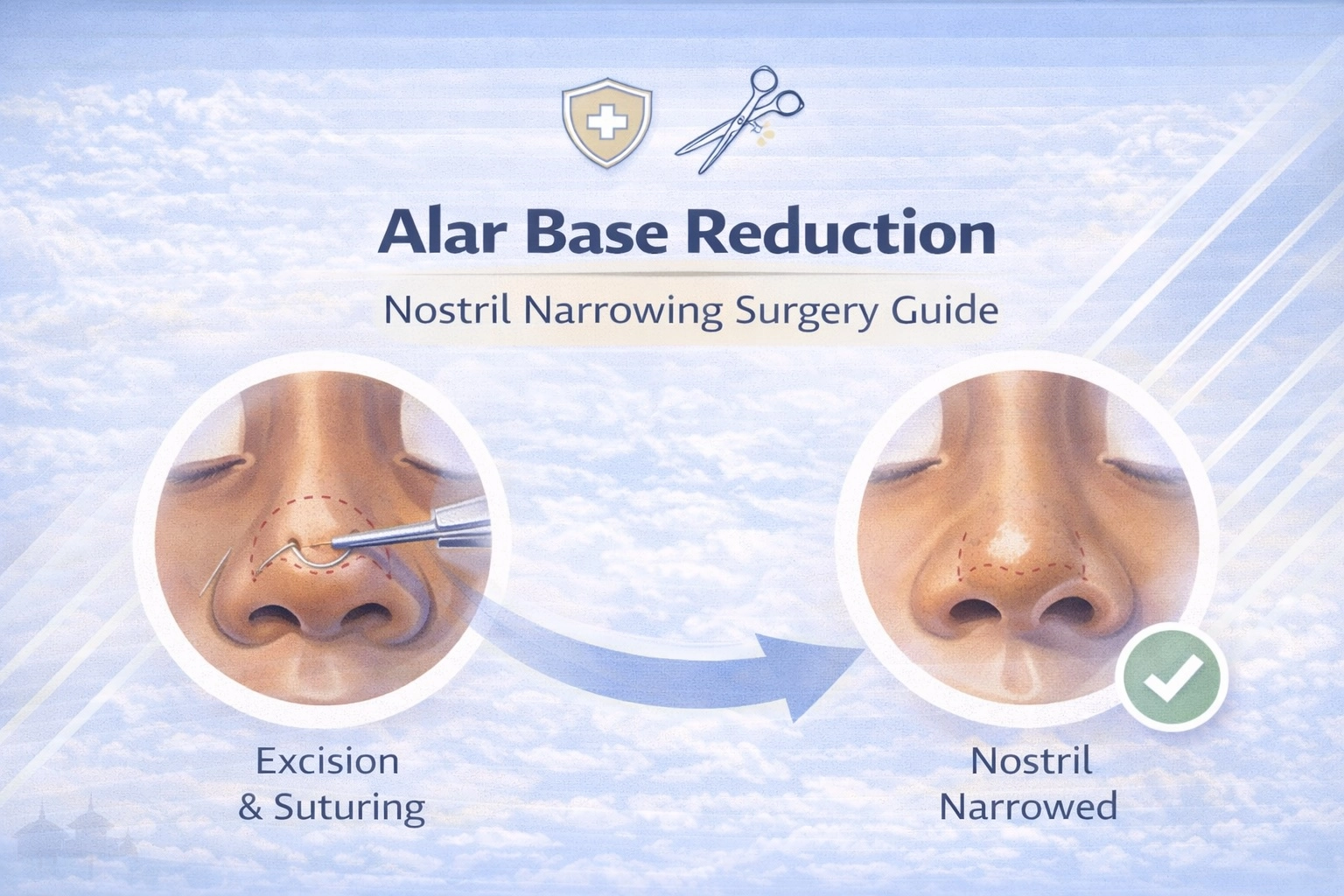
Alar base reduction is a surgical procedure that narrows the width of the nostrils by removing small wedges of tissue from the alar base, the lower portion of the nose where the nostrils connect to the cheeks and upper lip.
Also called alarplasty or nostril reduction surgery, this procedure specifically targets the ala—the curved, fleshy outer walls of the nostrils. Unlike comprehensive rhinoplasty that may involve bone and cartilage manipulation, alarplasty focuses exclusively on soft tissue modification to reduce nostril flare and width.
The alar base comprises skin and fibrofatty tissue without cartilage. This anatomical characteristic makes the procedure relatively straightforward compared to other nasal surgeries. The goal is achieving facial harmony by bringing nostril width into proportion with other facial features, typically aligning with the distance between the inner corners of the eyes (intercanthal distance).
Surgeons perform alarplasty as either a standalone procedure or as the final step during comprehensive rhinoplasty. When combined with rhinoplasty, surgeons complete the alar modification last because changes to tip projection and nasal structure can affect nostril appearance.
What Alarplasty Can Correct
The procedure effectively addresses several aesthetic concerns related to nostril appearance:
- Excessive nostril flare: When the outer portion of the nostrils extends significantly beyond the alar-facial groove
- Wide nasal base: Interalar distance exceeding the intercanthal distance
- Nostril asymmetry: Visible size or shape differences between nostrils
- Disproportionate nostril size: Nostrils appearing too large relative to other facial features
- Previous rhinoplasty refinement: Fine-tuning results from prior nasal surgery
Who Is a Good Candidate?
Ideal candidates for alar base reduction are healthy non-smokers aged 16 or older who have wide or flared nostrils disproportionate to their facial features and maintain realistic expectations about surgical outcomes.
Physical maturity represents a critical eligibility factor. Nasal development typically completes between ages 13-14 for females and 15-16 for males. Performing the procedure before full facial development risks distorting future growth and compromising long-term results.
Primary Eligibility Criteria
Surgeons evaluate several factors when determining candidacy:
Physical health requirements include being free from bleeding disorders, chronic illnesses that impair healing, and active skin infections around the nose. Conditions such as cold sores, acne, eczema, or rosacea near the treatment area may temporarily disqualify candidates.
Smoking cessation is mandatory. All forms of nicotine inhibit wound healing and significantly increase complication risk. Most surgeons require cessation for 4-6 weeks before and after surgery.
Medication considerations may affect eligibility. Blood thinners, aspirin, NSAIDs, and vitamin E supplements increase bleeding risk and typically must be discontinued 1-2 weeks before surgery.
Psychological readiness involves having realistic expectations and understanding that the procedure creates subtle rather than dramatic changes. Candidates should seek improvement rather than perfection.
Anatomical Indications
Specific nostril characteristics typically warrant consideration for alar base reduction:
The standard guideline suggests nostril width should fall within imaginary vertical lines drawn downward from each inner eye corner. When nostrils extend beyond these lines at rest or during flaring, reduction may be appropriate.
Alar flaring—where the lateral nostril edges curve outward beyond the alar-facial groove—responds well to wedge excision techniques. Wide nostril sills without significant flaring may benefit from sill excision approaches.
Patients of African, Asian, Middle Eastern, or Hispanic descent commonly seek this procedure due to naturally wider nasal bases characteristic of these ethnicities. Experienced surgeons approach ethnic rhinoplasty with cultural sensitivity, preserving ethnic identity while achieving aesthetic refinement.
Expert Insight
“Alar base reduction is one of the most challenging parts of rhinoplasty because the maneuvers performed are nearly irreversible. Conservative excision and careful planning are essential.”
— Aesthetic Plastic Surgery Journal, 2024
Surgical Techniques Explained
Three primary surgical techniques address different anatomical concerns: alar wedge excision (Weir incision), nasal sill excision, and V-Y advancement, with surgeons often combining methods for optimal results.
Each technique targets specific aspects of nostril width and flare. The choice depends on individual anatomy, the degree of correction needed, and aesthetic goals discussed during consultation.
Alar Wedge Excision (Weir Incision)
The alar wedge excision, introduced by Robert Weir in 1892 and subsequently refined, remains the preferred technique for correcting excessive nostril flare visible from the frontal view.
This approach removes a wedge-shaped piece of tissue from the alar base, with incisions strategically placed in the natural crease where the nostril meets the cheek. The technique spares the internal nostril circumference, avoiding telltale incisions visible inside the nostril opening.
Best for: Patients with excessive nostril flare without significant sill width concerns.
Advantages: Preserves natural alar curvature, hides scars in the alar-facial groove, and maintains internal nostril appearance.
Procedure details: Small wedges of skin are excised, and edges are sutured to reduce width. Incisions are closed with deep dissolvable sutures and superficial sutures removed at 5-7 days.
Nasal Sill Excision
Nasal sill excision targets the floor of the nostril—the area extending from the columella (central partition) to where the nostril meets the upper lip junction.
This technique directly narrows the nasal base when width results from an enlarged sill rather than alar flaring. Incisions are placed along the nasal sill, and excess tissue is removed to decrease interalar distance and nostril size.
Best for: Patients with a wide nasal base due to large nasal sill without significant flaring.
Advantages: Directly narrows the sill and reduces nostril size, with scars hidden in natural creases.
Considerations: Sill excisions may sometimes accentuate relative alar flaring, potentially requiring combination with wedge excision.
V-Y Advancement
The V-Y advancement technique repositions the alar insertion when the lateral attachment point of the ala is responsible for excessive nasal base width.
A V-shaped incision is made and closed into a Y-shape, advancing tissue without significant removal. This tissue-conserving approach offers subtle reshaping while maintaining reversibility if needed.
Best for: Cases where alar insertion position rather than tissue excess creates width.
Advantages: Conserves tissue, technically reversible, and results in subtle refinement.
Considerations: Rarely performed as standalone technique due to potential for visible scarring where incisions extend beyond natural creases.
Combined Technique Approach
Many patients require combined approaches for comprehensive correction. A 20-year review of 124 patients found that while 51.6% underwent wedge excision alone, 16.9% required combined wedge and sill excisions, and 16.1% received all three techniques.
Surgeons determine the optimal combination during preoperative assessment, evaluating nasal base width, degree of flaring, nostril size, and overall facial proportions. This individualized approach ensures each component of nostril aesthetics is appropriately addressed.
The Procedure Step-by-Step
Alar base reduction is typically performed under local anesthesia in an office setting, taking 30-60 minutes with patients returning home the same day.
Pre-Procedure Preparation
In the weeks before surgery, preparation includes:
- Completing medical evaluation and discussing health history
- Stopping blood-thinning medications, aspirin, and NSAIDs 1-2 weeks prior
- Ceasing smoking and nicotine products 4-6 weeks before surgery
- Avoiding alcohol for 2 weeks prior
- Arranging transportation home following the procedure
- Taking prescribed photographs for surgical planning
Some surgeons use 3D imaging technology during consultation to simulate potential results and refine surgical plans according to individual aesthetic goals.
During Surgery
The surgical process follows a systematic approach:
Anesthesia administration: Local anesthetic numbs the surgical area, ensuring comfort throughout. For combined rhinoplasty procedures, general anesthesia may be used instead.
Marking and measurement: The surgeon carefully marks planned incision lines, calculating the precise amount of tissue to remove based on preoperative assessment.
Incision and tissue removal: Using a fine surgical blade (typically no. 11), the surgeon makes precise incisions according to the selected technique. Tissue is removed conservatively—excess removal cannot be reversed.
Closure: Multiple suture layers close the wounds. Deep dissolvable sutures reduce tension, while superficial nylon sutures will be removed at follow-up. Surgeons close meticulously to minimize scarring and preserve natural contours.
Bilateral symmetry: The procedure is performed on both sides sequentially, with careful attention to achieving balanced, symmetrical results.
Immediate Post-Procedure
Following surgery, patients receive wound care instructions and any prescribed medications. Light bandaging may be applied. Most patients experience minimal discomfort and can resume light activities the following day.
Recovery Timeline
Most patients return to desk work within 5-7 days and see the majority of swelling resolve within 2 weeks, with final results visible at 6-12 months as subtle residual swelling dissipates.
Recovery from alarplasty progresses relatively quickly compared to comprehensive rhinoplasty since no bone or cartilage is involved.
Days 1-3: Immediate Recovery
The first few days involve peak swelling and potential discomfort. Patients typically experience:
- Swelling and redness around incision sites
- Minor discomfort manageable with over-the-counter pain medication
- Possible minor bleeding or oozing from incisions
- Tightness sensation in the nostril area
Keep the head elevated, even during sleep, to minimize swelling. Apply cold compresses as directed. Avoid touching or bumping the nose.
Days 5-7: Suture Removal
Non-dissolvable sutures are removed at the follow-up appointment, typically between days 5-7. Many surgeons remove half the stitches on day 3 and the remainder by day 7.
After suture removal, incisions may appear slightly pink. Patients can begin applying vitamin E oil, sunscreen, and makeup to the area approximately 24 hours after stitches are out.
Weeks 1-2: Early Healing
During the first two weeks:
- Major swelling subsides significantly
- Bruising (if present) fades
- Redness around incisions decreases
- Most patients feel comfortable in public
- Light fitness activities can resume around day 14
Avoid strenuous exercise, heavy lifting, and activities that risk nasal trauma. Don’t blow the nose forcefully. Sleep on your back using elevated pillows.
Weeks 3-4: Progressive Improvement
By week three, most visible signs of surgery have resolved. The nose appears smaller and more narrow, though subtle swelling may persist. Scars begin maturing and fading.
Patients can gradually resume more vigorous activities, though contact sports and high-impact exercise should still be avoided.
Months 1-3: Near-Final Results
Between one and three months, the nostril area continues healing internally. External appearance approaches final results. Scars, properly placed in natural creases, become increasingly inconspicuous.
Months 6-12: Final Outcome
Complete healing and final results typically take 6-12 months. Residual internal swelling fully resolves, and scars mature to their final appearance—often nearly invisible when performed by experienced surgeons.
Expert Insight
“Alar reduction healing time is usually quite short. When done well, the scar is virtually imperceptible even at one week, and there is usually no bruising.”
— American Society of Plastic Surgeons Member Commentary
Potential Risks and Complications
Alar base reduction carries lower risk than comprehensive rhinoplasty, but possible complications include visible scarring, asymmetry, over-correction, and infection, which experienced surgeons significantly minimize through proper technique.
All surgical procedures carry some degree of risk. Understanding potential complications helps patients make informed decisions and recognize warning signs during recovery.
Common Temporary Effects
Normal post-operative experiences include:
- Swelling and redness (1-2 weeks)
- Mild discomfort (typically managed without prescription medication)
- Minor bleeding or oozing initially
- Temporary tightness when smiling
- Slight numbness around incision sites
These effects resolve during normal healing and don’t indicate complications.
Potential Complications
Visible scarring: While incisions are placed in natural creases to minimize visibility, some patients may develop noticeable scars. Research indicates that 10-15% of patients may benefit from dermabrasion or laser treatment to improve scar appearance. Thicker, oilier skin with more sebaceous glands tends to scar more than thin, dry skin.
Asymmetry: Perfect symmetry is difficult to achieve, particularly when pre-existing asymmetry exists. Dynamic asymmetry—caused by uneven facial muscle activity—cannot be corrected through alarplasty. Studies note that achieving perfectly symmetric nostrils with preexisting asymmetries is nearly impossible.
Over-correction: Removing too much tissue can create an overly pinched appearance or compromise nasal airflow. This represents one of the procedure’s greatest risks because tissue removal cannot be reversed. Conservative excision and experienced surgeon selection are critical.
Notching: Improper technique can create an unnatural “notch” or concavity in the nostril contour. Meticulous surgical planning and precise closure minimize this risk.
Infection: Though uncommon, infections can occur. Antibiotics may be prescribed preventively, and patients receive wound care instructions to reduce risk.
Breathing changes: Narrowing nostrils too aggressively can restrict airflow. Experienced surgeons carefully assess functional implications alongside aesthetic goals.
Minimizing Risk
Selecting a board-certified facial plastic surgeon or plastic surgeon with significant alarplasty experience dramatically reduces complication likelihood. Patients should:
- Verify surgeon credentials and board certification
- Review before-and-after photographs of similar cases
- Ask about revision rates and complication experience
- Follow all pre- and post-operative instructions carefully
- Attend all follow-up appointments
- Report any concerning symptoms promptly
Alar Base Reduction Cost by Country
Alar base reduction in Turkey costs €1,500-€3,500 compared to $6,000-$9,000 in the USA and £3,000-£5,000 in the UK, representing savings of 50-70% while maintaining international safety standards.
The significant price difference reflects lower operating costs in Turkey rather than quality differences. Turkey’s medical tourism infrastructure, favorable exchange rates, and government healthcare investment contribute to competitive pricing.
Detailed Cost Comparison
| Country | Price Range | What’s Typically Included | Average Savings vs USA |
|---|---|---|---|
| Turkey | €1,500 – €3,500 | Surgery, anesthesia, facility, follow-up, medications, transfers, accommodation (packages) | 60-75% |
| USA | $6,000 – $9,000 | Surgeon fee only (anesthesia, facility billed separately) | — |
| UK | £3,000 – £5,000 | Surgeon fee, facility (anesthesia may be separate) | — |
| Australia | AUD $5,000 – $10,000 | Surgeon fee, facility | — |
| Canada | CAD $5,000 – $8,000 | Surgeon fee, facility | — |
Factors Affecting Cost
Several variables influence final pricing:
Procedure complexity: Standalone alarplasty costs less than combined procedures with rhinoplasty. More complex cases requiring multiple techniques increase price.
Surgeon experience: Specialists with extensive facial plastic surgery training and high procedure volumes typically command higher fees, often justified by lower revision rates.
Facility type: JCI-accredited hospitals with comprehensive resources cost more than basic clinic settings but offer enhanced safety.
Geographic location: Major metropolitan areas have higher operating costs reflected in pricing.
Anesthesia type: General anesthesia costs more than local anesthesia with sedation.
Package inclusions: Turkey’s all-inclusive packages covering accommodation, transfers, and medications represent significant value compared to à la carte pricing elsewhere.
What’s Not Typically Included
Regardless of country, certain costs may fall outside standard quotes:
- Extended medications or specialized treatments
- Revision surgery (if needed)
- Travel and accommodation (in non-package scenarios)
- Post-operative garments or specialty products
- Extended follow-up beyond standard protocols
Always clarify inclusions before booking to avoid unexpected expenses.
Alar Base Reduction vs Rhinoplasty
Alar base reduction exclusively addresses nostril width and flare through soft tissue modification, while rhinoplasty can reshape the entire nose including bone, cartilage, bridge, tip, and base—making alarplasty faster, less invasive, and more affordable.
Understanding the distinction helps patients determine which procedure meets their goals.
Key Differences
| Factor | Alar Base Reduction | Full Rhinoplasty |
|---|---|---|
| Structures Modified | Soft tissue only (skin, fat) | Bone, cartilage, soft tissue |
| Treatment Area | Nostrils and alar base only | Entire nose (bridge, tip, base) |
| Anesthesia | Local (usually) | General (usually) |
| Procedure Duration | 30-60 minutes | 1.5-4 hours |
| Recovery Time | 1-2 weeks (social); 1-3 months (full) | 2-3 weeks (social); 12+ months (full) |
| Bruising | Minimal to none | Common, especially around eyes |
| Splint/Cast Required | No | Yes (1-2 weeks) |
| Cost (Turkey) | €1,500 – €3,500 | €2,500 – €6,000 |
When to Choose Alarplasty Alone
Standalone alar base reduction is appropriate when:
- The only concern is nostril width or flare
- The nasal bridge and tip are satisfactory
- Subtle refinement rather than major change is desired
- Faster recovery is preferred
- Budget considerations favor less extensive surgery
When Full Rhinoplasty Is Better
Comprehensive rhinoplasty may be more appropriate when:
- Multiple nasal concerns exist (hump, tip, bridge, and nostrils)
- Structural changes are needed alongside nostril modification
- Breathing issues require septal or valve correction
- Previous rhinoplasty requires revision
Combining Procedures
When performed together, alarplasty is always completed last. Changes to tip projection and overall nasal structure affect nostril appearance, so surgeons assess the alar base only after other modifications are complete.
Combining procedures offers single recovery, comprehensive results, and potentially lower total cost than staged surgeries.
How This Applies in Turkey
International guidelines for alar base reduction apply equally at Turkey’s JCI-accredited facilities, where board-certified surgeons follow identical clinical protocols and safety standards as American and European hospitals while offering 50-70% cost savings.
Turkey has emerged as a global hub for facial plastic surgery, with over 46 JCI-accredited hospitals and surgeons who often trained at prestigious international centers. The country ranks among the top destinations for medical tourism, with Istanbul handling the majority of cosmetic procedure volume.
Why Patients Choose Turkey
Cost efficiency: Alarplasty and rhinoplasty procedures cost 50-70% less than equivalent surgeries in the USA and UK. All-inclusive packages covering surgery, accommodation, transfers, and aftercare provide exceptional value.
High-volume expertise: Turkish surgeons perform exceptionally high procedure volumes, with many completing 200-400+ rhinoplasties annually. This experience translates to refined technique and lower complication rates.
Ethnic rhinoplasty specialization: Turkey’s geographic position creates diverse patient populations, giving surgeons extensive experience with African, Asian, Middle Eastern, and European nasal anatomies. This expertise is particularly valuable for alarplasty patients.
Comprehensive packages: Unlike Western countries where fees are itemized separately, Turkish clinics typically offer complete packages including pre-operative consultations, surgery, anesthesia, hospital stay (if needed), medications, post-operative care, hotel accommodation, and airport transfers.
No waiting lists: While UK patients may face 18+ week waits, Turkish facilities offer immediate scheduling.
At Carely Clinic
At Carely Clinic in Istanbul, alar base reduction is performed by board-certified facial plastic surgeons at JCI-accredited partner hospitals. Our comprehensive approach includes:
- Detailed virtual consultation with photo review
- 3D imaging simulation when appropriate
- All-inclusive packages with no hidden fees
- Airport transfer and accommodation arrangements
- Multilingual patient coordinators
- Post-operative follow-up and long-term support
International patients typically complete the entire process—from consultation through suture removal—within 7-10 days, compared to several months navigating fragmented healthcare systems elsewhere.
Learn more about Rhinoplasty and Nostril Surgery at Carely Clinic.
Summary Comparison Table
| Aspect | Details |
|---|---|
| Procedure Duration | 30-60 minutes (standalone); up to 2 hours combined with rhinoplasty |
| Anesthesia | Local anesthesia (standalone); General if combined with rhinoplasty |
| Minimum Age | 16+ years (after facial development completes) |
| Suture Removal | 5-7 days post-surgery |
| Return to Work | 5-7 days (desk work); 2-3 weeks (strenuous activity) |
| Swelling Resolution | Major swelling: 1-2 weeks; Subtle swelling: 3-6 months |
| Final Results | 6-12 months for complete healing |
| Permanence | Permanent (tissue removal cannot be reversed) |
| Scarring | Minimal; hidden in natural creases |
| Turkey Cost | €1,500 – €3,500 (all-inclusive packages available) |
| USA Cost | $6,000 – $9,000 (surgeon fee only) |
| UK Cost | £3,000 – £5,000 |
Frequently Asked Questions
Is alar base reduction painful?
No, alar base reduction is not painful during surgery because local anesthesia numbs the area completely. Post-operative discomfort is mild and manageable with over-the-counter medications like ibuprofen or acetaminophen. Most patients report tightness rather than pain during the 1-2 week recovery period.
How long do alar base reduction results last?
Alar base reduction results are permanent because removed tissue cannot regenerate. The nostrils maintain their new narrower shape indefinitely once fully healed at 6-12 months. Natural aging may cause subtle skin changes over decades but won’t reverse the structural narrowing achieved.
Will I have visible scars after alarplasty?
Scars are typically well-hidden in the natural crease where nostrils meet cheeks. Incisions appear slightly pink initially but fade to nearly imperceptible within 6-12 months when performed by experienced surgeons. Proper scar placement and meticulous closure technique minimize visibility significantly.
Can alar base reduction improve my breathing?
Alar base reduction does not typically improve breathing unless asymmetric nostrils were restricting airflow. The procedure focuses on aesthetic refinement rather than functional correction. Conservative technique prevents narrowing airways, but over-aggressive reduction could compromise breathing.
How soon can I fly after nostril reduction surgery?
You can safely fly 5-7 days after suture removal, though waiting 7-10 days is more conservative. Most surgeons clear patients for air travel once external sutures are removed and initial healing is confirmed. International patients should plan 10-day stays to ensure appropriate recovery before departure.
Can I wear glasses after alar base reduction?
Yes, you can wear glasses immediately after alar base reduction because the procedure doesn’t affect the nasal bridge. Heavy frames should be avoided for the first week to prevent pressure on healing incisions. Unlike full rhinoplasty, alarplasty patients face no restrictions on eyewear.
Is there a non-surgical alternative to alarplasty?
No effective non-surgical treatments can narrow nostrils or reduce alar base width permanently. Dermal fillers can modify tip or bridge appearance but cannot create tissue-reduction effects of alarplasty. Patients wanting permanent nostril narrowing require surgical intervention with tissue removal.
How do I choose between standalone alarplasty and combined rhinoplasty?
Choose standalone alarplasty if nostril width is your only concern and you’re satisfied with your bridge and tip. Choose combined rhinoplasty if you have multiple concerns including tip, bridge, profile, and nostrils needing correction. Combined procedures offer comprehensive results with single recovery period.
What happens if I’m unhappy with my alarplasty results?
Revision options are extremely limited because tissue removal is irreversible and cannot be undone. Over-narrowed nostrils are very difficult to correct surgically. This makes choosing an experienced surgeon who excises conservatively critically important before proceeding.
How do I know if my surgeon is qualified?
Look for board certification in facial plastic surgery, plastic surgery, or otolaryngology with specialized rhinoplasty training. Verify credentials through professional organizations like ISAPS, review before-and-after photos of similar cases, and confirm the facility has JCI or equivalent accreditation.
Can alar base reduction be combined with other facial procedures?
Yes, alarplasty combines well with rhinoplasty, lip lift, chin augmentation, or blepharoplasty in single surgical sessions. Combined procedures reduce overall recovery time and total cost compared to staging surgeries separately. Surgeons perform alarplasty last to assess nostril proportions after other changes.
Will alarplasty change my ethnic appearance?
Skilled surgeons preserve ethnic identity while enhancing facial harmony through conservative refinement rather than dramatic alteration. The goal is balanced proportions respecting your cultural features, not Westernization of appearance. Clear communication during consultation ensures your aesthetic vision aligns with surgical approach.
Conclusion
Alar base reduction offers a targeted, minimally invasive solution for patients concerned with wide or flared nostrils, providing permanent results through a 30-60 minute outpatient procedure with rapid recovery—and substantial cost savings when performed in Turkey at accredited facilities.
The procedure represents one of rhinoplasty’s most refined techniques, requiring precise surgical judgment to achieve natural-looking results. Key success factors include conservative tissue removal, experienced surgeon selection, and realistic expectations about subtle rather than dramatic change.
For international patients, Turkey’s combination of board-certified expertise, JCI-accredited facilities, all-inclusive packages, and 50-70% cost savings makes it an increasingly popular destination for facial aesthetic procedures. The same surgical techniques and safety protocols used in leading American and European centers apply equally at Turkey’s top clinics.
Individual requirements and outcomes vary. This guide provides general information based on current clinical literature and international guidelines. Consult a qualified board-certified surgeon for personalized evaluation and recommendations.
If you’re considering alar base reduction and would like to explore options in Turkey, contact Carely Clinic for a complimentary virtual consultation with our facial plastic surgery team.