
Quick Summary
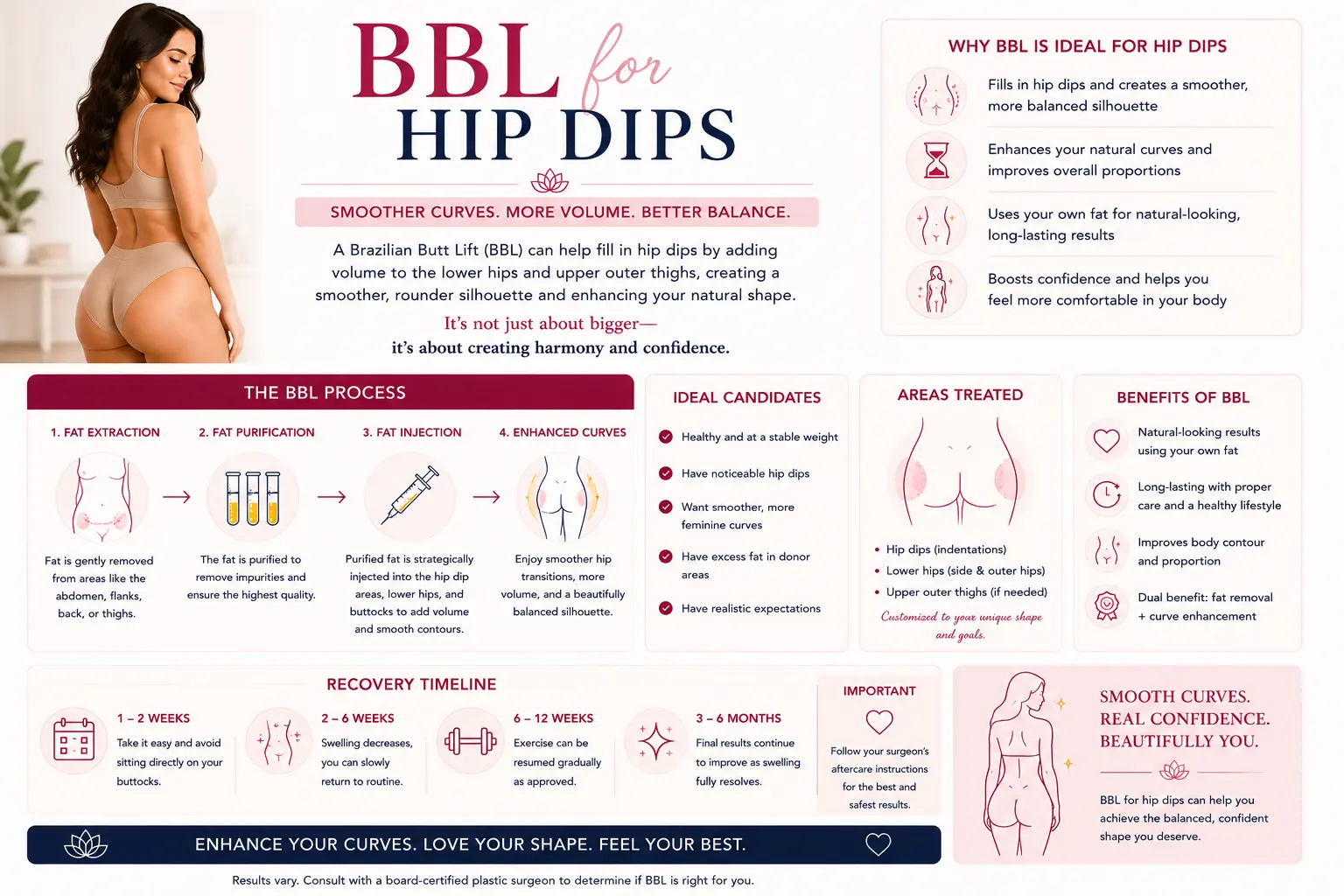
A BBL corrects hip dips by transferring your own purified fat into the trochanteric depressions — the natural indentations between the iliac crest and hip socket. Surgeons typically transfer 200–400cc per hip, with 60–70% surviving long-term.
BBL remains one of the most clinically established approaches for violin hip correction using the patient’s own tissue. All-inclusive packages in Turkey cost £2,800–£4,200 ($3,500–$5,200 / €3,200–€4,800).
This guide covers anatomy, candidacy, procedure steps, safety, recovery, and what UK and US patients should know about travelling to Istanbul.
Why Trust This Guide
This article draws on guidance from the American Society of Plastic Surgeons (ASPS) and the International Society of Aesthetic Plastic Surgery (ISAPS), peer-reviewed literature on gluteal fat grafting safety, and current UK and Turkish clinic cost data. It has been medically reviewed by Op. Dr. Alirza Jahangirov, Plastic, Reconstructive & Aesthetic Surgeon at Carely Clinic in Istanbul.
What Are Hip Dips (Violin Hips) and What Causes Them?
Hip dips are a structural feature, not a body composition problem. They appear as inward curves on the outer sides of the hips, just below the iliac crest and above the greater trochanter of the femur. The gap between these two bony landmarks creates the visible indentation known clinically as a trochanteric depression.
The Anatomy Behind Hip Dips
Hip dip depth is determined by skeletal spacing — a fixed genetic variable no exercise or diet can change. The distance between the iliac crest and the hip socket determines how pronounced the dip appears on the outer hip contour.
Women tend to show more noticeable hip dips due to a wider pelvis relative to body width. However, both men and women can have them. Individuals with a lower body fat percentage may find their dips more visible because less subcutaneous fat fills the overlying skin. Athletic body types with strong hip musculature may paradoxically show more prominent dips for the same reason.
Fat distribution and muscle mass can modulate visibility but cannot fill the bony depression. This is why targeted exercise — while valuable for overall hip strength and stability — does not constitute a clinical solution for violin hip appearance.
How Does a BBL Correct Hip Dips?
A BBL targets hip dips by using your own fat as a biological filler, placed precisely into the trochanteric depression.The procedure combines liposuction with fat transfer in a single surgical session under general anaesthesia, typically lasting 3–4 hours.
Fat Harvesting: Which Areas Are Used?
Donor sites are selected to slim contours where fat is unwanted and harvest material for the hip dip zones.Common donor areas include the abdomen, waist, flanks (love handles), lower back, and inner and outer thighs.
The choice of donor sites is not arbitrary. Removing fat from the waist and flanks simultaneously narrows the midsection, creating greater waist-to-hip contrast — the foundation of the hourglass silhouette. At Carely Clinic, Dr. Jahangirov customises the liposuction map to each patient’s fat distribution and contour goals before a single incision is made.
The Purification and Injection Stage
Harvested fat undergoes centrifugation or filtration to remove blood, oil, and damaged cells before injection. Only viable, intact fat cells survive this purification stage and are used for grafting. This step is critical — injecting impure fat reduces survival rates and increases complication risk.
Current best practice requires fat to be placed subcutaneously — above the gluteal fascia and outside the gluteal muscle. Intramuscular injection is contraindicated following multi-society safety reviews that established higher complication rates with deep injection.
Ultrasound guidance during injection is increasingly standard at high-volume centres, including Carely Clinic. This allows real-time visualisation of injection depth, reducing risk and improving volume precision per hip dip zone.
Mini BBL vs Full BBL for Hip Dips
A mini BBL corrects hip dip indentation only; a full BBL adds projection to the buttocks as well. The appropriate procedure depends on the patient’s goals, the degree of hip dip, and available donor fat volume.
Patients who want only hip dip correction — without buttock augmentation — are strong candidates for the mini BBL. This approach harvests fat from fewer donor sites, takes 1–2 hours, and has a faster recovery. For patients who want overall lower body reshaping, the full BBL addresses the hips, buttocks, waist, and flanks in a single session. Explore body contouring options at Carely Clinic to understand which approach fits your anatomy.
Expert Insight
“In patients with pronounced violin hip indentation, I aim to place 250–350cc of purified fat per side during the hip dip zone injection. Overfilling by approximately 30% accounts for physiological reabsorption, so the final settled result aligns with the patient’s contour goal — not the immediate post-operative appearance.”
— Reflecting current clinical practice on fat grafting volume and reabsorption planning
5 Factors That Determine Your Hip Dip BBL Results
Outcome quality in BBL hip dip correction is shaped by five anatomical and clinical variables — not by volume alone. Patients who understand these factors before surgery consistently report higher satisfaction at the 6-month mark.
1. Depth of the trochanteric depression. Shallow hip dips respond more completely to fat transfer than deep structural indentations. Skeletal anatomy creates a ceiling for achievable correction that no surgical technique can exceed.
2. Available donor fat volume. A minimum of 300–500cc of harvestable fat is required for meaningful hip dip correction per side. Patients with very low body fat (below 18–20% for women) may require a skinny BBL approach or be advised against surgery until donor reserves are sufficient.
3. Surgical technique and injection accuracy. Fat placed in the correct subcutaneous plane — and distributed in multiple small aliquots rather than single-bolus injections — achieves better vascularisation and higher survival. This is where surgeon experience directly affects results.
4. Fat graft survival rate. Published plastic surgery literature places average fat survival at 60–70%. The remaining 30–40% is reabsorbed within the first 3–6 months. Surgeons account for this by overfilling at the time of surgery.
5. Post-operative compliance. Sitting or applying direct pressure to the hip dip zones during the first 6 weeks compresses newly injected fat cells before they establish a blood supply. Compression garment use and sleep positioning — on your back or side — are the patient-controlled variables with the greatest impact on final results.
Clinical observation across plastic surgery practice consistently shows that patients who follow the 6-week pressure avoidance protocol and wear their compression garment consistently achieve better fat survival outcomes than those who do not.
BBL Hip Dip Recovery: Milestones Week by Week
Recovery from a BBL targeting hip dips follows a predictable arc across 12–16 weeks. The hip dip zones require the same pressure precautions as the buttocks — the grafted fat needs time to establish its own blood supply before bearing load.
| Timeframe | Activity Status | Hip Dip Zone Status | Key Instruction |
|---|---|---|---|
| Days 1–3 | Rest; supervised discharge | Significant swelling and bruising at donor and recipient sites | Sleep on stomach or side; no direct hip pressure; compression garment on 24/7 |
| Week 1–2 | Light walking indoors; no driving | Swelling peaks; hip contour not yet evaluable | BBL pillow under thighs when seated; lymphatic massage may begin if advised |
| Week 3–4 | Return to desk work; light daily tasks | Bruising subsides; early smoothing visible | Continue garment wear; no lower body exercise; short walk breaks every hour |
| Week 5–6 | Most normal activities; light cardio | Swelling diminishing; hip contour improving | Transition off BBL pillow after surgeon confirms fat integration; no squats yet |
| Week 7–10 | Return to gym; lower body light exercise | Hip dip smoothing clearly visible; some residual firmness | Introduce hip strengthening progressively; avoid contact sport |
| Month 3–6 | Full activity including strength training | Final settled result; surviving fat cells now permanent | Maintain stable weight; final photos taken at 6-month follow-up |
Lymphatic massage, when recommended by your surgeon, can accelerate the resolution of post-operative swelling and improve the smoothness of final contours at the hip dip zones. This is typically introduced at week 2–3 and continued for 4–6 sessions.
Warning Signs to Watch For After BBL
Most BBL complications, when identified within 24–72 hours, are manageable with prompt medical attention.Patients travelling from the UK or US should have written guidance on when to seek care before departing Istanbul.
The following signs require immediate contact with your surgical team or attendance at an emergency facility:
| Warning Sign | What It May Indicate | Action Required |
|---|---|---|
| Fever above 38.5°C / 101.3°F | Systemic infection; cellulitis | Contact surgical team immediately; do not wait |
| Wound separation or gaping at incision sites | Wound dehiscence; infection | Cover with clean dressing; attend clinic same day |
| Hard, warm, painful lump at hip or buttock site | Fat necrosis; seroma; haematoma | Attend clinic for ultrasound assessment |
| Redness, warmth, or swelling in one calf | Deep vein thrombosis (DVT) | Attend emergency department immediately; do not fly |
| Sudden shortness of breath or chest pain | Pulmonary embolism | Call emergency services (112 in Turkey / 999 in UK / 911 in US) immediately |
| Sudden sharp increase in pain after initial improvement | Seroma; late haematoma; infection | Contact your surgical team; same-day review recommended |
| Skin discolouration (purple or black) at injection site | Fat necrosis; vascular compromise | Photograph and send to your surgeon; attend clinic within 12 hours |
Mild bruising, swelling, and asymmetry during the first 4–6 weeks are expected and not warning signs. The distinction to understand is sudden change or worsening after initial improvement — that pattern warrants same-day clinical review.
Who Is NOT a Good Candidate for BBL Hip Dip Correction?
Not every patient seeking violin hip correction is a suitable candidate for BBL fat transfer. Proper patient selection, assessed during a pre-operative consultation, is a primary safety measure — not a bureaucratic step.
Absolute Contraindications
These conditions make BBL unsafe regardless of technique or surgeon experience. Surgery will not proceed until these are resolved or ruled out.
- Insufficient donor fat reserves (BMI below 20–21): Without adequate harvestable fat in the abdomen, flanks, or thighs, the surgeon cannot collect enough viable cells for meaningful hip dip correction. A minimum of approximately 300-500cc per side is typically required; patients with significantly less available donor fat may not be suitable candidates for standard BBL.
- Active infection or open wounds: Any systemic or localised infection disqualifies the patient from proceeding until fully resolved, per standard surgical protocols.
- Uncontrolled blood clotting disorders: Conditions including severe haemophilia or active anticoagulant therapy that cannot be safely paused increase intraoperative and post-operative haemorrhage risk beyond acceptable limits.
- Recent history of deep vein thrombosis or pulmonary embolism: The combined immobility and post-operative inflammatory response of BBL substantially elevates recurrence risk in patients with a prior thromboembolic event within the preceding 12 months.
Relative Contraindications
These factors require evaluation, optimisation, or frank discussion before surgery is planned.
- Active smoker: Nicotine reduces peripheral blood flow and fat graft vascularisation, directly lowering fat survival rates. Most surgeons require cessation for a minimum of 4 weeks before and 4 weeks after surgery. Patients who continue smoking are advised that their fat survival rate may be significantly reduced.
- Significant weight fluctuation or active weight loss plan: Losing more than 5–8kg after BBL will reduce the volume of the surviving fat graft proportionally, altering the achieved result. Patients are counselled to reach their stable target weight before surgery.
- BMI above 35: Higher BMI is associated with increased anaesthetic risk, reduced wound healing, and greater post-operative complications. Patients in this category are typically referred for a pre-operative optimisation plan.
- Autoimmune conditions on immunosuppressive therapy: These may impair healing at incision sites and reduce fat graft integration. Each case is assessed individually with the patient’s prescribing physician.
Managing Expectations
Hip dip depth varies substantially between patients, and the degree of correction achievable is anatomy-dependent.Patients with mild to moderate trochanteric depressions and adequate donor fat tend to achieve the most visually complete results, with the hip dip often appearing largely filled at 6 months.
Patients with deep structural depressions should understand that significant improvement — rather than visual elimination — is the realistic goal. A secondary touch-up procedure after 12 months is an option if additional volume is desired after the primary results have fully settled. Discuss your specific anatomy and expectations in detail with Dr. Jahangirov during your pre-operative consultation before committing to a procedure plan.
How This Applies in Turkey
Istanbul is among the world’s highest-volume centres for BBL and fat transfer procedures. High procedural frequency at established clinics correlates with technique refinement, predictable outcomes, and reduced complication rates.
Turkish plastic surgeons complete a comprehensive specialisation programme covering reconstructive and aesthetic surgery. Op. Dr. Alirza Jahangirov completed his medical and specialty training in Istanbul, with a focus on body contouring and reconstructive procedures — giving him strong anatomical knowledge particularly relevant for hip dip correction, where injection depth precision determines the quality of the final contour.
View his full profile and procedure list.
The cost advantage of Istanbul for UK and US patients is substantial. All-inclusive BBL packages at Carely Clinic’s JCI-accredited hospital partners cost £2,800–£4,200 ($3,500–$5,200 / €3,200–€4,800) in 2026. By comparison, a BBL targeting hip dips in London starts at £7,000–£12,000, and equivalent procedures in the US average $8,000–$15,000. Istanbul packages include surgical fees, anaesthesia, pre-operative blood panels, compression garments, hotel accommodation, airport transfers, and remote follow-up consultations after return home. View all-inclusive plastic surgery packages for current inclusions and pricing.
Patients from the UK typically fly into Istanbul Airport (IST) from London Heathrow, Gatwick, or Manchester — direct flights run 3.5–4 hours. US patients connect via major European hubs, with total travel time of 11–14 hours. A dedicated patient coordinator manages arrival logistics, hotel arrangement, and clinic transfers throughout the stay.
When Can You Fly After BBL?
The standard fit-to-fly window after BBL is 7–10 days post-surgery for short-haul UK flights, and 10–14 days for long-haul US flights. This timeline is assessed individually — patients with any signs of DVT, wound issues, or elevated inflammatory markers do not receive flight clearance until these resolve.
For long-haul travel, compression stockings are mandatory throughout the flight to reduce DVT risk. Walk the aisle every 45–60 minutes, stay well hydrated, and avoid alcohol during the flight. Sitting with a BBL pillow under the thighs for the duration of the flight is recommended to protect the hip graft zones from direct seat pressure. Carely Clinic provides a written fit-to-fly certificate and a DVT prevention protocol before every patient’s departure.
Learn more about BBL at Carely Clinic and VASER liposuction options that may complement your hip dip correction plan.
Frequently Asked Questions
Can a BBL fix hip dips?
A BBL significantly reduces hip dip visibility in most patients, with 60–70% fat survival long-term. Subcutaneous fat placement above the gluteal fascia produces the most predictable contour outcomes. Complete elimination depends on skeletal anatomy, which surgery cannot alter, making improvement the realistic clinical goal.
What causes hip dips (violin hips)?
Hip dips are caused by the gap between the iliac crest and the greater trochanter of the femur. This skeletal spacing is genetic and determines how prominent the outer hip indentation appears across body types. Fat distribution and muscle mass affect dip visibility but cannot eliminate the underlying bony depression.
How much does BBL for hip dips cost in Turkey?
All-inclusive BBL packages in Istanbul cost £2,800–£4,200 ($3,500–$5,200 / €3,200–€4,800) in 2026. This represents 60–70% savings versus UK prices of £7,000–£12,000 or US prices of $8,000–$15,000. Carely Clinic packages include surgery, anaesthesia, JCI-accredited hospital fees, accommodation, transfers, and aftercare.
How long does BBL for hip dips last?
Fat cells that survive the first 3–6 months after BBL behave as normal permanent fat in that location. According to ASPS guidance, 60–70% of transferred fat integrates permanently; the remainder is reabsorbed by the body. Maintaining a stable body weight is the most important factor for preserving long-term BBL results.
Will a BBL completely eliminate hip dips?
A BBL significantly smooths hip dip indentation but rarely eliminates it entirely in patients with pronounced skeletal spacing. Patient satisfaction studies consistently show high satisfaction with contour improvement rather than complete elimination. Patients with moderate hip dips and adequate donor fat tend to achieve the most visually complete corrections.
Who is a good candidate for BBL hip dip correction?
Good candidates have a BMI of 22–32, sufficient donor fat reserves, and a stable body weight. Most surgeons recommend non-smokers in good general health without active bleeding disorders. Patients with very low body fat may require a skinny BBL approach harvesting from multiple smaller donor sites.
How long is BBL recovery for hip dips?
Most patients return to light daily activity within 2–3 weeks and resume normal sitting after 6–8 weeks. Standard practice is to avoid direct pressure on the treated area for at least 6 weeks. Full results, including final fat graft stabilisation, are visible at 3–6 months as residual swelling resolves.
Does exercise get rid of hip dips?
Exercise cannot alter the bony skeletal anatomy that causes hip dips, regardless of intensity or duration. Hip muscle strengthening may reduce visual prominence slightly but cannot alter the underlying skeletal structure. Squats, side leg raises, and hip thrusts can improve overall hip contour modestly but not eliminate dips.
What is the difference between a BBL and a mini BBL for hip dips?
A full BBL adds volume to both buttocks and outer hips; a mini BBL corrects the hip dip depressions only. The mini BBL requires less donor fat, takes 1–2 hours, and involves a shorter recovery than a full BBL. Surgeons select the appropriate version based on the patient’s fat reserves, degree of hip dip, and desired outcome.
How much fat survives after a BBL?
Published ASPS data shows that 60–70% of transferred fat cells survive and integrate permanently at the injection site. Surgeons account for reabsorption by overfilling the target zone by approximately 30–40%, per standard fat grafting protocols. Factors affecting survival include injection technique, compression garment use, sitting compliance, and the patient’s overall circulation quality.
Is BBL for hip dips safe?
BBL safety has improved significantly since multi-society safety reviews established subcutaneous-only fat placement protocols. Ultrasound guidance during injection is now increasingly standard, further reducing complication rates. Choosing a qualified plastic surgeon operating in an accredited hospital remains the most important safety decision.
When can I sit normally after BBL?
Most patients can sit normally after 6–8 weeks, once fat graft integration is confirmed by their surgeon. During recovery, a BBL pillow under the thighs keeps pressure off the buttocks and freshly grafted hip tissue. Short toilet sitting is permitted immediately, but firm prolonged pressure before week 6 can disrupt fat cell integration.
Conclusion
BBL for hip dips delivers measurable, long-lasting contour improvement when performed by a board-certified surgeon using subcutaneous fat placement and ultrasound guidance.
The procedure addresses the root cause of violin hip appearance — insufficient volume in the trochanteric depression — using the patient’s own fat. Published plastic surgery literature confirms 60-70% long-term fat survival in compliant patients, with high satisfaction rates at the 6-month mark. The procedure simultaneously contours the donor areas, creating a smoother waist-to-hip ratio without implants or synthetic materials.
The most important variables for success are not geographic. They are surgeon qualification and technique, patient selection, adherence to the 6-week pressure protocol, and stable body weight maintenance after recovery. For UK and US patients, Istanbul offers these variables within an all-inclusive clinical pathway at £2,800–£4,200 ($3,500–$5,200 / €3,200–€4,800) — 60-70% below home-country pricing at JCI-accredited facilities.
The next step is a consultation. Op. Dr. Jahangirov reviews your anatomy, donor fat availability, and hip dip depth to confirm whether standard BBL, mini BBL, or a combination approach best fits your goals.
Individual outcomes vary. This guide provides general medical education based on international guidelines and published research. Consult qualified medical professionals for personalised advice.
Medical Review: Op. Dr. Alirza Jahangirov