
Quick Summary
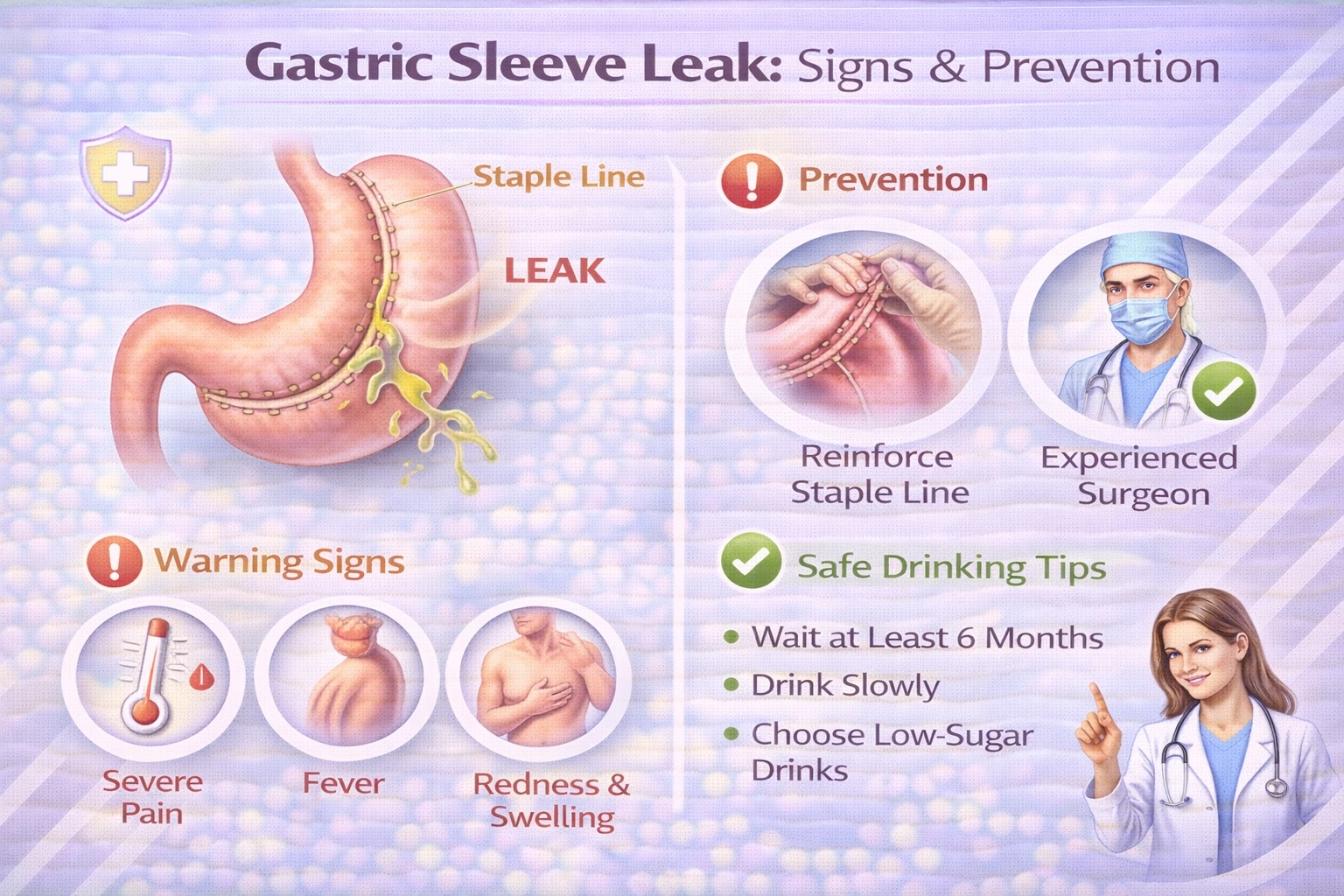
Gastric sleeve leaks occur in 1-3% of primary procedures when stomach contents escape through the staple line, most commonly near the gastroesophageal junction. The most reliable warning signs include persistent tachycardia above 120 bpm, fever, and worsening abdominal pain that radiates to the left shoulder.
According to 2024 research published in Langenbeck’s Archives of Surgery, surgical experience and high case volume reduce leak rates more consistently than any specific reinforcement technique. With early detection and proper treatment, 80-95% of leaks heal successfully.
This guide covers leak symptoms, risk factors, prevention strategies, diagnosis methods, treatment options, and what international patients should know about safety protocols in Turkey.
Why Trust This Guide
This guide synthesizes current research from peer-reviewed journals including Obesity Surgery, Surgery for Obesity and Related Diseases, and Clinical and Experimental Gastroenterology. We reference guidelines from the American Society for Metabolic and Bariatric Surgery (ASMBS), the International Federation for the Surgery of Obesity (IFSO), and systematic reviews published through 2024-2025.
Carely Clinic’s editorial team works closely with board-certified bariatric surgeons to ensure medical accuracy. All statistics are sourced from multicenter studies and clinical registries, with complete source documentation provided below.
What Is a Gastric Sleeve Leak?
A gastric sleeve leak occurs when stomach contents escape through an opening in the surgical staple line, allowing digestive fluids to enter the abdominal cavity and potentially cause infection or abscess formation.
During sleeve gastrectomy, approximately 75-85% of the stomach is removed, leaving a banana-shaped pouch secured by a continuous staple line extending from the antrum to the gastroesophageal junction. A leak develops when this staple line fails to maintain a complete seal, creating a gap through which gastric contents escape.
The escaped digestive fluids contain acids and enzymes that can damage surrounding organs and tissues. If not detected and treated promptly, this contamination can lead to severe infection, sepsis, and potentially life-threatening complications. According to a 2025 study in Clinical and Experimental Gastroenterology, gastric sleeve leaks represent the second most common cause of mortality following sleeve gastrectomy, after pulmonary embolism.
How Common Are Gastric Sleeve Leaks?
Gastric sleeve leaks occur in 1-3% of primary procedures at experienced centers, with rates decreasing significantly as surgical volume increases—surgeons performing more than 43 cases annually achieve leak rates below 1%.
The International Sleeve Gastrectomy Expert Panel Consensus Statement, based on data from over 12,000 procedures, reported an overall leak rate of 1.06%. More recent data from the Metabolic and Bariatric Surgery Accreditation and Quality Improvement Program (MBSAQIP) analyzed 370,369 sleeve gastrectomies and identified a leak rate of 0.16%.
This wide range reflects variations in surgical technique, surgeon experience, and reporting methods. High-volume bariatric centers consistently report lower complication rates due to standardized protocols and accumulated expertise.
Expert Insight
“The overall percentage of gastric leaks is inversely correlated with the growing numbers of sleeve gastrectomies performed. Increasing expertise is associated with substantial decreases in overall leak rates.”
— Annals of Laparoscopic and Endoscopic Surgery, 2025
Revision procedures carry significantly higher risk, with leak rates reaching 5-15% when converting from gastric band to sleeve gastrectomy in a single operation.
Warning Signs and Symptoms
The earliest and most reliable symptoms of a gastric sleeve leak include persistent tachycardia exceeding 120 beats per minute, fever, and progressive abdominal pain that worsens rather than improves in the days following surgery.
Research published in Obesity Surgery found that tachycardia and fever are the two most critical clinical indicators, mandating immediate diagnostic imaging when present. A 2020 study analyzing 80 leak cases found that 71.3% presented with tachycardia and 61.3% with fever as primary symptoms.
Physical Symptoms to Monitor
Abdominal pain remains the most common presenting symptom, reported in 90% of leak cases. However, this pain differs from normal post-operative discomfort in several important ways:
- The pain progressively worsens over 24-48 hours rather than improving
- Pain often radiates to the left shoulder or scapular region (reported in 35% of cases)
- Back pain accompanies abdominal discomfort in approximately 25% of cases
- A general sense that “something is wrong” frequently accompanies physical symptoms
Vital Sign Changes
- Heart rate exceeding 120 beats per minute (most reliable early indicator)
- Fever above 38°C (100.4°F)
- Rapid, shallow breathing or shortness of breath
- Low blood pressure in advanced cases
Other Warning Signs
- Nausea and vomiting that persist or worsen
- Dizziness or lightheadedness
- Difficulty breathing or chest discomfort
- Drainage from surgical sites with unusual color or odor
Symptoms vary depending on leak timing. Patients with early leaks (within 3 days) most commonly present with tachycardia as the first sign. Those with intermediate or late leaks more frequently present with fever as the initial symptom.
When Do Leaks Occur?
Most gastric sleeve leaks present within 13 days of surgery, with 95% detected within the first three days (early leaks) and 99% identified within 30 days post-operation.
Medical literature classifies leaks by timing of onset, as this affects both presentation and treatment approach:
Early Leaks (Days 1-3)
Early leaks typically result from mechanical causes such as stapler malfunction, tissue injury during surgery, or technical errors. These represent approximately 95% of all detected leaks. Patients usually remain hospitalized during this window, allowing for immediate intervention.
Intermediate Leaks (Days 4-7)
Intermediate leaks often develop from ischemic causes—inadequate blood supply to the staple line that impairs healing. The tissue may initially appear healthy but subsequently breaks down as circulation proves insufficient.
Late Leaks (After Day 7)
Late leaks can occur weeks or even months after surgery, though they become progressively rarer. These typically result from ongoing tissue ischemia, infection, or chronic pressure effects. Late leaks often prove more challenging to treat because surrounding tissues have become inflamed or formed fistula tracts.
MBSAQIP data analyzing over 370,000 sleeve gastrectomies found an average leak presentation time of 13.2 ± 7.8 days, indicating that vigilance must extend well beyond hospital discharge.
What Causes Gastric Sleeve Leaks?
Gastric sleeve leaks result from mechanical staple line failure or ischemic tissue breakdown from inadequate blood supply, with 75-85% occurring near the gastroesophageal junction.
Mechanical Causes
Mechanical leaks typically appear within the first 48 hours and result from:
- Stapler malfunction or misfiring
- Inappropriate staple height selection for tissue thickness
- Tissue injury from excessive manipulation during surgery
- Hematoma formation along the staple line
- Stapling too close to a previous staple line
Ischemic Causes
Ischemic leaks develop later, usually 5-7 days post-operation, due to:
- Compromised blood flow to the proximal stomach (near the esophagus)
- Surgical ligation of gastric arteries affecting tissue perfusion
- Thermal injury from energy devices used during dissection
- Pre-existing conditions affecting microcirculation
Pressure-Related Factors
The sleeve gastrectomy creates a high-pressure system compared to the original stomach. Factors that increase intragastric pressure can stress the staple line:
- Functional stenosis or narrowing of the gastric tube
- Distal obstruction at the incisura angularis
- Impaired gastric motility
- Eating solid foods too soon after surgery
- Vomiting or retching
Expert Insight
“Greater than 70 percent of sleeve gastrectomy leaks occur at the proximal staple line, indicating there might be an explainable cause. In half of cases, the vertical staple line changed the blood flow of the sleeve, creating weakness in the proximal portion.”
— Bariatric Times, Leak Management Review
Anatomical studies demonstrate that the blood supply to the proximal sleeve (near the gastroesophageal junction) is particularly fragile, explaining why this location accounts for 75-85% of all leaks.
Risk Factors for Developing a Leak
Higher BMI (especially above 50 kg/m²), revision procedures, male gender, and metabolic conditions including type 2 diabetes significantly increase leak risk, according to multicenter analyses.
Patient-Related Risk Factors
BMI and Obesity Severity
A systematic analysis of 4,888 patients found the overall leak risk was 2.4%, rising to 2.9% in super-obese patients with BMI exceeding 50 kg/m². Studies confirm that BMI between 50-50.9 kg/m² correlates with significantly higher leak rates compared to lower BMI categories.
Medical Comorbidities
Research identifies several modifiable risk factors:
- Type 2 diabetes
- Hypertension
- Obstructive sleep apnea
- Chronic kidney disease
- Chronic steroid use
- Current smoking
A 2025 study in Obesity Surgery identified albumin levels below 3 g/dL, previous foregut surgery, and preoperative therapeutic anticoagulation as the most significant predictors of post-operative leaks.
Gender
Male patients face higher leak rates (2.5% versus lower rates in females), possibly related to differences in tissue characteristics and fat distribution.
Procedure-Related Risk Factors
Revision Surgery
Converting from gastric band to sleeve gastrectomy in a single procedure carries leak rates of 5-15%, compared to 1-3% for primary procedures. Many surgeons now advocate for two-stage procedures with 6-12 weeks between band removal and sleeve creation.
Surgeon Experience
Case volume dramatically affects outcomes. Surgeons performing fewer than 43 bariatric procedures annually have measurably higher leak rates than high-volume operators who consistently achieve rates below 1%.
Technical Factors
- Bougie size smaller than 36 French
- Stapling too close to the esophagus
- Inadequate tissue thickness assessment
- Creating stenosis at the incisura angularis
How Are Leaks Diagnosed?
Diagnosis relies on clinical suspicion combined with imaging studies, primarily CT scan with oral contrast, which reveals fluid collections in 93.7% of cases and contrast extravasation in 75% of confirmed leaks.
Clinical Assessment
No single test definitively diagnoses all leaks. Physicians must synthesize clinical findings including:
- Vital signs (heart rate, temperature, blood pressure)
- Physical examination findings
- Patient-reported symptoms
- Laboratory markers
Laboratory Findings
Blood tests supporting leak diagnosis include:
- Elevated white blood cell count (leukocytosis)
- Increased C-reactive protein (CRP)
- Rising inflammatory markers
- Elevated amylase in drain fluid (when drains are present)
Imaging Studies
CT Scan with Oral Contrast
CT imaging represents the most accurate diagnostic tool, demonstrating:
- Intra-abdominal fluid collections (visible in 93.7% of leaks)
- Extravasation of contrast material (75% of cases)
- Pleural effusion (52.5% of cases)
- Fat stranding and inflammatory changes
Upper GI Series (Gastrografin Swallow)
Water-soluble contrast studies show contrast extravasation in approximately 77.5% of leaks. This study helps identify the leak location and magnitude.
Upper Endoscopy
Direct visualization can identify the fistula opening, assess its size, and guide treatment planning. Endoscopy also allows simultaneous therapeutic intervention.
Diagnostic Challenges
A concerning finding from clinical research shows that only 29.3% of patients are correctly diagnosed from their first emergency room visit. Common misdiagnoses include gastritis (49%) and pneumonia (22.6%). This emphasizes the need for high clinical suspicion in any patient presenting with concerning symptoms within 30 days of sleeve gastrectomy.
Treatment Options
Treatment ranges from conservative management with antibiotics and drainage in stable patients to surgical intervention for those with sepsis or peritonitis, with endoscopic approaches achieving 70-95% success rates in appropriate candidates.
Conservative Management
For clinically stable patients without signs of sepsis:
- IV antibiotics covering intra-abdominal pathogens
- Bowel rest (nothing by mouth)
- Proton pump inhibitors
- Nutritional support (parenteral nutrition if needed)
- Percutaneous drainage of fluid collections
Conservative management has limited success (approximately 25% healing rate) when used alone, but works well in combination with other interventions.
Endoscopic Treatment
Endoscopic approaches have become first-line therapy for stable patients. A 2024 study showed that 80% of patients achieved leak resolution with endoscopic repair.
Endoscopic Internal Drainage (EID)
Double-pigtail stents placed across the leak site into any abscess cavity allow drainage into the gastric lumen. Success rates range from 70-95%, with systematic reviews reporting pooled success of 83.4%.
Self-Expanding Metallic Stents (SEMS)
Fully covered stents divert gastric contents away from the leak site and bypass any distal stenosis. Long, fully covered “megastents” that extend from the esophagus to the duodenum achieve success rates above 90% in early leaks.
Over-the-Scope Clips (OTSC)
Endoscopic clips can directly close small defects, with success rates around 69% when used appropriately.
Endoscopic Vacuum Therapy (EVAC)
Negative pressure therapy promotes healing by removing contaminated fluid and stimulating granulation tissue.
Surgical Treatment
Surgery is required for:
- Hemodynamic instability or septic shock
- Peritonitis
- Failed endoscopic management (leaks persisting beyond 6-12 weeks)
- Large defects not amenable to endoscopic closure
Surgical options include:
- Laparoscopic washout and wide drainage
- Primary repair of the defect
- Fistula-jejunostomy (connecting the leak to small bowel)
- Conversion to Roux-en-Y gastric bypass
- Total gastrectomy (rare, reserved for severe cases)
Prevention Strategies
Prevention relies on surgical expertise (high-volume surgeons achieving consistently lower leak rates), appropriate staple height selection for tissue thickness, careful handling of the proximal stomach, and intraoperative leak testing.
Surgical Technique Factors
2024 Updated Evidence
According to the 2024 review in Langenbeck’s Archives of Surgery:
- Bougie size 36 French is effective and safe, with similar leak rates to larger sizes
- No significant difference in leak rates between restrictive (<6 cm from pylorus) and conservative (6 cm) antrum resection
- Surgical experience and case volume affect leak rates more consistently than any specific staple line reinforcement technique
Technical Best Practices
- Appropriate staple height selection based on tissue thickness
- Avoiding excessive thermal energy near the gastroesophageal junction
- Preserving vascular tissue around the diaphragmatic crura
- Preventing strictures at the incisura angularis
- Not stapling too close to the esophagus
Staple Line Reinforcement
Options include:
- Oversewing with running sutures
- Buttressing materials (bovine pericardium, bioabsorbable polymers)
- Fibrin sealants
While reinforcement is widely used, research shows mixed results—surgeon experience remains more predictive of outcomes than any specific reinforcement method.
Intraoperative Leak Testing
Common methods include:
- Methylene blue test
- Air insufflation (bubble test)
- Endoscopic visualization
- Indocyanine green fluorescence
However, a negative intraoperative test cannot guarantee a leak-free outcome, as many leaks develop days later from ischemic causes.
Patient Preparation
- Smoking cessation at least 4 weeks before surgery
- Optimizing blood sugar control in diabetic patients
- Pre-operative diet to reduce liver size
- Addressing nutritional deficiencies (especially albumin)
Post-Operative Compliance
Patients can reduce leak risk by:
- Following the staged dietary progression strictly
- Avoiding solid foods until cleared by the surgical team
- Staying well hydrated
- Avoiding NSAIDs (which can promote ulcer formation)
- Attending all follow-up appointments
How This Applies in Turkey
International guidelines from ASMBS and IFSO apply equally at Turkey’s JCI-accredited bariatric centers, where surgeons follow identical clinical protocols and safety standards as American and European institutions.
Turkey has emerged as a leading destination for bariatric surgery, with JCI-accredited hospitals meeting international standards for patient safety, surgical protocols, and complication management. Turkish bariatric surgeons often complete 300-500 procedures annually, compared to 50-150 for typical Western surgeons—experience levels associated with lower complication rates.
Cost Comparison
Gastric sleeve surgery in Turkey costs €3,000-€5,500 all-inclusive, compared to $15,000-$25,000 in the USA and £10,000-£15,000 in the UK, representing 50-70% savings. This price difference reflects lower operational costs, not reduced quality standards.
All-inclusive packages at reputable Turkish centers typically cover:
- Surgeon and hospital fees
- 2-3 night hospital stay in JCI-accredited facility
- Pre-operative testing (bloodwork, cardiac evaluation)
- 4-5 star hotel accommodation for recovery
- VIP airport and hospital transfers
- Post-operative nutritional support
Safety Protocols
Turkish bariatric centers implement comprehensive leak prevention and detection protocols:
- Multiple intraoperative leak tests (methylene blue, air insufflation)
- Staple line reinforcement
- Post-operative imaging before discharge
- 24/7 medical team availability during hospital stay
- Clear instructions for recognizing warning signs after discharge
At Carely Clinic in Istanbul, gastric sleeve surgery is performed by board-certified bariatric surgeons at JCI-accredited partner hospitals, with comprehensive pre-operative evaluation and 12-month post-operative nutritional support. Learn more about Gastric Sleeve Surgery at Carely Clinic.
Summary Table
| Aspect | Key Information |
|---|---|
| Incidence Rate | 1-3% primary procedures; 0.1-0.2% at high-volume MBSAQIP centers; 5-15% revision procedures |
| Most Common Location | Gastroesophageal junction (75-85% of leaks) |
| Typical Presentation | Day 13 ± 8 post-operation (average) |
| Primary Warning Signs | Tachycardia >120 bpm (71%), fever (61%), abdominal pain (90%) |
| Best Diagnostic Tool | CT scan with oral contrast (93.7% detection of collections) |
| Key Risk Factors | BMI >50, revision surgery, male gender, diabetes, low albumin |
| Endoscopic Success Rate | 70-95% depending on technique and timing |
| Prevention Key | Surgeon experience and case volume (>43/year = <1% leak rate) |
Frequently Asked Questions
How do I know if my gastric sleeve is leaking?
Sustained heart rate above 120 bpm, fever, and worsening abdominal pain radiating to the left shoulder are primary warning signs. Contact your surgical team immediately if symptoms worsen rather than improve.
When are leaks most likely to occur after gastric sleeve surgery?
Ninety-five percent of leaks occur within the first three days post-surgery, and 99% present within 30 days, with average presentation around day 13 after the procedure.
Can a gastric sleeve leak heal on its own?
Conservative management alone has only 25% success rate. Most leaks require active intervention through endoscopic drainage, stenting, or surgical repair to achieve healing. Early treatment dramatically improves outcomes.
What is the survival rate for gastric sleeve leaks?
Survival rates exceed 95% with prompt diagnosis and appropriate treatment at experienced centers. Mortality increases with delayed diagnosis or severe sepsis. Modern endoscopic techniques have significantly improved outcomes.
How can I reduce my risk of a gastric sleeve leak?
Choose an experienced surgeon performing 43+ cases annually, stop smoking 4 weeks pre-surgery, optimize blood sugar if diabetic, and strictly follow all pre-operative and post-operative dietary instructions.
What does treatment for a gastric sleeve leak involve?
Stable patients receive IV antibiotics, bowel rest, and endoscopic intervention like stent placement or internal drainage. Unstable patients with sepsis require emergency surgery. Multiple procedures over weeks to months ensure complete healing.
Are leaks more common in Turkey compared to other countries?
JCI-accredited Turkish centers show comparable or lower leak rates than international benchmarks. Turkish surgeons perform 300-500 procedures annually versus 50-150 in Western countries, and high volume correlates with better outcomes.
How long should I stay near the hospital after surgery?
Medical tourism protocols recommend staying 5-7 days in the surgical city. This ensures early leaks (95% of cases) are detected while you’re close to your surgical team for immediate treatment.
What questions should I ask my surgeon about leak prevention?
Ask about personal leak rate, annual case volume, staple line reinforcement method, intraoperative leak testing protocol, and complication management approach. Reputable surgeons provide transparent answers and outcomes data.
Is gastric sleeve surgery safe despite leak risk?
Yes. Gastric sleeve has 2% complication rate and 0.03-0.1% mortality—comparable to gallbladder removal. Benefits of significant weight loss and disease resolution outweigh small leak risk at accredited facilities.
Conclusion
Gastric sleeve leaks represent a serious but relatively rare complication, occurring in 1-3% of primary procedures and decreasing further at high-volume centers. Early recognition of warning signs—particularly persistent tachycardia, fever, and worsening abdominal pain—enables prompt treatment and excellent outcomes, with modern endoscopic techniques achieving success rates of 80-95%.
The most effective leak prevention strategy involves selecting an experienced, high-volume bariatric surgeon who operates at an accredited facility with comprehensive safety protocols. Patient factors including smoking cessation, blood sugar optimization, and strict adherence to post-operative dietary guidelines also significantly reduce risk.
For international patients considering bariatric surgery, Turkey’s JCI-accredited centers offer world-class care at 50-70% lower cost than Western alternatives, with Turkish surgeons performing case volumes associated with the lowest complication rates globally.
Individual outcomes vary based on health status, surgical factors, and adherence to medical recommendations. This guide provides general information based on current medical literature—consult qualified bariatric surgeons for personalized evaluation and advice.
If you’re considering gastric sleeve surgery and want to learn more about safety protocols, surgeon credentials, and comprehensive care packages, contact Carely Clinic for a no-obligation consultation with our bariatric team.