
Quick Summary
Non-surgical rhinoplasty uses hyaluronic acid dermal fillers to reshape the nose in 15-30 minutes, with results lasting 9-18 months and an overall complication rate of approximately 7.6% according to clinical studies.
The procedure costs £300-£600 in the UK and $600-$1,500 in the USA, compared to €200-€600 in Turkey—offering 50-70% savings while maintaining identical treatment protocols.
This guide covers filler types, candidacy criteria, what to expect during treatment, safety considerations, cost comparisons, and how to choose between non-surgical and surgical options.
Why Trust This Guide
This comprehensive guide draws from peer-reviewed research published in journals including Plastic and Reconstructive Surgery, Aesthetic Surgery Journal, and Dermatologic Therapy, combined with clinical guidelines from the American Society of Plastic Surgeons (ASPS).
Our medical team synthesizes evidence-based information with practical patient guidance to help you make an informed decision about non-surgical nose reshaping. All statistics and medical claims are sourced from authoritative publications with proper attribution.
What Is Non-Surgical Rhinoplasty?
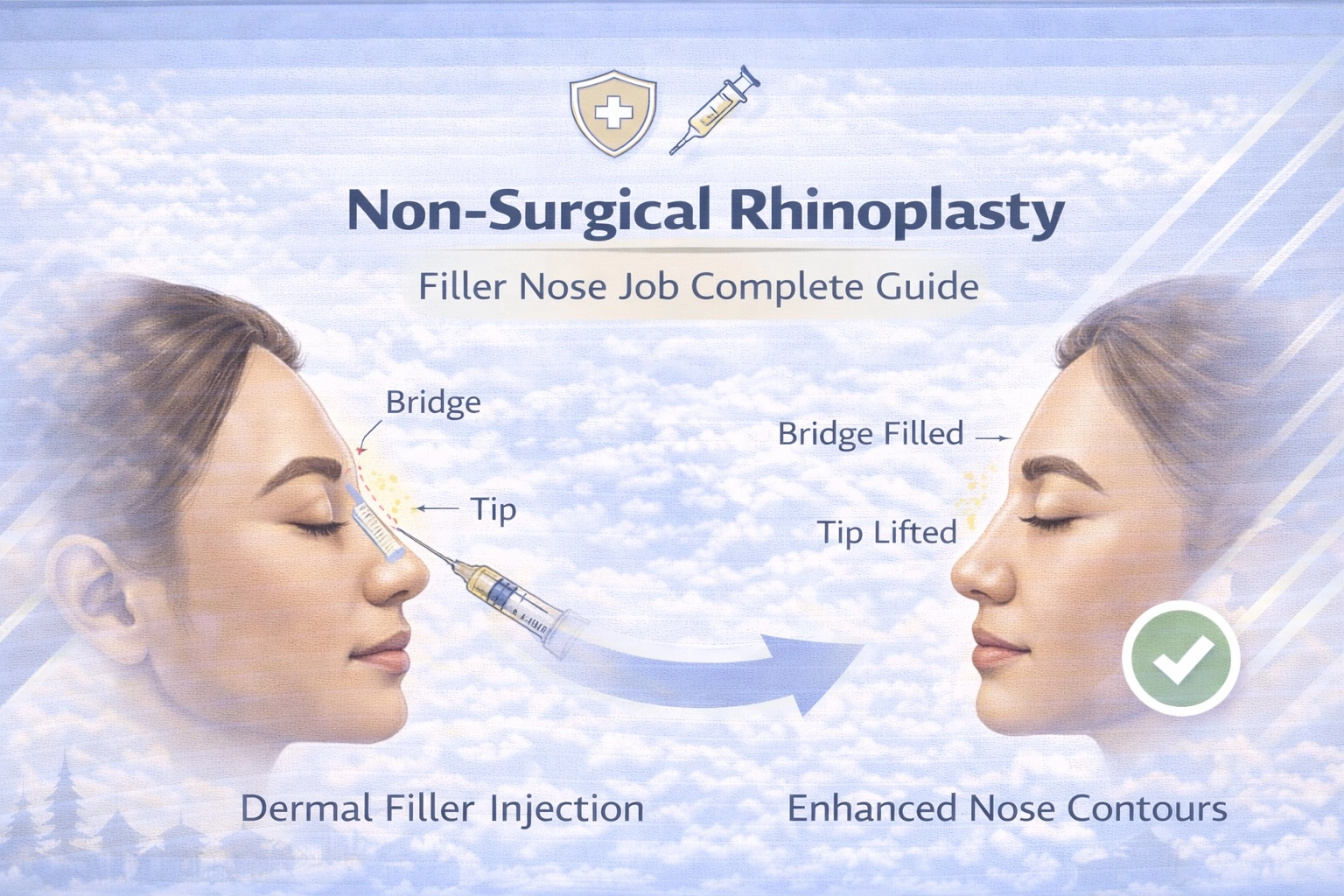
Non-surgical rhinoplasty, also called liquid rhinoplasty or a filler nose job, uses injectable dermal fillers—typically hyaluronic acid—to reshape the nose without incisions, anesthesia, or downtime in a 15-30 minute office procedure.
The treatment works by strategically placing small amounts of filler beneath the skin to add volume, smooth contours, and create the illusion of structural changes. Unlike surgical rhinoplasty which removes or repositions tissue, the non-surgical approach only adds material.
This minimally invasive technique gained significant popularity over the past decade. According to ASPS data, nonsurgical rhinoplasty offers an immediate, reversible alternative for patients seeking subtle refinements without committing to permanent surgical changes.
The filler material—most commonly hyaluronic acid products like Restylane or Juvéderm—integrates with the tissue and provides immediate visible results. Because hyaluronic acid naturally occurs in the body, allergic reactions are rare and the substance can be dissolved with an enzyme called hyaluronidase if needed.
What Can Non-Surgical Rhinoplasty Fix?
Non-surgical rhinoplasty effectively addresses minor aesthetic concerns including dorsal humps, mild asymmetry, drooping nasal tips, and subtle irregularities—but cannot reduce nose size, narrow nostrils, or correct breathing problems.
Understanding the procedure’s capabilities and limitations is essential for realistic expectations.
Concerns Non-Surgical Rhinoplasty CAN Address
Dorsal Hump Camouflage: This represents one of the most common applications. By placing filler above and below the hump, practitioners create a straighter profile line. The technique works well for small to moderate bumps, though it adds rather than removes tissue.
Drooping Nasal Tip: Filler injected at the tip or just above it creates subtle lift, addressing a tip that points downward. Botox can also be used in the depressor septi nasi muscle to further enhance this effect.
Minor Asymmetry: Small depressions, dents, or asymmetrical contours can be filled to create better balance. This is particularly useful for post-rhinoplasty irregularities.
Flat Nasal Bridge: Patients with naturally low bridges can achieve greater projection through strategic filler placement along the dorsum.
Post-Surgical Refinements: Many practitioners use fillers to address minor imperfections following surgical rhinoplasty, avoiding the need for revision surgery.
What Non-Surgical Rhinoplasty CANNOT Do
Reduce Nose Size: Because the technique only adds volume, it cannot make a large nose smaller. In some cases, adding filler to create balance may even make the nose appear slightly larger overall.
Narrow Wide Noses: Flaring nostrils or a wide nasal base cannot be corrected with fillers—these require surgical intervention.
Fix Breathing Problems: Functional issues like deviated septum, nasal valve collapse, or chronic congestion require surgical correction. Fillers address only external appearance.
Correct Major Deformities: Significantly crooked noses, large humps, or severe structural issues need surgical rhinoplasty for meaningful improvement.
Provide Permanent Results: All filler results are temporary, requiring maintenance treatments every 9-18 months.
Non-Surgical vs Surgical Rhinoplasty
The main difference between non-surgical and surgical rhinoplasty is that fillers only add volume for temporary results lasting 9-18 months, while surgery permanently reshapes bone and cartilage structure to both increase and decrease nasal dimensions.
| Factor | Non-Surgical Rhinoplasty | Surgical Rhinoplasty |
|---|---|---|
| Procedure Time | 15-30 minutes | 1-3 hours |
| Anesthesia | Topical numbing cream only | General or local with sedation |
| Recovery Time | None—resume activities immediately | 1-2 weeks before returning to work |
| Results Duration | 9-18 months (temporary) | Permanent |
| Can Reduce Size | No—adds volume only | Yes—can increase or decrease |
| Fixes Breathing | No | Yes |
| Reversible | Yes—HA fillers can be dissolved | No—changes are permanent |
| Typical Cost | $600-$1,500 per session | $6,000-$15,000+ |
Choose Non-Surgical Rhinoplasty If:
You want to test changes before committing to surgery, need only subtle refinements, prefer minimal downtime, want reversible results, or are addressing post-surgical irregularities.
Choose Surgical Rhinoplasty If:
You need significant structural changes, want permanent results, need to reduce nose size, have breathing problems, or want to correct major asymmetry or deviation.
Some patients pursue both options—using fillers initially to preview potential changes, then proceeding with surgery for permanent results, or using fillers after surgery to refine minor imperfections.
Types of Dermal Fillers for Nose Reshaping
Hyaluronic acid fillers like Restylane and Juvéderm are most commonly used for non-surgical rhinoplasty because they’re reversible with hyaluronidase, while calcium hydroxylapatite (Radiesse) offers longer-lasting results of 12-18 months.
Hyaluronic Acid Fillers
Hyaluronic acid (HA) is a naturally occurring substance in the body’s connective tissue and skin. HA fillers provide immediate results and can be dissolved if complications occur or results are unsatisfactory.
Restylane Lyft: Many practitioners prefer Restylane products for non-surgical rhinoplasty because of their firmer consistency and ability to maintain shape. Restylane Lyft offers structural support ideal for creating definition along the nasal bridge. Results typically last 9-12 months.
Juvéderm Voluma: This thicker formulation from the Juvéderm family provides lifting capability and longer duration. However, some practitioners note that Juvéderm products can absorb more water and expand slightly after injection, which requires careful dosing. Results last approximately 12-18 months.
Juvéderm Ultra/Vollure: These softer formulations may be used for more subtle refinements, though most rhinoplasty specialists prefer stiffer products for better structure.
Calcium Hydroxylapatite
Radiesse: This filler contains calcium microspheres suspended in gel, providing immediate volume plus stimulating collagen production over time. Radiesse offers stronger structural support and longer-lasting results of 12-18 months. However, it cannot be dissolved if complications occur, making it a higher-commitment choice. Some practitioners reserve Radiesse for the radix (upper nose near the forehead) where vascular risks are lower.
Filler Selection Considerations
The right filler depends on the specific correction needed, the practitioner’s experience, and whether reversibility is important to you. Most experienced practitioners use HA fillers for safety and flexibility, reserving Radiesse for cases requiring more significant structural support.
Expert Insight
“Restylane Lyft tends to maintain its shape better than other hyaluronic acid fillers for rhinoplasty. Juvéderm products can expand after injection, which may be beneficial for lips but is not ideal for the nose where precision matters.”
— Clinical consensus from facial plastic surgeons, as reported in aesthetic medicine literature
Am I a Good Candidate?
Ideal candidates for non-surgical rhinoplasty are healthy adults seeking minor cosmetic improvements to their nose without surgery, who have realistic expectations about the temporary nature of results and the procedure’s limitations.
Good Candidates Include:
Those seeking subtle changes: If you want to smooth a small bump, lift a drooping tip, or correct minor asymmetry without dramatic alteration, non-surgical rhinoplasty may be appropriate.
People wanting to “test” changes: The temporary nature of fillers allows you to preview how modifications might look before committing to permanent surgery.
Post-rhinoplasty refinement patients: Those with minor irregularities or depressions following surgical rhinoplasty can often address these concerns with filler rather than revision surgery.
Those avoiding surgery: People who cannot undergo general anesthesia, prefer to avoid surgical risks, or simply want minimal downtime may find the non-surgical approach appealing.
Adults with fully developed facial features: Facial growth should be complete before any rhinoplasty procedure.
Poor Candidates Include:
Those seeking significant size reduction: If your primary concern is that your nose is too large, fillers cannot help—and may make it appear larger.
People with breathing problems: Functional issues require surgical correction.
Those with large dorsal humps: While small bumps can be camouflaged, significant humps need surgical removal.
Patients with bulbous tips or wide nostrils: These concerns require tissue removal or repositioning that only surgery provides.
People with thick nasal skin: Very thick skin may not conform well to subtle filler adjustments.
Those wanting permanent results: If maintaining results every 9-18 months seems burdensome, surgical rhinoplasty offers permanence.
Smokers or those in poor health: These factors can affect healing and increase complication risks.
The Procedure: What to Expect
The non-surgical rhinoplasty procedure takes 15-30 minutes in an office setting with topical numbing, involves minimal discomfort comparable to a brief pinching sensation, and produces immediate visible results with no required downtime.
Before the Procedure
Your practitioner will conduct a thorough consultation to assess your nasal anatomy, discuss goals, and determine if you’re a suitable candidate. This is the time to share your complete medical history, including any medications, allergies, or previous procedures.
In the week before treatment:
- Avoid blood-thinning medications like aspirin and ibuprofen (if medically safe to do so)
- Stop vitamin E supplements and fish oil
- Avoid alcohol for 24-48 hours prior
- Do not wear heavy makeup on procedure day
During the Procedure
Step 1: Numbing. A topical anesthetic cream is applied to the nose and surrounding area for 15-20 minutes.
Step 2: Marking. The practitioner may mark injection sites to guide precise placement.
Step 3: Injection. Using a fine needle or cannula, small amounts of filler are strategically injected. Most practitioners use micro-droplet techniques, placing tiny deposits rather than large boluses. You may feel slight pressure or pinching.
Step 4: Molding. The practitioner gently massages and shapes the filler into position.
Step 5: Assessment. You’ll review the results together, and minor adjustments can be made immediately.
After the Procedure
You can return to normal activities immediately, though some guidelines help optimize results:
First 24-48 hours:
- Mild swelling and redness are normal
- Avoid touching, pressing, or rubbing the nose
- Skip strenuous exercise
- Avoid alcohol
First 1-2 weeks:
- Do not wear glasses or sunglasses (pressure can shift filler)
- Sleep on your back with head elevated
- Avoid extreme heat (saunas, hot yoga)
- Final results visible once swelling subsides
Most people see minimal visible signs of treatment by day 2-3 and can return to social activities immediately.
How Long Do Results Last?
Non-surgical rhinoplasty results typically last 9-18 months depending on the filler type used, with hyaluronic acid fillers averaging 9-12 months and calcium hydroxylapatite products extending to 12-18 months.
Factors Affecting Duration
Filler Type: Thicker, higher G-prime (stiffer) fillers generally last longer. Radiesse typically outlasts most HA products. Within the HA family, Restylane Lyft and Juvéderm Voluma tend to persist longer than softer formulations.
Metabolism: Individuals with faster metabolisms break down filler more quickly. Active lifestyles with regular vigorous exercise may accelerate absorption.
Injection Volume: Smaller volumes may dissipate faster, while larger corrections can sometimes maintain shape longer. However, the goal is always the minimum effective amount.
Injection Technique: Precise placement in the proper tissue plane by an experienced practitioner optimizes longevity.
Lifestyle Factors: Smoking, excessive sun exposure, and poor hydration can accelerate filler breakdown.
Maintaining Results
To extend the life of your non-surgical rhinoplasty:
- Protect skin from sun damage with daily SPF
- Stay well-hydrated
- Maintain a healthy lifestyle
- Schedule touch-up treatments before complete filler absorption
Many practitioners recommend maintenance treatments every 6-9 months rather than waiting for complete filler loss. This approach maintains consistent appearance and may require less product per session.
Safety and Risks
Non-surgical rhinoplasty has an overall complication rate of approximately 7.6% according to a comprehensive 10-year study of 2,488 procedures, with serious complications like vascular occlusion occurring in only 0.20% of cases.
Common Side Effects (Expected)
Most patients experience mild, temporary effects that resolve within days:
- Redness at injection sites (resolves in 24-48 hours)
- Swelling (peaks at 24-48 hours, subsides within a week)
- Bruising (possible, typically fades within 7-10 days)
- Tenderness (mild, temporary)
Potential Complications (Rare)
Asymmetry or Lumps: Uneven results or palpable nodules may occur. Often correctable with massage or dissolving enzyme.
Infection: Rare but possible. Signs include increasing pain, redness, warmth, or fever.
Filler Migration: Material can shift from the intended location, though this is uncommon with experienced practitioners.
Serious Complications (Very Rare)
Vascular Occlusion: The nose has rich blood supply connected to critical vessels. If filler accidentally enters or compresses a blood vessel, it can block blood flow. Signs include immediate blanching (white skin), severe pain, or dusky discoloration.
Skin Necrosis: Tissue death can result from vascular occlusion if not treated promptly. Immediate intervention with hyaluronidase can prevent permanent damage.
Vision Complications: In extremely rare cases, filler can travel retrograde through vessels connected to the eye, causing vision impairment or blindness. This represents the most serious potential complication of any facial filler.
Minimizing Risk
The single most important safety factor is choosing an experienced, qualified practitioner. According to ASPS guidance, non-surgical rhinoplasty should only be performed by practitioners with comprehensive understanding of nasal anatomy and proven experience managing potential complications.
Expert Insight
“The injection site is a high-risk area for adverse events like skin necrosis and irreversible blindness. I recommend that patients conduct their research thoroughly when selecting their provider. Choose a board-certified plastic surgeon with specific experience in liquid rhinoplasty.”
— Dr. Michelle Lee, ASPS Member Surgeon
Safety indicators to look for:
- Board certification in plastic surgery, facial plastic surgery, or dermatology
- Specific training and experience in non-surgical rhinoplasty
- Ability to manage complications (hyaluronidase on hand)
- Thorough consultation process
- Use of hyaluronic acid fillers (reversible)
Cost Comparison by Country
Non-surgical rhinoplasty costs €200-€600 in Turkey compared to £300-£600 in the UK and $600-$1,500 in the USA, representing 50-70% savings while using identical filler products and techniques.
| Country | Price Range | What’s Typically Included |
|---|---|---|
| Turkey (Istanbul) | €200-€600 / $220-$650 | Consultation, procedure, filler, follow-up. Medical tourism packages may include transfers and accommodation. |
| United Kingdom | £300-£600 | Consultation (may be separate fee), procedure, filler. Follow-up may incur additional charge. |
| United States | $600-$1,500 | Consultation (often separate), procedure, filler. Premium in major cities like NYC or LA. |
| Australia | AUD 800-$1,800 | Consultation, procedure, filler. Follow-up typically included. |
| Canada | CAD 700-$1,500 | Consultation, procedure, filler. Varies by province and practitioner. |
Why Prices Vary
Practitioner Expertise: More experienced specialists, particularly board-certified facial plastic surgeons, typically charge more. This premium often correlates with lower complication rates.
Geographic Location: Clinics in major metropolitan areas face higher operating costs. A procedure in central London or Manhattan will cost more than in smaller cities.
Filler Type and Amount: Premium filler products cost more. The amount needed varies by individual anatomy and correction goals.
Clinic Standards: Accredited facilities with advanced equipment and safety protocols may charge accordingly.
Long-Term Cost Considerations
Because results are temporary, consider the cumulative cost of maintenance treatments:
- Annual maintenance: 1-2 sessions per year
- 5-year cost: $3,000-$7,500 (USA), £1,500-£3,000 (UK), €1,000-€3,000 (Turkey)
For comparison, surgical rhinoplasty—a one-time expense of $6,000-$15,000—may prove more cost-effective for those committed to permanent change over many years.
How This Applies in Turkey
International filler products and injection protocols used at Turkey’s JCI-accredited facilities mirror those at leading UK and American clinics, with non-surgical rhinoplasty costing €200-€600 compared to £300-£600 in the UK.
Turkey has emerged as a global leader in aesthetic medicine, attracting patients from Europe, the Middle East, and beyond. Istanbul alone handles a significant portion of the country’s medical tourism volume, with practitioners completing hundreds of procedures annually.
Why Turkey Offers Lower Prices
The cost advantage reflects Turkey’s lower cost of living and operating expenses—not lower quality. Turkish clinics use the same FDA and CE-approved filler products (Restylane, Juvéderm, Radiesse) as Western facilities. Many practitioners trained internationally and returned to establish practices in Turkey.
Government support for medical tourism has created competitive pricing while maintaining standards through regulatory oversight.
What to Expect in Istanbul
Many clinics offer packages for international patients that may include:
- Airport transfers
- Consultation and procedure
- Premium filler products
- Follow-up assessment
- Accommodation assistance
For non-surgical rhinoplasty specifically, the quick nature of the procedure means patients can combine treatment with a short city visit. The treatment takes 15-30 minutes with no downtime, allowing you to explore Istanbul immediately after.
At Carely Clinic
At Carely Clinic in Istanbul, non-surgical rhinoplasty is performed by experienced aesthetic medicine practitioners at JCI-accredited partner facilities. We use premium hyaluronic acid fillers with proven safety profiles and provide comprehensive before-and-after guidance.
Learn more about Non-Surgical Rhinoplasty at Carely Clinic.
Summary Table
| Aspect | Details |
|---|---|
| Procedure Time | 15-30 minutes |
| Anesthesia | Topical numbing cream |
| Results Visible | Immediately; final results at 2-3 weeks |
| Duration of Results | 9-18 months depending on filler type |
| Recovery Time | None—resume activities immediately |
| Common Fillers Used | Restylane Lyft, Juvéderm Voluma, Radiesse |
| Complication Rate | ~7.6% overall; 0.20% serious complications |
| Reversible | Yes (HA fillers can be dissolved) |
| Cost in Turkey | €200-€600 |
| Cost in UK | £300-£600 |
| Cost in USA | $600-$1,500 |
| Best For | Minor refinements, hump camouflage, tip lift, post-surgical touch-ups |
| Not Suitable For | Size reduction, breathing issues, major structural changes |
Frequently Asked Questions
How painful is non-surgical rhinoplasty?
Most patients rate non-surgical rhinoplasty pain at 2-3 out of 10, experiencing only brief pinching or pressure during injection. Topical numbing cream applied 15-20 minutes before the procedure significantly reduces sensation. The entire process takes 15-30 minutes with minimal discomfort throughout.
Can non-surgical rhinoplasty make my nose smaller?
No, non-surgical rhinoplasty cannot reduce nose size—it only adds volume through filler injection, not tissue removal. While strategic placement creates optical illusions of better proportion, the nose actually increases in volume slightly. Patients seeking true size reduction require surgical rhinoplasty to remove or reshape bone and cartilage.
Is non-surgical rhinoplasty safer than surgery?
Non-surgical rhinoplasty avoids general anesthesia risks but has a 7.6% overall complication rate, with serious vascular complications occurring in 0.20% of cases. Surgical rhinoplasty carries different risks including anesthesia complications, infection, and longer recovery. Both procedures require experienced, board-certified practitioners to minimize complications.
How do I choose between non-surgical and surgical rhinoplasty?
Choose non-surgical rhinoplasty for minor cosmetic changes, no downtime requirements, reversible results lasting 9-18 months, or previewing potential changes. Choose surgical rhinoplasty for permanent results, significant structural alterations, nose size reduction, breathing improvements, or correcting major deformities.
Can I wear glasses after non-surgical rhinoplasty?
You must avoid wearing glasses for 1-2 weeks after non-surgical rhinoplasty to prevent filler displacement from frame pressure. The weight of glasses can shift filler before it fully integrates with tissue. Use contact lenses during this period or wear the lightest possible frames if absolutely necessary.
What happens when the filler wears off?
The nose gradually returns to its original appearance over 9-18 months as the body naturally metabolizes the filler. This transition occurs symmetrically and subtly without sudden changes. You can schedule maintenance treatments every 6-12 months to maintain results or allow complete natural absorption.
Can non-surgical rhinoplasty be reversed?
Yes, hyaluronic acid fillers can be completely dissolved using hyaluronidase enzyme injections within minutes if complications occur or results are unsatisfactory. This reversibility provides a significant safety advantage over permanent procedures. However, calcium hydroxylapatite fillers like Radiesse cannot be dissolved and must absorb naturally over 12-18 months.
How often do I need touch-up treatments?
Touch-up treatments are typically needed every 9-18 months depending on filler type, individual metabolism, and lifestyle factors. Many practitioners recommend maintenance at 6-9 month intervals before significant absorption occurs. This approach maintains consistent appearance and may require less product per session than waiting for complete filler loss.
Can I combine non-surgical rhinoplasty with other treatments?
Yes, non-surgical rhinoplasty combines safely with other injectable treatments including chin augmentation, cheek fillers, and Botox in a single appointment. Combining procedures can enhance overall facial balance and proportion. Your practitioner will coordinate treatments to achieve harmonious results while managing any potential interactions.
What should I look for in a practitioner?
Choose a board-certified plastic surgeon or facial plastic surgeon with specific training in liquid rhinoplasty and proven experience managing complications. The nose contains high-risk vascular anatomy connected to the eyes, requiring advanced expertise. Verify they keep hyaluronidase readily available and ask about their complication management protocols.
Is non-surgical rhinoplasty right for fixing my nose after surgery?
Non-surgical rhinoplasty effectively corrects minor post-surgical irregularities, asymmetries, or depressions without requiring revision surgery. Approximately 9-20% of surgical rhinoplasty patients need revisions according to published data. Filler offers a less invasive alternative for small refinements while avoiding the risks and recovery of additional surgery.
How do results compare to surgical rhinoplasty?
Non-surgical results provide subtle refinement rather than dramatic transformation, lasting 9-18 months versus permanent surgical changes. Fillers cannot reduce size, narrow nostrils, or correct breathing problems that surgery addresses. However, for appropriate candidates seeking minor improvements, satisfaction rates reach approximately 97% according to patient reviews.
Conclusion
Non-surgical rhinoplasty offers a genuine option for patients seeking subtle nasal refinements without surgery, providing immediate results in 15-30 minutes with minimal risk when performed by qualified practitioners. The procedure effectively camouflages small dorsal humps, lifts drooping tips, and addresses minor asymmetries.
The key decision factors include understanding that results are temporary (9-18 months), the procedure can only add volume rather than reduce size, and breathing issues require surgical intervention. For appropriate candidates with realistic expectations, satisfaction rates approach 97% according to patient reviews.
Turkey offers the same filler products and techniques as Western countries at 50-70% lower cost, making non-surgical rhinoplasty accessible to more patients without compromising quality or safety.
Individual requirements and outcomes vary. This guide provides general information based on current clinical evidence and international guidelines. Consult qualified medical professionals for personalized advice regarding your specific situation.
If you’re considering non-surgical rhinoplasty and want to explore your options, contact Carely Clinic to schedule a complimentary consultation with our aesthetic medicine team.