
Quick Summary
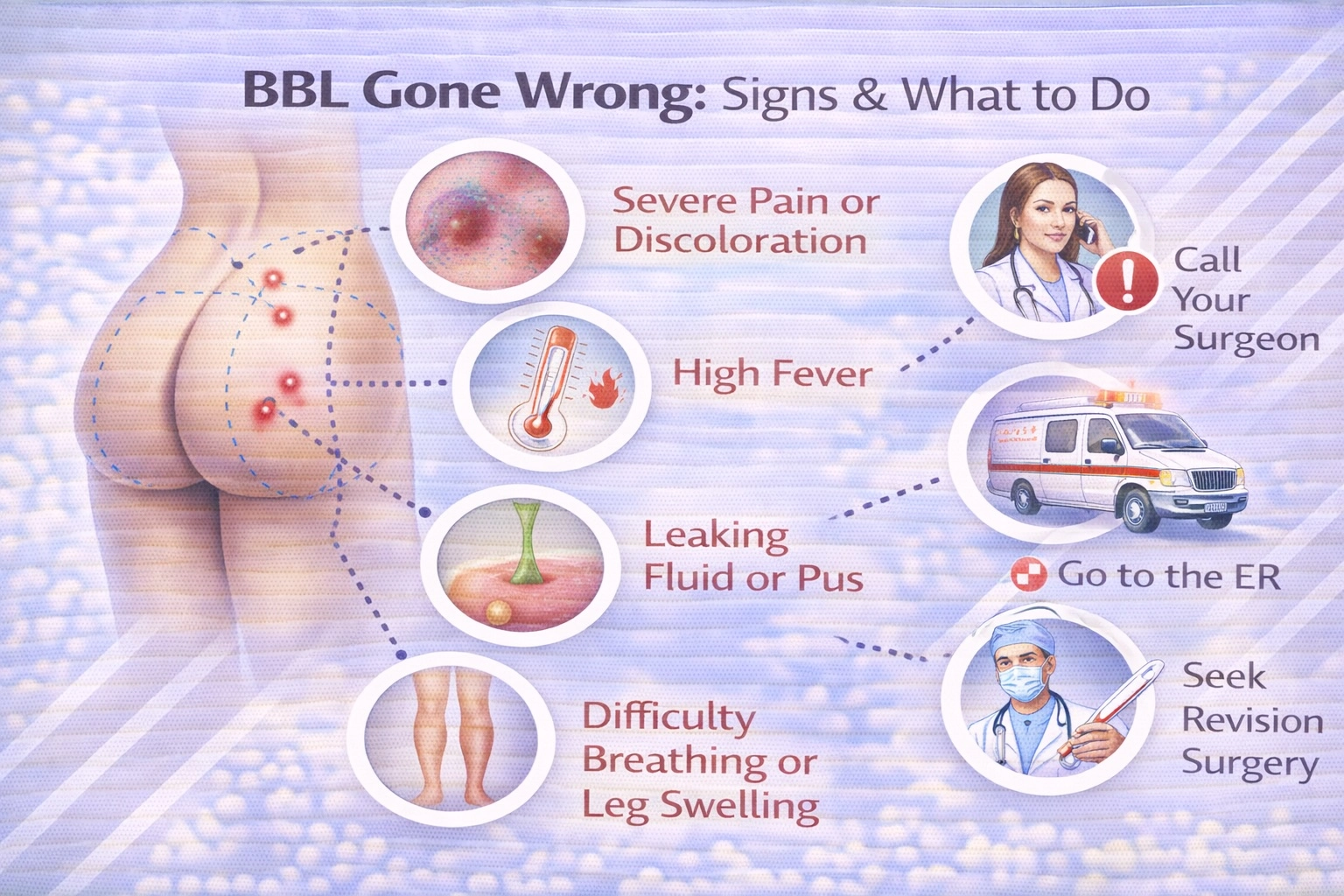
A BBL gone wrong presents warning signs including severe pain beyond normal recovery, asymmetry that persists after swelling subsides, signs of infection such as fever and discharge, or breathing difficulties indicating potential fat embolism.
According to the Multi-Society Task Force for Safety in Gluteal Fat Grafting, fat embolism represents the most serious complication with historical mortality rates of approximately 1 in 3,000 procedures.
This guide covers emergency warning signs, common BBL complications, what to do if something goes wrong, revision surgery options, and how to prevent complications in the first place.
Why Trust This Guide
This content draws from peer-reviewed research published in the Aesthetic Surgery Journal, safety guidelines from the American Society of Plastic Surgeons (ASPS), the International Society of Aesthetic Plastic Surgery (ISAPS), and clinical studies documenting BBL outcomes and complications.
Carely Clinic’s medical team has reviewed this information to ensure accuracy and clinical relevance, providing patients with evidence-based guidance for recognizing and addressing BBL complications.
What Is a BBL Gone Wrong?
A BBL gone wrong refers to any Brazilian Butt Lift outcome that results in medical complications, unsatisfactory aesthetic results, or both—ranging from minor asymmetry to life-threatening fat embolism requiring emergency intervention.
The term encompasses a spectrum of issues that can occur during or after surgery. Some problems, like mild asymmetry or temporary lumps, may resolve with time and proper care. Others, such as infections or fat embolism, require immediate medical attention to prevent serious harm.
Understanding the difference between normal recovery symptoms and genuine complications is essential for every BBL patient. While some discomfort, swelling, and bruising are expected after surgery, certain warning signs indicate something has gone seriously wrong.
Emergency Warning Signs: When to Seek Immediate Help
Breathing difficulties, chest pain, rapid heartbeat, confusion, or loss of consciousness following BBL surgery indicate potential fat embolism—a life-threatening emergency requiring immediate hospital care.
Fat embolism occurs when fat particles enter the bloodstream and travel to the lungs, heart, or brain. According to research published in the Aesthetic Surgery Journal, most fat embolism events occur within 48 hours of surgery, though they can theoretically happen at any time during the recovery period.
Symptoms Requiring Emergency Care
If you experience any of the following symptoms after a BBL, call emergency services immediately:
Cardiopulmonary symptoms such as sudden shortness of breath, chest tightness or pain, rapid or irregular heartbeat, and sudden difficulty breathing even while resting.
Neurological symptoms including sudden confusion or disorientation, loss of consciousness or fainting, sudden severe headache, and visual disturbances.
Systemic symptoms such as a sudden drop in blood pressure, skin turning blue or gray (especially around lips and fingertips), and severe dizziness that doesn’t improve when lying down.
Expert Insight
“A fat embolism is a medical emergency that requires prompt care. If someone experiences dizziness, shortness of breath, trouble breathing, weakness, or other symptoms of fat embolism, they should seek immediate medical attention.”
— Medical News Today, 2022
How to Respond to Emergency Symptoms
Do not wait to see if symptoms improve. Call emergency services (911 in the USA, 112 in Turkey and Europe) immediately. When speaking with emergency responders, clearly state that you recently had a Brazilian Butt Lift surgery.
Provide information about when your surgery occurred, who performed it, and where it took place. If possible, have someone bring your surgical discharge papers to the hospital, as they contain important details about your procedure.
Common BBL Complications
BBL complications range from mild and treatable issues like seromas and minor infections to serious conditions including fat necrosis, severe infection, and the life-threatening risk of pulmonary fat embolism.
Understanding what can go wrong helps you recognize problems early and seek appropriate treatment. Here are the most common complications associated with BBL surgery:
Seroma (Fluid Collection)
Seroma is the most common BBL complication, occurring in approximately 1-2% of cases. It develops when lymphatic channels disrupted during liposuction allow fluid to accumulate under the skin, creating visible or palpable lumps.
Symptoms include soft, fluid-filled swelling in treated areas, a sloshing sensation when moving, and discomfort or pressure at the affected site. Most seromas are not dangerous but require drainage to prevent infection and optimize healing.
Infection
Infection after BBL can range from superficial wound infections to deep tissue infections requiring hospitalization. Signs of infection typically appear within 5-10 days after surgery.
Early warning signs include increasing redness, warmth, or tenderness around incision sites, fever above 38°C (100.4°F), chills or feeling generally unwell, and unusual discharge from wounds (especially if yellow, green, or foul-smelling).
Signs of serious infection requiring immediate medical attention include spreading redness or red streaking, high fever that doesn’t respond to medication, severe pain that worsens rather than improves, and symptoms of sepsis such as rapid breathing, confusion, and extreme weakness.
Fat Necrosis
Fat necrosis occurs when transplanted fat cells die due to inadequate blood supply. This complication typically becomes apparent 1-2 weeks after surgery and can cause lasting aesthetic and physical problems.
Signs of fat necrosis include firm, hard lumps or nodules in the buttocks, skin discoloration (darkening or gray patches) over affected areas, and persistent pain in specific locations. In some cases, necrotic tissue may try to work its way out through the skin, creating wounds that can be mistaken for infection.
Treatment depends on severity. Minor fat necrosis may resolve on its own as the body absorbs dead tissue. Larger areas may require surgical removal to prevent deformity and ongoing discomfort.
Hematoma (Blood Collection)
While some bruising after BBL is normal, a hematoma is a larger collection of blood that pools under the skin. Hematomas appear as firm, painful swellings that may continue to grow in the days following surgery.
Symptoms include significant swelling that increases rather than decreases, firm or hard areas under the skin, pain out of proportion to normal recovery, and skin discoloration that darkens over time. Small hematomas may resolve on their own; larger ones require drainage.
Nerve Damage
Liposuction and fat grafting can irritate or damage nerves, causing numbness, tingling, or altered sensation in treated areas. Most nerve-related symptoms resolve within 3-6 months as nerves heal, though minor changes can persist up to a year.
If you experience complete numbness that doesn’t improve, severe shooting pains, or muscle weakness, report these symptoms to your surgeon promptly.
Signs of Aesthetic Problems After BBL
Aesthetic BBL complications include persistent asymmetry where one buttock appears larger or higher than the other, “diaper booty” from overfilling, contour irregularities, and excessive fat absorption that leaves results flatter than expected.
While not medically dangerous, aesthetic problems can significantly impact your satisfaction with the procedure and may require revision surgery to correct.
Asymmetry
Some degree of asymmetry is normal during the early healing phase due to uneven swelling. However, significant asymmetry that persists beyond 3-6 months post-surgery indicates a problem.
Causes of persistent asymmetry include uneven fat distribution during injection, one side absorbing more fat than the other, pre-existing anatomical differences not addressed during surgery, and improper post-operative care such as sleeping on one side.
“Diaper Booty”
“Diaper booty” describes buttocks that have been overfilled or incorrectly shaped during BBL, creating a bulky, diaper-like appearance that looks unnatural and disproportionate to the patient’s frame.
This complication typically results from injecting too much fat, placing fat in the wrong locations, or failing to consider the patient’s overall proportions and body frame. Correction requires liposuction to remove excess fat and potentially a traditional butt lift to address sagging.
Contour Irregularities
Contour problems manifest as lumps, bumps, dents, or uneven surfaces across the buttocks. These can result from uneven fat distribution, fat necrosis in certain areas, scarring from previous surgery, or the body’s natural healing response.
Some irregularities smooth out over time as swelling resolves and fat settles. Persistent problems may require revision surgery, additional fat grafting to fill depressions, or liposuction to smooth prominent areas.
Excessive Fat Absorption
The body naturally absorbs some transplanted fat—typically 20-40% of transferred volume. However, excessive absorption can leave results significantly flatter than expected.
Factors that increase fat absorption include returning to strenuous activity too soon, not wearing compression garments as directed, sitting directly on the buttocks before fat has established blood supply, significant weight loss after surgery, and poor surgical technique affecting fat cell viability.
What to Do If Your BBL Goes Wrong
If you experience complications after BBL, contact your surgeon immediately for assessment, document all symptoms with photos and written notes, follow medical advice precisely, and seek a second opinion if you’re unsatisfied with your surgeon’s response.
Immediate Steps for Any Complication
Step 1: Contact your surgeon. Most complications are best addressed by the surgeon who performed your procedure. They understand your anatomy and what was done during surgery. Describe your symptoms clearly and ask for urgent evaluation.
Step 2: Document everything. Take clear photographs of any visible problems from multiple angles in good lighting. Write down when symptoms started, how they’ve progressed, and any other relevant details. This documentation helps with diagnosis and is important if you need to see another surgeon.
Step 3: Follow medical instructions. If your surgeon prescribes antibiotics, completes drainage, or recommends specific care, follow their instructions exactly. Do not self-treat with home remedies or unverified advice from online forums.
Step 4: Know when to seek emergency care. If you experience breathing difficulties, chest pain, high fever, signs of spreading infection, or any symptoms suggesting fat embolism, go to the emergency room immediately. Don’t wait for your surgeon to call back.
If Your Surgeon Is Unresponsive
If your original surgeon is unavailable, unresponsive, or you’ve lost confidence in their care, seek evaluation from another board-certified plastic surgeon—preferably one experienced in BBL revision.
When consulting a new surgeon, bring all documentation from your original procedure including operative reports, photographs, and any communication about complications. Be honest about what occurred and what you’ve done so far.
BBL Revision Surgery Options
BBL revision surgery addresses unsatisfactory results through additional fat grafting for volume loss, liposuction to correct overfilling, or traditional butt lift techniques to resolve sagging—typically requiring a 6-12 month wait after the initial procedure.
When to Consider Revision Surgery
Revision surgery is appropriate when aesthetic problems persist beyond the initial healing period (typically 6-12 months), non-surgical treatments cannot address your concerns, and you’re in good health and cleared for additional surgery.
Do not rush into revision. Allow adequate time for swelling to resolve, fat to settle, and your body to heal completely. Premature revision increases complication risk and may compromise results.
Types of BBL Revision
Additional fat grafting addresses volume loss or asymmetry by harvesting more fat and transferring it to under-filled areas. This is the most common revision approach for patients who’ve experienced excessive fat absorption.
Liposuction revision corrects overfilling, “diaper booty,” or localized fat deposits that create an unnatural appearance. Ultrasound-assisted liposuction is particularly effective for revision cases where scar tissue complicates fat removal.
Traditional butt lift may be necessary when excessive fat transfer has caused sagging, or when skin laxity contributes to poor results. This involves removing excess skin and tissue to lift and tighten the buttocks.
Finding a Revision Surgeon
Revision surgery is more complex than primary BBL. Look for surgeons who specialize in BBL revision with documented experience, can show before-and-after photos of revision cases, understand the limitations of revision surgery and set realistic expectations, and operate at accredited facilities with proper safety protocols.
Be cautious about returning to a surgeon who originally performed an unsatisfactory procedure unless you’re confident they’ve acknowledged what went wrong and have a clear plan for improvement.
Expert Insight
“BBL revision surgery is a corrective procedure that aims to fix unsatisfactory results from the initial surgery. It is typically recommended that patients wait at least 6 to 12 months after the initial procedure before considering revision.”
— Raadina Health, Clinical Guidelines
How to Prevent BBL Complications
Preventing BBL complications starts with choosing a board-certified plastic surgeon who uses ultrasound-guided subcutaneous-only injection techniques, operating at an accredited facility, and following all pre-operative and post-operative instructions meticulously.
Choosing the Right Surgeon
The surgeon you choose has the greatest impact on both safety and results. Prioritize the following criteria:
Board certification by a recognized plastic surgery board (ASPS in the USA, ISAPS internationally) confirms the surgeon has completed rigorous training and examinations in plastic surgery.
BBL-specific experience matters because this procedure requires specialized skills. Ask how many BBLs the surgeon has performed and request to see before-and-after photos of their work.
Safety protocols should include subcutaneous-only fat injection (never into the muscle), ultrasound guidance during fat transfer, operating at accredited surgical facilities, and comprehensive emergency protocols.
Pre-Operative Steps
Stop smoking at least 4 weeks before surgery, as nicotine impairs blood flow and healing. Avoid blood-thinning medications and supplements as directed by your surgeon. Achieve and maintain a stable weight before surgery. Disclose your complete medical history, including any previous surgeries.
Post-Operative Care
Avoid sitting directly on your buttocks for 2-6 weeks (as specified by your surgeon). Use a BBL pillow when sitting is unavoidable. Sleep on your stomach or side, not your back.
Wear compression garments as directed to reduce swelling and support healing tissues. Attend all follow-up appointments even if you feel fine. Report any unusual symptoms promptly—don’t wait for your next scheduled visit.
Avoid strenuous activity for at least 6 weeks. Light walking is encouraged to promote circulation, but avoid exercise that strains the buttocks or causes bouncing movements.
How This Applies in Turkey
International safety guidelines from ASPS, ISAPS, and the Multi-Society Task Force for Safety in Gluteal Fat Grafting apply equally at Turkey’s JCI-accredited medical facilities, where surgeons follow identical clinical protocols as American and European institutions.
Turkey has become a leading destination for BBL surgery, with modern facilities in Istanbul offering advanced safety technologies including ultrasound-guided fat injection at significantly lower costs than Western countries. BBL packages in Turkey typically range from €3,300-€5,500, compared to $8,000-$15,000 in the USA and £7,000-£12,000 in the UK.
At Carely Clinic in Istanbul, BBL procedures are performed by board-certified plastic surgeons at JCI-accredited partner hospitals. Our approach prioritizes safety with subcutaneous-only fat injection, real-time ultrasound guidance, and comprehensive post-operative monitoring. Packages include pre-operative testing, surgery, hospital stay, 5-star accommodation, and lifetime follow-up support. Learn more about BBL at Carely Clinic.
Warning Signs Summary Table
| Warning Sign | Possible Cause | Urgency Level | Action Required |
|---|---|---|---|
| Breathing difficulty, chest pain | Fat embolism | EMERGENCY | Call emergency services immediately |
| Confusion, loss of consciousness | Fat embolism to brain | EMERGENCY | Call emergency services immediately |
| High fever (>38.5°C/101.3°F), chills | Severe infection/sepsis | EMERGENCY | Go to emergency room |
| Spreading redness, red streaking | Spreading infection | URGENT | Contact surgeon or go to ER same day |
| Fever, discharge from incisions | Local infection | URGENT | Contact surgeon within 24 hours |
| Hard lumps, skin discoloration | Fat necrosis | SOON | Schedule appointment within days |
| Large, growing swelling | Hematoma or seroma | SOON | Contact surgeon within 1-2 days |
| Persistent asymmetry (after 6 months) | Uneven fat placement/survival | ROUTINE | Discuss at follow-up appointment |
| Results flatter than expected | Excessive fat absorption | ROUTINE | Discuss revision options after 6-12 months |
| Overfilled, unnatural appearance | “Diaper booty” from overfilling | ROUTINE | Discuss correction options after healing |
Frequently Asked Questions
How do I know if my BBL has gone wrong?
A BBL has gone wrong if you experience breathing difficulties or chest pain (indicating fat embolism), fever above 38°C with spreading redness (infection), hard lumps appearing 1-2 weeks post-surgery (fat necrosis), or persistent asymmetry beyond 6 months. Emergency symptoms like shortness of breath, confusion, or high fever require immediate hospital care. Aesthetic issues like uneven buttocks or contour irregularities that don’t improve after swelling resolves also indicate problems requiring surgical consultation.
What is the most dangerous BBL complication?
Fat embolism is the most dangerous BBL complication with a historical mortality rate of 1 in 3,000 procedures according to ASERF Task Force data. This occurs when fat enters the bloodstream and travels to the lungs, heart, or brain, typically within 48 hours of surgery. Modern safety protocols including subcutaneous-only injection and ultrasound guidance have reduced this risk significantly. Current mortality rates with proper technique approach 1 in 14,000-15,000, similar to tummy tuck procedures.
How long after BBL can complications occur?
Fat embolism occurs within 48 hours of surgery in most cases, infections appear within 5-10 days, and fat necrosis becomes apparent at 1-2 weeks post-surgery. Aesthetic issues require 3-6 months to fully assess after all swelling resolves. While most serious complications happen in the first 2 weeks, problems can theoretically occur at any time during recovery. Seromas typically develop within the first month when lymphatic drainage is disrupted.
Can a botched BBL be fixed?
Yes, most botched BBL results can be fixed through revision surgery performed 6-12 months after the initial procedure. Revision options include additional fat grafting for volume loss (requiring 800-1,200cc harvested fat), liposuction to correct overfilling or “diaper booty,” or traditional butt lift for sagging skin. Ultrasound-assisted liposuction achieves 40% more fat removal in revision cases with scar tissue. Success rates are high when performed by experienced revision surgeons, though realistic expectations are essential.
What is “diaper booty” and how is it fixed?
“Diaper booty” is an overfilled buttocks appearance resembling a bulky diaper, caused by injecting excessive fat volumes or improper placement creating unnatural projection. Correction requires liposuction to remove 300-800cc of excess fat and reshape the contours, waiting 6-9 months after the original procedure for scar tissue to soften. In severe cases with skin sagging, a traditional butt lift removes excess skin and tissue. Ultrasound-assisted liposuction is most effective for revision cases with extensive scarring.
How do I know if I have an infection after BBL?
BBL infection presents with fever above 38°C (100.4°F), increasing redness and warmth around incision sites, yellow or green discharge with foul odor, and escalating pain 5-10 days post-surgery. Serious infection signs include fever above 38.5°C (101.3°F), spreading red streaks from the wound, chills with confusion, and rapid breathing indicating sepsis. Early-stage cellulitis affects less than 1% of patients and responds to oral antibiotics, while deep abscesses require surgical drainage and IV antibiotics.
What does fat necrosis feel like after BBL?
Fat necrosis feels like firm, hard lumps ranging from pea-sized to golf ball-sized nodules within the buttocks, appearing 1-2 weeks post-surgery when transferred fat dies from inadequate blood supply. The skin over these areas turns gray, dark, or discolored, and the lumps remain painful or tender to touch. Some necrotic fat calcifies and hardens as the body attempts to wall it off. Superficial fat necrosis may push through the skin creating wounds, while internal necrosis requires monitoring or surgical removal if larger than 2cm.
When should I call my surgeon vs. go to the emergency room?
Call your surgeon within 24 hours for mild fever (37.5-38°C/99.5-100.4°F), clear or slightly colored drainage from incisions, swelling that grows gradually, or firm areas suggesting seroma or hematoma. Go to the emergency room immediately for breathing difficulties, chest pain, fever above 38.5°C (101.3°F) with chills, confusion or altered consciousness, rapidly spreading redness with red streaks, or any symptoms appearing within 48 hours post-surgery suggesting fat embolism. When in doubt, err on the side of seeking emergency care.
Is BBL safer in Turkey than other countries?
BBL safety depends on surgeon qualifications and facility standards, not geography—Turkey’s JCI-accredited hospitals follow identical international protocols as USA and European facilities. Turkish clinics achieve 0.08% infection rates versus 0.5% international averages, with costs 60-70% lower (€3,300-€5,500 in Turkey vs $8,000-$15,000 USA, £7,000-£12,000 UK). The key safety factors are board-certified surgeons, subcutaneous-only injection with ultrasound guidance, and JCI/ISO-accredited facilities. Turkey offers these standards at significantly reduced prices due to lower operational costs.
How can I reduce my risk of BBL complications?
Reduce BBL complications by choosing board-certified surgeons with 500+ BBL procedures who use ultrasound-guided subcutaneous-only injection at JCI/ISO-accredited facilities. Stop smoking 4 weeks pre-surgery, avoid sitting directly on buttocks for 2-6 weeks post-surgery (use BBL pillows when necessary), wear compression garments 23 hours daily for 6 weeks, and attend all follow-up appointments. Surgeons using ultrasound guidance reduce fat embolism risk by 40% according to Aesthetic Surgery Journal 2024 data.
Conclusion
Understanding the warning signs of a BBL gone wrong can protect your health and help you take appropriate action quickly. Emergency symptoms like breathing difficulty, chest pain, or confusion require immediate emergency care, while aesthetic concerns can be addressed through revision surgery after proper healing.
The key to BBL safety lies in prevention: choosing a qualified, board-certified plastic surgeon who uses modern safety techniques including subcutaneous-only fat injection with ultrasound guidance, operating at an accredited facility, and following all pre- and post-operative instructions carefully.
If you’re considering a BBL or concerned about your results from a previous procedure, consult with an experienced plastic surgeon who can evaluate your specific situation and discuss your options.
Individual requirements and outcomes vary. This guide provides general information based on international medical guidelines and published research. Consult qualified medical professionals for personalized advice regarding your specific situation.