
Quick Summary
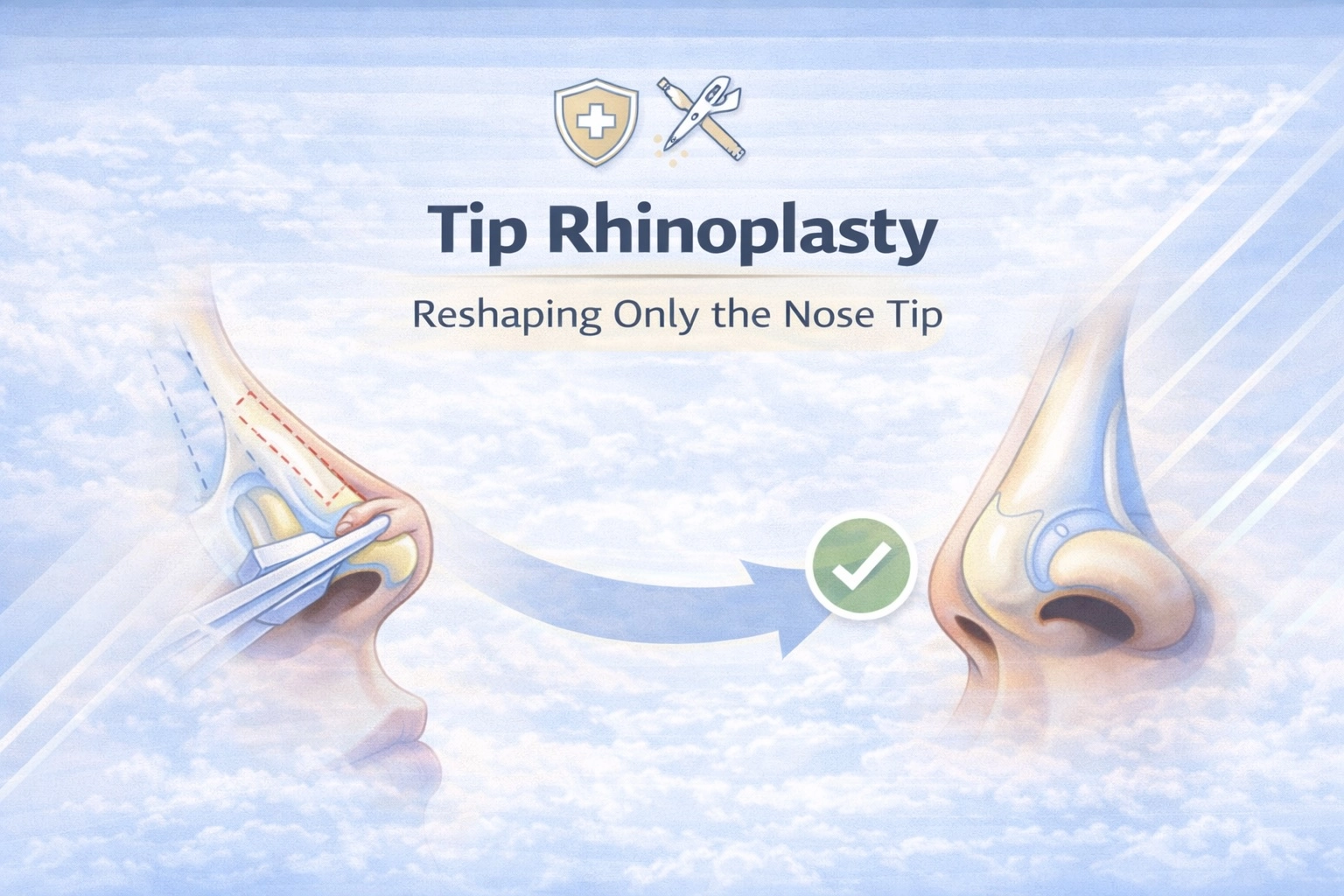
Tip rhinoplasty (tip plasty) focuses exclusively on reshaping the nasal tip cartilage without altering the nasal bridge or bones, making it less invasive than full rhinoplasty with faster recovery.
According to the American Society of Plastic Surgeons (ASPS), tip reshaping is one of the most frequent requests in rhinoplasty consultations, with the procedure achieving an 85-90% success rate in desired outcomes.
This guide covers tip rhinoplasty techniques, ideal candidates, recovery timelines, costs by country, and what to expect when having the procedure performed in Turkey.
Why Trust This Guide
This comprehensive guide draws on peer-reviewed research from medical journals including Aesthetic Plastic Surgeryand Plastic and Reconstructive Surgery, along with guidelines from the International Society of Aesthetic Plastic Surgery (ISAPS) and the American Society of Plastic Surgeons (ASPS).
Carely Clinic’s editorial team collaborates with board-certified surgeons to ensure all information reflects current surgical standards and safety protocols followed at JCI-accredited facilities worldwide.
What Is Tip Rhinoplasty?
Tip rhinoplasty is a specialized nasal surgery that reshapes only the lower third of the nose, targeting the cartilage structures without altering the nasal bones or bridge, typically completed in 60-90 minutes under local or general anesthesia.
Unlike comprehensive rhinoplasty procedures that modify the entire nasal framework, tip plasty exclusively addresses the alar cartilages that determine tip shape, projection, and rotation. This targeted approach makes it ideal for patients satisfied with their overall nasal profile who want refinement only at the tip.
The procedure involves precise cartilage reshaping through trimming, suturing techniques, or grafting. Surgeons may narrow a wide tip, lift a drooping tip, reduce projection, or correct asymmetry, all while preserving the structural integrity of the nose.
Because no bone work (osteotomies) is performed, patients typically experience less swelling and bruising compared to full rhinoplasty. Most patients return to normal activities within one to two weeks, though final results take 12-18 months as the tip settles into its new shape.
Tip Rhinoplasty vs Full Rhinoplasty
The primary difference between tip rhinoplasty and full rhinoplasty is the extent of surgical modification: tip plasty addresses only the cartilage at the nose tip, while full rhinoplasty involves reshaping the entire nasal structure including bones.
Understanding which procedure matches your goals is essential for achieving satisfying results. The following comparison highlights key differences between these approaches.
| Factor | Tip Rhinoplasty | Full Rhinoplasty |
|---|---|---|
| Area Treated | Nasal tip cartilage only | Entire nose (bone, cartilage, septum) |
| Procedure Duration | 60-90 minutes | 2-3 hours |
| Anesthesia | Local or general | General anesthesia |
| Bone Work Required | No | Often yes (osteotomies) |
| Initial Recovery | 1-2 weeks | 2-3 weeks |
| Bruising | Minimal to none | Moderate (especially around eyes) |
| Final Results | 12-18 months | 12-18 months |
| Best For | Bulbous, droopy, or asymmetric tips | Comprehensive nasal reshaping |
| Cost Range (Turkey) | €2,000-€2,800 | €2,700-€4,500 |
Choosing tip rhinoplasty makes sense when your concerns are limited to the nasal tip and you’re otherwise satisfied with your nasal bridge and overall profile. If you need dorsal hump reduction, bridge straightening, or correction of a deviated septum, full rhinoplasty may be the better option.
Who Is a Good Candidate?
Ideal tip rhinoplasty candidates are adults with fully developed nasal structures (typically 16+ for females, 18+ for males) who are dissatisfied specifically with the shape, size, or position of their nasal tip.
Good candidates share several characteristics that make tip plasty an appropriate solution. Physical eligibility requirements include having a smooth nasal bridge with no dorsal hump, no breathing issues related to nasal structure, and concerns limited to the tip area such as excessive roundness, drooping, asymmetry, or over-projection.
Beyond physical factors, candidates should be in good general health with no conditions that impair healing, be non-smokers or willing to quit at least four weeks before and after surgery, and have realistic expectations about achievable outcomes.
Psychological readiness matters significantly. Patients should seek improvement rather than perfection and understand that while tip rhinoplasty can create meaningful changes, it won’t dramatically transform their overall appearance. Research indicates that patients with clear, realistic goals experience the highest satisfaction rates following nasal tip surgery.
You May Be a Good Candidate If:
- Your nasal tip appears bulbous, boxy, or excessively rounded
- Your tip droops downward, especially when smiling
- Your nasal tip projects too far from your face (over-projection)
- Your tip lacks projection and appears flat or undefined
- You have noticeable asymmetry at the nasal tip
- Your tip appears too wide relative to your nose bridge
- You’ve experienced tip changes from aging or previous trauma
Tip Rhinoplasty May Not Be Right If:
- You have a prominent dorsal hump requiring reduction
- Your nasal bridge is crooked or deviated
- You have breathing difficulties related to septal deviation
- Your nasal bones need reshaping for facial symmetry
- You have very thick nasal skin that limits refinement potential
- You’re under 16 (female) or 18 (male) years of age
Surgical Techniques
Tip rhinoplasty employs either open or closed surgical approaches, with the choice depending on the complexity of changes needed and surgeon preference, each offering distinct advantages for nasal tip refinement.
Open vs Closed Approach
Closed (Endonasal) Technique: All incisions are made inside the nostrils, leaving no visible external scars. This approach offers faster healing, less swelling, and preserved blood supply to the nasal skin. Closed rhinoplasty works well for minor tip adjustments and patients seeking subtle refinement.
Open Technique: A small incision across the columella (the tissue between the nostrils) connects incisions inside each nostril, allowing the surgeon to lift the nasal skin and directly visualize all tip structures. This provides superior access for complex reshaping, precise graft placement, and comprehensive tip modification. The resulting scar typically heals to become nearly invisible within several months.
Cartilage Modification Methods
Surgeons employ several techniques to reshape the nasal tip, often combining multiple approaches for optimal results:
Suturing Techniques: Specialized sutures reposition and reshape the alar cartilages without removing tissue. Dome-binding sutures narrow wide tips by bringing the cartilage domes together. Interdomal and intercrural sutures adjust projection and definition. This conservative approach preserves cartilage strength while achieving refined contours.
Cephalic Trimming: When lower lateral cartilages are overly prominent, surgeons carefully trim the upper (cephalic) portion while preserving adequate cartilage for structural support. This reduces tip width and creates a more defined appearance. Modern techniques emphasize conservative trimming to prevent long-term complications.
Cartilage Grafting: For tips requiring additional structure, projection, or definition, surgeons may place cartilage grafts harvested from the nasal septum, ear, or occasionally rib. Shield grafts enhance tip definition, columellar struts provide support, and cap grafts smooth and refine the tip shape.
Soft Tissue Reduction: For patients with thick nasal skin, surgeons may carefully thin subcutaneous tissue to improve tip definition. This technique requires particular skill to avoid complications while achieving meaningful refinement.
Expert Insight
“The nasal tip is where millimetres truly matter. Modern tip rhinoplasty emphasizes preservation techniques and structural support rather than aggressive cartilage removal, leading to more predictable long-term results.”
— Aesthetic Plastic Surgery Journal, 2024
What Tip Rhinoplasty Can Correct
Tip rhinoplasty effectively addresses multiple aesthetic concerns including bulbous tips, drooping tips, over-projected tips, asymmetry, and wide nostrils, achieving natural results that complement facial features.
Common Concerns Addressed
Bulbous or Boxy Tip: The most common reason patients seek tip rhinoplasty is an overly rounded or boxy nasal tip that lacks definition. This often results from wide lower lateral cartilages, thick soft tissue, or both. Surgeons narrow and refine the tip through cartilage reshaping, suturing, and sometimes tissue reduction.
Drooping Tip (Ptotic Tip): A nasal tip that points downward, particularly noticeable when smiling, can be lifted and rotated to a more aesthetically pleasing angle. Techniques include cartilage repositioning, columellar strut placement, and specific suturing methods that adjust the nasolabial angle.
Over-Projected Tip: When the tip extends too far from the face, surgeons reduce projection through controlled cartilage modification. This creates better proportion between the tip and other facial features while maintaining structural integrity.
Under-Projected Tip: A flat or poorly defined tip lacking adequate projection can be augmented using cartilage grafts. These grafts add structure and definition, creating a more refined profile appearance.
Tip Asymmetry: Congenital differences or previous trauma may cause uneven tip appearance. Surgeons carefully analyze the asymmetry’s cause and employ targeted techniques to achieve improved symmetry, though perfect symmetry is neither achievable nor natural-looking.
Wide Nostrils: While technically a nostril reduction (alarplasty) rather than tip surgery, this procedure is often performed alongside tip rhinoplasty. Small wedge excisions narrow the nostril base without leaving visible scars.
Pinched Tip: Previous rhinoplasty or natural anatomy may leave the tip appearing overly narrow or collapsed. Cartilage grafts provide support and restore natural width and definition.
Recovery Timeline
Most patients return to normal activities within 1-2 weeks after tip rhinoplasty, with major swelling subsiding by 4-6 weeks, though the nasal tip takes 12-18 months to reveal final results as it is the slowest area to heal.
What to Expect Week by Week
| Timeframe | Milestone | What to Expect |
|---|---|---|
| Day 1-3 | Initial Recovery | Peak swelling and mild discomfort; splint or tape in place; rest with head elevated |
| Day 4-7 | Splint Removal | External splint removed (day 5-7); sutures removed if present; bruising begins fading |
| Week 2 | Return to Daily Life | Most return to desk work/school; visible swelling significantly reduced; avoid strenuous activity |
| Week 3-4 | Social Comfort | Comfortable attending social events; light exercise permitted; residual swelling may be noticeable only to you |
| Week 6 | Activity Resumption | Nasal bones stable (if any work performed); resume exercise and glasses-wearing; safe to blow nose |
| Month 3 | Early Results Visible | 80-90% of swelling resolved; tip shape becoming more defined; numbness resolving |
| Month 6-12 | Continued Refinement | Subtle changes continue; tip definition improves; residual stiffness resolves |
| Month 12-18 | Final Results | Nose has settled into permanent shape; all swelling resolved; sensation fully returned |
Recovery Tips for Optimal Healing
Following your surgeon’s post-operative instructions is the single most important factor in successful recovery. General guidelines include keeping your head elevated (even during sleep) for at least two weeks, applying cold compresses near but not directly on the nose during the first 48 hours, and avoiding blood-thinning medications and supplements.
Physical precautions matter significantly. Avoid blowing your nose for six weeks, sneeze through your mouth if necessary, and protect your nose from accidental bumps. Skip strenuous exercise for 4-6 weeks, and avoid wearing glasses that rest on the nose bridge until cleared by your surgeon.
Lifestyle factors also influence healing. Do not smoke before or after surgery as nicotine impairs blood flow and healing. Limit sun exposure to prevent discoloration of healing tissue, stay hydrated, and maintain a low-sodium diet to minimize swelling.
Risks and Safety
Tip rhinoplasty has a strong safety profile with revision rates of 5-15% for rhinoplasty procedures overall, though complications are less common in isolated tip work when performed by board-certified surgeons at accredited facilities.
Potential Risks
Common, Temporary Effects: Swelling lasting several months (especially at the tip), bruising around the nose and eyes, numbness or altered sensation in the tip, temporary nasal congestion, and minor asymmetry during healing are expected and resolve with time.
Less Common Complications: Infection (under 2% incidence), persistent asymmetry requiring touch-up, visible scarring (primarily with open approach), prolonged swelling beyond expected timeframes, and dissatisfaction with aesthetic results.
Rare Complications: Breathing difficulties, cartilage or graft displacement, skin necrosis, septal perforation (when septal cartilage is harvested), and need for revision surgery.
Minimizing Risk
The most important factor in reducing complications is choosing an experienced, board-certified surgeon who specializes in rhinoplasty. Research indicates that surgeon experience correlates directly with lower complication rates and higher patient satisfaction. Having surgery at an accredited facility with proper emergency protocols provides additional safety assurance.
Patient factors also matter. Providing accurate medical history, following all pre-operative instructions (including stopping blood-thinning medications and nicotine), and adhering carefully to post-operative guidelines all contribute to optimal outcomes.
Expert Insight
“Postoperative deformities are considered the main risks of rhinoplasty, causing revision surgery in 5% to 15% of cases. The risks can be reduced with increasing experience. Maintaining the position of the tip and the columella is one of the main issues to avoid typical postoperative deformities.”
— German Medical Science, Rhinoplasty Complications Review
Tip Rhinoplasty Cost by Country
Tip rhinoplasty costs €2,000-€2,800 in Turkey compared to $7,000-$14,000 in the USA and £3,500-£7,000 in the UK, representing savings of 60-75% for equivalent surgical quality at accredited facilities.
| Country | Price Range | What’s Typically Included |
|---|---|---|
| Turkey | €2,000-€2,800 ($2,500-$3,000) | Surgery, hospital stay, hotel, transfers, medications, follow-ups |
| United States | $7,000-$14,000 | Surgeon fee and facility fee only; anesthesia and aftercare extra |
| United Kingdom | £3,500-£7,000 | Surgery and basic aftercare; accommodation not included |
| Germany | €4,000-€8,000 | Surgery and clinical care; accommodation not included |
| Canada | CAD $6,000-$12,000 | Surgery and facility; aftercare and accommodation extra |
Why Turkey Offers Lower Prices
Turkey’s cost advantage stems from lower operational costs, favorable currency exchange rates, and government support for medical tourism rather than compromised quality. Turkish hospitals often feature newer equipment than many Western facilities, and surgeons trained internationally maintain equivalent skill levels.
The all-inclusive package model common in Turkey provides particular value. Rather than receiving separate bills for surgery, anesthesia, facility fees, medications, and follow-up appointments, international patients receive comprehensive packages covering all medical expenses plus accommodation and ground transportation.
Factors Affecting Cost
Several variables influence tip rhinoplasty pricing regardless of location. Surgeon experience and reputation command premium fees, while the surgical technique (open requires more time than closed) affects operating room costs. Facility type matters: JCI-accredited hospitals with ICU capabilities charge more than basic clinic settings. Additional procedures like alarplasty (nostril reduction) increase the total. Revision cases involving scar tissue and altered anatomy from previous surgery require more complex work and higher fees.
How This Applies in Turkey
International guidelines for tip rhinoplasty apply equally at Turkey’s JCI-accredited facilities, which follow identical clinical protocols and safety standards as leading American and European hospitals.
Turkey has earned its position as a global leader in rhinoplasty through the combination of highly trained surgeons, modern facilities, and accessible pricing. With approximately 50 JCI-accredited hospitals—more than any other country except the United States—Turkey offers verified quality assurance for international patients.
The practical benefits for international patients are significant. Tip rhinoplasty in Turkey costs €2,000-€2,800 all-inclusive, compared to $7,000-$14,000 in the USA and £3,500-£7,000 in the UK. International patients typically complete the entire process, from consultation through surgery and initial recovery, within 5-7 days, compared to weeks or months of waiting in countries with public healthcare systems.
At Carely Clinic in Istanbul, tip rhinoplasty is performed by board-certified plastic surgeons at JCI-accredited partner hospitals. All-inclusive packages cover pre-operative consultations, surgery at an accredited facility, post-operative medications, hotel accommodation, and private transfers throughout your stay. Learn more about Rhinoplasty in Turkey at Carely Clinic.
Frequently Asked Questions
How long does tip rhinoplasty surgery take?
Tip rhinoplasty typically takes 60-90 minutes to complete. The exact duration depends on complexity and whether the surgeon uses an open or closed approach. This is significantly shorter than full rhinoplasty which requires 2-3 hours.
Is tip rhinoplasty painful?
Most patients report minimal pain, describing pressure or discomfort rather than significant pain. Oral medication effectively manages discomfort during the first 3-5 days. The majority of patients discontinue pain medication within one week.
When can I return to work after tip rhinoplasty?
Most patients return to desk work within 7-10 days once the splint is removed and visible swelling subsides. Physically demanding jobs require 2-3 weeks off. Remote work may be possible sooner depending on individual comfort levels.
Will there be visible scarring?
Closed rhinoplasty leaves no visible scars as all incisions are inside the nostrils. Open rhinoplasty creates a small columella incision that typically becomes nearly invisible within several months. Skilled surgeons place this incision at the narrowest part for minimal visibility.
How long until I see final results?
Final tip rhinoplasty results take 12-18 months to appear as the nasal tip holds swelling longest. You’ll notice improvement within weeks as initial swelling resolves. Subtle refinement continues throughout the first year as tissues settle and remodel.
Can tip rhinoplasty fix breathing problems?
Tip rhinoplasty addresses aesthetic concerns only and does not treat breathing problems. Septal deviation, enlarged turbinates, or structural obstruction require septoplasty or functional rhinoplasty. Some patients combine both procedures in one surgery for comprehensive improvement.
What’s the difference between tip rhinoplasty and tip filler?
Tip rhinoplasty surgically reshapes cartilage for permanent results, while fillers provide temporary changes lasting 6-24 months. Fillers cannot reduce bulbous tips or remove tissue—they only add volume. Surgery is the only option for genuine tip reduction or refinement.
Can I combine tip rhinoplasty with other procedures?
Yes, tip rhinoplasty commonly combines with alarplasty, chin augmentation, or other facial procedures. Combining procedures reduces overall recovery time versus separate surgeries. Many patients add septoplasty if breathing issues exist alongside aesthetic concerns.
At what age can I have tip rhinoplasty?
Candidates should wait until facial development completes—typically age 16 for females and 18 for males. There’s no upper age limit for tip rhinoplasty. Healthy patients in their 40s, 50s, and beyond regularly undergo the procedure successfully with proper medical clearance.
How do I choose between open and closed tip rhinoplasty?
Your surgeon recommends the approach based on your anatomy and goals. Closed rhinoplasty suits minor refinements with no visible scarring. Open rhinoplasty provides better visualization for complex reshaping. Both techniques achieve excellent results when matched appropriately to patient needs.
Is tip rhinoplasty worth it?
Patient satisfaction rates range from 85-90% when performed by experienced surgeons on appropriate candidates. The procedure provides permanent improvement for concerns affecting confidence. Realistic expectations and choosing a skilled surgeon are key factors determining whether results justify the investment.
What if I’m unhappy with my results?
Revision surgery is possible if results don’t meet expectations, though rare with careful surgeon selection. Surgeons recommend waiting 12-18 months before considering revision. This allows all swelling to resolve and the nose to settle into final shape before making adjustments.
Conclusion
Tip rhinoplasty offers a focused solution for patients seeking nasal tip refinement without the complexity and extended recovery of full rhinoplasty. With procedure times of 60-90 minutes, recovery periods of 1-2 weeks, and success rates of 85-90%, tip plasty delivers meaningful aesthetic improvement for appropriate candidates.
If you’re considering tip rhinoplasty, the next steps involve consulting with a board-certified plastic surgeon who can evaluate your anatomy, discuss your goals, and recommend the most appropriate approach. Look for surgeons with specific rhinoplasty expertise and before-and-after photos demonstrating natural-looking results.
Individual requirements and outcomes vary. This guide provides general information based on international surgical guidelines and peer-reviewed research. Consult qualified medical professionals for personalized advice regarding your specific situation.
Carely Clinic offers comprehensive tip rhinoplasty packages in Istanbul with board-certified surgeons, JCI-accredited facilities, and all-inclusive pricing. Contact us for a free consultation to learn whether tip rhinoplasty is right for your goals.