
Quick Summary
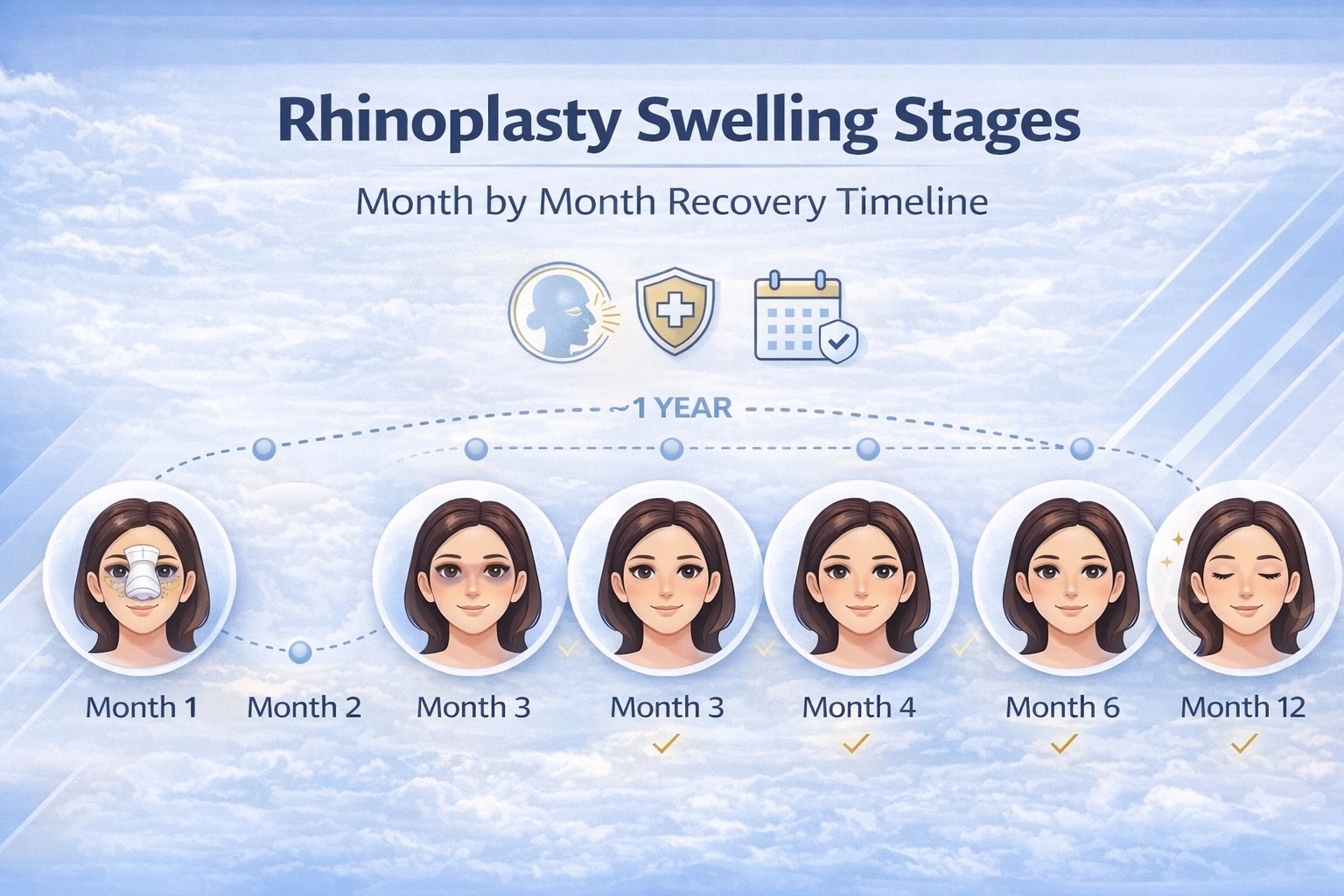
Rhinoplasty swelling peaks within 48-72 hours post-surgery, with 80-90% resolving by three months and final results visible at 12 months. The nasal tip retains swelling longest due to its cartilaginous structure and thick skin.
According to research published in Plastic and Reconstructive Surgery, more than 97% of facial swelling resolves within one year of rhinoplasty surgery, with 95% subsiding by six months.
This guide covers week-by-week rhinoplasty swelling stages, month-by-month milestones, factors affecting healing, tips to reduce swelling faster, and what to expect throughout your complete recovery journey.
Why Trust This Guide
This comprehensive guide draws from peer-reviewed research in Plastic and Reconstructive Surgery, clinical guidelines from board-certified facial plastic surgeons, and recovery data from thousands of rhinoplasty patients. Sources include the Ear, Nose and Throat Journal and established medical institutions.
At Carely Clinic, our medical team has guided hundreds of rhinoplasty patients through recovery, understanding that knowledge of the swelling timeline reduces anxiety and supports optimal healing outcomes.
Understanding Rhinoplasty Swelling Stages
Rhinoplasty swelling is your body’s natural inflammatory response to surgical tissue manipulation, typically peaking at 48-72 hours and resolving in stages over 12 months with final refinement visible at one year post-surgery.
Swelling occurs because your body sends increased blood flow and fluids to the surgical site as part of the healing process. This response protects damaged tissue and initiates repair mechanisms. Understanding this process helps you recognize that swelling is not a complication—it’s evidence that healing is progressing normally.
The nose experiences two types of post-operative swelling. Immediate swelling appears within hours of surgery as the body’s acute inflammatory response. Long-term residual swelling relates to fluid accumulation and tissue remodeling that continues for months as your nose settles into its final shape.
Where Swelling Occurs Most
Swelling after rhinoplasty concentrates in specific areas based on the surgical work performed. The nasal tip typically retains swelling longest because it consists of cartilaginous tissue covered by thick skin with numerous oil glands. The nasal bridge usually refines more quickly since it sits over bone rather than cartilage.
Surrounding areas also experience swelling. Patients commonly notice puffiness around the eyes, cheeks, and upper lip during the first week. This periorbital swelling resolves faster than nasal swelling, typically clearing within 10-14 days.
Week-by-Week Swelling Timeline
The first four weeks after rhinoplasty involve the most dramatic changes in swelling, with visible improvements occurring almost daily after the initial peak.
Days 1-3: Peak Swelling Phase
Swelling and bruising reach maximum intensity within 48-72 hours after surgery, with the face appearing significantly puffy and discolored around the nose, eyes, and cheeks.
During these first days, your nose will be protected by a splint or cast, and internal packing may be present depending on your surgeon’s technique. You cannot see your actual results yet—the nose appears much larger than it will be. This is completely normal and expected.
Pain during this phase is generally mild to moderate, typically rated 1-4 out of 10 by most patients. Prescribed pain medication manages discomfort effectively. You’ll experience nasal congestion and difficulty breathing through your nose due to internal swelling.
Days 4-7: Initial Improvement
By the end of the first week, bruising begins fading from dark purple to yellow-green, and facial puffiness starts decreasing noticeably around the eyes and cheeks.
Your cast or splint removal typically occurs between days 5-10 post-surgery. This moment provides your first glimpse of your new nose, though significant swelling remains. Don’t be alarmed—the nose will look nothing like the final result at this stage.
Most patients feel comfortable enough to take short walks and handle basic self-care. Oozing from the nostrils and into the throat is normal during this period but decreases daily.
Week 2: Returning to Public
By week two, most bruising has resolved or can be concealed with makeup, and patients typically feel comfortable returning to work and public activities.
The dramatic facial swelling has subsided, though your nose still appears swollen compared to what it will eventually look like. Many patients return to desk jobs within 7-10 days, though physically demanding work should wait longer.
Your surgeon will remove any remaining stitches and may apply taping to help contour the nose as swelling decreases. Some patients notice temporary numbness in the nasal tip—this sensation gradually returns over the coming weeks.
Weeks 3-4: Visible Progress
By the end of week four, approximately 50-60% of the initial swelling has resolved, and your nose begins showing its intended shape more clearly.
Bruising should be completely gone by now. While the nose still feels and looks larger than normal, you can start appreciating the changes. Nasal breathing typically improves significantly as internal swelling decreases.
At this stage, patients often feel a mix of excitement about visible progress and impatience about remaining swelling. Understanding that subtle changes continue for months helps manage expectations appropriately.
Month-by-Month Recovery Stages
After the first month, swelling resolution becomes more gradual, with changes occurring week-to-week rather than day-to-day. Patience becomes increasingly important during this phase.
Month 1-2: Rapid Refinement
By the two-month mark, approximately 65-75% of swelling has resolved, and the nose’s overall shape and profile become increasingly apparent.
During this period, the nose continues refining daily. You may notice that your nose looks slightly different in the morning (more swollen) than in the evening. This fluctuation is normal and relates to fluid accumulation while sleeping.
Most patients feel comfortable attending social events and taking photographs by this stage. However, subtle swelling—particularly at the nasal tip—remains visible to you even if others don’t notice it.
Month 3: Major Milestone
Three months post-rhinoplasty marks a significant milestone, with 80-90% of swelling resolved and the nasal bridge appearing refined while the tip continues settling.
Research confirms this timeline—studies show that the majority of visible swelling resolves by the three-month mark. Many patients stop scheduling follow-up appointments at this point because they’re satisfied with their appearance.
The nasal bone structure has strengthened considerably, allowing you to wear glasses comfortably if needed. You can resume most physical activities, though contact sports should still be avoided.
Month 4-6: Continued Settling
Between months four and six, approximately 95% of swelling resolves, numbness or tingling sensations typically fade, and the nasal tip begins showing more definition.
Changes during this period are subtle but noticeable when comparing photographs. The tip, which holds swelling longest, gradually drops into its final position and gains definition. Any remaining stiffness in the nose typically improves.
If you have thicker skin, you may still notice more residual swelling compared to thinner-skinned patients. This is expected and doesn’t indicate any problem with healing.
Month 6-12: Final Refinement
By twelve months, final rhinoplasty results become fully visible with 97-100% of swelling resolved and the repositioned cartilage fully conformed to its new shape.
The last 5% of swelling resolution occurs gradually during this final phase. Changes are subtle—you and your surgeon will notice them more than casual observers. The nasal tip gains its final definition, and any minor asymmetries from uneven swelling resolve.
At the one-year mark, your nose has reached its permanent shape. For patients who underwent revision rhinoplasty or have thick skin, this timeline may extend to 18 months or longer.
Expert Insight
“While the majority of swelling resolves by 2 months, the remaining 30% comes down over the year. Swelling is worse during summer and hot months. With time, your nose will usually become more refined and take shape.”
— Clinical Practice Guidelines, Rhinoplasty Post-Operative Care
Factors That Affect Swelling Duration
Individual healing varies significantly based on multiple factors, meaning your personal recovery timeline may differ from general averages.
Skin Thickness
Patients with thick nasal skin typically experience prolonged swelling lasting 12-18 months or longer, while those with thin skin often see final results within 6-12 months.
Thick skin contains more subcutaneous fat, sebaceous glands, and collagen in the dermal layer. These structures hold onto fluid longer and take more time to conform to the new nasal framework. Patients of African, Middle Eastern, Asian, or Hispanic descent often have thicker nasal skin.
Research published in the Ear, Nose and Throat Journal confirms that patients with thicker skin demonstrate worse swelling and bruising after rhinoplasty, with longer resolution times.
Surgical Technique
Open rhinoplasty typically involves more swelling initially compared to closed rhinoplasty, though final results between techniques are comparable at one year.
Open rhinoplasty requires an incision across the columella (the tissue between the nostrils), causing more tissue disruption and initial swelling. Closed rhinoplasty uses incisions entirely inside the nose, generally resulting in faster early recovery.
The extent of work performed also affects swelling. Tip refinement, dorsal hump reduction, and osteotomies (bone repositioning) create more swelling than minor adjustments.
Primary vs. Revision Surgery
Revision rhinoplasty patients typically experience longer swelling duration—often 15-18 months to final results—due to existing scar tissue and more complex surgical requirements.
Secondary procedures involve working through tissue that has already healed once, often with scar tissue formation. This tissue responds differently to surgery and takes longer to settle. If you’ve had previous nasal surgery, expect a longer swelling timeline.
Individual Healing Response
Personal factors including age, overall health, smoking status, and adherence to post-operative instructions significantly influence how quickly swelling resolves.
Younger patients generally heal faster than older patients due to better tissue elasticity and circulation. Smokers experience prolonged swelling because nicotine constricts blood vessels and impairs healing. Following your surgeon’s instructions closely optimizes your personal recovery timeline.
How to Reduce Swelling Faster
While swelling cannot be eliminated completely, specific strategies can accelerate resolution and improve comfort during recovery.
Head Elevation
Keeping your head elevated at 30-45 degrees, especially while sleeping, promotes fluid drainage and significantly reduces swelling during the first several weeks.
Use multiple pillows or a wedge pillow to maintain elevation. Sleeping flat allows fluid to pool around the surgical site, worsening swelling each morning. Many patients find sleeping in a recliner comfortable during the first week.
Continue sleeping elevated for at least 2-3 weeks post-surgery, longer if you notice significant morning swelling.
Cold Compress Application
Cold compresses applied to the cheeks and under the eyes—never directly on the nose—during the first 48 hours help constrict blood vessels and minimize early swelling.
Use crushed ice wrapped in a soft cloth or commercial cold packs. Apply for 20 minutes, then remove for 20-40 minutes. Continue this cycle throughout the first two days. Cold therapy loses effectiveness after 48 hours but can still provide comfort.
Critical warning: Never place ice or cold compresses directly on the nose. This risks displacing bone segments or cartilage grafts that are still healing.
Natural Supplements
Arnica montana and bromelain supplements, when approved by your surgeon, have anti-inflammatory properties that may help reduce swelling and bruising.
Arnica montana is a homeopathic remedy available as tablets, creams, or gels. Bromelain, an enzyme derived from pineapples, has documented anti-inflammatory effects. Many surgeons recommend starting these supplements a few days before surgery and continuing for 1-2 weeks afterward.
Other supplements that may support healing include vitamin C, vitamin K, vitamin A, and zinc. Always consult your surgeon before taking any supplements.
Dietary Modifications
Reducing sodium intake and staying well-hydrated helps minimize fluid retention and supports faster swelling resolution throughout recovery.
High-sodium foods promote water retention, worsening facial swelling. Avoid processed foods, salty snacks, and restaurant meals during the first few weeks. Instead, focus on fresh vegetables, lean proteins, and foods rich in vitamin C.
Stay well-hydrated by drinking plenty of water. Proper hydration helps flush toxins and supports tissue healing. Avoid alcohol, which dilates blood vessels and can increase swelling.
Activity Restrictions
Avoiding strenuous activities for 3-6 weeks prevents elevated blood pressure and increased blood flow to the face, which can worsen and prolong swelling.
Exercise raises your heart rate and blood pressure, increasing blood flow to the surgical area. This can intensify swelling and potentially cause bleeding. Light walking is encouraged after the first few days, but gym workouts, running, and heavy lifting should wait until your surgeon clears you.
Avoid bending over with your head below your heart, as this increases facial pressure. When tying shoes or picking up items, bend at the knees instead.
Warning Signs to Watch For
While swelling is normal, certain symptoms may indicate complications requiring prompt medical evaluation.
When to Contact Your Surgeon
Seek immediate evaluation if you experience severe swelling that worsens after week two, intense pain or fever above 38°C (100.4°F), unusual discharge, or significant asymmetry that doesn’t improve.
Normal swelling follows a predictable pattern of gradual improvement. Swelling that suddenly increases or fails to improve as expected may indicate infection, hematoma, or other complications.
Additional warning signs include:
- Redness, warmth, or yellowish discharge at incision sites
- Difficulty breathing through the nose that worsens rather than improves
- Persistent nosebleeds beyond the first week
- Blue-gray or very dark bruising persisting past two weeks
- Numbness that spreads rather than resolves
Most rhinoplasty recoveries proceed smoothly. However, early intervention for complications produces better outcomes, so don’t hesitate to contact your surgical team with concerns.
How This Applies in Turkey
International medical guidelines for rhinoplasty recovery apply equally at Turkey’s JCI-accredited facilities, which follow identical post-operative protocols as American and European institutions.
Turkey has emerged as a leading destination for rhinoplasty, with board-certified surgeons performing hundreds of procedures annually. The Turkish Healthcare Tourism Association reports over 100,000 international patients choose Turkey for nose surgery annually, attracted by experienced surgeons and significant cost savings.
Rhinoplasty in Turkey costs €2,500-€4,500 all-inclusive compared to $6,000-$15,000 in the USA and £5,000-£10,000 in the UK—representing 50-70% savings without compromising quality. This price typically includes surgeon fees, hospital stay, anesthesia, medications, hotel accommodation, and ground transportation.
At Carely Clinic in Istanbul, rhinoplasty is performed by board-certified surgeons at JCI-accredited partner hospitals. Comprehensive packages include pre-operative consultations, surgery, post-operative care, and follow-up appointments to monitor your swelling stages and healing progress. Learn more about Rhinoplasty at Carely Clinic.
Swelling Timeline Summary Table
| Timeframe | Swelling Status | What to Expect | Activity Level |
|---|---|---|---|
| Days 1-3 | Peak swelling (100%) | Maximum puffiness, bruising around eyes, nose appears very large | Bed rest, head elevated |
| Days 4-7 | 85-90% remains | Cast removal, first glimpse of nose, bruising fading | Light activity, short walks |
| Week 2 | 70-80% remains | Bruising resolved, comfortable in public | Return to desk work |
| Weeks 3-4 | 50-60% remains | Nose shape becoming visible, breathing improved | Normal daily activities |
| Month 2 | 25-35% remains | Significant refinement, social confidence returns | Light exercise permitted |
| Month 3 | 10-20% remains | 80-90% of final result visible, tip still settling | Most activities resumed |
| Month 6 | 3-5% remains | 95% resolved, numbness fading, tip refining | Full activity including exercise |
| Month 12 | 0-3% remains | Final results visible, cartilage fully settled | No restrictions |
| Month 18* | Fully resolved | *For thick skin or revision cases | No restrictions |
Frequently Asked Questions
How long does rhinoplasty swelling last?
Rhinoplasty swelling lasts 12 months for most patients, with 80-90% resolving by 3 months and final results visible at one year. Thick-skinned patients or revision cases may require 18 months or longer. The nasal tip retains swelling longest due to its cartilaginous structure and thicker skin.
Why is my nose still swollen after 3 months?
Approximately 10-20% of swelling remains at 3 months, concentrated primarily in the nasal tip. This is completely normal because the tip consists of cartilage covered by thick skin with many oil glands, making it the slowest area to refine and settle into final shape.
Is my nose still swollen at 6 months after rhinoplasty?
Yes, minor swelling (3-5%) at 6 months is normal, though 95% has resolved by this point. Remaining swelling concentrates at the nasal tip and resolves gradually over months 6-12. Changes after month six are subtle but the nose continues refining toward final results.
How can I tell the difference between swelling and my final result?
Swelling fluctuates throughout the day (worse in mornings) and feels soft when pressed, while final results remain consistent. Swelling gradually decreases over weeks and months. Your healed nose feels firm, doesn’t change with sleep position, and remains stable day-to-day.
Does sleeping position affect rhinoplasty swelling?
Yes, sleeping elevated at 30-45 degrees significantly reduces swelling by promoting fluid drainage away from the surgical site. Sleeping flat allows fluid to accumulate around the nose, causing increased morning puffiness. Maintain head elevation for at least 2-3 weeks, longer if you notice morning swelling.
Will hot weather make my rhinoplasty swelling worse?
Yes, heat causes blood vessel dilation, increasing fluid accumulation and worsening nasal swelling throughout recovery. Avoid saunas, hot tubs, direct sun exposure, and hot climates during the first 3-6 months. Many patients notice increased swelling during summer months even 6-12 months post-surgery.
When can I see my rhinoplasty results?
Initial results become visible at cast removal (5-10 days), with significant improvement by 1 month and final results at 12 months. Most patients feel confident with their appearance by 3 months when 80-90% of swelling has resolved. The nose continues subtle refinement throughout the entire year.
Does thick skin affect how long swelling lasts?
Yes, thick skin extends swelling duration to 12-18 months or longer, compared to 6-12 months for thin skin. Thick skin contains more subcutaneous fat and oil glands that retain fluid longer. Patients with thick nasal skin should expect extended recovery but can achieve excellent final outcomes.
Can steroid injections help reduce rhinoplasty swelling?
Yes, steroid injections (typically triamcinolone) effectively reduce stubborn swelling, particularly at the nasal tip in thick-skinned patients. Your surgeon may recommend injections if swelling persists beyond expected timelines. Multiple injections spaced several weeks apart may be needed for optimal results.
What foods should I avoid to reduce swelling?
Avoid high-sodium foods, alcohol, and processed meals because they increase fluid retention and worsen facial swelling. Salty snacks, restaurant food, and packaged meals should be eliminated during recovery. Instead, eat fresh vegetables, lean proteins, and vitamin C-rich foods while drinking plenty of water.
Conclusion
Understanding rhinoplasty swelling stages transforms recovery from an anxious waiting period into a predictable journey with clear milestones. Remember these key points: swelling peaks at 48-72 hours, 80-90% resolves by three months, and final results emerge at 12 months. The nasal tip heals slowest, so patience with this area is especially important.
Your next steps involve following post-operative instructions carefully, maintaining head elevation during sleep, staying hydrated, and avoiding high-sodium foods. Attend all follow-up appointments so your surgeon can monitor progress and address any concerns.
Individual swelling patterns and recovery timelines vary based on skin thickness, surgical technique, and personal healing factors. This guide provides general information based on medical research and clinical experience. Consult your surgeon for personalized guidance specific to your procedure.
If you’re considering rhinoplasty and want to understand what your personal recovery might look like, our team at Carely Clinic is available to answer your questions and help you prepare for a smooth healing journey.