
Quick Summary
Full recovery from rhinoplasty takes 12 months for final results, with most patients returning to work within 7-10 days and resuming normal activities by week 4-6.
According to facial plastic surgery research, approximately 80-90% of swelling resolves within 3 months, with the nasal tip taking the longest to show final definition.
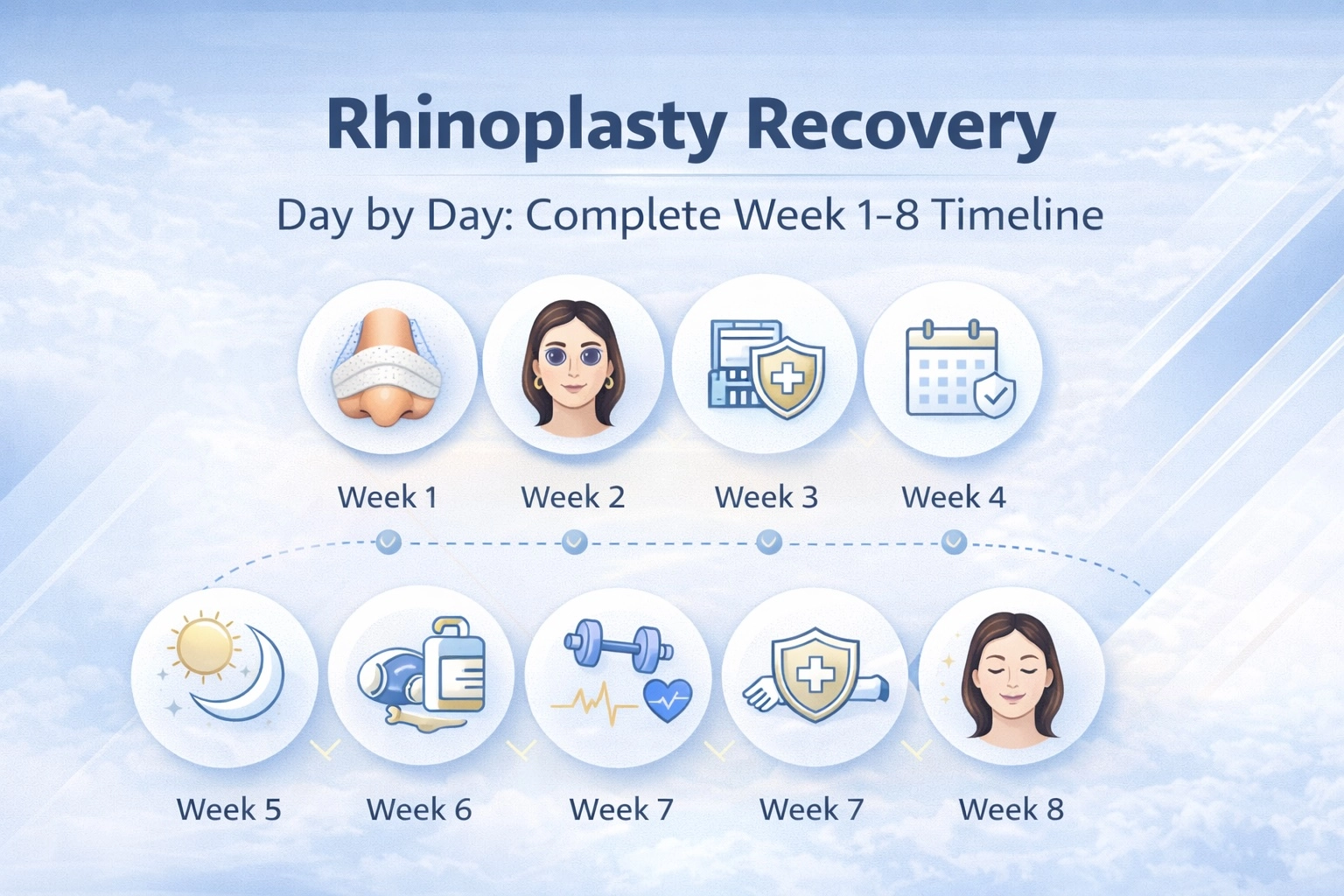
This guide provides a detailed day-by-day and week-by-week timeline covering swelling stages, activity restrictions, and milestones from surgery day through complete healing.
Why Trust This Guide
This rhinoplasty recovery guide draws from peer-reviewed medical literature, including studies published in Aesthetic Surgery Journal and guidance from the American Academy of Facial Plastic and Reconstructive Surgery.
Carely Clinic’s editorial team has compiled clinical protocols from board-certified facial plastic surgeons and cross-referenced multiple expert sources to provide accurate, evidence-based recovery expectations for international patients.
Week 1: The Critical First Days
The first week after rhinoplasty involves peak swelling and bruising, splint protection, and strict rest requirements, with most patients rating pain between 1-4 out of 10 and managing discomfort with prescribed or over-the-counter medication.
This initial recovery phase sets the foundation for your entire healing journey. Following post-operative instructions carefully during these first 7 days significantly impacts your long-term results and can reduce complications.
Understanding what to expect each day helps manage expectations and reduces anxiety during this most challenging phase of recovery.
Day 1: Surgery Day and Immediate Aftermath
Expect significant swelling, bruising around the eyes, nasal congestion, and grogginess from anesthesia that wears off within a few hours.
Your nose will be protected by a nasal splint, and you may have internal splints or soft packing to stabilize the septum. Light drainage from the nostrils is completely normal during the first 24-48 hours, and a drip pad placed under your nose will catch any discharge.
What you’ll experience:
- Puffy face and cheeks
- Bruising under the eyes extending to the cheeks
- Nasal congestion and inability to breathe through your nose
- Moderate discomfort similar to a dull headache
- Feeling tired and disoriented from anesthesia
Essential care:
- Keep your head elevated at 45 degrees, even while sleeping
- Apply cold compresses to cheeks (never directly on nose)
- Take prescribed pain medication as directed
- Stay well-hydrated
- Avoid hot showers—heat increases swelling
Days 2-3: Peak Swelling Period
Swelling and bruising typically reach their maximum intensity within the first 72 hours, which can be alarming but is completely normal.
The area around your eyes may develop dark purple or blue discoloration, and your entire face can feel tender and pressurized. Nasal congestion remains significant, and you’ll need to breathe through your mouth during this time.
Key instructions:
- Continue aggressive icing (20 minutes on, 20 minutes off)
- Maintain head elevation at all times
- Avoid bending over or lifting anything
- Do not blow your nose
- Sleep on your back with extra pillows
Days 4-5: Early Improvement Signs
Bruising begins transitioning from dark purple to lighter shades, and some patients notice the first subtle reduction in swelling around the eyes.
Pain should be significantly reduced by now, though the area remains tender to touch. Many patients feel well enough to move around the house more, but rest should still be prioritized.
What’s changing:
- Bruising starts fading at the edges
- Less reliance on prescription pain medication
- Improved energy levels
- Swelling may shift toward the nasal tip
- Breathing may feel slightly easier
Days 6-7: Preparing for Splint Removal
By the end of week one, most patients feel substantially better and are ready for their first post-operative appointment to have the splint removed.
You’ll notice bruising continuing to fade and may feel comfortable taking short walks. However, your nose will still look quite different from the final result—it appears swollen, bulbous, and larger than expected. This is temporary.
Week 2: Splint Removal and Early Recovery
The nasal splint is typically removed around day 7, giving patients their first glimpse of the reshaped nose, though significant swelling means this is far from the final result.
Splint removal is a milestone moment that often brings mixed emotions. While exciting to see your new nose shape emerging, remember that what you see is heavily influenced by swelling that will continue decreasing over the coming months.
What to Expect at Your First Follow-Up
Your surgeon will remove external splints, any internal packing, and examine your healing. Sutures may be trimmed if they’re causing irritation. The appointment typically takes 15-30 minutes.
After splint removal:
- Your nose will appear swollen and puffy
- Skin may look shiny or tight
- Minor asymmetry is normal and temporary
- You can gently clean around the nostrils
- Some patients feel their nose is “too big”—this is swelling
Days 8-14: Gradual Improvement
Bruising fades significantly during week two, with most discoloration resolving by day 14. Many patients feel comfortable returning to social activities and covering any remaining bruising with makeup.
Activity guidelines:
- Light walking around your home is encouraged
- Avoid raising your heart rate
- No bending over or lifting more than 5 pounds
- Continue sleeping with head elevated
- Can usually return to desk work by day 10-14
Most patients return to work or school within 7-10 days, depending on their comfort level, job requirements, and how much face-to-face interaction is involved. Remote workers often return earlier, while those in physically demanding jobs need additional time.
Weeks 3-4: Return to Normal Activities
Around three weeks post-surgery, most patients notice meaningful reduction in visible swelling and can comfortably resume everyday tasks and social activities.
The nose begins looking more refined and closer to its intended shape, though subtle puffiness may linger, especially around the nasal tip. Most bruising has completely resolved, and confidence in public settings typically improves significantly.
Week 3 Milestones
By the end of week three, you’ll notice your nose settling into a more natural position. The bridge appears more defined, and overall facial harmony improves.
What’s typical:
- 50% or more of swelling has resolved
- Breathing through nose becomes easier
- Nasal skin may feel firm or slightly numb
- Minor color changes around the nose as it heals
- Comfortable in most social situations
Week 4: Approaching “Normal”
At the one-month mark, most everyday activities can safely resume, except contact sports or intense workouts. You’ll likely feel more like yourself, though subtle improvements continue.
Recovery status:
- Significant reduction in visible swelling
- Clearer picture of final nose shape emerging
- Light exercise may be reintroduced with surgeon approval
- Can wear light glasses briefly (with caution)
- Follow-up appointment typically scheduled
Expert Insight
“At four weeks, most patients see roughly 70-80% of their swelling resolved, but the nasal tip—being thicker and lower on the face—takes the longest to reveal its final shape.”
— Clinical guidance from facial plastic surgery specialists
Weeks 5-6: Intermediate Recovery
By week 6, approximately 95% of swelling has subsided, and patients can typically return to most normal activities including moderate exercise and wearing glasses.
This phase marks a transition from active recovery to maintenance. Your nose continues refining, but changes become more gradual and subtle. Most people around you won’t notice ongoing healing.
Returning to Exercise
Low-impact activities can typically resume around week 4-5, with moderate exercise approved by week 6. However, contact sports and high-impact activities require additional waiting time.
Exercise timeline:
- Weeks 4-5: Light walking, gentle stretching, stationary cycling at low intensity
- Week 6: Swimming (no diving), moderate cardio, lower body weight training
- Week 6+: Running, full gym workouts with surgeon approval
The key concern with exercise is elevated blood pressure and heart rate, which can increase swelling and potentially cause bleeding. Listen to your body and stop if you experience discomfort, throbbing, or visible swelling increase.
Physical Sensations
Some patients experience numbness or tingling on the nasal skin, tip, or upper lip during this period. This is normal nerve recovery and typically resolves over the following weeks.
Common sensations:
- Stiffness when moving facial muscles
- Temporary numbness at the nasal tip
- Occasional twinges or mild discomfort
- Sensitivity to temperature changes
- Skin may feel tight or thick
Weeks 7-8: Exercise Resumption
Most patients can resume all normal activities including full gym workouts by weeks 7-8, though contact sports should still be avoided for at least 3 months to protect the healing nasal structure.
By this stage, most visible swelling has subsided, and your new nose shape becomes more defined. While you’ll see significant results, the final shape continues refining for several more months.
What’s Safe Now
With surgeon approval, you can typically return to:
- Full weight training (upper and lower body)
- High-intensity cardio
- Running and jogging
- Most recreational sports
- Swimming and water activities
What Still Requires Caution
Certain activities pose risks to your healing nose even at this stage:
- Contact sports: Basketball, soccer, martial arts, boxing—wait 3 months minimum
- Activities with fall risk: Skiing, mountain biking, skateboarding
- Glasses: Wearing glasses directly on the nose should be limited; use tape or special supports if needed
- Sun exposure: Protect your nose from direct sunlight to prevent discoloration
Months 3-12: Long-Term Healing
The majority of healing is complete by 3-6 months, with the final 10% of swelling resolving gradually over the first year, particularly in the nasal tip.
Understanding this extended timeline helps manage expectations. Even when you feel fully recovered, subtle refinements continue happening beneath the skin as cartilage settles and scar tissue matures.
3-Month Milestone
At three months, approximately 90% of swelling has resolved. Most patients are comfortable showing off their new nose in social situations, photos, and special events.
What to expect:
- Bridge and middle third appear refined
- Nasal tip still slightly fuller than final result
- Breathing fully stabilized
- Can wear glasses normally
- Return to contact sports with protective gear
6-Month Milestone
By six months, residual swelling is minimal and typically noticeable only to you. Any numbness or tingling should be resolving, and the nose feels more natural.
Progress markers:
- 95% of swelling resolved
- Semi-final shape visible
- Skin texture normalizes
- Full sensation usually restored
- Excellent preview of final results
12-Month Milestone
One year after surgery marks the official end of the healing process. Your nose has fully settled into its final shape, with all swelling completely resolved.
Final results:
- 100% swelling resolved
- Cartilage fully stabilized
- Final contour and definition visible
- Skin completely adapted to new structure
- Time to assess overall satisfaction
Rhinoplasty Swelling Stages Explained
Rhinoplasty swelling progresses through predictable stages, with approximately 50% resolving by week 2, 80-90% by month 3, and 97% or more by the one-year mark.
Understanding these stages helps set realistic expectations throughout your recovery journey.
Swelling Timeline Overview
| Timeframe | Swelling Status | What You’ll Notice |
|---|---|---|
| Days 1-3 | Peak swelling (100%) | Maximum puffiness, significant bruising |
| Week 1 | Beginning reduction | Splint on, bruising prominent |
| Week 2 | ~50% reduced | Bruising fading, first glimpse of shape |
| Week 4 | ~70-80% reduced | Clearer nose shape, comfortable socially |
| Month 3 | ~90% reduced | Bridge refined, tip still settling |
| Month 6 | ~95% reduced | Semi-final shape visible |
| Month 12 | 100% resolved | Final results achieved |
Why the Nasal Tip Takes Longest
The nasal tip contains thicker skin with more sebaceous glands, making it more prone to prolonged swelling. Additionally, gravity pulls fluid downward, causing the tip to retain puffiness longer than the bridge.
Patients with thicker skin types may notice their nasal tip taking 18 months or longer to fully refine. This is normal and doesn’t indicate a problem with your surgery.
How This Applies in Turkey
International rhinoplasty patients in Turkey follow identical clinical recovery protocols as those in the US or Europe, with the added benefit of comprehensive post-operative care included in all-inclusive packages.
Rhinoplasty in Turkey costs €2,500-€5,000 compared to $10,000-$18,000 in the USA and £5,000-£12,000 in the UK—representing 60-75% savings while maintaining JCI-accredited hospital standards and board-certified surgeons.
What’s included in Turkey packages:
- Surgeon and facility fees
- Hospital stay (typically 1 night)
- Post-operative medications
- 3-5 nights hotel accommodation
- Airport transfers
- Daily nurse visits during recovery
- Follow-up appointments before departure
At Carely Clinic in Istanbul, rhinoplasty is performed by board-certified surgeons at JCI-accredited partner hospitals. International patients typically stay 7-10 days in Turkey for surgery and initial recovery, with the splint removed before departure. Virtual follow-up consultations continue monitoring your healing after returning home.
Learn more about Rhinoplasty at Carely Clinic.
Recovery Timeline Summary Table
| Milestone | Timeline | Activity Status |
|---|---|---|
| Splint removal | Day 7 | First look at new nose shape |
| Return to desk work | Days 7-14 | Light activities, no physical exertion |
| Social activities | Week 2-3 | Most bruising resolved |
| Light exercise | Week 3-4 | Walking, gentle stretching |
| Moderate exercise | Week 4-6 | Swimming, light cardio, cycling |
| Full gym workouts | Week 6-8 | Weight training, running |
| Contact sports | Month 3+ | With protective gear recommended |
| Final results visible | Month 12 | Complete healing achieved |
Warning Signs to Watch For
While rhinoplasty is generally safe with a major complication rate of only 0.7% according to research published in Aesthetic Surgery Journal, knowing when to contact your surgeon ensures any issues are addressed promptly.
Contact Your Surgeon If You Experience:
- Excessive bleeding: Continuous bright red bleeding that doesn’t slow with pressure
- Signs of infection: Increasing redness, warmth, pus, or fever over 101°F (38.3°C)
- Severe pain: Pain that worsens rather than improves, or isn’t controlled by medication
- Breathing emergency: Sudden severe difficulty breathing
- Vision changes: Any changes to your eyesight
- Asymmetry concerns: Significant asymmetry that worsens after week 2
Normal vs. Concerning Symptoms
Normal: Light bloody discharge for 1-3 days, bruising spreading to cheeks, asymmetric swelling, numbness at nasal tip, stuffiness, mild headaches.
Concerning: Green/yellow discharge with odor, rapidly increasing swelling after initial improvement, severe persistent headache, high fever, spreading redness.
Tips for Faster Recovery
Following these evidence-based recommendations can optimize your healing and help you see your final results sooner.
Sleep Position
Keep your head elevated at 45 degrees for at least 2 weeks, using multiple pillows or a wedge pillow. This reduces swelling by promoting fluid drainage away from the surgical site.
Cold Compresses
Apply cold compresses to cheeks (not directly on nose) for the first 48-72 hours. Use 20 minutes on, 20 minutes off intervals. After the first week, icing provides minimal additional benefit.
Nutrition and Hydration
Drink 8-10 glasses of water daily to support tissue repair and reduce fluid retention. Focus on protein-rich foods, vitamins A and C, zinc, and anti-inflammatory foods. Avoid salty foods that increase swelling.
Activity Modifications
Avoid bending over, heavy lifting, and anything that raises blood pressure for at least 2 weeks. Straining during bowel movements can increase swelling—use stool softeners if needed.
Lifestyle Factors
- Don’t smoke: Smoking impairs healing and increases complication risk significantly
- Avoid alcohol: Alcohol thins blood and increases swelling
- Skip sun exposure: UV rays can cause permanent discoloration of healing skin
- No glasses on nose: Use tape to suspend glasses from forehead for 4-6 weeks
Expert Insight
“The difference between an average recovery and an excellent one often comes down to patient compliance with post-operative instructions. Those who prioritize rest, elevation, and avoiding strenuous activity in the first two weeks typically experience less swelling and faster refinement.”
— Guidance compiled from board-certified facial plastic surgeons
Frequently Asked Questions
How painful is rhinoplasty recovery?
Most patients rate rhinoplasty pain between 1-4 out of 10, describing it as pressure or a dull headache rather than sharp pain. Discomfort peaks in the first 48 hours and is typically manageable with prescribed medication, with many patients switching to over-the-counter pain relievers by day 3-4.
When can I blow my nose after rhinoplasty?
You should avoid blowing your nose for at least 2-3 weeks after surgery to prevent disrupting the healing nasal structures. Use saline spray to keep nasal passages moist and gently dab any discharge. After 3 weeks, you can very gently blow one nostril at a time.
How long does bruising last after rhinoplasty?
Bruising typically peaks at days 2-3 and begins fading by day 5-7, with most discoloration resolved within 10-14 days. Makeup can usually cover any remaining bruising by the end of week 2. Some patients experience minimal bruising, while others have more pronounced discoloration.
When can I wear glasses after a nose job?
You must wait 4-6 weeks before resting glasses directly on your nose to prevent indentations in the healing bone and cartilage. During this period, use tape to suspend glasses from your forehead, wear special glasses supports, or switch to contact lenses temporarily for best healing outcomes.
How long until I see my final rhinoplasty results?
Final rhinoplasty results are visible at 12 months when all swelling resolves, though you’ll see approximately 70-80% of results by week 4 and 90% by month 3. The nasal tip takes longest to refine due to thicker skin, and patients with thicker skin types may see continued subtle improvements up to 18 months.
Can I travel after rhinoplasty?
Air travel is generally safe 7-10 days after rhinoplasty once the splint is removed, though some surgeons recommend waiting 2-3 weeks for optimal healing. Short car trips are fine after a few days. Flying can temporarily increase swelling due to cabin pressure changes, so stay hydrated and avoid unnecessary flights during the first month.
When can I exercise after rhinoplasty?
Full workouts can resume around week 6-8 after rhinoplasty, with light walking encouraged from day 1 and light cardio starting at weeks 3-4. Avoid raising your heart rate for the first 2 weeks, and wait a minimum of 3 months before participating in contact sports to protect the healing nasal structure.
Is revision rhinoplasty common?
Revision rhinoplasty rates range from 5-15% depending on procedure complexity and surgeon experience, with primary rhinoplasty having lower revision rates than complex cases. Choosing an experienced board-certified surgeon significantly reduces the likelihood of needing revision. History of previous nasal surgery or trauma increases revision risk.
What if I’m unhappy with my results?
You should wait at least 12 months before considering revision rhinoplasty, as final results aren’t visible until all swelling completely resolves. Many concerns that seem significant at 6 months resolve naturally through continued healing. If issues persist at the one-year mark, discuss revision options with your surgeon.
How do I reduce swelling faster?
Swelling reduces fastest by sleeping elevated at 45 degrees, staying hydrated with 8-10 glasses of water daily, avoiding salt and alcohol, and applying cold compresses during the first 72 hours. Avoid sun exposure and strenuous activity for 2 weeks. Some patients find bromelain supplements helpful, though clinical evidence is limited.
Conclusion
Rhinoplasty recovery follows a predictable timeline with most patients returning to work within 7-10 days, resuming normal activities by week 4-6, and seeing final results at 12 months. Understanding what to expect at each stage helps manage expectations and supports optimal healing.
The key milestones include splint removal at day 7, resolution of most bruising by day 14, approximately 80-90% swelling reduction by month 3, and complete healing by month 12. Patience is essential—the nasal tip in particular continues refining for many months after other areas look complete.
Individual recovery experiences vary. This guide provides general information based on clinical protocols and medical literature. Consult qualified medical professionals for personalized guidance tailored to your specific situation.
If you’re considering rhinoplasty and want to explore options at accredited facilities with experienced surgeons, our patient coordinators can answer your questions and help plan your journey. Contact Carely Clinic for a personalized consultation.