
Quick Summary
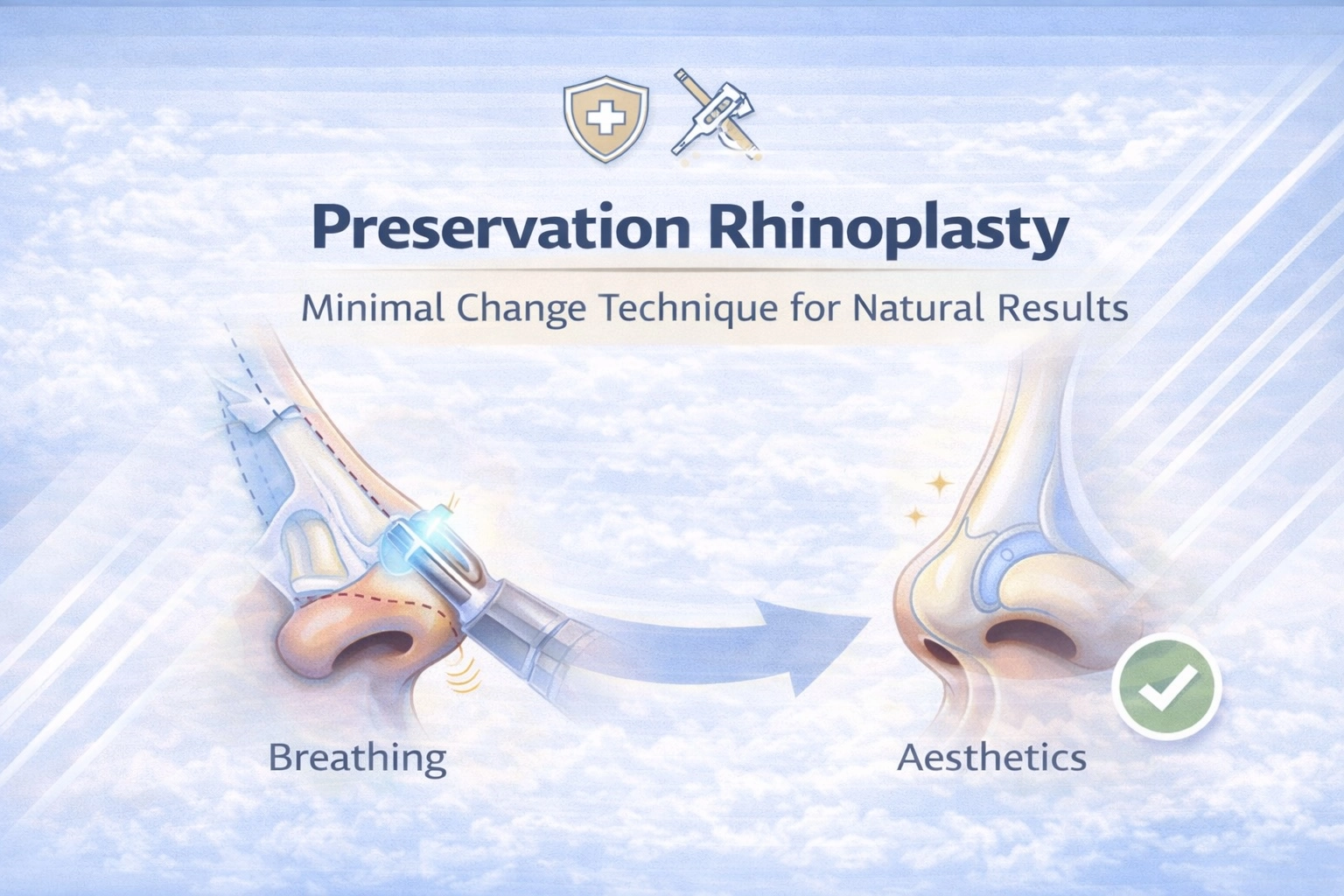
Preservation rhinoplasty maintains the nose’s natural dorsal structure while lowering the nasal bridge to reduce humps, achieving more natural results with less tissue disruption than traditional techniques.
According to 2025 research published in Facial Plastic Surgery & Aesthetic Medicine, preservation rhinoplasty shows statistically significant superiority in both functional and cosmetic outcomes compared to structural rhinoplasty.
This guide covers preservation rhinoplasty techniques, ideal candidates, recovery timeline, costs in Turkey versus Western countries, and how to determine if this approach suits your goals.
Why Trust This Guide
This guide synthesizes current evidence from peer-reviewed journals including Aesthetic Surgery Journal and Facial Plastic Surgery & Aesthetic Medicine, along with clinical guidelines from ISAPS (International Society of Aesthetic Plastic Surgery) and leading rhinoplasty specialists.
Carely Clinic’s editorial team maintains rigorous accuracy standards, consulting board-certified surgeons and referencing the latest clinical research to provide evidence-based information for patients considering preservation rhinoplasty.
What Is Preservation Rhinoplasty?
Preservation rhinoplasty is a surgical technique that reshapes the nose by repositioning and modifying structures from beneath the nasal bridge rather than removing bone and cartilage from the top, maintaining the nose’s natural dorsal aesthetic lines.
The concept dates back to the early 1900s, with surgeons Goodale (1899), Lothrop (1914), and Cottle (1946) pioneering techniques that preserved the dorsum. The term “preservation rhinoplasty” was coined by Rollin K. Daniel in 2018, sparking renewed international interest in these tissue-sparing approaches.
Modern preservation rhinoplasty encompasses three primary components: dorsal preservation (maintaining the osseocartilaginous dorsum), soft-tissue envelope preservation through subperichondrial dissection, and lateral crural preservation with emphasis on suture modification rather than cartilage removal.
The technique has gained substantial traction among rhinoplasty surgeons worldwide. According to a 2024 survey published in Facial Plastic Surgery & Aesthetic Medicine, over 50% of surgeons who prefer dorsal preservation techniques use it in more than 90% of primary rhinoplasty cases.
How Preservation Rhinoplasty Works
Preservation rhinoplasty lowers the entire nasal dorsum as a single unit through controlled bone and cartilage modifications beneath the bridge, avoiding destruction of the keystone area that occurs with traditional hump removal.
The procedure utilizes two primary foundation techniques. The “push-down” operation involves downward impaction of the fully mobilized nasal pyramid after lateral and transverse osteotomies, suitable for smaller humps of less than 4 millimeters. The “let-down” technique involves wedge resection of bone at the nasomaxillary junction, allowing greater descent for larger hump reductions exceeding 4 millimeters.
The Surgical Process
The procedure typically follows a standardized sequence. First, an endonasal (closed) approach provides access without external incisions in most cases. The surgeon then removes a precisely calculated septal strip in the subdorsal area, with the shape and height determined during preoperative planning.
Complete lateral, transverse, and radix osteotomies mobilize the nasal pyramid. Finally, dorsal reduction occurs through either push-down or let-down maneuvers, depending on the required correction. The entire osseocartilaginous vault descends as a unified structure, preserving the natural dorsal lines.
Several approaches to septal modification exist, differentiated by the location of cartilage resection: subdorsal (immediately below the dorsum), high-septal, intermediate, and inferior septal techniques. The senior author Yves Saban documented outcomes from 320 patients using these techniques, reporting no dorsal irregularities or inverted-V deformities postoperatively.
Preservation vs. Traditional Rhinoplasty
The fundamental difference between preservation and traditional rhinoplasty lies in dorsum management—preservation maintains the bridge’s natural contour while traditional methods remove and reconstruct it.
Traditional structural rhinoplasty, based on Joseph’s technique from the early 20th century, involves removing the dorsal hump by excising bone and cartilage from the top of the nasal bridge. This creates an “open roof” that requires reconstruction with spreader grafts or spreader flaps to restore structural integrity and prevent middle vault collapse.
Preservation rhinoplasty takes an opposite approach. Rather than removing the hump from above, surgeons modify structures beneath the dorsum, allowing the entire nasal pyramid to settle into a lower position while maintaining its original surface architecture.
Clinical Outcomes Comparison
A 2025 systematic review and meta-analysis published in Facial Plastic Surgery & Aesthetic Medicine analyzed randomized controlled studies comparing preservation versus structural rhinoplasty for dorsal hump reduction. The analysis found preservation rhinoplasty demonstrated statistically significant superiority in both functional outcomes (SMD −0.317) and cosmetic outcomes (SMD −0.460).
The functional improvements are attributed to preservation of the internal nasal valve and keystone area, structures that critically affect airflow. Traditional hump removal disrupts these areas, potentially compromising breathing function even when the aesthetic result appears successful.
| Factor | Preservation Rhinoplasty | Traditional Rhinoplasty |
|---|---|---|
| Dorsum Treatment | Lowered as single unit | Removed and reconstructed |
| Keystone Area | Preserved | Disrupted, requires grafts |
| Dorsal Aesthetic Lines | Maintained naturally | Must be recreated |
| Tissue Trauma | Less extensive | More extensive |
| Recovery Swelling | Typically reduced | Standard duration |
| Nasal Function | Often improved/maintained | Variable outcomes |
| Best For | Moderate humps, natural refinement | Major reconstruction, severe deformities |
| Learning Curve | Steeper, specialized training required | More widely taught |
Who Is an Ideal Candidate?
Ideal candidates for preservation rhinoplasty are patients with a dorsal hump, good nasal skin quality, no significant previous nasal trauma or surgery, and goals focused on subtle refinement rather than dramatic transformation.
The technique shows greatest efficacy for specific anatomical presentations. Patients with “tension noses”—characterized by a high radix, projected dorsum, narrow middle third, and thin nostrils—represent excellent candidates. A V-shaped hump with a single curvature flattens more readily than an S-shaped hump with two curvature points.
Anatomical Considerations
Skin thickness significantly influences outcomes. Thinner skin allows more precise definition and reveals subtle changes to underlying structures. Patients with very thick nasal skin may achieve better results with traditional approaches that provide more aggressive reshaping capability.
The proportion of cartilage to bone in the hump affects technique selection. Patients with a predominance of cartilage and shorter nasal bones respond well to preservation techniques, while those with greater bony components, deep nasofrontal angles, or irregular bony pyramids may be poor candidates.
Expert Insight
“The ideal candidate benefits from the side effects of preservation rhinoplasty: a lower radix, deprojected dorsum, increased interalar distance, and widening of the middle third.”
— Facial Plastic Surgery Clinics of North America, 2021
Who May Not Be Suitable
Preservation rhinoplasty has limitations for certain presentations. Contraindications include low radix height, pre-existing irregularities in the nasal dorsum, anterior nasal septal angle positioned lower than the rhinion, and wide middle nasal vault. Patients requiring extensive reconstruction, correction of major asymmetries, or revision of significantly altered nasal structures may benefit more from traditional structural techniques.
Approximately 41% of patients seen by leading preservation rhinoplasty specialists still undergo conventional Joseph hump resections when anatomical factors favor that approach. The goal is matching technique to individual anatomy rather than applying one method universally.
Benefits of Preservation Rhinoplasty
Preservation rhinoplasty offers several documented advantages over traditional techniques, including more natural-appearing results, reduced tissue trauma, potential for faster recovery, and improved nasal function maintenance.
Natural Aesthetic Outcomes
The primary advantage is preservation of the nose’s intrinsic aesthetic lines. The dorsum maintains its original surface architecture, producing what surgeons describe as a “non-operated” appearance. Traditional hump removal requires rebuilding the dorsal aesthetic lines, a process that can create visible irregularities or an artificial look even in skilled hands.
By keeping the bony-cartilaginous junction (keystone area) intact, preservation techniques avoid the open roof deformity that necessitates spreader grafts in traditional rhinoplasty. This means fewer grafts, less internal scarring, and better long-term stability.
Functional Preservation
Preservation rhinoplasty may help maintain or improve breathing function by preserving critical internal structures including the internal nasal valve and nasal ligaments. Traditional dorsal resection can destabilize these structures, potentially causing breathing difficulties even when cosmetic outcomes appear successful.
A 2020 study published in Aesthetic Plastic Surgery found that dorsal preservation rhinoplasty demonstrated significantly less impact on internal nasal valve dimensions compared to dorsal hump resection, suggesting better preservation of nasal airflow.
Reduced Tissue Trauma
The minimally invasive nature of preservation techniques results in less disruption to blood supply, lymphatic drainage, and soft tissue attachments. This typically translates to reduced postoperative swelling and bruising compared to traditional approaches, along with potentially faster visible recovery.
Many surgeons report patients can return to social activities sooner following preservation rhinoplasty, with some sources citing return to public activities within 3 days and 90% swelling resolution by cast removal at one week.
Long-Term Stability
Preservation of natural structural support may enhance long-term stability of results. With the keystone area and nasal ligaments intact, there is less risk of tissue collapse, cartilage warping, or gradual changes to nasal shape over time. Some surgeons believe preservation rhinoplasty results may last longer than traditional techniques for this reason.
Potential Risks and Limitations
While preservation rhinoplasty offers significant benefits, it carries specific risks and limitations that patients should understand, including potential for hump recurrence, technical constraints, and surgeon availability.
Hump Recurrence
The most cited concern among surgeons is hump persistence or recurrence. If the underlying structures are not adequately mobilized or the septal support is insufficient, the dorsum may gradually return toward its original position. According to surgeon surveys, this concern is the primary reason many practitioners continue using structural techniques alongside preservation approaches.
Proper patient selection and meticulous surgical technique minimize this risk. Surgeons must ensure complete mobilization of the nasal pyramid and appropriate septal modification to allow permanent descent of the dorsum.
Limited Scope of Correction
Preservation rhinoplasty is most effective for moderate corrections and may not achieve the dramatic changes possible with structural rhinoplasty. Patients requiring significant narrowing, extensive tip work, or major reconstruction may find traditional techniques more appropriate.
The technique also has limited utility in revision rhinoplasty cases where previous surgery has significantly altered nasal anatomy. However, if a patient’s primary rhinoplasty used preservation techniques, secondary preservation procedures remain feasible.
Technical Demands
Preservation rhinoplasty requires specialized training and significant experience. The learning curve is steeper than traditional techniques, and the number of expert surgeons worldwide remains limited. A 2024 survey found that surface techniques were considered to have a shorter learning curve compared to foundation techniques used in preservation rhinoplasty.
Potential complications specific to preservation techniques include saddle nose deformity if excessive septal removal occurs, asymmetries of the bony pyramid, cerebrospinal fluid leak (rare), radix step-off, and the aforementioned hump recurrence.
General Rhinoplasty Risks
Like all rhinoplasty procedures, preservation rhinoplasty carries standard surgical risks. According to a 2017 analysis of 4,978 patients in Aesthetic Surgery Journal, the overall major complication rate for rhinoplasty is 0.7%. Hematoma and infection each occur in approximately 0.2% of cases.
Revision surgery rates for rhinoplasty generally range from 5% to 15% across all techniques. Preservation rhinoplasty proponents suggest this rate may be lower with preservation techniques due to greater structural stability, though long-term comparative data remains limited.
Recovery Timeline
Full recovery from preservation rhinoplasty takes 6-12 months, with most patients returning to work within 1-2 weeks and normal activities by 4-6 weeks, following a pattern similar to traditional rhinoplasty but often with reduced initial swelling and bruising.
Week-by-Week Recovery
Days 1-3: Peak swelling and bruising occur within 72 hours after surgery. Patients experience nasal congestion, mild to moderate discomfort controlled with prescribed medication, and bloody drainage requiring nasal drip pads. Rest with head elevated is essential. Some surgeons report preservation patients experience noticeably less bruising during this phase.
Days 4-7: The nasal splint remains in place, providing structural support. Swelling and bruising plateau and may begin slight improvement. Pain significantly decreases but tenderness persists. Patients should continue avoiding physical strain and keeping the head elevated.
Week 2: Splint removal typically occurs around day 7-10. Most visible bruising fades sufficiently for social activities. Early nasal shape becomes visible, though substantial swelling remains. Many patients feel comfortable returning to desk work. Light walking is encouraged but strenuous activity remains restricted.
Weeks 3-4: Approximately 70-80% of initial swelling subsides. The nose begins revealing its new contour, though the tip often remains puffy longer than the bridge. Light physical activity may resume with surgeon approval.
Months 1-3: Progressive refinement continues as swelling decreases. Most patients see about 70% of their final result by the three-month mark. Normal activities including exercise can typically resume by 4-6 weeks, with contact sports restricted for 3 months.
Months 6-12: Residual swelling fully resolves, particularly in the nasal tip, which is the last area to settle. Final results become apparent, with complete healing achieved around 12 months. Some subtle refinement may continue for up to 18 months in thick-skinned patients.
Expert Insight
“Let down dorsal preservation rhinoplasty can achieve significant improvement in nasal aesthetics, nasal breathing, and sleep according to validated assessment tools including NOSE, SNOT-22, and SCHNOS scores.”
— Facial Plastic Surgery & Aesthetic Medicine, 2022
Tips for Faster Recovery
Keeping the head elevated at a 45-degree angle, especially while sleeping, significantly reduces swelling. Cold compresses applied to cheeks and under eyes (not directly on nose) during the first 48 hours help minimize bruising. Adequate hydration and avoiding salty foods support healing.
Patients must avoid blood-thinning medications, smoking, and alcohol as directed. Smoking is particularly detrimental, as nicotine constricts blood vessels and impairs tissue healing. Surgeons typically require smoking cessation 4-6 weeks before and after surgery.
Cost Comparison by Country
Preservation rhinoplasty in Turkey costs €2,500-€4,500 for primary cases in all-inclusive packages, compared to $12,000-$24,000 in the USA and £10,000-£16,000 in the UK, representing savings of 60-75%.
Detailed Price Breakdown
| Country | Price Range | What’s Typically Included |
|---|---|---|
| Turkey | €2,500-€4,500 | Surgery, hospital stay, hotel (3-5 nights), transfers, medications, follow-up |
| USA | $12,000-$24,000 | Surgeon fee only; facility, anesthesia, aftercare billed separately |
| UK | £10,000-£16,000 | Surgery and hospital; follow-up varies by clinic |
| Australia | AUD 10,000-40,000 | Surgeon and hospital; variable inclusions |
| Revision (Turkey) | €3,600-€6,500 | All-inclusive package (30-50% premium over primary) |
Why Turkey Offers Lower Prices
The significant price difference between Turkey and Western countries reflects economic factors rather than quality compromises. Lower operational costs, favorable exchange rates, government support for medical tourism, and high procedural volumes enable Turkish facilities to offer competitive pricing while maintaining international standards.
Turkish surgeons perform high volumes of rhinoplasty annually, with the country ranking among global leaders in nose surgery procedures. ISAPS 2024 data confirms Turkey among the top countries with highest proportions of foreign patients seeking aesthetic surgery. This volume creates efficiency and expertise that benefits international patients.
Understanding Package Inclusions
Turkish all-inclusive packages typically cover pre-operative consultations and laboratory tests, surgery with board-certified plastic surgeon, general anesthesia and operating room fees, hospital stay (typically 1 night), hotel accommodation (3-5 nights), airport transfers and local transportation, prescribed medications, and initial follow-up appointments.
Patients should confirm specific inclusions before booking, as package contents vary between clinics. Important questions include revision policy, additional night charges if extended stay is needed, and scope of follow-up care.
How This Applies in Turkey
International guidelines and preservation rhinoplasty techniques apply identically at Turkey’s JCI-accredited facilities, which follow the same clinical protocols and safety standards as American and European institutions.
Turkey ranks second globally for the number of Joint Commission International (JCI) accredited hospitals, with 46 JCI-certified facilities as of 2024, including 25 in Istanbul alone. This accreditation ensures strict safety protocols, infection control measures, and documentation of patient outcomes that meet or exceed Western standards.
The country welcomed approximately 1.3 million medical tourists in 2024, with cosmetic surgery representing a significant portion of these visits. Turkish plastic surgeons frequently train internationally, including fellowships in the United States and Europe, and many hold memberships in organizations such as ISAPS and the European Board of Plastic, Reconstructive and Aesthetic Surgeons.
Cost and Accessibility Advantages
Preservation rhinoplasty in Turkey costs €2,500-€4,500 compared to $12,000-$24,000 in the USA and £10,000-£16,000 in the UK. International patients typically complete the entire surgical process within 7-14 days, compared to potentially months-long waits in some Western healthcare systems.
All-inclusive medical tourism packages eliminate the complexity of coordinating surgery, accommodation, and transportation independently. English-speaking medical staff and dedicated patient coordinators ensure clear communication throughout the treatment journey.
At Carely Clinic in Istanbul, preservation rhinoplasty is performed by board-certified plastic surgeons at JCI-accredited partner hospitals. Packages include comprehensive pre-operative evaluation, surgery with advanced techniques including preservation and ultrasonic options, private hospital room, luxury hotel accommodation, VIP airport transfers, and 24/7 patient support.
Learn more about Nose Job in Turkey at Carely Clinic.
Summary Table
| Aspect | Key Information |
|---|---|
| Definition | Technique lowering nasal dorsum as single unit rather than removing hump |
| Primary Techniques | Push-down (<4mm humps), Let-down (>4mm humps) |
| Procedure Duration | 2-3 hours under general anesthesia |
| Ideal Candidates | Dorsal hump, thin-normal skin, primary rhinoplasty, subtle goals |
| Not Suitable For | Low radix, wide nasal bridge, major reconstruction needs |
| Return to Work | 7-14 days for desk work |
| Final Results | 70% visible at 3 months; complete at 12 months |
| Cost in Turkey | €2,500-€4,500 (all-inclusive) |
| Savings vs. USA/UK | 60-75% |
| Hospital Accreditation | JCI-certified facilities available |
What to Expect: Timeline
Before Surgery
- 4-6 weeks prior: Stop smoking; discontinue blood-thinning medications as directed
- 2 weeks prior: Complete pre-operative blood tests and medical evaluation
- 1 week prior: Final consultation with surgeon; review surgical plan and expectations
- Day before: Avoid food and drink after midnight; arrange transportation
Surgery Day
You arrive at the hospital for final pre-operative checks. General anesthesia is administered, and the procedure takes 2-3 hours depending on complexity. After surgery, you recover in a monitored setting before transfer to a private room with a nasal splint in place.
Recovery Milestones
- Days 1-3: Rest with head elevated; manage swelling with cold compresses
- Day 7-10: Splint removal; first clear view of new nose shape
- Week 2: Most bruising resolved; return to light work possible
- Week 4-6: Resume normal activities and exercise
- Month 3: Approximately 70% of final result visible
- Month 12: Complete healing and final outcome achieved
Frequently Asked Questions
How does preservation rhinoplasty differ from traditional rhinoplasty?
Preservation rhinoplasty lowers the nasal bridge as a unified structure from beneath, while traditional rhinoplasty removes the hump from above. The key difference is that preservation maintains the natural dorsal lines and keystone area intact, avoiding the need for spreader grafts to reconstruct the middle vault. This results in less tissue trauma, potentially more natural appearance, and better functional outcomes.
Am I a good candidate for preservation rhinoplasty?
Ideal candidates have a dorsal hump, good nasal skin quality, no previous nasal surgery, and desire subtle refinement. Patients with low radix, wide nasal bridge, thick skin, or need for extensive reconstruction may achieve better results with traditional techniques. Your surgeon evaluates your specific anatomy during consultation to determine the most appropriate approach.
Is preservation rhinoplasty safer than traditional rhinoplasty?
Both techniques have similar safety profiles with a 0.7% major complication rate when performed by qualified surgeons. Preservation offers advantages in nasal function preservation due to maintaining the keystone area and internal valve structures. However, it carries a specific risk of hump recurrence if structures aren’t adequately mobilized. Choose an experienced surgeon at an accredited facility for optimal safety.
How long does recovery take compared to traditional rhinoplasty?
Recovery timelines are similar, with final results visible at 12 months. Preservation patients often experience less initial swelling and bruising, potentially returning to social activities sooner. Most patients return to desk work within 1-2 weeks and normal activities by 4-6 weeks. Splint removal occurs around day 7-10, with 70% of final results visible at 3 months.
Can preservation rhinoplasty improve breathing?
Yes, preservation techniques can improve breathing by maintaining the internal nasal valve and keystone area. Studies show significant functional improvement on validated assessment tools including NOSE and SCHNOS scores. However, individual results depend on pre-existing conditions and surgical technique. Combining with septoplasty addresses additional breathing issues related to deviated septum.
What happens if I’m not satisfied with my results?
Revision surgery is possible with rates of 5-15% across all rhinoplasty techniques. If your primary surgery used preservation, secondary preservation procedures often remain feasible. Discuss concerns with your surgeon during follow-up appointments, as some issues may resolve as swelling decreases over 12 months. Choosing an experienced preservation specialist and maintaining realistic expectations reduces revision risk.
Why is rhinoplasty so much cheaper in Turkey?
Turkey offers 60-75% savings due to lower operational costs, favorable exchange rates, and government medical tourism support. The country has 46 JCI-accredited hospitals meeting identical international standards as Western facilities. High procedural volumes create efficiency without compromising quality. Turkish surgeons often train internationally and hold ISAPS memberships, providing expertise at accessible pricing.
How do I verify a Turkish clinic’s credentials?
Verify JCI accreditation on the Joint Commission International website directory. Check surgeon board certification with ISAPS or Turkish Society of Plastic Reconstructive and Aesthetic Surgeons. Request before-and-after photos of patients with similar anatomy, review independent patient testimonials, and confirm the facility’s Ministry of Health licensing. Carely Clinic provides full credential transparency during consultation.
How long should I stay in Turkey for the procedure?
Plan 7-14 days total for the complete process. This includes pre-operative consultation and tests (day 1-2), surgery (day 3), recovery with splint (days 4-10), splint removal and assessment (day 7-10), and final evaluation before departure. Most clinics issue “fit to fly” certification confirming safe travel clearance. Extend your stay for additional recovery if desired.
Can preservation rhinoplasty be combined with other procedures?
Yes, preservation rhinoplasty commonly combines with septoplasty for breathing improvement, tip refinement techniques, and alar base modifications. Combined procedures in a single session reduce overall recovery time and costs compared to staged surgeries. Discuss combination options during consultation to create a comprehensive surgical plan addressing all your aesthetic and functional goals.
Are preservation rhinoplasty results permanent?
Results are permanent with preserved natural structures offering enhanced long-term stability. However, natural aging, significant weight changes, or trauma can affect appearance over time. The intact keystone area and ligaments may provide better longevity than reconstructed dorsum. Most patients maintain their results indefinitely when following post-operative care instructions and protecting the nose from injury.
What questions should I ask my surgeon during consultation?
Ask about their preservation rhinoplasty training, annual procedure volume, whether you’re a suitable candidate, and their revision rate. Request before-and-after photos of patients with similar anatomy and goals. Discuss recovery timeline, realistic expectations, and what’s included in your package. Verify JCI accreditation, anesthesia type, and follow-up care protocol. A qualified surgeon welcomes detailed questions and provides transparent answers.
Conclusion
Preservation rhinoplasty represents a significant evolution in nasal surgery, offering patients with suitable anatomy the potential for more natural-appearing results with preserved nasal function. The technique maintains the nose’s intrinsic dorsal lines by lowering structures as a unit rather than removing and reconstructing the hump, resulting in less tissue trauma and potentially faster recovery.
Clinical evidence from meta-analyses and systematic reviews demonstrates statistically significant superiority in both functional and cosmetic outcomes compared to traditional dorsal hump reduction. However, preservation rhinoplasty is not universally applicable—patients requiring extensive reconstruction or with certain anatomical features may achieve better outcomes with structural techniques.
Turkey offers preservation rhinoplasty at JCI-accredited facilities with experienced, internationally-trained surgeons at 60-75% savings compared to USA and UK pricing. All-inclusive packages simplify the process for international patients seeking high-quality outcomes with exceptional value.
Individual requirements and outcomes vary. This guide provides general information based on current medical literature and international guidelines. Consult with qualified medical professionals for personalized advice regarding your specific anatomy and goals.
Ready to explore whether preservation rhinoplasty is right for you? Contact Carely Clinic to schedule a consultation with our board-certified plastic surgeons and receive a personalized assessment of your options.
Medical Review: Dr. Aliraz Jahangirov