
Quick Summary
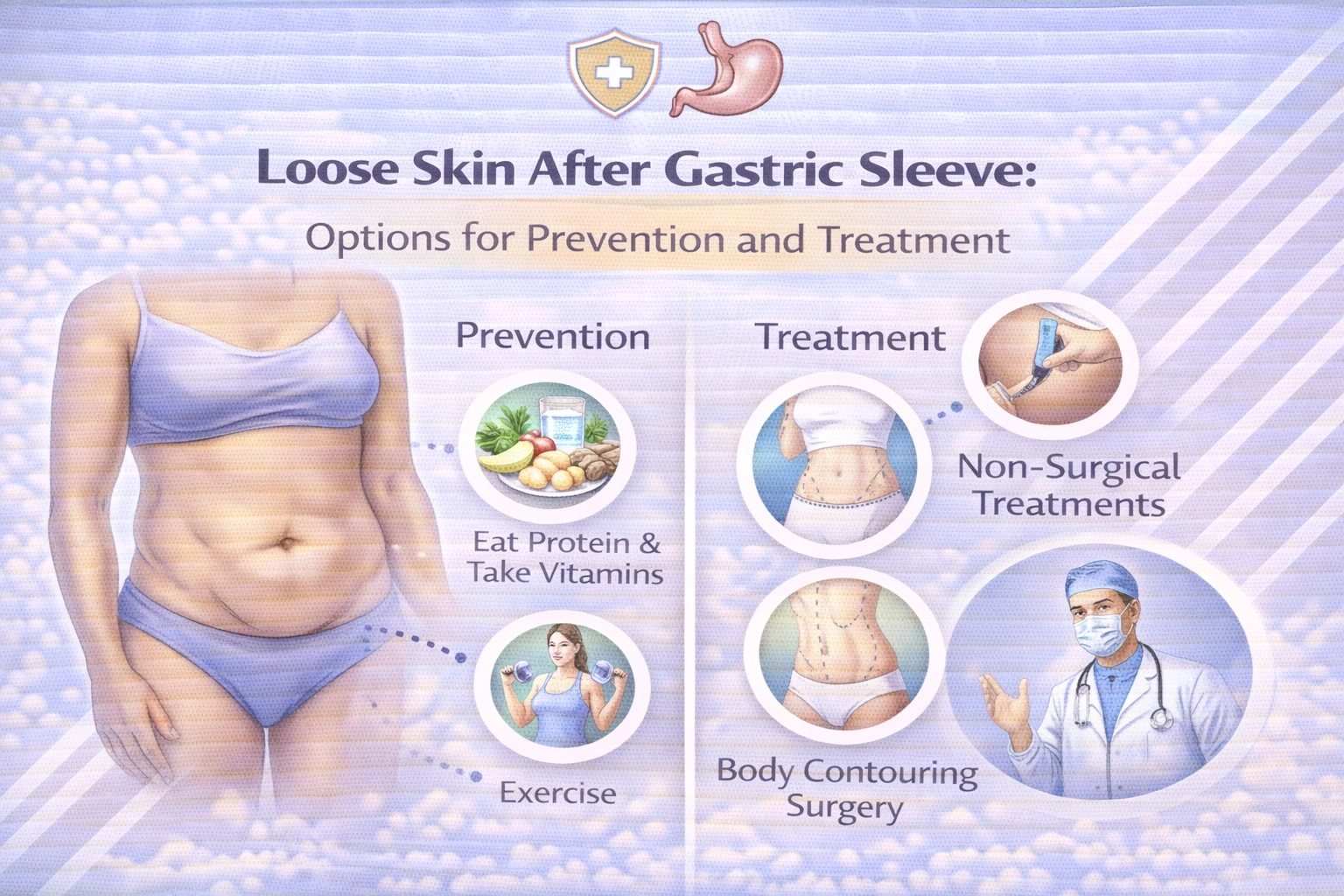
Up to 75-96% of gastric sleeve patients experience some degree of loose skin after significant weight loss, with severity depending on age, genetics, amount lost, and skin elasticity. Treatment options range from non-surgical approaches like strength training and radiofrequency therapy to surgical procedures including tummy tucks, arm lifts, and body lifts.
This comprehensive guide covers prevention strategies, non-surgical solutions, surgical options with costs, recovery timelines, and how medical tourism in Turkey offers cost-effective body contouring procedures.
Why Trust This Guide
This article is based on current clinical guidelines from the American Society of Plastic Surgeons (ASPS), International Society of Aesthetic Plastic Surgery (ISAPS), peer-reviewed research published in journals including Plastic and Reconstructive Surgery and Obesity Surgery, and established bariatric care protocols.
Our editorial team works closely with board-certified bariatric and plastic surgeons to ensure all information reflects current medical evidence and real-world clinical experience with post-bariatric patients.
Why Does Loose Skin Happen After Gastric Sleeve?
Loose skin develops because collagen and elastin fibres become permanently stretched during weight gain, losing their ability to contract fully even after the underlying fat is removed through rapid weight loss.
When you gain a significant amount of weight over months or years, your skin gradually stretches to accommodate the extra body mass. The dermis, which contains the structural proteins collagen and elastin, expands beyond its natural elastic capacity. Think of it like an overstretched rubber band that can no longer snap back to its original size.
Gastric sleeve surgery produces rapid weight loss, typically 60-70% of excess body weight within 12-18 months. This timeline simply doesn’t give skin enough time to gradually retract. The fat beneath the skin diminishes quickly, but the overlying skin remains, creating folds and hanging tissue in areas where fat was previously stored.
Additionally, weight loss doesn’t just remove fat—it can also reduce lean muscle mass if patients don’t maintain adequate protein intake and exercise. This loss of underlying muscle volume creates more “empty space” beneath the skin, making laxity more pronounced.
Who Experiences the Most Loose Skin?
Patients over age 40 who lose more than 100 pounds typically experience the most significant skin laxity, while younger patients losing smaller amounts may see their skin retract more naturally over time.
Several factors determine how much loose skin you’ll experience after gastric sleeve surgery:
Age plays a significant role. Collagen production naturally decreases as we get older, and skin elasticity diminishes with age. Patients who undergo bariatric surgery in their 20s or early 30s generally experience better skin retraction than those who have surgery in their 50s or 60s.
Amount of weight lost directly correlates with excess skin. Patients who lose 150+ pounds will almost certainly have more redundant skin than someone who loses 75 pounds, simply because their skin stretched more during the weight gain phase.
Duration of obesity matters significantly. If you’ve carried excess weight for decades, your skin has been stretched for longer periods, causing more permanent damage to the elastic fibres. Someone who gained and lost weight over 5 years may have better skin retraction than someone who was obese for 20 years.
Genetics influence your skin’s inherent elasticity. Some individuals naturally have more resilient skin that bounces back better after weight changes, while others are predisposed to stretch marks and sagging regardless of other factors.
Smoking history damages collagen and elastin fibres, reducing skin elasticity. Smokers or former smokers often experience more pronounced loose skin after weight loss.
Rate of weight loss can influence outcomes, though this is partially outside your control after bariatric surgery. Very rapid weight loss gives skin less time to adapt compared to gradual reduction.
Common Areas Affected by Excess Skin
The abdomen, upper arms, inner thighs, and breasts are most commonly affected by loose skin after gastric sleeve, as these areas store the most fat and experience the greatest stretching during weight gain.
Abdomen
The midsection is typically the most affected area. Many post-bariatric patients develop an “apron” of hanging skin (called a pannus or panniculus) that hangs over the pubic area and sometimes reaches the thighs. This excess abdominal skin can cause:
- Skin irritation and rashes in the folds
- Difficulty with personal hygiene
- Challenges fitting into clothing
- Self-consciousness and body image concerns
- Mobility restrictions during exercise
Upper Arms
Often called “bat wings,” loose skin on the upper arms is extremely common after significant weight loss. The inner arm from elbow to shoulder can develop hanging tissue that makes patients feel uncomfortable wearing sleeveless clothing.
Thighs
Inner thigh skin tends to sag significantly, particularly in patients who carried weight in their lower body. This can cause chafing during walking, running, or cycling, and may create hygiene challenges.
Breasts
Both women and men experience breast changes after major weight loss. Women often notice significant deflation and drooping, while men may develop excess tissue requiring correction. The loss of volume combined with stretched skin creates a particularly noticeable change.
Face and Neck
While less frequently discussed, facial volume loss and neck skin laxity can occur after substantial weight loss. Patients may notice jowls, sagging under the chin, or a generally “gaunt” appearance, sometimes referred to as “Ozempic face” when associated with GLP-1 medications.
Can You Prevent Loose Skin?
Complete prevention isn’t possible for most patients losing significant weight, but strategies including adequate protein intake (60-120g daily), strength training, hydration, and proper nutrition can minimise severity and support skin health.
Protein Intake
Protein provides the amino acids necessary for collagen synthesis and helps maintain lean muscle mass during weight loss. The amino acids glycine, proline, and hydroxyproline are particularly important for skin structure.
After gastric sleeve surgery, aim for 60-100 grams of protein daily, following your bariatric team’s specific recommendations. High-quality sources include eggs, poultry, fish, Greek yogurt, and bariatric-specific protein supplements. Some patients also add collagen peptide supplements, though research on their effectiveness for post-bariatric skin elasticity remains limited.
Strength Training
Building muscle helps fill the space left by lost fat, making skin appear tighter and more toned. Focus on resistance exercises targeting common problem areas:
- Bicep curls and tricep exercises for upper arms
- Squats, lunges, and leg presses for thighs
- Core exercises and planks for abdominal muscles
- Chest presses and rows for upper body
Begin strength training once cleared by your surgical team, typically 6-8 weeks post-surgery, starting with light weights and gradually increasing intensity.
Hydration
Dehydrated skin appears more crepey and loses elasticity. Aim for at least 64 ounces of water daily (more if you exercise or live in a dry climate). Proper hydration helps skin cells function optimally and maintain what elasticity remains.
Vitamins and Antioxidants
Certain nutrients directly support skin health:
- Vitamin C: Essential for collagen synthesis
- Vitamin E: Protects skin from oxidative damage
- Vitamin A: Supports skin cell turnover
- Zinc: Critical for wound healing and skin repair
- Omega-3 fatty acids: Help maintain skin moisture and elasticity
Following your bariatric vitamin regimen is essential, as deficiencies in these nutrients are common after gastric sleeve surgery and can worsen skin quality.
Skincare
While topical treatments cannot address significant skin laxity, maintaining skin health through moisturisation and sun protection is sensible. Avoid excessive sun exposure, which breaks down collagen, and use SPF protection when outdoors.
Some patients explore skin brushing (dry brushing) to improve circulation, though scientific evidence for this practice is limited.
Allow Time
Skin continues to retract gradually for 1-2 years after weight stabilisation. Before considering surgical intervention, most plastic surgeons recommend waiting at least 12-18 months after bariatric surgery and maintaining stable weight for 3-6 months to allow maximum natural skin retraction.
Non-Surgical Treatments for Loose Skin
Radiofrequency microneedling, ultrasound therapy, and laser treatments can improve mild to moderate skin laxity by stimulating collagen production, though they cannot address significant excess skin requiring surgical removal.
Radiofrequency (RF) Treatments
RF treatments like Morpheus8, Thermage FLX, and Venus Versa deliver controlled heat energy to the deeper skin layers, stimulating new collagen and elastin production. The treatment causes existing collagen fibres to contract while triggering the body’s healing response to produce new structural proteins.
RF microneedling combines tiny needles with radiofrequency energy, creating micro-injuries that enhance the skin-tightening effect. Morpheus8, one of the most popular options, can penetrate up to 5mm into tissue for deeper remodelling.
Best for: Mild to moderate skin laxity on face, neck, arms, abdomen, and thighs
Treatment protocol: Typically 3-4 sessions spaced 4-6 weeks apart, with maintenance every 6-12 months
Results: Gradual improvement over 3-6 months as collagen production increases
Limitations: Cannot remove significant excess skin or address large hanging folds
Ultrasound Treatments
Ultherapy and similar devices use focused ultrasound energy to reach deeper tissue layers than radiofrequency alone. The energy creates targeted heating that triggers collagen remodelling.
Best for: Facial and neck skin tightening, mild body laxity
Results: Improvements visible over 2-6 months, lasting 1-2 years
Laser Therapy
Various laser treatments can improve skin texture and stimulate some tightening effect. While not as effective as RF for significant laxity, lasers can address skin quality concerns alongside other treatments.
Realistic Expectations
Non-surgical treatments work best for patients with:
- Mild to moderate skin laxity (not large hanging folds)
- Good underlying skin quality
- Weight that has stabilised
- Realistic expectations about gradual improvement
For post-bariatric patients with significant excess skin, non-surgical treatments may provide modest improvement but cannot replace surgical skin removal. Many patients use RF or laser treatments as a complement to surgery or to address areas where surgery isn’t desired.
Surgical Body Contouring Options
Post-bariatric body contouring includes abdominoplasty, lower body lift, arm lift, thigh lift, and breast procedures—often performed in staged operations to address multiple areas affected by significant weight loss.
Abdominoplasty (Tummy Tuck)
Abdominoplasty removes excess abdominal skin and fat while tightening the underlying abdominal muscles (rectus diastasis repair). This is the most commonly requested procedure after bariatric surgery.
Types of abdominoplasty:
- Mini abdominoplasty: Addresses lower abdomen only, smaller incision, faster recovery. Best for minimal excess skin below the navel.
- Full abdominoplasty: Standard procedure addressing upper and lower abdomen with navel repositioning. Incision runs hip to hip, typically hidden below underwear line.
- Extended abdominoplasty: Includes lateral hip and flank contouring with a longer incision wrapping toward the sides.
- Fleur-de-lis abdominoplasty: Adds a vertical midline incision to the horizontal one, forming an anchor shape. Essential for post-bariatric patients with significant vertical and horizontal excess skin. Removes maximum tissue but leaves additional scarring.
Surgery duration: 2-4 hours
Hospital stay: 1-2 nights
Recovery: Return to desk work in 2-3 weeks; full recovery 6-12 weeks
Panniculectomy
A panniculectomy specifically removes the pannus (hanging apron of skin) without muscle tightening or cosmetic contouring. This functional procedure may be covered by insurance when the pannus causes documented medical problems.
Key difference from abdominoplasty: Panniculectomy is a functional procedure focused on removing tissue that causes medical issues (rashes, infections, mobility problems). Abdominoplasty includes cosmetic elements like muscle tightening and navel repositioning.
Lower Body Lift (Belt Lipectomy)
A circumferential procedure that addresses the entire midsection in 360 degrees, including abdomen, flanks, lower back, and buttocks. The incision circles the body like a belt.
Best for: Patients with excess skin affecting the entire torso circumference, typically after massive weight loss
Surgery duration: 4-6 hours
Hospital stay: 1-3 nights
Recovery: Significant procedure requiring 4-6 weeks before returning to work
Brachioplasty (Arm Lift)
Brachioplasty removes excess skin and fat from the upper arms, creating a more toned appearance. The standard incision runs from the elbow to the armpit on the inner arm.
Types:
- Standard brachioplasty: Full-length incision from elbow to armpit
- Mini brachioplasty: Smaller incision in the armpit area for minimal excess
- Extended brachioplasty: Extends to the lateral chest wall for more extensive laxity
Surgery duration: 2-3 hours
Recovery: Return to work in 2-3 weeks; avoid heavy lifting for 6 weeks
Thigh Lift (Thighplasty)
Thigh lift surgery addresses sagging skin on the inner and/or outer thighs through various techniques:
- Medial thigh lift: Inner thigh correction with incision from groin potentially extending toward the knee
- Bilateral/outer thigh lift: Addresses outer thighs and buttocks
- Circumferential (spiral) thigh lift: 360-degree approach for significant laxity
Surgery duration: 2-4 hours
Recovery: Most challenging of body contouring procedures due to incision tension; requires 3-4 weeks limited activity
Breast Procedures
Women typically require breast lift (mastopexy) with or without implants to address deflation and drooping. Men may need gynecomastia correction to remove excess breast tissue.
Staged vs. Combined Procedures
Post-bariatric patients often need multiple procedures. Surgeons may:
- Stage procedures: Perform one area at a time (e.g., abdomen first, arms later) for safety
- Combine strategically: Perform multiple procedures in one operation (e.g., tummy tuck with breast lift) to reduce total anaesthesia exposure and recovery periods
Combined procedures carry slightly higher overall complication rates but similar per-procedure risk compared to staged approaches. Your surgeon will recommend the safest approach based on your health status and goals.
Costs by Procedure and Country
Body contouring after weight loss costs €3,500-€7,000 per procedure in Turkey compared to $8,000-$25,000 in the USA and £6,000-£15,000 in the UK, representing typical savings of 50-70%.
| Procedure | Turkey (All-Inclusive) | USA | UK |
|---|---|---|---|
| Full Tummy Tuck | €3,500-€5,500 | $8,000-$18,000 | £6,000-£10,000 |
| Extended/Fleur-de-Lis Tummy Tuck | €5,500-€7,500 | $12,000-$22,000 | £8,000-£14,000 |
| Lower Body Lift | €6,500-€9,000 | $15,000-$25,000 | £12,000-£18,000 |
| Arm Lift (Brachioplasty) | €2,500-€4,000 | $5,000-$10,000 | £4,000-£7,000 |
| Thigh Lift | €3,500-€6,000 | $6,500-$16,000 | £5,000-£9,000 |
| Breast Lift | €2,500-€4,000 | $5,000-$9,000 | £5,000-£8,000 |
What’s typically included in Turkey packages:
- Surgeon and surgical team fees
- Hospital/clinic facility costs
- Anaesthesia
- Pre-operative tests
- Compression garments
- 4-7 nights hotel accommodation
- Airport and hospital transfers
- Post-operative follow-up appointments
- Translation/personal assistant services
What’s typically NOT included:
- International flights
- Travel insurance
- Extended accommodation beyond package duration
- Additional medications after departure
When to Consider Surgery
Most plastic surgeons recommend waiting at least 18 months after gastric sleeve surgery and maintaining stable weight for 3-6 months before undergoing body contouring to ensure optimal safety and results.
Timing Criteria
Wait until:
- You’ve reached your goal weight or weight has stabilised for at least 3-6 months
- At least 12-18 months have passed since your bariatric surgery
- Your nutritional status is optimised (protein levels, vitamins)
- You’ve quit smoking for at least 4-6 weeks (ideally longer)
- You’re physically and emotionally prepared for major surgery
Why timing matters:
- Premature surgery risks a second pannus developing if you continue losing weight
- Nutritional deficiencies common after bariatric surgery increase complication risks
- Weight fluctuations can compromise surgical results
- Your body needs time to recover from the metabolic changes of bariatric surgery
Medical Indications
Beyond cosmetic concerns, excess skin may cause functional problems warranting earlier intervention:
- Recurrent skin rashes, fungal infections, or ulcers in skin folds
- Difficulty with hygiene maintenance
- Mobility limitations during walking or exercise
- Chronic back pain from anterior weight distribution
- Significant psychological distress affecting quality of life
Surgical Readiness
Good candidates for body contouring surgery:
- Have achieved stable weight with BMI ideally under 35
- Are in good overall health without uncontrolled medical conditions
- Do not smoke or have quit smoking
- Have realistic expectations about outcomes and scarring
- Understand the risks and recovery requirements
- Can commit to 4-6 weeks of limited activity
Insurance and Medical Necessity
Panniculectomy may be covered by insurance when documented medical conditions like recurrent infections, skin ulcers, or mobility impairment are caused by excess skin, while cosmetic procedures like abdominoplasty are typically excluded.
Understanding the Difference
Panniculectomy (potentially covered):
- Removes hanging pannus causing functional problems
- Does NOT include muscle tightening or cosmetic contouring
- Requires documentation of medical necessity
Abdominoplasty (typically not covered):
- Includes cosmetic elements (muscle plication, navel repositioning)
- Considered elective/cosmetic by most insurers
- Some insurers cover if performed alongside medically necessary panniculectomy
Insurance Coverage Criteria
Most insurance companies require ALL of the following for panniculectomy coverage:
- Pannus grade: Hangs at or below the pubic symphysis (Grade 2 or higher)
- Documented medical conditions: Recurrent rashes, infections, cellulitis, or ulcers that failed 3+ months of conservative treatment (topical medications, hygiene measures)
- Functional impairment: Documented difficulty with ambulation or activities of daily living
- Weight stability: Stable weight for 6+ months
- Post-bariatric timing: At least 18 months since bariatric surgery
- Photographic documentation: Clinical photographs showing the extent of the pannus
Documentation Requirements
To support an insurance claim:
- Photographs (front and side views, with pannus lifted to show extent)
- Medical records documenting skin infections, rashes, or other complications
- Records of failed conservative treatments
- Physician’s letter explaining medical necessity
- BMI and weight stability documentation
Reality Check
Even with documentation, many insurance claims for panniculectomy are denied or only partially reimbursed. According to published studies, reimbursements for post-bariatric panniculectomy are “remarkably low” with 35% of patients receiving no reimbursement despite pre-authorisation. Be prepared to appeal denials and potentially cover significant out-of-pocket costs.
Other body contouring procedures (arm lifts, thigh lifts, breast procedures) are almost never covered by insurance as they’re considered cosmetic.
How This Applies in Turkey
International patients can access the same body contouring procedures at Turkey’s JCI-accredited hospitals following identical clinical protocols, with typical savings of 50-70% compared to the USA or UK and all-inclusive packages designed for medical tourists.
Turkey has become a leading destination for post-bariatric body contouring, performing hundreds of thousands of plastic surgery procedures annually. The country ranks among the top five destinations worldwide for abdominoplasty according to ISAPS data.
Why Turkey Offers Lower Costs
The price difference reflects economic factors rather than quality differences:
- Lower operating costs and overhead expenses
- Favourable currency exchange rates
- High surgical volumes creating efficiency
- Government support for medical tourism infrastructure
- Competitive market driving value
Carely Clinic Approach
At Carely Clinic in Istanbul, post-bariatric body contouring is performed by board-certified plastic surgeons at JCI-accredited partner hospitals. Patients benefit from:
- Comprehensive pre-operative assessment and surgical planning
- All-inclusive packages covering surgery, hospital stay, accommodation, and transfers
- Personal patient coordinator throughout your journey
- Post-operative care during your Istanbul stay
- Remote follow-up support after returning home
The clinic works with patients who have completed their weight loss journey elsewhere, providing body contouring to complete their transformation.
Learn more about body contouring procedures at Carely Clinic.
Recovery Timeline Summary
| Timeframe | Milestone | What to Expect |
|---|---|---|
| Day 1-3 | Immediate post-op | Hospital stay, drains in place, limited mobility, significant swelling |
| Week 1-2 | Early recovery | Drain removal, gentle walking encouraged, compression garment worn 24/7 |
| Week 2-4 | Gradual improvement | Return to desk work possible, swelling and bruising decreasing |
| Week 4-6 | Increasing activity | Light exercise permitted, compression garment worn during day |
| Month 2-3 | Return to normal | Most normal activities resumed, scars maturing |
| Month 6-12 | Final results | Swelling fully resolved, scars fading, final contour visible |
Expert Insight
Expert Insight
“Body contouring surgery should ideally be performed after the patient maintains a stable weight for two to six months. For post-bariatric patients, this often occurs 12-18 months after surgery when BMI reaches the 25-30 range.”
— American Society of Plastic Surgeons Practice Parameter, 2007
Frequently Asked Questions
Does everyone get loose skin after gastric sleeve?
No, but 75-96% of gastric sleeve patients experience some degree of loose skin. Severity varies based on age, weight lost, and genetics—younger patients losing less weight typically see better natural retraction.
How much does loose skin weigh?
Removed tissue typically ranges from 2-15 pounds depending on the procedure. A panniculectomy removes 3-10 pounds, while lower body lift may remove more. Surgery focuses on removing excess tissue, not weight loss.
Can exercise tighten loose skin after weight loss?
No, exercise cannot repair damaged collagen and elastin fibers. However, building muscle fills space left by lost fat, making skin appear tighter. Strength training is recommended but won’t eliminate significant excess skin.
How long after gastric sleeve should I wait for skin removal surgery?
Wait at least 18 months after gastric sleeve and maintain stable weight for 3-6 months. This allows maximum skin retraction, ensures nutritional improvement, and confirms weight stabilization before surgery.
Will insurance pay for skin removal after gastric sleeve?
Insurance may cover panniculectomy if you have documented infections, rashes, ulcers, functional impairment, and failed conservative treatment. Cosmetic abdominoplasty is typically not covered. Many claims are denied despite documentation.
Is a tummy tuck or panniculectomy better after weight loss?
Panniculectomy removes hanging skin only, while abdominoplasty includes muscle tightening and cosmetic contouring. Most post-bariatric patients prefer abdominoplasty for optimal aesthetic results. Panniculectomy suits insurance-covered functional removal.
What are the risks of body contouring surgery?
Risks include infection (2-4%), seroma (5-10%), wound healing problems, bleeding, blood clots (1-2%), and scarring. Post-bariatric patients face higher complication rates (up to 50-68%), though most are minor.
How much does body contouring cost for multiple areas?
Complete body transformation costs $50,000-$100,000+ in the USA or £40,000-£70,000+ in the UK across multiple surgeries. Turkey offers comprehensive body contouring for €15,000-€25,000, making medical tourism attractive.
Do non-surgical treatments really work for loose skin?
Radiofrequency microneedling can improve mild to moderate laxity by stimulating collagen production. For significant post-bariatric skin with hanging folds, non-surgical treatments provide only modest improvement and cannot replace surgery.
How do I choose between having surgery in the UK/USA vs. Turkey?
Consider cost savings (50-70% in Turkey), surgeon credentials, JCI hospital accreditation, travel logistics, recovery support, and follow-up care. Cost barriers often make Turkey attractive for extensive procedures.
Will I have scars after skin removal surgery?
Yes, all body contouring leaves permanent scars. Surgeons hide incisions below underwear lines, inner arms, and inner thighs. Scars fade significantly over 12-18 months with sun protection and scar treatments.
Can I have multiple procedures done at once?
Yes, surgeons often combine procedures (tummy tuck with breast lift) to reduce anaesthesia exposure. Extensive combinations increase risk. Post-bariatric patients typically require 2-3 separate staged operations for safety.
Conclusion
Loose skin after gastric sleeve surgery is an extremely common consequence of significant weight loss, affecting up to 96% of patients to varying degrees. While complete prevention isn’t possible, proactive strategies including adequate protein intake, strength training, and patience can minimise severity and support skin health during your weight loss journey.
Treatment options span a spectrum from non-surgical approaches like radiofrequency therapy (best for mild laxity) to comprehensive surgical body contouring for significant excess skin. Surgical procedures including abdominoplasty, arm lift, thigh lift, and lower body lift offer transformative results but require significant recovery time and investment.
For patients considering body contouring, working with experienced plastic surgeons at accredited facilities is essential for safety and optimal outcomes. Turkey offers access to high-quality surgical care at significantly lower costs, making comprehensive body contouring financially accessible for many international patients.
Individual results and recovery experiences vary. This guide provides general educational information based on current medical guidelines and should not replace personalised medical advice. Consult qualified plastic surgeons and your bariatric team for recommendations specific to your situation.
Ready to explore your body contouring options? Contact Carely Clinic to schedule a consultation and learn how we can help you complete your transformation journey.