
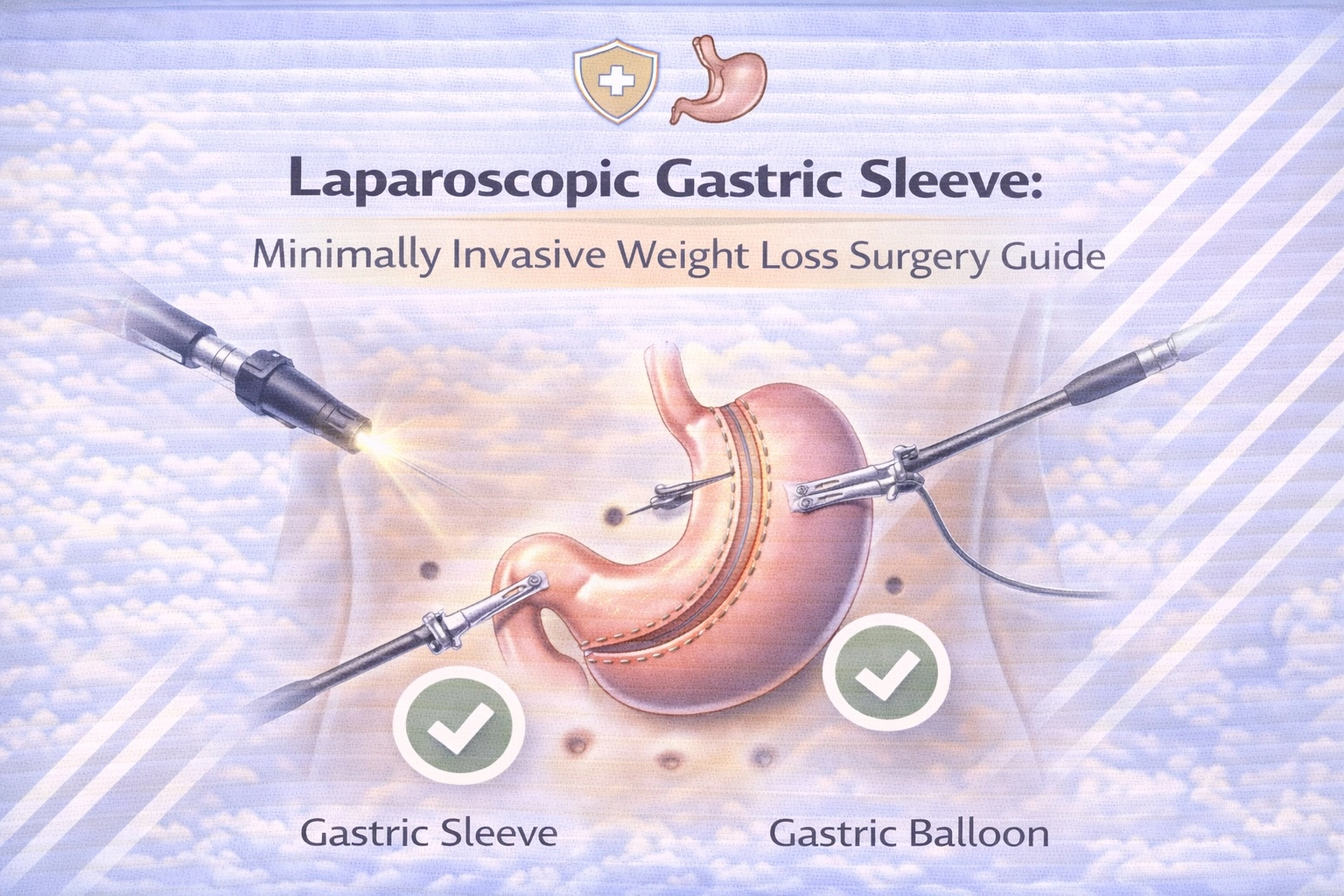
Quick Summary
Laparoscopic gastric sleeve surgery removes approximately 80% of the stomach through 4-6 small incisions, resulting in 60-70% excess weight loss within 12-18 months with a mortality rate of just 0.05% according to international meta-analysis data.
This minimally invasive approach offers faster recovery (1-2 weeks to return to work), reduced post-operative pain, and lower complication rates compared to open surgery while achieving identical weight loss outcomes.
This comprehensive guide covers the laparoscopic technique, eligibility requirements, safety statistics, expected weight loss, recovery timeline, and how Turkey’s JCI-accredited facilities provide this procedure at significantly lower costs.
Why Trust This Guide
This guide synthesizes current clinical evidence from the American Society for Metabolic and Bariatric Surgery (ASMBS), International Federation for the Surgery of Obesity and Metabolic Disorders (IFSO), peer-reviewed journals including Surgery for Obesity and Related Diseases, and major medical institutions including Johns Hopkins Medicine, Cleveland Clinic, and Mayo Clinic.
Carely Clinic’s bariatric team maintains strict adherence to international surgical protocols and evidence-based guidelines. Our commitment to medical accuracy ensures patients receive reliable information to make informed healthcare decisions.
What Is Laparoscopic Gastric Sleeve Surgery?
Laparoscopic gastric sleeve surgery is a minimally invasive bariatric procedure that removes approximately 75-80% of the stomach, creating a narrow, banana-shaped “sleeve” that holds significantly less food and reduces hunger hormone production.
The term “laparoscopic” refers to the surgical technique used, where surgeons operate through several small incisions (typically 4-6) rather than one large abdominal opening. A laparoscope—a thin tube with a tiny camera attached—provides magnified visualization on a monitor, allowing surgeons to perform precise operations with minimal tissue disruption.
This procedure has become the most commonly performed weight loss surgery worldwide, accounting for more than half of all bariatric surgeries in the United States and internationally. According to Cleveland Clinic, approximately 150,000 gastric sleeve operations are performed annually in the U.S. and 380,000 worldwide.
The surgery works through two primary mechanisms. First, the dramatically reduced stomach size limits food intake to just a few ounces per meal. Second, removing the gastric fundus eliminates the majority of cells that produce ghrelin, the hormone responsible for hunger signals, resulting in significantly reduced appetite between meals.
Why Laparoscopic Surgery Over Open Surgery?
Laparoscopic gastric sleeve surgery offers significant advantages over traditional open surgery, including 50-70% less post-operative pain, hospital stays of 1-2 days versus 4-7 days, and return to normal activities within 2-4 weeks rather than 6-8 weeks.
Open bariatric surgery requires incisions of 8-10 inches across the abdomen to provide direct visualization and access to the stomach. While this approach offers surgeons greater tactile feedback, it creates substantially more tissue trauma, increased bleeding risk, and longer healing times.
The laparoscopic approach uses incisions of approximately 0.5-1 inch, with the largest incision (about the width of a small coin) used to remove the excised stomach portion. This minimal tissue disruption translates directly to patient benefits.
Key Advantages of the Laparoscopic Approach
Reduced Pain and Discomfort: Smaller incisions mean less nerve damage and muscle disruption. Most laparoscopic patients describe post-operative discomfort similar to doing intensive abdominal exercises rather than the significant pain associated with open surgery. Pain medication requirements are typically 60% lower.
Faster Recovery: The body heals more quickly when surgical trauma is minimized. Incisions heal within 2-3 weeks, while the internal staple line typically heals within 6-8 weeks. Most patients walk within hours of surgery and return to light activities within days.
Lower Complication Rates: Research consistently shows laparoscopic bariatric surgery carries lower risks of wound infection, herniation at the incision site, and blood clots compared to open procedures. The smaller incisions are particularly beneficial for obese patients, who face higher wound complication risks.
Improved Cosmetic Results: The small incisions result in minimal visible scarring, with most scars fading significantly over time. This contrasts with the prominent abdominal scar left by open surgery.
Equivalent Weight Loss Outcomes: Numerous studies confirm that laparoscopic and open gastric sleeve procedures achieve identical weight loss results. The surgical approach affects recovery, not effectiveness.
How the Procedure Works
The laparoscopic gastric sleeve procedure takes approximately 60-90 minutes under general anesthesia, involving the creation of 4-6 small abdominal incisions, carbon dioxide insufflation for visualization, and removal of the greater curvature of the stomach using surgical staplers.
Pre-Operative Preparation
Before surgery, patients undergo comprehensive medical evaluations including blood tests, cardiac assessment, pulmonary function testing, and often a psychological evaluation. Many surgeons require a pre-operative liquid diet for 2-4 weeks to reduce liver size, improving surgical access and visualization.
Patients must stop smoking at least 4 weeks before surgery, as tobacco use significantly increases complication risks. Certain medications may need adjustment, particularly blood thinners and anti-inflammatory drugs.
Surgical Technique
The procedure begins with the patient under general anesthesia in a supine position with arms extended. The surgeon insufflates the abdomen with carbon dioxide gas to a pressure of approximately 15 mmHg, creating working space and visualization.
Trocar ports are placed strategically: a camera port near the midline, working ports on both sides for the surgeon’s instruments, and an assistant port in the left upper quadrant. A liver retractor may be placed to elevate the left liver lobe for stomach access.
The surgeon begins dissection along the greater curvature of the stomach, typically starting 4-6 cm from the pylorus (the valve connecting stomach to small intestine). Using energy devices, the blood vessels and attachments along the greater curvature are divided, including the short gastric vessels extending to the angle of His at the gastroesophageal junction.
A calibration tube (bougie) of 32-40 French diameter is passed through the esophagus into the stomach, positioned along the lesser curvature. This tube serves as a guide to create the sleeve. The surgeon then fires sequential staple loads, beginning near the pylorus and continuing upward, creating the tubular sleeve while removing the excised stomach portion.
The final sleeve typically holds 60-150 ml of volume (compared to the original stomach capacity of 1-1.5 liters). Many surgeons reinforce the staple line with sutures or buttressing material to reduce bleeding and leak risks.
Immediate Post-Operative Period
Patients typically remain in the hospital 1-2 nights for monitoring. A leak test using contrast imaging or methylene blue may be performed before discharge. Clear liquid intake begins within hours of surgery, with gradual diet progression over the following weeks.
Eligibility Requirements
According to 2022 ASMBS/IFSO guidelines, laparoscopic gastric sleeve surgery is recommended for patients with BMI ≥35 regardless of comorbidities, or BMI 30-34.9 with metabolic conditions such as type 2 diabetes, hypertension, or sleep apnea.
These updated guidelines replaced the 1991 NIH criteria that had restricted surgery primarily to patients with BMI ≥40 or BMI ≥35 with serious comorbidities. The expansion reflects three decades of evidence demonstrating the safety and effectiveness of bariatric surgery in broader patient populations.
Primary Eligibility Criteria
BMI Thresholds:
- BMI ≥35 kg/m²: Recommended regardless of presence, absence, or severity of obesity-related conditions
- BMI 30-34.9 kg/m²: Recommended for patients with metabolic disease who have not achieved durable weight loss through non-surgical methods
- BMI ≥27.5 kg/m² (Asian populations): Due to different body composition patterns, Asian patients experience obesity-related complications at lower BMI thresholds
Age Considerations: Most programs accept adult patients ages 18-65, though carefully selected patients outside this range may qualify. Adolescents with BMI >120% of the 95th percentile for age with major comorbidities may be candidates when evaluated by specialized multidisciplinary teams.
Qualifying Health Conditions
Patients with lower BMIs may qualify when they have obesity-related conditions that significantly impact health:
- Type 2 diabetes mellitus (especially poorly controlled)
- Hypertension requiring medication
- Obstructive sleep apnea
- Non-alcoholic fatty liver disease
- Dyslipidemia (high cholesterol/triglycerides)
- Osteoarthritis limiting mobility
- Polycystic ovary syndrome
- Urinary stress incontinence
Disqualifying Factors
Certain conditions may preclude surgery or require additional evaluation:
- Uncontrolled psychiatric disorders that impair ability to comply with post-operative requirements
- Active substance abuse (alcohol or drugs)
- Inability to understand or commit to necessary lifestyle changes
- Certain medical conditions making anesthesia high-risk
- Pregnancy (current or planned within 12-18 months)
- Severe gastroesophageal reflux disease (may require alternative procedure)
Pre-Surgical Evaluation Process
The multidisciplinary evaluation typically includes:
- Surgical consultation and physical examination
- Nutritional assessment and dietary counseling
- Psychological evaluation
- Cardiac clearance (EKG, possibly stress testing)
- Pulmonary function testing (for patients with sleep apnea or lung disease)
- Upper endoscopy to evaluate stomach and esophagus
- Laboratory testing (metabolic panel, lipid profile, hemoglobin A1c, vitamin levels)
Safety and Complication Rates
Laparoscopic gastric sleeve surgery has a mortality rate of 0.05% according to comprehensive meta-analysis data, making it one of the safest bariatric procedures and comparable in risk to common operations like gallbladder removal.
A large meta-analysis published in the British Journal of Surgery analyzing over 3.6 million bariatric patients found the overall perioperative mortality rate was 0.08%, with sleeve gastrectomy specifically at 0.05%—lower than gastric bypass (0.09%) and significantly lower than duodenal switch (0.41%).
Complication Categories and Rates
Staple Line Leak (1-2.5%): The most concerning potential complication occurs when stomach contents escape through the staple line. Most leaks occur near the gastroesophageal junction due to high intragastric pressure. Modern surgical techniques, staple line reinforcement, and careful technique have reduced this risk significantly. Treatment ranges from conservative management to endoscopic stenting or surgical intervention.
Bleeding (1-4%): Staple line bleeding may occur during or after surgery. Intraoperative bleeding is typically managed immediately. Post-operative bleeding sometimes requires transfusion and rarely requires reoperation. Most cases resolve with conservative management.
Stricture (1-3.5%): Narrowing of the sleeve, most commonly at the incisura angularis (natural bend of the stomach), can cause difficulty eating and vomiting. Most strictures respond well to endoscopic balloon dilation, though severe cases may require surgical revision.
Gastroesophageal Reflux Disease (10-20%): Some patients develop new or worsened acid reflux after sleeve gastrectomy. Most cases respond to medication, though persistent severe GERD may require conversion to gastric bypass.
Venous Thromboembolism (<1%): Blood clots in the legs (DVT) or lungs (pulmonary embolism) are risks with any surgery. Preventive measures include blood thinners, compression devices, and early ambulation.
Risk Factors for Complications
Certain factors increase complication risk:
- Higher BMI (especially >50 kg/m²)
- Male gender
- Older age (>55 years)
- Smoking (current or recent)
- Previous abdominal surgery
- Comorbid conditions (diabetes, heart disease, pulmonary disease)
- Revision surgery (vs. primary procedure)
Comparing Risks: Surgery vs. Obesity
The risks of surgery must be weighed against the risks of untreated severe obesity, which include significantly elevated rates of heart disease, stroke, diabetes, and certain cancers. Research demonstrates that bariatric surgery is associated with up to 89% reduction in long-term mortality compared to non-surgical management of obesity. Cancer mortality decreases by approximately 60%, diabetes-related mortality by over 90%, and heart disease mortality by over 50%.
Expected Weight Loss Results
Patients undergoing laparoscopic gastric sleeve surgery typically lose 60-70% of their excess weight within 12-18 months, with most patients reaching maximum weight loss by 18-24 months post-operatively.
Weight loss after gastric sleeve occurs in predictable phases. The first three months show the most rapid loss, with patients often losing 10-15% of their excess weight in the first month alone. This rapid initial loss results from severely restricted caloric intake during the liquid and soft food phases of recovery.
Weight Loss Timeline
Month 1: Expect 10-15% excess weight loss (approximately 15-25 pounds for most patients). Diet consists primarily of liquids and pureed foods. Rapid changes occur due to caloric restriction and metabolic shifts.
Months 2-3: Weight loss continues at 3-5 pounds per week. By the 3-month mark, most patients have lost 25-35% of their excess weight. Solid foods are gradually reintroduced.
Month 6: Weight loss pace begins slowing to 1-2 pounds weekly. Most patients have achieved 45-55% excess weight loss. Dietary habits are becoming established.
Month 12: Many patients approach or reach their goal weight, with average excess weight loss of 60-70%. Weight loss begins transitioning to maintenance phase.
Month 18: Weight loss typically plateaus. Maximum weight loss for most patients occurs between 12-18 months. Focus shifts to weight maintenance.
Long-Term Results
A five-year prospective study found that patients maintained an average of 60% excess weight loss at five years, though results ranged from 43-76% depending on lifestyle adherence. A systematic review of long-term outcomes reported mean excess weight loss of 62.3% at 5 years, 53.8% at 6 years, and 54.8% at 8+ years.
Weight regain occurs in some patients over time, often due to:
- Gradual stretching of the gastric sleeve
- Return to pre-operative eating habits
- Insufficient physical activity
- Hormonal adaptations
Factors Affecting Weight Loss Success
Starting BMI: Patients with higher starting BMIs tend to lose more absolute weight but may achieve lower percentage excess weight loss compared to patients with lower starting weights.
Diet Adherence: Following nutritional guidelines correlates strongly with weight loss success. Patients who avoid high-calorie beverages, practice mindful eating, and prioritize protein intake consistently achieve better outcomes.
Physical Activity: Regular exercise enhances weight loss and is critical for weight maintenance. Muscle mass preservation through resistance training improves metabolism and long-term outcomes.
Psychological Support: Patients who engage with support groups, maintain follow-up appointments, and address emotional eating patterns show superior long-term results.
The Ghrelin Effect: Why You Feel Less Hungry
Gastric sleeve surgery removes the gastric fundus, which contains 10-20 times more ghrelin-producing cells than any other part of the digestive tract, resulting in significantly reduced hunger signals that persist long after surgery.
Ghrelin, discovered in 1999 and often called the “hunger hormone,” plays a central role in appetite regulation. This 28-amino acid peptide primarily produced in the stomach’s fundus and body rises before meals, triggering hunger sensations, and falls after eating to promote satiety.
How Ghrelin Affects Appetite
In normal physiology, ghrelin levels follow a predictable pattern—rising in anticipation of meals and falling within minutes of food intake. These fluctuations drive meal-to-meal eating behavior. Research published in the New England Journal of Medicine demonstrated that ghrelin levels rise significantly with dieting (contributing to the “yo-yo” effect), but decrease substantially after gastric sleeve surgery.
When the gastric fundus is removed during sleeve gastrectomy, the primary ghrelin production site is eliminated. Studies consistently show plasma ghrelin levels drop significantly immediately after surgery and remain suppressed for years.
Clinical Significance
The reduction in ghrelin production explains a phenomenon that initially puzzled researchers: why gastric sleeve patients report less hunger between meals compared to patients who lose equivalent weight through dieting or gastric banding (which doesn’t remove stomach tissue).
This hormonal change provides several advantages:
- Reduced hunger drive between meals
- Fewer food cravings and “appetite attacks”
- Easier adherence to reduced-calorie diets
- Less psychological struggle with hunger management
Research from the University of Ostrava demonstrated that fasting ghrelin levels significantly decreased at 12 months post-surgery, correlating with sustained appetite reduction and weight loss maintenance.
Beyond Appetite: Metabolic Benefits
Ghrelin reduction may contribute to metabolic improvements independent of weight loss. Lower ghrelin levels have been associated with:
- Improved insulin sensitivity
- Better glucose metabolism
- Decreased cardiovascular risk factors
- Enhanced satiety signaling
These effects help explain why gastric sleeve surgery often produces rapid improvement or resolution of type 2 diabetes—sometimes within days of surgery, before significant weight loss occurs.
Recovery Timeline
Most laparoscopic gastric sleeve patients return to desk work within 1-2 weeks, resume normal activities by 4-6 weeks, and achieve full recovery with unrestricted activity by 6-8 weeks post-operatively.
The minimally invasive nature of laparoscopic surgery significantly shortens recovery compared to open procedures. However, internal healing requires patience regardless of how quickly external incisions heal.
Hospital Stay and Immediate Recovery
Day of Surgery: After a 60-90 minute procedure, patients spend several hours in recovery as anesthesia clears. Most can take small sips of water within hours. Light walking is encouraged same-day to prevent blood clots and promote circulation.
Hospital Stay (1-2 days): Medical staff monitors vital signs, pain management, and initial fluid tolerance. A contrast study (upper GI series) may confirm no leaks before discharge. Patients receive detailed instructions for home recovery.
First Week at Home
Pain and discomfort peak during the first 2-3 days, then gradually improve. Most patients describe the sensation as similar to intense abdominal muscle soreness rather than sharp pain. Gas pain from residual carbon dioxide used during surgery sometimes causes referred shoulder discomfort.
Diet consists of clear liquids (water, broth, sugar-free gelatin, diluted protein drinks). Patients should sip continuously throughout the day, aiming for 64 ounces of fluid. Walking short distances multiple times daily promotes healing.
Fatigue is normal and expected. The combination of anesthesia, reduced caloric intake, and the body’s healing demands requires adequate rest.
Weeks 2-4: Progressive Recovery
The diet advances from clear liquids to full liquids (protein shakes, milk, smooth soups), then to pureed foods around week 3. Small, frequent meals (4-6 per day) become the pattern.
Energy levels begin improving as nutrition increases. Most patients with desk jobs return to work between days 7-14. Those with physically demanding jobs may need 3-4 weeks.
Light walking continues, with gradual distance increases. Lifting restrictions (nothing over 10-15 pounds) remain in place to protect healing incisions and staple lines.
Weeks 4-8: Building Toward Normal
Soft foods are introduced around week 4-5, including scrambled eggs, soft fish, cottage cheese, and well-cooked vegetables. Chewing thoroughly becomes essential as the small stomach cannot process poorly chewed food.
Exercise can gradually intensify. Light resistance training may begin around week 6 with surgeon approval. Swimming and low-impact activities are generally safe by this point.
By week 6-8, most patients resume their regular activities with few restrictions. The internal staple line is considered healed, though the stomach continues remodeling over subsequent months.
Long-Term Recovery and Lifestyle
Months 2-3: Regular solid foods are reintroduced carefully. Patients learn which foods their new stomach tolerates well and which cause discomfort. Vitamin and mineral supplementation becomes a permanent daily routine.
Months 3-12: Focus shifts from recovery to optimization. Regular exercise, protein-first eating strategies, and consistent follow-up appointments maximize results.
Ongoing: Annual check-ups, periodic blood work to monitor nutritional status, and continued attention to diet and exercise support long-term success.
How This Applies in Turkey
International guidelines from ASMBS and IFSO apply identically at Turkey’s JCI-accredited medical facilities, where laparoscopic gastric sleeve surgery costs €3,500-€5,500 all-inclusive compared to $15,000-$25,000 in the USA and £8,000-£10,000 in the UK—a savings of 60-75%.
Turkey has emerged as a leading destination for bariatric surgery, performing hundreds of thousands of procedures annually for international patients. The country’s bariatric surgeons train extensively in laparoscopic techniques and many have performed thousands of successful procedures.
Why Turkey Offers Lower Costs
The significant price difference between Turkey and Western countries reflects economic factors rather than quality differences:
- Lower operational costs (facility overhead, staffing, equipment)
- Favorable currency exchange rates
- Government support for medical tourism
- Competitive market with many accredited facilities
- Lower malpractice insurance costs
These savings pass directly to patients while clinical standards remain equivalent to Western institutions.
What’s Included in Turkey Packages
Most Turkish bariatric clinics offer comprehensive all-inclusive packages covering:
- Pre-operative medical evaluations and blood work
- Surgeon and anesthesiologist fees
- Operating room and hospital stay (typically 2-3 nights)
- Post-operative medications and supplies
- Nutritional consultation and dietary guidance
- Airport transfers and local transportation
- Hotel accommodation (typically 4-6 nights)
- English-speaking patient coordinator
- Follow-up support after returning home
This bundled approach eliminates hidden costs and simplifies the medical tourism experience.
Carely Clinic’s Approach
At Carely Clinic in Istanbul, laparoscopic gastric sleeve surgery is performed by board-certified bariatric surgeons at JCI-accredited partner hospitals. Our comprehensive packages include all medical services, comfortable accommodation, VIP transfers, and lifetime aftercare support through WhatsApp communication with our medical team.
International patients typically complete the entire process within 5-7 days—arriving one day before surgery for evaluations, undergoing the procedure, recovering in hospital for 1-2 nights, and spending an additional 2-3 days recovering comfortably before flying home.
Learn more about Gastric Sleeve Surgery at Carely Clinic.
Laparoscopic Gastric Sleeve Comparison Table
| Factor | Laparoscopic Gastric Sleeve | Open Gastric Sleeve | Gastric Bypass |
|---|---|---|---|
| Procedure Duration | 60-90 minutes | 90-120 minutes | 2-4 hours |
| Incision Size | 4-6 small (0.5-1 inch) | 1 large (8-10 inches) | 5-6 small (laparoscopic) |
| Hospital Stay | 1-2 nights | 4-7 nights | 2-3 nights |
| Return to Work | 1-2 weeks | 4-6 weeks | 2-4 weeks |
| Full Recovery | 4-6 weeks | 8-12 weeks | 6-8 weeks |
| Mortality Rate | 0.05% | 0.1-0.3% | 0.09% |
| Excess Weight Loss (1 year) | 60-70% | 60-70% | 70-80% |
| Ghrelin Reduction | Significant | Significant | Variable |
| Malabsorption | None | None | Yes |
| Reversibility | No (stomach removed) | No (stomach removed) | Technically yes |
| Cost (Turkey) | €3,500-€5,500 | €4,000-€6,000 | €4,500-€6,500 |
| Cost (USA) | $15,000-$25,000 | $18,000-$30,000 | $20,000-$35,000 |
| Cost (UK) | £8,000-£10,000 | £10,000-£12,000 | £10,000-£15,000 |
Frequently Asked Questions
How long does laparoscopic gastric sleeve surgery take?
Laparoscopic gastric sleeve surgery takes 60-90 minutes to complete. Including anesthesia induction and recovery time, patients spend approximately 2-3 hours total in the operating suite. The laparoscopic approach is faster than open surgery due to improved visualization and instrument precision.
Is laparoscopic gastric sleeve surgery painful?
Pain after laparoscopic gastric sleeve is moderate, typically rated 5-7/10 for days 1-2, decreasing to 3-4/10 by day 3. Most patients describe it as intense muscle soreness rather than sharp pain. The small incisions reduce nerve damage compared to open surgery, and most patients manage with standard pain medication by week 2.
How soon can I return to work after laparoscopic gastric sleeve?
Most patients return to desk work within 1-2 weeks after laparoscopic gastric sleeve surgery. Those with moderately active jobs need 2-3 weeks, while heavy physical labor requires 4-6 weeks. Starting with half-days or reduced duties helps ease the transition back to full work responsibilities.
What can I eat after laparoscopic gastric sleeve surgery?
Your diet progresses through 6 stages after surgery: clear liquids (days 1-7), full liquids (weeks 1-2), pureed foods (weeks 3-4), soft foods (weeks 4-6), and regular solid foods (week 6+). Long-term eating emphasizes protein-first meals with 4-6 small portions daily totaling 800-1,200 calories.
Will I feel hungry after gastric sleeve surgery?
Hunger is dramatically reduced after gastric sleeve surgery because 75-80% of ghrelin-producing stomach tissue is removed. Most patients report feeling “food neutral” and rarely experience intense hunger cravings. Some hunger sensation returns gradually over 6-18 months but remains significantly lower than pre-surgery levels for most patients.
What is the success rate of laparoscopic gastric sleeve surgery?
Laparoscopic gastric sleeve has a 70-80% success rate at 5 years, defined as maintaining at least 50% excess weight loss. Patients lose an average of 60-70% of excess weight at 12-18 months. Success rates are highest among patients who follow dietary guidelines, exercise regularly, and attend follow-up appointments.
Are there any foods I can never eat again after gastric sleeve?
No foods are permanently prohibited after gastric sleeve surgery, but fibrous meats, bread, pasta, and raw vegetables are often poorly tolerated initially. High-sugar foods may cause nausea or “dumping syndrome” in some patients. Most people identify through trial which foods their new stomach handles well within 3-6 months.
How much weight will I lose with laparoscopic gastric sleeve?
You can expect to lose 60-70% of your excess weight within 12-18 months after laparoscopic gastric sleeve surgery. A patient 100 pounds overweight typically loses 60-70 pounds total. Individual results vary based on starting BMI, dietary adherence, exercise habits, and metabolic factors.
Is laparoscopic gastric sleeve surgery reversible?
Laparoscopic gastric sleeve surgery is not reversible because 75-80% of the stomach is permanently removed from the body. If needed for medical reasons, the sleeve can be converted to gastric bypass or duodenal switch. This permanent nature is why thorough pre-operative evaluation and patient commitment are essential.
What is the difference between laparoscopic and robotic gastric sleeve surgery?
Robotic gastric sleeve uses the same small incisions as traditional laparoscopy but provides surgeons with 3D visualization, articulating instruments, and tremor filtration. Weight loss outcomes are comparable between both approaches. Robotic surgery may offer advantages in complex cases, but both are significantly superior to open surgery.
Does insurance cover laparoscopic gastric sleeve surgery?
Many U.S. insurance plans cover laparoscopic gastric sleeve when patients meet BMI ≥35 with comorbidities or BMI ≥40 requirements. Pre-approval, 3-6 month supervised diet programs, and psychological evaluations are typically required. International patients in Turkey typically pay out-of-pocket at 60-75% savings compared to U.S. prices.
What vitamins do I need to take after gastric sleeve surgery?
Lifelong daily vitamins are required after gastric sleeve: a bariatric multivitamin with minerals, vitamin B12 (1,000 mcg), calcium citrate with vitamin D (1,200-1,500 mg), and iron (45-60 mg for menstruating women). Blood work every 3-6 months for the first year monitors nutritional status and guides adjustments.
Conclusion
Laparoscopic gastric sleeve surgery represents the gold standard approach to sleeve gastrectomy, offering patients the benefits of proven weight loss effectiveness with minimally invasive surgical technique. The procedure’s 0.05% mortality rate, 60-70% average excess weight loss, and 1-2 week return to work timeline make it an attractive option for qualifying patients seeking a permanent solution to severe obesity.
The combination of mechanical restriction (smaller stomach capacity) and hormonal modification (reduced ghrelin production) addresses obesity from multiple angles, helping patients achieve and maintain significant weight loss while reducing hunger and improving metabolic health. Resolution or improvement of obesity-related conditions including type 2 diabetes, hypertension, and sleep apnea occurs in the majority of patients.
For international patients, Turkey offers access to this life-changing procedure at JCI-accredited facilities with experienced bariatric surgeons at a fraction of Western costs. All-inclusive packages simplify the medical tourism experience while maintaining clinical standards equivalent to any world-class bariatric center.
Medical Disclaimer: Individual requirements and outcomes vary. This guide provides general information based on international guidelines and published research. It does not constitute medical advice. Consult qualified medical professionals for personalized evaluation and recommendations regarding bariatric surgery.
Ready to explore whether laparoscopic gastric sleeve surgery is right for you? Contact Carely Clinic for a free consultation with our bariatric team.