
Quick Summary
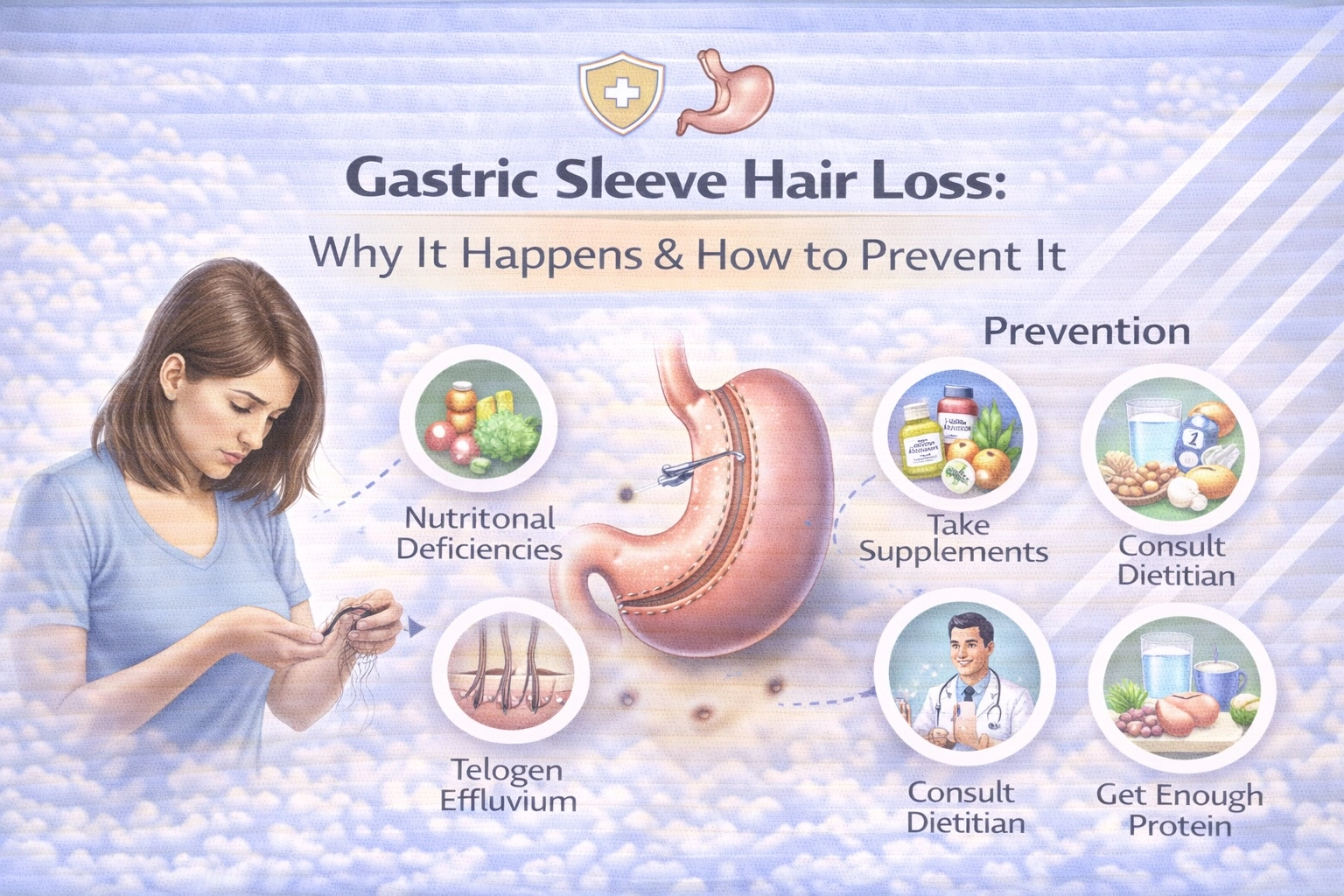
Hair loss after gastric sleeve surgery affects approximately 57% of patients, typically beginning 3-4 months post-operatively and resolving within 6-12 months. This temporary condition, called telogen effluvium, occurs due to surgical stress, rapid weight loss, and nutritional changes.
According to a 2021 meta-analysis published in Obesity Surgery, the pooled incidence of hair loss ranges from 42-71% across bariatric procedures, with most cases being self-limiting. Maintaining 60-80 grams of daily protein and following vitamin supplementation guidelines significantly reduces severity.
This guide covers the science behind post-bariatric hair loss, evidence-based prevention strategies, essential nutrients for hair health, and realistic recovery timelines.
Why Trust This Guide
This article synthesizes current research from peer-reviewed medical journals including Surgery for Obesity and Related Diseases and Obesity Surgery, alongside clinical guidelines from the American Society for Metabolic and Bariatric Surgery (ASMBS) and International Federation for the Surgery of Obesity and Metabolic Disorders (IFSO).
Carely Clinic’s bariatric team reviews all content for medical accuracy. Our approach prioritizes evidence-based information while providing practical guidance for patients navigating post-operative recovery. All statistics and recommendations are sourced from published clinical studies and current medical guidelines.
Why Does Hair Loss Happen After Gastric Sleeve Surgery?
Hair loss after gastric sleeve surgery results from the body’s stress response to major surgery, rapid weight loss, and reduced nutrient absorption, causing hair follicles to prematurely enter a resting phase called telogen.
The human body prioritises essential functions during periods of significant physical stress. When you undergo gastric sleeve surgery, your body experiences multiple simultaneous stressors: surgical trauma, dramatic caloric restriction, and rapid metabolic changes. In response, your body redirects available nutrients toward vital organs, temporarily reducing resources allocated to non-essential functions like hair growth.
Weight loss surgery fundamentally changes how your body processes and absorbs nutrients. The gastric sleeve removes approximately 75-80% of the stomach, significantly reducing food intake capacity. While this restriction drives effective weight loss, it also means your body receives fewer overall nutrients during the rapid weight loss phase.
The surgical stress itself triggers a hormonal cascade that can disrupt normal hair growth cycles. Elevated cortisol levels, which commonly occur after any major surgery, have been shown to interfere with hair follicle function. This stress response, combined with the metabolic changes from rapid weight loss, creates conditions where hair shedding becomes more pronounced.
What Is Telogen Effluvium?
Telogen effluvium is a temporary, non-scarring form of hair loss where a higher-than-normal percentage of hair follicles shift into the resting (telogen) phase simultaneously, causing diffuse shedding approximately three months after a triggering event.
Understanding the normal hair growth cycle helps explain why telogen effluvium occurs. Hair growth happens in three distinct phases: anagen (active growth), catagen (transition), and telogen (resting). Under normal circumstances, approximately 85-90% of hair follicles are in the anagen phase at any given time, while only 5-15% are in the telogen phase.
During telogen effluvium, the percentage of follicles in the resting phase can increase dramatically, sometimes affecting up to 70% of scalp hair. Researchers have coined the term “Bariatric Surgery-Induced Telogen Effluvium” (Bar SITE) specifically to describe this phenomenon in weight loss surgery patients.
The condition differs from genetic hair loss in several important ways. Telogen effluvium causes diffuse thinning across the entire scalp rather than pattern baldness. The hair follicles themselves remain healthy and capable of producing new hair once the triggering stressor resolves. Most importantly, the condition is temporary and self-limiting in the vast majority of cases.
How Common Is Hair Loss After Bariatric Surgery?
Approximately 57% of bariatric surgery patients experience noticeable hair loss, according to a systematic review and meta-analysis published in Obesity Surgery, with incidence ranging from 42% to 71% depending on the study and follow-up period.
The prevalence of hair loss varies somewhat depending on the specific bariatric procedure performed. Research indicates that gastric sleeve and gastric bypass patients experience higher rates of hair loss compared to those who undergo gastric banding procedures. This difference relates to the rate of weight loss and the degree of nutritional change each procedure creates.
A 2021 study examining 112 women who underwent sleeve gastrectomy found that 75% experienced some degree of hair loss, with 80% of those affected reporting onset between three and four months after surgery. However, the study also noted that in nearly all cases, the hair loss was temporary and self-resolving.
It’s worth noting that the incidence of hair loss decreases significantly with longer follow-up periods. One study found that hair loss rates dropped from 65% at one year post-surgery to just 35% at three years or more, indicating that hair recovery is the norm rather than the exception for most patients.
When Does Hair Loss Start and Stop?
Hair loss typically begins 3-4 months after gastric sleeve surgery, peaks around month 5-6, and naturally resolves within 9-12 months as the body stabilises and nutritional status normalises.
Before Surgery
No hair loss occurs at this stage. Your hair growth cycle continues normally, though any follicles already in the telogen phase at the time of surgery will be the first to shed during the post-operative period.
Months 1-2 Post-Surgery
During the immediate recovery period, you likely won’t notice significant changes in your hair. Your body is focused on healing from surgery, and the hair growth cycle hasn’t yet been affected enough to produce visible shedding.
Months 3-4 Post-Surgery
This is when most patients first notice increased hair shedding. You may find more hair in your brush, on your pillow, or in the shower drain. The shedding represents hair follicles that shifted into the telogen phase during or shortly after surgery, which takes approximately three months to manifest as visible hair loss.
Months 5-6 Post-Surgery
Peak shedding typically occurs during this period. While this can be alarming, it’s important to remember that the increased shedding is temporary. Your body is still adjusting to significant changes, and rapid weight loss is usually most pronounced during this time frame.
Months 6-9 Post-Surgery
Most patients notice that hair loss begins to slow during this period. As weight loss stabilises and nutritional intake improves, fewer follicles enter the telogen phase, and the balance between growing and resting hair begins to normalise.
Months 9-12 Post-Surgery
The majority of patients see significant improvement or complete resolution of hair loss by this point. New hair growth becomes visible, and hair density gradually returns toward pre-surgical levels.
Beyond 12 Months
If hair loss continues beyond 12 months, it may indicate an underlying nutritional deficiency or other medical condition that requires evaluation. Persistent hair loss should prompt blood work to assess iron, zinc, vitamin B12, and thyroid function.
Nutritional Causes of Post-Bariatric Hair Loss
Post-bariatric hair loss is primarily driven by deficiencies in protein, iron, zinc, biotin, vitamin B12, and essential fatty acids, all of which play critical roles in hair follicle function and keratin production.
The relationship between nutrition and hair health is well-established in medical literature. Hair follicles are among the most metabolically active structures in the human body, requiring a constant supply of nutrients to maintain the rapid cell division necessary for hair growth. When nutrient availability decreases, hair growth is one of the first non-essential functions to be affected.
After gastric sleeve surgery, reduced stomach capacity means you simply cannot eat as much food as before. This caloric restriction is intentional and necessary for weight loss, but it also reduces the total nutrients your body receives. Additionally, some patients experience food intolerances or difficulties with certain protein sources in the early post-operative period.
Unlike gastric bypass, the gastric sleeve doesn’t cause significant malabsorption of nutrients since the intestinal tract remains intact. However, reduced food intake can still lead to nutritional deficiencies if patients don’t prioritise nutrient-dense foods and appropriate supplementation.
Protein Requirements for Hair Health
Bariatric patients should consume 60-80 grams of protein daily (or 1.1-1.5 grams per kilogram of ideal body weight) to support hair health, wound healing, and lean muscle preservation during rapid weight loss.
Hair is composed primarily of a protein called keratin. When protein intake falls below required levels, the body prioritises available protein for essential functions like organ maintenance and immune function, reducing allocation to hair growth. Clinical studies consistently identify inadequate protein intake as a significant contributor to post-bariatric hair loss.
Meeting protein requirements after gastric sleeve surgery requires intentional planning. With a significantly smaller stomach, you must maximise the nutritional value of every meal. Protein-rich foods should be consumed first at each meal, before vegetables or other items, to ensure adequate intake even if you feel full quickly.
High-quality protein sources for bariatric patients include lean poultry, fish, eggs, low-fat dairy products, and legumes. Many patients also benefit from protein supplements, particularly in the early post-operative period when solid food intake is still limited. Protein shakes can help bridge the gap between what you can comfortably eat and what your body requires.
The timing of protein intake matters as well. Spreading protein consumption throughout the day, rather than attempting to consume large amounts at once, supports better absorption and utilisation. Aim to include protein in every meal and snack.
Essential Vitamins and Minerals for Hair Health
Key nutrients for preventing hair loss include iron (45-60mg daily), zinc (8-22mg daily), biotin (minimum 3,000mcg daily for those experiencing hair loss), vitamin B12, vitamin D, and folate, all of which support hair follicle function.
Iron
Iron deficiency is one of the most common nutritional causes of hair loss in bariatric patients. Low ferritin levels (the storage form of iron) have been directly linked to telogen effluvium. Bariatric patients should have their iron levels monitored regularly and supplement as directed by their healthcare team. ASMBS guidelines recommend 45-60mg of elemental iron daily for most bariatric patients.
Zinc
Zinc plays a crucial role in hair tissue growth and repair. It helps keep the oil glands around hair follicles functioning properly and has been shown to have a regulatory effect on hair loss. Research indicates that zinc supplementation can stop hair loss in patients with documented zinc deficiency. The recommended daily intake for bariatric patients is 8-22mg, depending on procedure type.
Biotin (Vitamin B7)
Biotin is essential for the production of keratin, the protein that makes up hair structure. While true biotin deficiency is relatively rare, some bariatric patients benefit from supplementation, particularly those experiencing significant hair loss. Studies suggest that biotin supplementation of at least 1,000-3,000mcg daily may support hair health, though evidence for effectiveness in patients without documented deficiency remains limited.
Vitamin B12
Vitamin B12 supports red blood cell production, which in turn delivers oxygen and nutrients to hair follicles. Deficiency can contribute to hair loss and is common after bariatric surgery due to reduced stomach acid production and intrinsic factor. Bariatric patients typically require B12 supplementation via sublingual tablets, injections, or high-dose oral supplements.
Vitamin D
Vitamin D receptors are present in hair follicles, and deficiency has been associated with various forms of hair loss. Many bariatric patients are deficient in vitamin D both before and after surgery, making supplementation essential.
Folate
Folate supports cell division, including the rapid division that occurs in hair follicles. Adequate folate intake helps ensure that new hair growth proceeds normally once follicles exit the telogen phase.
How to Prevent Hair Loss After Gastric Sleeve
While some degree of hair loss may be unavoidable, following ASMBS nutritional guidelines—consuming 60-80g protein daily, taking bariatric-specific multivitamins, and addressing documented deficiencies—can significantly reduce severity and duration.
Prioritise Protein Intake
Ensure you consume adequate protein at every meal, aiming for 60-80 grams daily. Include protein supplements if needed to reach your target. Choose high-quality sources like lean meats, fish, eggs, and dairy products.
Take Your Vitamins Consistently
Treat your bariatric vitamin regimen as non-negotiable. ASMBS guidelines recommend a complete bariatric multivitamin with minerals, calcium citrate (1,200-1,500mg daily in divided doses), vitamin B12, and iron with vitamin C for enhanced absorption.
Monitor Your Lab Values
Regular blood work allows early identification of nutritional deficiencies before they cause symptoms like hair loss. Most bariatric programs recommend lab monitoring at 3, 6, and 12 months post-operatively, then annually.
Stay Hydrated
Adequate hydration supports overall metabolic function and nutrient transport. Aim for 48-64 ounces of non-caffeinated, non-carbonated fluids daily, consumed between meals rather than with meals.
Address Deficiencies Promptly
If blood work reveals specific deficiencies, work with your healthcare team to correct them through targeted supplementation. Iron deficiency, in particular, should be addressed aggressively in patients experiencing hair loss.
Manage Stress
The stress response contributes to telogen effluvium. Prioritise adequate sleep, consider stress-reduction techniques, and give yourself grace during this period of significant change. Remember that hair loss is temporary.
Use Gentle Hair Care
Avoid harsh treatments, excessive heat styling, and tight hairstyles that pull on hair during the shedding phase. Gentle care won’t prevent telogen effluvium but can minimise breakage that compounds the appearance of hair loss.
Will Your Hair Grow Back?
Yes, hair regrowth occurs in the vast majority of bariatric patients, typically beginning 6-9 months after surgery and reaching near-complete restoration by 12-18 months, provided nutritional status is optimised.
The temporary nature of telogen effluvium is perhaps its most reassuring characteristic. Unlike genetic hair loss or scarring alopecia, the hair follicles themselves are not damaged during post-bariatric shedding. They simply pause their growth cycle in response to physiological stress and resume normal function once conditions stabilise.
Research consistently shows that most patients experience significant hair regrowth without any specific intervention beyond standard nutritional care. One study following women after gastric sleeve surgery found that while nearly 70% reported hair loss, approximately 80% of affected patients saw resolution within an average of 5.5 months.
The key factors supporting regrowth include weight stabilisation, adequate protein intake, correction of any nutritional deficiencies, and time. Most patients report that their hair returns to its pre-surgical thickness and quality, though some note changes in texture during the regrowth period.
If hair loss persists beyond 12 months, or if you notice bald patches rather than diffuse thinning, consult your healthcare provider. These presentations may indicate causes other than typical telogen effluvium that require specific evaluation and treatment.
How This Applies in Turkey
International nutritional guidelines from ASMBS and IFSO apply equally at Turkey’s JCI-accredited bariatric centres, where comprehensive post-operative nutrition programs include vitamin supplementation and dietary counselling specifically designed to minimise complications like hair loss.
Turkey has become a leading destination for bariatric surgery, offering significant cost savings compared to the USA and UK while maintaining international safety standards. Gastric sleeve surgery in Turkey costs €2,500-€5,500 all-inclusive, compared to $15,000-$25,000 in the USA and £8,000-£15,000 in the UK—representing savings of 60-75%.
These price differences reflect lower operating costs in Turkey rather than lower quality standards. Reputable Turkish bariatric centres follow the same ASMBS/IFSO guidelines used by accredited facilities worldwide, including comprehensive nutritional protocols designed to optimise outcomes and minimise complications.
At Carely Clinic in Istanbul, gastric sleeve procedures are performed by board-certified bariatric surgeons at JCI-accredited partner hospitals. All-inclusive packages cover pre-operative testing, surgery, hospital stay, post-operative vitamins, and nutritional counselling. Our team provides detailed guidance on protein requirements, supplementation protocols, and hair loss prevention strategies specific to bariatric patients.
International patients receive ongoing support after returning home, including access to nutritional guidance and follow-up consultations. This comprehensive approach helps ensure optimal outcomes, including minimising hair loss during the post-operative period.
Learn more about Gastric Sleeve Surgery at Carely Clinic.
Summary Table : Gastric Sleeve Hair Loss
| Factor | Details |
|---|---|
| Incidence Rate | 57% of bariatric patients (range: 42-71%) |
| Onset | 3-4 months post-surgery |
| Peak Shedding | 5-6 months post-surgery |
| Resolution | 9-12 months (most cases) |
| Primary Cause | Telogen effluvium (stress-induced hair cycle disruption) |
| Daily Protein Target | 60-80 grams (or 1.1-1.5g/kg ideal body weight) |
| Iron Requirement | 45-60mg elemental iron daily |
| Zinc Requirement | 8-22mg daily (procedure-dependent) |
| Biotin (for hair loss) | 3,000mcg+ daily |
| Permanent Hair Loss | Rare; hair regrowth occurs in most patients |
Frequently Asked Questions
Is hair loss after gastric sleeve permanent?
No, hair loss after gastric sleeve is temporary and resolves within 6-12 months in the vast majority of cases. The condition is called telogen effluvium, a self-limiting response to surgical stress. Hair follicles are not damaged during this process, and regrowth occurs naturally once the body stabilises and nutritional status normalises.
How much hair loss is normal after bariatric surgery?
Diffuse thinning affecting 30-50% of scalp hair density is normal for post-bariatric telogen effluvium. You’ll notice increased shedding in your brush or shower drain, but this is temporary and expected. Complete bald patches are not typical and should prompt medical evaluation if they occur.
Does biotin really help with hair loss after gastric sleeve?
Biotin supplementation shows limited effectiveness—only 23-38% of patients report improvement according to a 2021 study. Research indicates that meeting protein requirements (60-80g daily) and correcting iron/zinc deficiencies is significantly more effective than biotin alone for preventing post-bariatric hair loss.
What protein intake prevents hair loss after bariatric surgery?
Consume 60-80 grams of protein daily, or 1.1-1.5 grams per kilogram of ideal body weight, to prevent hair loss after bariatric surgery. Distribute protein throughout the day and prioritise it at every meal before other foods. Meeting this target significantly reduces hair loss severity and supports regrowth.
When should I worry about hair loss after gastric sleeve?
Consult your healthcare provider if hair loss continues beyond 12 months post-surgery or if you develop bald patches rather than diffuse thinning. Additional concerning symptoms include extreme fatigue, brittle nails, dizziness, or pale skin, which may indicate iron deficiency or other nutritional deficiencies requiring treatment.
Can I take hair supplements after gastric sleeve surgery?
Yes, but your bariatric-specific multivitamin must be your foundation—take it consistently every day. Add targeted supplements like biotin (3,000mcg+), iron, or zinc only if blood work shows deficiency or your healthcare team recommends them. Excessive iron or zinc supplementation can cause toxicity, so professional guidance is essential.
Why does hair loss start 3-4 months after surgery?
Hair loss starts 3-4 months post-surgery because of the natural hair growth cycle timeline. Hair follicles that shift into the resting (telogen) phase during surgical stress remain attached for approximately 3 months before shedding. The delayed visible shedding represents follicles affected at the time of your operation.
Does gastric sleeve cause more hair loss than gastric bypass?
Gastric sleeve and gastric bypass cause similar hair loss rates—55-72% for sleeve versus 40-65% for bypass. Studies show gastric sleeve may have slightly higher incidence in some populations, but both procedures trigger telogen effluvium through rapid weight loss and metabolic stress, with recovery timelines being essentially identical.
Will my hair texture change after it grows back?
Hair texture typically returns to its pre-surgery state within 12-18 months, though temporary changes are common during regrowth. Some patients report finer, curlier, or differently textured hair initially as new follicles emerge. These changes usually normalise as the complete hair growth cycle stabilises.
How can I hide hair thinning during the shedding phase?
Use volumising shampoos, strategic parting, and gentle styling techniques to minimise visible thinning during the 3-6 month shedding phase. Avoid tight hairstyles, excessive heat styling, and harsh chemical treatments that stress remaining hair. Shorter haircuts often appear fuller and can help you feel more confident during this temporary period.
Does everyone lose hair after gastric sleeve surgery?
No, 43% of bariatric patients do not experience noticeable hair loss after surgery. Factors associated with lower risk include strong pre-operative nutritional status, consistent adherence to 60-80g daily protein targets, taking bariatric vitamins as prescribed, and maintaining adequate iron and zinc levels throughout the weight loss phase.
Should I delay gastric sleeve surgery because of hair loss concerns?
No, temporary hair loss should not delay gastric sleeve surgery given the significant health benefits. The procedure resolves life-threatening conditions like type 2 diabetes, hypertension, and sleep apnea, with mortality risk reductions far outweighing the cosmetic inconvenience of 6-12 months of temporary, reversible hair thinning.
Conclusion
Hair loss after gastric sleeve surgery affects approximately 57% of patients but is nearly always temporary, resolving within 6-12 months as the body stabilises. Understanding that this condition—telogen effluvium—represents a normal physiological response to surgical stress and rapid weight loss can help manage expectations during recovery.
The most effective prevention strategy involves meeting daily protein requirements (60-80 grams), consistently taking bariatric-specific supplements, and monitoring blood levels to identify and correct any nutritional deficiencies. While some shedding may be unavoidable, these measures significantly reduce severity and support optimal regrowth.
Important Disclaimer: Individual experiences vary, and this guide provides general information based on current medical research and international guidelines. Hair loss patterns, nutritional needs, and recovery timelines differ between patients. Always consult qualified medical professionals for personalised advice specific to your situation.
If you’re considering gastric sleeve surgery and want to learn more about comprehensive post-operative care, including nutritional support designed to optimise outcomes, our team is available to answer your questions.