
Quick Summary
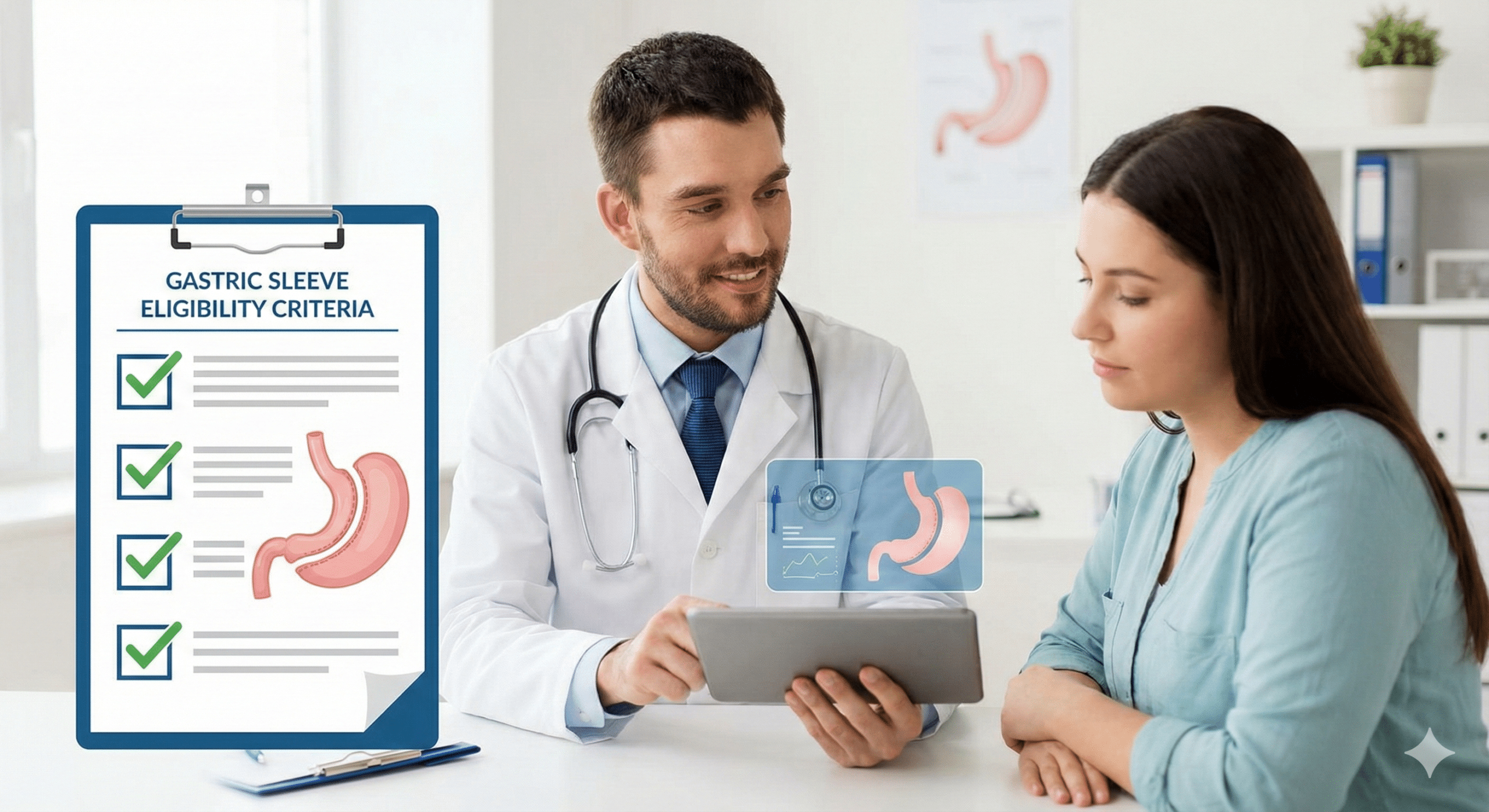
Gastric sleeve eligibility criteria is BMI ≥35 without comorbidities, or BMI 30-34.9 with metabolic conditions like type 2 diabetes, according to 2022 ASMBS/IFSO guidelines.
These updated guidelines replaced the 1991 NIH criteria that restricted surgery to BMI ≥40, significantly expanding access to eligible patients.
This guide covers all eligibility criteria including BMI thresholds, qualifying health conditions, age requirements, and the complete evaluation process.
Why Trust This Guide
This guide synthesizes recommendations from the American Society for Metabolic and Bariatric Surgery (ASMBS), International Federation for the Surgery of Obesity and Metabolic Disorders (IFSO), and peer-reviewed studies published in Surgery for Obesity and Related Diseases and Obesity Surgery.
Carely Clinic maintains partnerships with JCI-accredited hospitals in Turkey, ensuring our guidance reflects the same international standards applied at leading bariatric centers worldwide.
BMI Requirements for Gastric Sleeve
Gastric sleeve surgery requires BMI ≥35 regardless of comorbidities, or BMI 30-34.9 with at least one metabolic disease, according to 2022 ASMBS/IFSO joint guidelines.
These updated criteria represent a significant expansion from the 1991 NIH Consensus Statement, which restricted bariatric surgery to patients with BMI ≥40 or BMI ≥35 with serious comorbidities. The change reflects three decades of evidence demonstrating that metabolic surgery benefits patients at lower BMI thresholds, particularly those with obesity-related health conditions.
Standard BMI Thresholds
The primary eligibility pathway requires a BMI of 35 or higher, regardless of whether you have any obesity-related health conditions. This is the clearest qualification criterion—if your BMI meets this threshold, you meet the primary medical guideline for gastric sleeve surgery.
Lower BMI with Health Conditions
Patients with BMI between 30 and 34.9 may qualify if they have metabolic disease such as type 2 diabetes, hypertension, or metabolic syndrome. Research published in Surgery for Obesity and Related Diseases has demonstrated that sleeve gastrectomy produces significant weight loss and comorbidity improvement even in patients with lower starting BMI.
Adjusted Criteria for Asian Patients
BMI thresholds are adjusted downward for Asian populations due to higher metabolic risk at lower body weights. According to ASMBS/IFSO guidelines, Asian patients with BMI >27.5 should be offered metabolic and bariatric surgery, and BMI >25 indicates clinical obesity in this population.
Calculating Your BMI
BMI is calculated as weight in kilograms divided by height in meters squared. For example, someone who is 5’11” (1.80m) and weighs 290 lbs (132 kg) would have a BMI of approximately 40.7, meeting the primary eligibility threshold.
Qualifying Health Conditions
Type 2 diabetes, hypertension, sleep apnea, and metabolic syndrome are the primary qualifying conditions that enable patients with BMI 30-34.9 to become eligible for gastric sleeve surgery.
The 2022 guidelines specifically emphasize metabolic conditions because research has demonstrated that bariatric surgery can produce remission or significant improvement in these diseases. Studies show that sleeve gastrectomy achieves type 2 diabetes remission in 47% of patients and hypertension improvement in 43.7% of cases at long-term follow-up.
Primary Metabolic Conditions
Type 2 diabetes mellitus is perhaps the strongest qualifying condition. The International Diabetes Federation and American Diabetes Association both recommend bariatric surgery for patients with type 2 diabetes and BMI ≥35, and consider it an option for patients with BMI 30-35 when diabetes cannot be adequately controlled with optimal medical therapy.
Cardiovascular Risk Factors
High blood pressure that requires medication, elevated cholesterol levels requiring treatment, and established cardiovascular disease all serve as qualifying conditions. The American Heart Association has stated that bariatric surgery can result in long-term weight loss and significant reductions in cardiac and other risk factors.
Sleep and Respiratory Conditions
Obstructive sleep apnea is a common qualifying condition. This condition creates significant health risks and typically improves dramatically after weight loss surgery. Research shows sleep apnea resolution in up to 75% of patients following sleeve gastrectomy.
Musculoskeletal and Joint Problems
Severe arthritis in weight-bearing joints, particularly when it significantly impacts mobility and quality of life, can serve as a qualifying condition. The mechanical stress of excess weight accelerates joint deterioration and limits physical activity.
Age Requirements and Limits
Most bariatric surgery programs accept patients between ages 18-65, though adolescents (ages 12-17) may qualify with parental consent and specialized evaluation at pediatric-focused centers.
Adult Age Range
The standard age range for gastric sleeve surgery is 18 to 65 years. Patients within this range who meet BMI and health criteria are generally considered appropriate candidates. The 2022 ASMBS/IFSO guidelines specifically state that appropriately selected children and adolescents should be considered for metabolic and bariatric surgery.
Adolescent Patients
Patients under 18 may be candidates at specialized pediatric bariatric centers. These programs require comprehensive evaluation including assessment of physical maturity, psychological readiness, and family support systems. A statement from at least one custodial parent or legal guardian demonstrating commitment to support the adolescent’s weight loss journey is typically required.
Patients Over 65
For patients over 65, decisions are made on an individual basis considering overall health status, existing medical conditions, and expected benefit-to-risk ratio. Age alone does not disqualify patients, but the presence of multiple comorbidities such as heart disease, diabetes, and hypertension requires careful evaluation.
Disqualifying Factors
Active substance abuse, untreated psychiatric conditions, inability to comply with post-operative requirements, and certain medical conditions may disqualify candidates from gastric sleeve surgery.
Understanding what might prevent surgery is as important as knowing the qualifying criteria. Some factors are absolute contraindications, while others may require treatment or management before surgery can proceed.
Absolute Contraindications
Patients who are currently pregnant or planning pregnancy within 12-18 months should not undergo bariatric surgery. Active alcohol or drug abuse is a disqualifying factor that requires treatment before candidacy can be reconsidered.
Psychiatric Considerations
Untreated or unstable psychiatric conditions may prevent surgery. However, having a mental health diagnosis does not automatically disqualify patients. Most programs require psychological evaluation to ensure patients can understand the procedure, commit to lifestyle changes, and have realistic expectations.
Medical Contraindications
Conditions that significantly increase surgical risk, such as severe heart failure, advanced liver disease, or clotting disorders, may prevent surgery. Patients with active cancer or certain autoimmune conditions may need to delay surgery until their condition is stable or resolved.
Tobacco Use
Most programs require patients to stop smoking and all tobacco products at least 4-6 weeks before surgery and commit to remaining tobacco-free afterward. Smoking impairs wound healing and significantly increases the risk of complications including blood clots, infections, and anastomotic leaks.
Weight Limits
Some facilities have maximum weight limits based on operating table and imaging equipment capacity. UCSF, for example, notes a 450-pound maximum due to hospital radiology equipment limitations. Patients above these limits may need to lose weight before surgery can be scheduled.
Pre-Surgery Evaluation Process
The evaluation process includes medical assessments, nutritional counseling, psychological evaluation, and for many insurance-based patients, a 3-6 month supervised weight loss program.
This comprehensive evaluation serves multiple purposes: ensuring patient safety, identifying any conditions that need treatment before surgery, establishing realistic expectations, and preparing patients for the lifestyle changes required after surgery.
Medical Evaluation
The medical workup typically includes blood tests, cardiac evaluation (EKG and sometimes stress testing), pulmonary function tests for patients with respiratory conditions, and upper endoscopy to examine the stomach. Some centers require sleep studies to screen for obstructive sleep apnea.
Nutritional Assessment
Meeting with a registered dietitian is a standard requirement. This evaluation assesses current eating habits, identifies nutritional deficiencies that need correction before surgery, and begins education about post-operative dietary requirements.
Psychological Evaluation
A mental health assessment helps ensure patients understand what surgery involves, can commit to lifelong dietary and behavioral changes, and have appropriate support systems. This evaluation identifies any psychiatric conditions that need treatment and assesses for eating disorders or other behaviors that might impact outcomes.
Supervised Weight Loss Programs
Many insurance companies require 3-6 months of documented medically supervised weight loss attempts before approving surgery. This typically involves monthly visits with documentation of weight, dietary counseling, and sometimes medication management. The requirement exists to demonstrate commitment and to achieve some weight loss before surgery.
Insurance Requirements vs. Medical Guidelines
Medical guidelines from ASMBS/IFSO have expanded eligibility to BMI ≥35 or BMI 30-34.9 with metabolic disease, but many insurance policies still use older, more restrictive 1991 NIH criteria requiring BMI ≥40 or BMI ≥35 with comorbidities.
This discrepancy creates confusion for patients. While you may medically qualify under current guidelines, your insurance may have different requirements.
Common Insurance Criteria
Most insurance plans that cover bariatric surgery require BMI of 40 or higher, or BMI of 35-39.9 with at least two obesity-related conditions such as diabetes, hypertension, sleep apnea, or heart disease. They typically also require documented failure of previous weight loss attempts through diet and exercise.
Pre-Authorization Requirements
Insurance approval usually requires a letter of medical necessity from your primary care physician, documentation of BMI and comorbid conditions, records of previous weight loss attempts, and often completion of a supervised weight loss program lasting 3-6 months.
Medicare and Medicaid
Medicare covers certain bariatric procedures for eligible beneficiaries, though coverage specifics vary. Medicaid coverage for bariatric surgery varies significantly by state—some states offer coverage while others do not, and eligibility criteria differ.
Self-Pay Considerations
Patients who do not have insurance coverage or whose insurance does not cover bariatric surgery can choose self-pay options. This is where medical tourism to countries like Turkey becomes particularly attractive, as the cost savings can be 60-75% compared to US prices.
How This Applies in Turkey
International guidelines from ASMBS and IFSO apply at Turkey’s JCI-accredited medical facilities, where surgeons follow identical clinical protocols and safety standards as American and European institutions.
The primary difference between Turkey and Western countries is cost and accessibility. Gastric sleeve surgery in Turkey costs €2,500-€5,500 (approximately $2,700-$6,000) with all-inclusive gastric sleeve packages , compared to $15,000-$25,000 in the USA and £8,000-£15,000 in the UK—representing savings of 60-75%.
JCI Accreditation Standards
Over 30 hospitals in Turkey hold Joint Commission International (JCI) accreditation, which ensures compliance with more than 1,200 global patient safety criteria. JCI is the same organization that accredits over 18,000 hospitals in the United States, meaning Turkish JCI-accredited facilities meet identical safety and quality standards.
What All-Inclusive Packages Include
Turkish bariatric packages typically include pre-operative testing and consultations, the surgical procedure and hospital stay (2-4 nights), post-operative medications and supplements, hotel accommodation, airport and clinic transfers, translator services, and nutritional follow-up support.
Timeline for International Patients
International patients typically need 5-7 days in Turkey for gastric sleeve surgery. This includes arrival one day before surgery, 2-3 nights in hospital, 1-2 nights in a hotel for monitoring, and return travel once cleared by the medical team.
At Carely Clinic in Istanbul, gastric sleeve surgery is performed by board-certified surgeons at JCI-accredited partner hospitals, with comprehensive packages designed specifically for international patients. Learn more about Gastric Sleeve Surgery at Carely Clinic.
Eligibility Summary Table
| Criterion | Requirement | Notes |
|---|---|---|
| Primary BMI | ≥35 kg/m² | Qualifies regardless of comorbidities |
| Lower BMI | 30-34.9 kg/m² | Requires metabolic disease (diabetes, hypertension, etc.) |
| Asian Patients | ≥27.5 kg/m² | Adjusted threshold per ASMBS/IFSO guidelines |
| Age Range | 18-65 years (standard) | Adolescents 12-17 with parental consent at specialized centers |
| Tobacco | Must quit 4-6 weeks before | Lifelong cessation strongly recommended |
| Psychological Eval | Required | Assesses readiness and identifies treatment needs |
| Insurance (US) | Often BMI ≥40 or ≥35 with 2+ conditions | May require 3-6 month supervised diet |
| Medical Clearance | Required | Labs, cardiac eval, possible endoscopy |
Expected Outcomes and Success Rates
Most patients lose 60-70% of excess weight within 12-18 months after gastric sleeve surgery, with long-term studies showing 50-55% excess weight loss maintained at 5-10 years.
Understanding realistic expectations helps you make an informed decision about whether surgery is right for you.
Weight Loss Timeline
Weight loss follows a predictable pattern after gastric sleeve surgery. The first month typically sees 10-15% excess weight loss. By six months, most patients have lost 50-60% of excess weight. At 12 months, weight loss typically reaches 60-70% of excess weight. Weight loss then slows and stabilizes, transitioning to a maintenance phase.
Long-Term Results
Five-year follow-up studies show mean excess weight loss of approximately 50-60%, with some variation based on adherence to dietary and exercise guidelines. A Swiss study demonstrated that participants maintained nearly 60% excess weight loss five years after surgery.
Comorbidity Improvement
Beyond weight loss, gastric sleeve surgery produces significant improvements in obesity-related health conditions. Research shows type 2 diabetes remission in approximately 47% of patients, hypertension improvement in 43.7%, and sleep apnea resolution in up to 75% of cases.
Safety Profile
Gastric sleeve surgery has a strong safety record. According to ASMBS data, the 30-day mortality rate is approximately 0.08%—roughly 8 patients per 10,000 procedures. The major complication rate is 2-3% at accredited centers. These rates are comparable to common procedures like gallbladder removal.
Expert Insight
“Metabolic and bariatric surgery is recommended for individuals with BMI >35, regardless of presence, absence, or severity of comorbidities, and should be considered for individuals with metabolic disease and BMI 30-34.9.”
— 2022 ASMBS/IFSO Joint Guidelines
Frequently Asked Questions
What BMI do I need for gastric sleeve surgery?
You need BMI ≥35 without health conditions, or BMI 30-34.9 with metabolic disease like type 2 diabetes. Asian patients qualify at BMI >27.5 under 2022 ASMBS/IFSO guidelines. These thresholds represent a significant expansion from 1991 NIH criteria that required BMI ≥40.
Can I get gastric sleeve with BMI 30?
Yes, BMI 30-34.9 qualifies if you have metabolic conditions like type 2 diabetes, hypertension, or metabolic syndrome. The 2022 ASMBS/IFSO guidelines specifically recommend surgery for this group based on evidence showing significant health improvements even at lower BMI ranges.
What disqualifies you from gastric sleeve surgery?
Active substance abuse, untreated psychiatric conditions, current pregnancy, tobacco use, and severe unstable medical conditions disqualify candidates. Most barriers can be addressed—for example, completing addiction treatment, stabilizing mental health conditions, or quitting smoking for 4-6 weeks before reconsideration.
Is there an age limit for gastric sleeve?
Standard age range is 18-65 years, though adolescents 12-17 qualify at specialized centers with parental consent. Patients over 65 are evaluated individually based on health status and life expectancy. Age alone does not automatically disqualify candidates when overall health is good.
Do I need to lose weight before gastric sleeve surgery?
Medical guidelines do not require pre-operative weight loss, but insurance often mandates 3-6 months of supervised diet attempts. Some surgeons recommend losing 5-10% body weight beforehand to reduce liver size and surgical risk. Self-pay patients typically avoid this requirement.
How long is the evaluation process?
Self-pay patients complete evaluation in 1-2 weeks with all testing done quickly. Insurance-based patients face 3-6 months due to supervised diet requirements and authorization delays. International patients at Turkish facilities complete pre-operative testing upon arrival, with surgery scheduled 1-2 days later.
What tests are required before gastric sleeve?
Required tests include blood work (metabolic panel, CBC, thyroid), cardiac evaluation (EKG, possibly stress test), psychological assessment, and often upper endoscopy. Some programs add sleep studies, chest X-rays, or pulmonary function tests based on individual health conditions and risk factors.
Will insurance cover gastric sleeve surgery?
Most plans cover surgery for BMI ≥40 or BMI ≥35 with two comorbidities like diabetes and hypertension. Medicare covers certain procedures for eligible patients. Medicaid coverage varies by state—some cover bariatric surgery while others don’t. Verify your specific plan requirements before proceeding.
How much does gastric sleeve cost without insurance?
USA costs range $15,000-$25,000 without insurance, varying by location and facility. Turkey offers all-inclusive packages at €2,500-€5,500 ($2,700-$6,000), representing 60-75% savings. Turkish JCI-accredited hospitals maintain identical safety standards as American facilities despite significantly lower pricing.
Is gastric sleeve surgery safe?
Gastric sleeve has 0.08% mortality rate (8 per 10,000 procedures) and 2-3% major complication rate at accredited centers. This safety profile is comparable to common procedures like gallbladder removal. Choosing board-certified surgeons at JCI-accredited facilities minimizes risk and ensures optimal outcomes.
What happens if I don’t meet BMI requirements?
Options include endoscopic sleeve gastroplasty (non-surgical alternative), medically supervised weight management programs, or waiting if weight increases. Some patients with BMI 28-30 and severe metabolic disease may qualify under emerging guidelines. Consult a bariatric surgeon to explore all available options.
Can I have gastric sleeve if I have diabetes?
Yes—type 2 diabetes is a primary qualifying condition for BMI 30-34.9 patients. Studies show 47% diabetes remission rate after sleeve gastrectomy. The American Diabetes Association recommends bariatric surgery for diabetic patients with BMI ≥35, and considers it for BMI 30-35 when medication fails.
Conclusion
Gastric sleeve eligibility has expanded significantly under 2022 ASMBS/IFSO guidelines, now including patients with BMI ≥35 regardless of comorbidities and those with BMI 30-34.9 who have metabolic conditions. The surgery demonstrates strong safety with mortality rates of 0.08% and major complication rates of 2-3% at accredited centers, while producing 60-70% excess weight loss within 12-18 months.
If you believe you may qualify for gastric sleeve surgery, the next step is consultation with a qualified bariatric surgeon who can review your specific circumstances, conduct necessary evaluations, and discuss whether surgery is appropriate for your situation.
Individual requirements and outcomes vary. This guide provides general information based on international guidelines. Consult qualified medical professionals for personalized advice.
For international patients seeking affordable, high-quality gastric sleeve surgery, Turkey offers JCI-accredited care at 60-75% lower cost than the USA or UK. Contact Carely Clinic for a free, no-obligation consultation to discuss your eligibility and explore your options.
Medical Review: Doç. Dr. Gökmen Öztürk