
Quick Summary
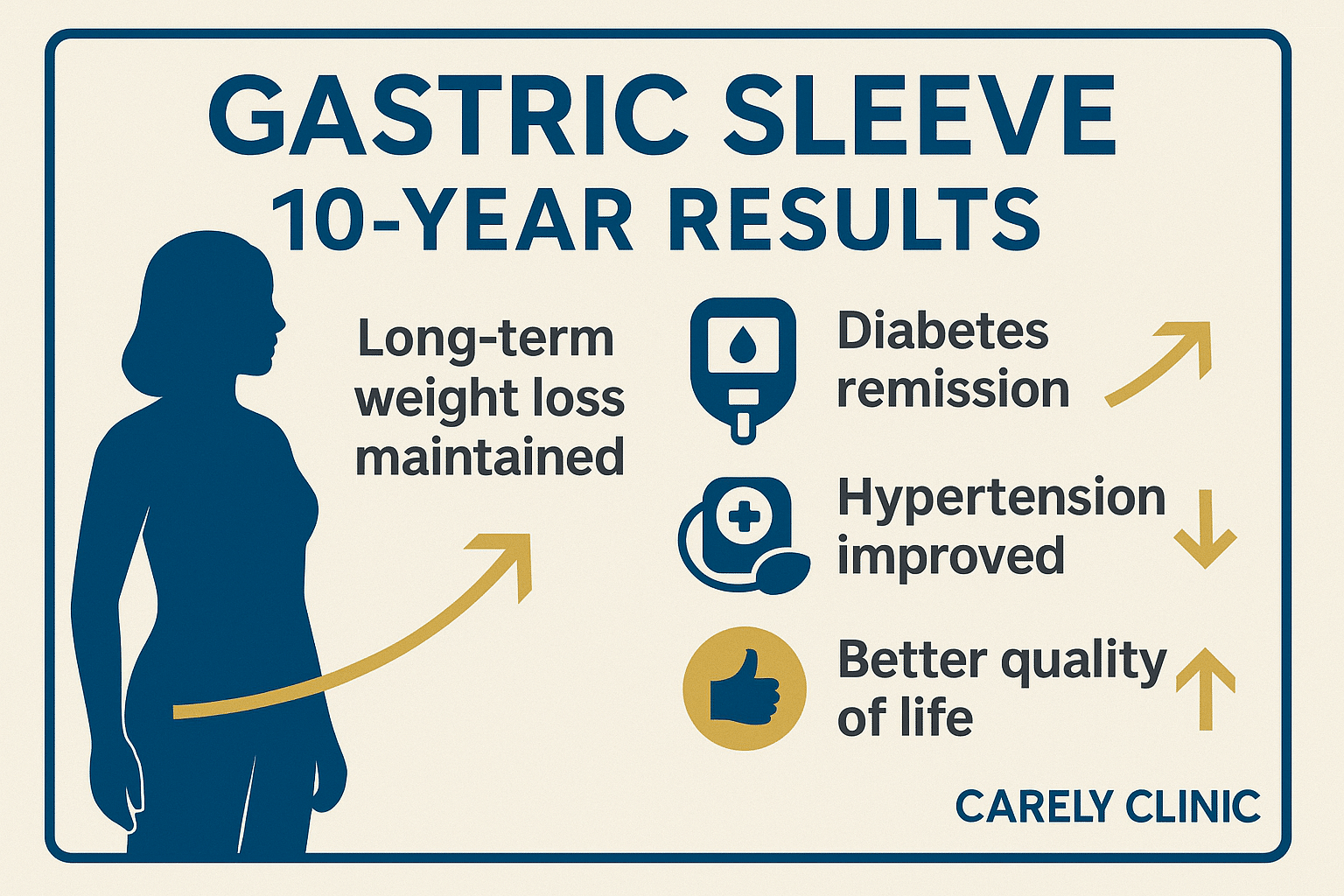
Gastric sleeve 10 year results show that patients maintain an average of 50–60% excess weight loss, with weighted mean total weight loss of 24.4% according to a 2023 systematic review of 1,020 patients published in Obesity Surgery.
Long-term studies show type 2 diabetes remission rates of 45.6% and hypertension remission of 41.4% at the 10-year mark, with approximately 19% of patients requiring revisional surgery within a decade.
This guide covers realistic weight loss expectations, comorbidity resolution rates, potential complications, and strategies for maintaining results long-term.
Why Trust This Guide
This article draws from peer-reviewed studies published in Obesity Surgery, Surgery for Obesity and Related Diseases, and JAMA Surgery, including landmark trials like SLEEVEPASS and systematic reviews analyzing over 1,000 patients with 10+ year follow-up.
Carely Clinic’s editorial team works with board-certified bariatric surgeons to ensure all content reflects current clinical evidence and international guidelines from ASMBS and IFSO.
What Does a Gastric Sleeve Look Like After 10 Years?
Ten years after surgery, the gastric sleeve typically expands from its initial 100-150ml capacity to approximately 200-250ml, though it remains significantly smaller than the original stomach’s 1-liter capacity.
This natural stretching occurs gradually as the stomach tissue adapts over time. Research from Columbia Surgery indicates stomach volume can double within two years post-surgery, though this doesn’t necessarily predict weight regain in patients who maintain healthy eating habits.
The stomach’s sleeve shape generally remains intact, continuing to restrict food intake and produce lower levels of ghrelin (the hunger hormone). However, patients often report feeling less restriction compared to the first few years, making adherence to dietary guidelines increasingly important for sustained success.
Long-Term Weight Loss Results
The weighted mean total weight loss at 10+ years is 24.4%, ranging from 17% to 36.9% across studies, according to a 2023 systematic review in Obesity Surgery analyzing 11 studies with 1,020 patients.
Individual study outcomes vary significantly based on patient selection and follow-up rates:
Key findings from major studies:
A Tel Aviv Sourasky Medical Center study of 80 patients found mean excess weight loss of 42.65% at 10 years, with 35% of patients maintaining at least 50% EWL. Mean BMI decreased from 43.86 kg/m² preoperatively to 36.34 kg/m² at final follow-up.
A monocentric cohort study published in Surgical Endoscopy reported a 41% success rate (defined as %EWL >50% without need for conversion), with optimal weight loss reached at 12 months followed by progressive regain. Success rates were notably higher (83%) in patients achieving >75% EWL at one year.
Factors associated with better 10-year outcomes include lower preoperative BMI (41 ± 2 vs 45 ± 4 kg/m²), absence of preoperative GERD symptoms, and strong first-year weight loss response.
Comorbidity Resolution at 10 Years
Type 2 diabetes remission rates at 10 years average 45.6%, while hypertension remission averages 41.4% according to systematic review data, representing substantial long-term metabolic benefits despite some decline from peak remission rates.
Diabetes outcomes:
The SLEEVEPASS trial reported 26% diabetes remission after sleeve gastrectomy at 10 years, with no statistically significant difference compared to gastric bypass (33%). Long-term glycemic control (HbA1c <7%) was achieved in 63% of patients in one Cleveland Clinic study, though complete remission and sustained “cure” occurred less frequently.
According to a study in Annals of Surgery, while complete diabetes remission at 5-9 years occurred in only 11% of patients, 63% maintained glycemic control without medications or with reduced medication needs. Patients on two or more diabetes medications preoperatively showed lower remission rates.
Hypertension outcomes:
The SLEEVEPASS trial found significantly lower hypertension remission after sleeve gastrectomy (8%) compared to gastric bypass (24%) at 10 years. However, many patients experienced meaningful blood pressure improvements requiring fewer medications even without complete remission.
Sleep apnea and other conditions:
Studies report sustained improvements in obstructive sleep apnea, with 16% of sleeve gastrectomy patients discontinuing CPAP use by 10 years. Improvements in joint pain, mobility, and cardiovascular risk factors persist long-term for most patients who maintain weight loss.
Weight Regain: Rates and Risk Factors
Between 25-35% of patients experience clinically significant weight regain within 10 years, with one systematic review finding regain prevalence ranging from 5.7% at 2 years to 75.6% at 6 years depending on how regain is defined.
According to UCLA Health, patients regain an average of 30% of their lost weight after 10 years, with approximately one-quarter regaining all lost weight by the decade mark. However, it’s important to note that even with some regain, most patients remain significantly lighter than their pre-surgery weight.
Risk factors for weight regain:
Potential causes identified by research include gradual stomach stretching, increased portion sizes over time, return to high-calorie foods, emotional eating patterns, reduced physical activity, and hormonal adaptations. A study in Nutrients found that patients who gained weight in the second year post-surgery had significantly worse long-term outcomes.
Behavioral factors play a crucial role—patients with depression, night eating, emotional eating, and reduced dietary knowledge showed higher regain rates. The Cleveland Clinic emphasizes that obesity is a chronic, relapsing disease requiring lifelong follow-up even after successful surgery.
Protective factors:
Patients maintaining regular follow-up with bariatric programs, adhering to protein-first eating strategies, engaging in consistent physical activity, and addressing psychological factors show better long-term weight maintenance.
Acid Reflux and Barrett’s Esophagus Concerns
De novo gastroesophageal reflux disease (GERD) develops in approximately 32.3% of patients after gastric sleeve, with the risk of esophagitis increasing by 13% for each year post-surgery according to meta-analysis data.
GERD prevalence:
A 2023 prospective cohort study found reflux symptoms in 51.9% of sleeve gastrectomy patients at 5+ years, compared to only 10.5% after gastric bypass. Moderate-to-severe esophagitis occurred in 27.7% of sleeve patients versus 5.8% of bypass patients, despite greater proton pump inhibitor use (49.4% vs 19.7%).
The monocentric 10-year study reported GERD requiring medical treatment in 65% of patients, with de novo GERD incidence of 41% and persisting GERD in 80% of those with preoperative symptoms.
Barrett’s esophagus risk:
A 2024 systematic review in Clinical Gastroenterology and Hepatology found de novo Barrett’s esophagus incidence of 5.6% after sleeve gastrectomy, increasing significantly in patients with greater than 10 years follow-up. One 10-year study reported 15% Barrett’s esophagus incidence.
The SLEEVEPASS trial, however, found cumulative Barrett’s esophagus incidence of only 4%—similar between sleeve and bypass—which was markedly lower than the 14-17% reported in some earlier studies.
Clinical implications:
Given these findings, endoscopic surveillance may be warranted for sleeve gastrectomy patients, particularly those with persistent GERD symptoms. Patients with significant preoperative GERD may be better candidates for gastric bypass, which typically resolves rather than worsens reflux.
Revision Surgery Rates
Approximately 12.2% of patients require revisional surgery within 10 years of sleeve gastrectomy according to a nationwide French study of over 224,000 patients, with rates of 4.7% at 5 years and 7.5% at 7 years.
Reasons for revision:
The nationwide study found persistence of obesity as the primary indication (87%) followed by GERD (5.2%). Conversion to gastric bypass was the most common revision procedure (75.2%), followed by re-sleeve gastrectomy (18.7%).
According to the 2023 systematic review, revisional surgery was required for 19.2% of patients within 10 years, with Roux-en-Y gastric bypass being the most common secondary procedure (67.2% of revisions), followed by duodenal switch (19.7%) and one-anastomosis gastric bypass (6.6%).
Risk factors for revision:
Patients with history of gastric banding showed 2.8 times higher revision risk. Other factors associated with increased revision rates included higher preoperative BMI (superobesity), type 2 diabetes, younger age, and female sex.
Revision outcomes:
When conversion to bypass is performed, patients can expect additional weight loss of 30-70% of excess weight if the indication is weight regain. Endoscopic sleeve revision (non-surgical) is emerging as an option, with studies showing approximately 15% weight loss for appropriate candidates.
Gastric Sleeve vs. Gastric Bypass at 10 Years
The SLEEVEPASS randomized trial found gastric bypass achieved 8.4 percentage points higher excess weight loss than sleeve gastrectomy at 10 years (51.9% vs 43.5%), though both procedures provided durable weight loss and metabolic benefits.
Weight loss comparison:
The landmark SLEEVEPASS trial—one of the largest randomized controlled trials with 10-year follow-up comparing 240 patients—found that RYGB achieved statistically superior weight loss at 10 years for the first time. Earlier 5-year results had shown no significant difference between procedures.
The SleeveBypass trial reported comparable excess BMI loss between procedures, though percentage total weight loss was 3.3% lower after sleeve gastrectomy. Both procedures exceeded the 20% total weight loss threshold considered a good surgical outcome.
Comorbidity resolution:
There was no significant difference in type 2 diabetes remission (26% sleeve vs 33% bypass), dyslipidemia remission, or obstructive sleep apnea improvement. However, hypertension remission was significantly higher after bypass (24% vs 8%).
Complications profile:
Sleeve gastrectomy showed significantly more esophagitis and GERD symptoms, while gastric bypass was associated with more minor complications such as abdominal pain. A 2024 meta-analysis found sleeve gastrectomy associated with lower all-cause mortality during follow-up compared to bypass.
Choosing between procedures:
The SLEEVEPASS investigators concluded both are “good procedures providing good and sustainable 10-year results.” Gastric bypass may be preferred for patients with preoperative GERD, while sleeve gastrectomy offers simpler anatomy and potentially lower mortality risk.
Quality of Life After a Decade
Quality of life improvements persist at 10 years regardless of whether patients maintain 50% excess weight loss, according to a multicenter Austrian study using validated assessment tools, with reflux symptoms being the primary factor affecting long-term satisfaction.
Physical functioning:
Most patients report sustained improvements in mobility, reduced joint pain, increased energy levels, and enhanced ability to perform daily activities. Studies report that even patients who experience some weight regain maintain quality of life improvements compared to pre-surgery.
Psychological benefits:
Long-term emotional benefits include improved self-esteem, reduced social stigma, greater comfort in social settings, and decreased depression rates. The SLEEVEPASS trial found total quality of life was significantly better at 10 years compared to baseline for both surgical groups.
Food tolerance:
Research indicates 95.2% of patients report acceptable to excellent food tolerance at long-term follow-up. Most patients gradually expand their dietary variety while maintaining portion control, though tolerance for certain foods (red meat, bread) may remain limited.
Factors affecting quality of life:
The Austrian study found no significant difference in quality of life between patients with greater or less than 50% excess weight loss, but significant differences existed between those with and without reflux symptoms—highlighting the importance of addressing GERD proactively.
How to Maintain Your Results Long-Term
Patients who maintain regular follow-up with bariatric programs, prioritize protein intake, and engage in consistent physical activity show significantly better 10-year outcomes than those who disengage from care.
Dietary strategies:
Prioritize protein at every meal (60-80g daily minimum), eat slowly and mindfully, avoid grazing between meals, and limit high-calorie processed foods. Research from Cleveland Clinic emphasizes that successful long-term patients treat their dietary changes as a permanent lifestyle rather than a temporary diet.
Physical activity:
Aim for 150-300 minutes of moderate activity weekly. Regular exercise helps maintain muscle mass, supports metabolic health, and counteracts natural weight regain tendency. Even daily walking provides significant benefits.
Medical follow-up:
Annual check-ups including nutritional bloodwork help identify vitamin deficiencies (B12, iron, vitamin D) before they cause symptoms. Continued monitoring of GERD symptoms is particularly important given the risk of Barrett’s esophagus.
Psychological support:
Address emotional eating patterns through counseling or support groups. Many patients benefit from ongoing behavioral support, particularly during life transitions or stressful periods when old habits may resurface.
Medication options:
For patients experiencing significant regain, GLP-1 agonists (semaglutide, liraglutide) show promise as adjunctive therapy, though specific studies in post-bariatric populations are still emerging. Consultation with a bariatric specialist is recommended before starting any weight loss medication.
How This Applies in Turkey
International guidelines from ASMBS and IFSO apply at Turkey’s JCI-accredited medical facilities, with Turkish bariatric surgeons following identical clinical protocols and safety standards as American and European institutions.
The key differences are cost and accessibility. Gastric sleeve surgery in Turkey costs €3,500-€5,500 compared to $15,000-$25,000 in the USA and £10,000-£15,000 in the UK. All-inclusive packages typically cover hospital stay, surgeon fees, accommodation, VIP transfers, pre-operative tests, and post-operative medications.
At Carely Clinic in Istanbul, gastric sleeve procedures are performed by board-certified bariatric surgeons at JCI-accredited partner hospitals. Comprehensive packages include lifetime follow-up support via telehealth consultations, helping international patients maintain their results long-term even after returning home.
Learn more about Gastric Sleeve Surgery at Carely Clinic.
10-Year Gastric Sleeve Outcomes: Summary Table
| Outcome Measure | 10-Year Result | Key Notes |
|---|---|---|
| Average Total Weight Loss | 24.4% (range 17-37%) | Weighted mean from 11 studies, 1,020 patients |
| Patients Maintaining ≥50% EWL | 35-41% | Higher with lower baseline BMI and strong first-year response |
| Type 2 Diabetes Remission | 26-46% | Lower remission if on 2+ medications pre-surgery |
| Hypertension Remission | 8-41% | Higher rates with gastric bypass |
| De Novo GERD | 32-41% | Risk increases ~13% per year post-surgery |
| Barrett’s Esophagus | 4-15% | Endoscopic surveillance may be warranted |
| Revision Surgery Rate | 12-19% | Bypass conversion most common (75%) |
| Weight Regain (any) | 25-35% | Most maintain significant net loss vs. pre-surgery |
What to Expect: Timeline
Years 1-2 (Maximum Weight Loss Phase)
Peak weight loss typically occurs at 12-18 months post-surgery, with patients reaching their lowest weight (nadir). Most experience 60-70% excess weight loss during this period. Regular follow-up and strict dietary adherence are critical.
Years 3-5 (Stabilization Phase)
Mild weight regain of 5-10 kg is normal and expected during this period. Patients develop more dietary flexibility while maintaining portion control. Focus shifts from rapid weight loss to sustainable lifestyle habits.
Years 5-10 (Long-Term Maintenance)
Weight generally stabilizes, though continued vigilance is needed. GERD symptoms may emerge or worsen. This is when the importance of lifelong follow-up becomes apparent—patients who maintain care connections show better outcomes.
Beyond 10 Years
Limited data exists beyond a decade, but available evidence suggests continued metabolic benefits for patients who maintain lifestyle modifications. Some may require revision surgery for GERD or weight regain.
Expert Insight
“Our 10-year data shows that patients with lower preoperative BMI and without preoperative GERD symptoms achieve better long-term success. First-year weight loss strongly predicts decade-long outcomes—patients achieving >75% excess weight loss at one year had 83% success rates versus 17% for those with lower initial response.”
— Hauters et al., Surgical Endoscopy (2021)
Expert Insight
“The SLEEVEPASS trial demonstrates both sleeve gastrectomy and gastric bypass provide good and sustainable 10-year results for severe obesity. While bypass showed statistically superior weight loss at 10 years, there was no difference in diabetes remission, making procedure selection dependent on individual patient factors.”
— Salminen et al., JAMA Surgery (2022)
Frequently Asked Questions
What is the success rate of gastric sleeve after 10 years?
35-41% of patients maintain ≥50% excess weight loss without revision surgery at 10 years. However, approximately 80% maintain meaningful weight loss (>20% total weight loss) with continued health improvements. Success rates are highest in patients who achieved >75% excess weight loss in the first year and had lower baseline BMI.
How much weight will I keep off 10 years after gastric sleeve?
Most patients maintain 24.4% total weight loss at 10 years, meaning a 300-pound patient typically weighs around 227 pounds a decade later. Individual results vary from 17-37% total weight loss based on adherence, BMI, and metabolic factors. Studies show 42.65% average excess weight loss persists at the 10-year mark.
Is weight regain after gastric sleeve inevitable?
No, weight regain is not inevitable, though 25-35% of patients experience significant regain within 10 years. Patients maintaining regular follow-up, protein-first eating, and consistent exercise show substantially better outcomes. The stomach naturally stretches over time, but lifestyle habits determine whether this leads to weight regain.
Does gastric sleeve cause acid reflux long-term?
Yes, new-onset GERD develops in approximately 32% of patients after gastric sleeve surgery. Esophagitis risk increases 13% per year post-surgery, with 52% reporting reflux symptoms at 5+ years. Patients with preoperative GERD should strongly consider gastric bypass instead, as sleeve worsens rather than resolves reflux.
What is Barrett’s esophagus risk after gastric sleeve?
Barrett’s esophagus develops in 5.6% of gastric sleeve patients, with rates ranging from 4-15% across studies. The risk increases significantly after 10 years of follow-up, even without GERD symptoms. Endoscopic surveillance should be considered for long-term sleeve patients, particularly those with persistent reflux.
How often do gastric sleeve patients need revision surgery?
12.2% of patients require revisional surgery within 10 years, with rates of 4.7% at 5 years and 7.5% at 7 years. Weight regain accounts for 87% of revisions, while severe GERD causes 5%. Conversion to gastric bypass is the most common revision (75%), followed by re-sleeve (19%).
Is gastric sleeve or bypass better long-term?
Gastric bypass achieves 8.4% higher excess weight loss at 10 years (51.9% vs 43.5%) according to the SLEEVEPASS trial. Bypass also provides better hypertension remission (24% vs 8%), but sleeve shows lower all-cause mortality and fewer minor complications. Type 2 diabetes remission is similar between procedures (26% vs 33%).
Can I still lose weight 10 years after gastric sleeve?
Yes, additional weight loss is possible through dietary recommitment, increased physical activity, GLP-1 medications like semaglutide, endoscopic sleeve revision, or conversion to gastric bypass. The restrictive tool remains functional after 10 years when combined with renewed lifestyle changes. Many patients successfully reverse weight regain.
What vitamins do I need 10 years after surgery?
You need lifelong daily multivitamin, vitamin B12 (sublingual or injection), vitamin D with calcium, and iron if menstruating. Annual bloodwork is essential to detect deficiencies in B12, iron, vitamin D, calcium, and folate before symptoms develop. Requirements don’t decrease over time despite stable weight.
Do the hunger hormones stay reduced after 10 years?
Ghrelin levels remain lower than pre-surgery at 10 years, though some hormonal adaptation occurs. Most patients report reduced hunger compared to before surgery, but appetite typically increases somewhat compared to years 1-2. The hormonal benefits persist long-term but are less dramatic than immediately post-surgery.
How does gastric sleeve compare to gastric bypass after 10 years?
Gastric bypass provides 8.4 percentage points higher excess weight loss and better hypertension control at 10 years. However, sleeve shows similar diabetes remission (26% vs 33%), lower mortality risk, and fewer complications. Sleeve causes more GERD while bypass resolves it, making reflux history a critical decision factor.
What percentage of gastric sleeve patients maintain their weight loss?
35% of patients maintain ≥50% excess weight loss at 10 years without revision. Overall, patients maintain an average 24.4% total weight loss, though individual results range from 17-37%. Factors predicting success include lower baseline BMI, strong first-year loss, regular follow-up, and sustained lifestyle adherence.
Conclusion
Gastric sleeve surgery delivers meaningful long-term results for most patients, with average total weight loss of 24.4% and substantial metabolic improvements persisting at the 10-year mark. While some weight regain is common, the majority of patients maintain significant health benefits compared to their pre-surgery condition.
Key factors for 10-year success include achieving strong weight loss in the first year, maintaining regular follow-up with bariatric specialists, addressing GERD proactively, and committing to permanent lifestyle modifications. Patients should understand that approximately 12-19% may require revisional surgery, most commonly conversion to gastric bypass for weight regain or severe reflux.
The decision to undergo bariatric surgery remains highly personal. Understanding realistic long-term expectations—including both benefits and limitations—empowers patients to make informed decisions and set appropriate goals for their weight loss journey.
Individual requirements and outcomes vary. This guide provides general information based on international research and guidelines. Consult qualified medical professionals for personalized advice.
Considering gastric sleeve surgery? Schedule a free consultation with Carely Clinic to discuss your options with our experienced bariatric surgery team.
Medical Review: Doç. Dr. Gökmen Öztürk