
Quick Summary:
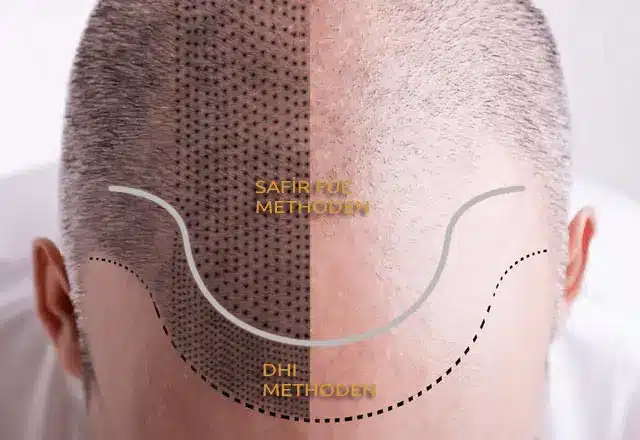
The main difference between FUE and DHI is the implantation method: FUE creates recipient channels first then places grafts with forceps, while DHI uses a Choi implanter pen for simultaneous incision and graft placement in one step.
According to clinical studies published in BMC Surgery (2024), both techniques achieve 90-95% graft survival rates when performed by experienced surgeons at accredited facilities.
This guide compares technique, recovery, cost, candidacy, and results to help you determine which hair transplant method suits your specific needs.
Why Trust This Guide
This comparison draws on peer-reviewed research from the International Society of Hair Restoration Surgery (ISHRS), clinical studies published in medical journals including BMC Surgery and the Journal of Cutaneous and Aesthetic Surgery, and current data from leading hair restoration centers worldwide.
Carely Clinic’s medical team reviews all content for accuracy, ensuring our recommendations reflect current best practices and evidence-based standards in hair restoration surgery.
Quick Comparison Table : FUE vs DHI Hair Transplant
| Factor | FUE (Follicular Unit Extraction) | DHI (Direct Hair Implantation) |
|---|---|---|
| Extraction Method | Micro-punch tool (0.7-1.0mm) | Micro-punch tool (0.7-1.0mm) |
| Implantation Method | Channels created first, then grafts placed with forceps | Choi implanter pen creates incision and places graft simultaneously |
| Procedure Steps | 3 steps (extraction, channel creation, implantation) | 2 steps (extraction, direct implantation) |
| Graft Survival Rate | 85-95% | 90-97% |
| Grafts Per Session | 3,000-4,500+ | 1,500-2,500 |
| Procedure Duration | 4-8 hours | 6-8 hours |
| Shaving Required | Usually full donor area | Partial or no-shave options available |
| Scarring | Tiny dot-like scars | Minimal dot-like scars |
| Best For | Larger coverage areas, extensive baldness | Hairline refinement, smaller areas, high density |
| Cost (Turkey) | €1,800-€4,500 | €2,500-€6,000 |
| Recovery to Normal Activities | 7-10 days | 5-7 days |
What Is FUE Hair Transplant?
FUE (Follicular Unit Extraction) involves extracting individual hair follicles from the donor area using a micro-punch tool, then creating recipient channels and implanting grafts separately—a three-step process offering versatility for covering large balding areas.
FUE has become the global standard in hair restoration surgery, accounting for approximately 60% of all hair transplant procedures performed worldwide according to ISHRS data. The technique emerged as an evolution from the older FUT (strip) method, eliminating the linear scar that resulted from scalp strip removal.
During an FUE procedure, the surgeon uses a hollow micro-punch instrument, typically 0.7-1.0mm in diameter, to extract individual follicular units from the donor area. These units contain 1-4 hairs each. After extraction, the follicles are stored in a specialized solution to maintain viability while the surgeon creates tiny incisions (channels) in the recipient area using sapphire blades or steel micro-blades. Finally, the harvested grafts are carefully placed into these pre-made channels using forceps.
The separation of channel creation and graft placement gives surgeons full visual control over incision depth, angle, and direction. This flexibility proves particularly advantageous when covering larger areas or when working on complex cases requiring varied angulation across different scalp regions.
Expert Insight
“The FUE technique allows surgeons to transplant up to 4,500 grafts in a single mega-session, making it the preferred choice for patients with extensive hair loss requiring comprehensive coverage.”
— Based on BMC Surgery Clinical Study, 2024
What Is DHI Hair Transplant?
DHI (Direct Hair Implantation) is a modified FUE technique that uses a Choi implanter pen to simultaneously create recipient incisions and place hair follicles, reducing the number of procedural steps and minimizing time grafts spend outside the body.
The DHI technique originated at Kyungpook National University in South Korea in 1992, initially developed to address hair loss in Asian patients with thicker, straighter hair. The defining feature of DHI is the Choi implanter pen—a pen-shaped surgical instrument with a hollow needle (0.5-1.5mm diameter) that loads individual grafts and directly implants them into the scalp without requiring pre-made incisions.
The extraction phase remains identical to FUE: individual follicular units are harvested from the donor area using micro-punch tools. However, instead of storing grafts while channels are created, DHI surgeons load each extracted follicle into the Choi pen immediately. The pen simultaneously creates the recipient site and places the graft at a precise angle (typically 40-45 degrees) in one motion.
This streamlined approach offers several mechanical advantages. Grafts spend less time outside the body (reduced ischemia time), potentially improving survival rates. The Choi pen also provides enhanced control over implantation depth, angle, and direction—particularly valuable when creating natural-looking hairlines or working on detailed areas like temples, eyebrows, or beards.
However, the technique demands higher levels of surgical skill and coordination. Clinics typically employ 4-6 Choi pens simultaneously, with surgical assistants continuously loading grafts while the surgeon implants them. This requirement for a highly trained team contributes to DHI’s higher cost.
Key Differences Between FUE and DHI
The fundamental difference between FUE and DHI lies in implantation methodology: FUE separates channel creation from graft placement allowing flexibility for large sessions, while DHI combines both steps using specialized tools optimized for precision in targeted areas.
Implantation Technique
The most significant technical distinction concerns how grafts reach their final position. In FUE, surgeons first create all recipient sites using blades or needles, carefully planning density and direction. Grafts are then placed into these pre-made channels using fine forceps. This separation allows different team members to handle different stages, potentially speeding up large procedures.
DHI eliminates the channel-creation step entirely. The Choi implanter pen punctures the scalp and deposits the follicle in a single motion. Proponents argue this reduces graft handling and manipulation, potentially decreasing mechanical trauma. Critics note that the technique can limit visibility during implantation and requires exceptionally steady hands.
Graft Capacity Per Session
FUE consistently allows higher graft counts per session. Experienced clinics regularly perform 3,000-4,500 graft FUE procedures, with some mega-sessions reaching 5,000+ grafts. DHI sessions typically max out at 1,500-2,500 grafts due to the more time-intensive nature of pen-based implantation.
Patients with advanced hair loss (Norwood 5-7) who need extensive coverage often require FUE or multiple DHI sessions to achieve adequate density. For localized thinning or hairline refinement, DHI’s lower capacity presents no limitation.
Time Requirements
Average FUE procedures take 4-8 hours depending on graft count. DHI procedures for similar graft numbers tend to run 30-50% longer—typically 6-8 hours—because each graft requires individual loading and precise pen placement. A 2018 comparative study found DHI operations averaged 437 minutes compared to 373 minutes for FUE with equivalent graft counts.
Shaving Requirements
FUE traditionally requires shaving the entire donor area for optimal extraction visibility. Some clinics offer partial-shave FUE, but complete shaving remains standard. DHI more readily accommodates no-shave or partial-shave approaches, particularly beneficial for patients wanting discrete procedures or those with longer hair who prefer not to drastically alter their appearance during recovery.
Graft Survival and Success Rates
Both FUE and DHI achieve graft survival rates between 90-95% when performed by qualified surgeons, with DHI showing slightly higher rates (90-97%) in some studies due to reduced time grafts spend outside the body during implantation.
Graft survival—the percentage of transplanted follicles that successfully establish blood supply and produce hair—represents the most critical success metric for any hair transplant. Multiple factors influence survival beyond technique alone.
Published Survival Data
A 2024 BMC Surgery study involving 158 FUE patients demonstrated over 90% follicle survival at 12 months, with more than 85% of patients achieving 95%+ survival rates. Patient satisfaction reached 98%, with complication rates under 6%.
Research published in the Journal of Cutaneous and Aesthetic Surgery examining direct hair transplantation methods found survival rates comparable to or exceeding traditional approaches when proper protocols were followed. The study emphasized that minimizing out-of-body time (ischemia time) significantly improves outcomes regardless of technique.
Factors Affecting Survival
Several variables impact graft survival more significantly than technique selection: surgeon skill and experience remain paramount—the same technique produces vastly different results between novice and expert surgeons. Graft hydration throughout the procedure, maintained through specialized holding solutions, prevents desiccation and cell death.
Temperature control matters: grafts must remain cool without freezing. Mechanical handling—how gently grafts are extracted, stored, and placed—directly impacts follicle integrity. Finally, patient health factors including smoking status, scalp blood supply, and adherence to post-operative care influence survival rates substantially.
Comparative Assessment
No large-scale randomized controlled trials definitively establish one technique’s superiority. According to a Healthline analysis, there is currently no conclusive evidence demonstrating DHI’s superiority over FUE in terms of overall outcomes. The consensus among hair restoration surgeons suggests that surgeon expertise matters more than technique selection—a skilled FUE surgeon typically outperforms an inexperienced DHI surgeon, and vice versa.
Recovery Timeline Comparison
Both FUE and DHI follow similar recovery trajectories with initial healing at 7-10 days, intermediate recovery at 2-4 weeks, and full results visible at 12-18 months, though DHI may offer slightly faster initial healing due to smaller implantation trauma.
First 72 Hours
Both techniques produce comparable immediate effects: mild swelling around the forehead and temples, slight discomfort manageable with over-the-counter pain medication, and visible redness at implantation sites. DHI patients sometimes report marginally less discomfort due to the absence of pre-made incisions. Local anesthesia effects wear off within hours of the procedure.
Week One
Scabbing peaks around days 3-5 in both procedures. FUE scabs may appear slightly more pronounced due to the separate channel-creation step. Most patients experience itching as healing progresses—a normal indicator of tissue repair. Swelling typically resolves by day 4-5 with proper head elevation and ice application.
The donor area shows tiny dot-like marks where follicles were extracted—identical between FUE and DHI since both use the same extraction method. These marks heal within 7-10 days, becoming virtually invisible once surrounding hair regrows.
Days 7-14
By day 10, most scabs fall off during gentle washing. Redness begins fading, and patients can typically return to non-strenuous work. DHI patients often report slightly faster resolution of recipient area redness, potentially because the Choi pen creates smaller implantation wounds compared to pre-made channels plus forceps insertion.
Months 1-3
Transplanted hair enters the telogen (resting) phase and sheds—commonly called “shock loss.” This temporary shedding affects 100% of transplanted hairs and represents a normal part of the growth cycle, not treatment failure. Native hair around the transplant area may also experience temporary shedding but typically recovers within months.
Months 3-6
New hair growth emerges from transplanted follicles, initially appearing fine and wispy. By month 6, approximately 50-60% of transplanted hair should be growing. Texture and thickness continue improving through this period.
Months 6-12
The majority of transplanted hair (70-80%) reaches visible length and thickness. Density continues increasing as follicles mature. Most patients see dramatic improvement during this phase.
Month 12+
Full results become apparent 12-18 months post-procedure. Hair continues improving in texture and coverage through month 18 for some patients. The transplanted hair is permanent and will continue growing normally for life.
| Timeline | FUE Recovery | DHI Recovery |
|---|---|---|
| Days 1-3 | Swelling, mild discomfort, visible redness | Swelling, mild discomfort, visible redness |
| Days 4-7 | Scabbing peaks, itching begins | Scabbing peaks, faster redness resolution |
| Days 7-14 | Scabs fall off, return to work possible | Scabs fall off, return to work possible |
| Weeks 2-8 | Shock loss begins (temporary shedding) | Shock loss begins (temporary shedding) |
| Months 3-6 | New growth emerges, 30-50% visible | New growth emerges, 30-50% visible |
| Months 6-12 | Significant improvement, 70-80% growth | Significant improvement, 70-80% growth |
| Month 12+ | Final results visible | Final results visible |
Cost Comparison by Country
Hair transplants in Turkey cost €1,800-€4,500 for FUE and €2,500-€6,000 for DHI, representing 60-75% savings compared to USA prices of $12,000-$25,000 and UK prices of £5,000-£15,000 for equivalent procedures.
Pricing by Region
Cost differences between countries primarily reflect labor costs, clinic overhead, and market positioning rather than quality differences. Turkey’s combination of lower operating expenses, high procedure volume, and medical tourism infrastructure enables premium-quality procedures at accessible prices.
| Country | FUE Price Range | DHI Price Range | Cost Per Graft |
|---|---|---|---|
| Turkey | €1,800-€4,500 | €2,500-€6,000 | $0.70-$1.50 |
| United Kingdom | £5,000-£12,000 | £8,000-£16,000 | $4-$6 |
| United States | $12,000-$20,000 | $15,000-$25,000 | $6-$10 |
| Germany | €4,000-€12,000 | €6,000-€15,000 | $4-$7 |
| Canada | $10,000-$17,500 | $12,000-$20,000 | $5-$8 |
Why DHI Costs More
DHI procedures typically cost 30-50% more than equivalent FUE procedures for several reasons: the Choi implanter pens represent specialized equipment requiring regular replacement. DHI demands larger surgical teams (typically 6+ staff members compared to 3-4 for FUE) because multiple pens must operate simultaneously. The technique requires additional training, and longer procedure times increase labor costs.
What’s Included in Turkey Packages
Turkish clinic packages typically include the surgical procedure with unlimited grafts (within medical limits), 3-4 star hotel accommodation, airport transfers, translation services, medications, PRP therapy, and 12-month follow-up support. This all-inclusive approach eliminates hidden costs common in Western pricing models where each component bills separately.
Who Should Choose FUE?
FUE is optimal for patients with Norwood 4-7 baldness requiring 3,000+ grafts, those comfortable with donor area shaving, patients seeking efficient coverage of large areas, and anyone prioritizing cost-effectiveness over no-shave convenience.
Ideal FUE Candidates
Extensive hair loss patients benefit most from FUE’s high-volume capacity. If you’re covering a receding hairline plus crown thinning, or addressing significant overall density loss, FUE allows comprehensive restoration in a single mega-session. Patients requiring 3,000-5,000 grafts find FUE more practical than multiple DHI sessions.
Those who don’t mind temporary full-head shaving—or who prefer keeping hair very short anyway—face no disadvantage from FUE’s shaving requirements. The technique’s lower cost per graft also makes it attractive for patients managing budgets without compromising quality.
FUE works well across all hair types including coarse, curly, or tightly coiled hair textures. The separate channel-creation step allows surgeons to adjust technique for varying hair characteristics more easily than DHI’s pen-based approach.
Patients comfortable with the standard recovery timeline who don’t require immediate return to professional settings benefit from FUE’s efficient approach to coverage.
Expert Insight
“FUE’s ability to handle 4,000+ grafts in a single session makes it the practical choice for advanced baldness cases where comprehensive coverage takes priority over refinement details.”
— Clinical Hair Restoration Guidelines, ISHRS
Who Should Choose DHI?
DHI excels for patients needing hairline refinement, those requiring fewer than 2,500 grafts, individuals preferring no-shave options, patients with straight to slightly wavy hair, and those prioritizing maximum density in targeted zones.
Ideal DHI Candidates
Early-stage hair loss patients (Norwood 2-3) seeking hairline restoration without extensive coverage represent optimal DHI candidates. The Choi pen’s precision enables natural-looking hairline design with control over individual follicle angle and direction—critical for the frontal aesthetic where unnatural angles immediately appear artificial.
Patients wanting discreet procedures without obvious shaving benefit from DHI’s partial or no-shave compatibility. Professionals unable to take extended time away from work or public-facing roles appreciate this advantage.
Those seeking density enhancement in specific zones—adding thickness to existing thin areas rather than covering completely bald patches—find DHI’s controlled placement ideal. The technique excels for beard, eyebrow, and sideburn transplants where precision matters more than volume.
Patients with straight or slightly wavy hair achieve optimal results with DHI. The Choi pen was originally designed for Asian hair characteristics, and while technological improvements have expanded its applicability, straight hair still loads and implants most smoothly.
Individuals prioritizing potentially faster initial healing and minimal visible scarring may prefer DHI’s smaller implantation wounds, though both techniques produce excellent cosmetic outcomes with proper aftercare.
How This Applies in Turkey
International hair transplant guidelines from ISHRS apply identically at Turkey’s JCI-accredited facilities, where surgeons perform both FUE and DHI using the same protocols and safety standards as American and European hospitals—at 60-75% lower cost.
Turkey performs over 1.5 million hair transplant procedures annually, representing approximately 35% of the global market according to 2024 statistics. This volume has created exceptional surgeon expertise through sheer practice: leading Turkish surgeons perform 500-1,000 procedures yearly compared to 50-100 at many Western clinics.
Cost advantages stem from Turkey’s lower labor costs, favorable currency exchange rates, and government support for medical tourism—not from reduced quality or corner-cutting. JCI (Joint Commission International) accreditation ensures facilities meet the same infection control, equipment standards, and safety protocols required at Johns Hopkins or the Mayo Clinic.
At Carely Clinic’s JCI-accredited partner hospitals in Istanbul, both FUE and DHI procedures are performed by board-certified surgeons specializing exclusively in hair restoration. All-inclusive packages cover the procedure, accommodation, transfers, medications, PRP therapy, and follow-up care—eliminating the surprise bills common in per-graft pricing models.
International patients typically complete consultations, procedures, and initial recovery within 4-5 days, returning home after post-operative checks confirm proper healing. Twelve-month virtual follow-up ensures long-term support regardless of patient location.
Learn more about Hair Transplant Procedures at Carely Clinic.
Frequently Asked Questions
Is DHI better than FUE for hair transplant?
Neither technique is universally superior—DHI offers more precision for hairline work and smaller sessions, while FUE handles larger graft volumes more efficiently. According to clinical research, both achieve 90-95% graft survival rates when performed by experienced surgeons. Your hair loss pattern, goals, and preferences determine the optimal choice.
How much does FUE cost compared to DHI?
DHI typically costs 30-50% more than FUE due to specialized equipment, larger surgical teams, and longer procedure times. In Turkey, FUE ranges €1,800-€4,500 while DHI costs €2,500-€6,000. In the USA, expect $12,000-$20,000 for FUE versus $15,000-$25,000 for DHI.
Does DHI have a higher success rate than FUE?
Clinical studies show comparable success rates for both techniques. DHI’s graft survival may reach 90-97% versus FUE’s 85-95% range, attributed to reduced out-of-body time. However, surgeon skill impacts outcomes more significantly than technique selection. Both methods achieve excellent results at accredited facilities.
How many grafts can be transplanted with FUE vs DHI?
FUE allows 3,000-4,500+ grafts per session, sometimes reaching 5,000 in mega-sessions. DHI typically maxes out at 1,500-2,500 grafts because the technique is more time-intensive. Patients needing extensive coverage often prefer FUE or require multiple DHI sessions.
Which technique has faster recovery—FUE or DHI?
Both techniques follow similar recovery timelines, with most patients resuming normal activities within 7-10 days. DHI may offer marginally faster initial healing (5-7 days) because the Choi pen creates smaller implantation wounds. Full results for both techniques appear at 12-18 months.
Can I avoid shaving my head with DHI?
DHI more readily accommodates partial-shave or no-shave approaches compared to FUE, which typically requires full donor area shaving. No-shave DHI suits patients wanting discrete procedures, though it may increase procedure time and cost. Discuss shaving options during your consultation.
Which technique is better for hairline restoration?
DHI generally excels for hairline work due to the Choi pen’s control over implantation angle, depth, and direction—critical factors for natural-looking frontal results. FUE can produce excellent hairlines too, but DHI’s precision makes it the common choice for detailed anterior work.
How long does each procedure take?
FUE procedures typically require 4-8 hours depending on graft count. DHI takes 6-8 hours for comparable graft numbers because each follicle requires individual pen loading and placement. Procedure duration varies based on patient characteristics and graft requirements.
Is FUE or DHI more painful?
Both techniques use local anesthesia and are considered minimally uncomfortable during the procedure itself. Post-operative discomfort is similar and well-managed with over-the-counter medication. DHI patients sometimes report slightly less immediate soreness due to smaller implantation wounds.
Which technique leaves less scarring?
Both FUE and DHI leave tiny dot-like scars in the donor area that become virtually invisible once surrounding hair regrows. Neither technique produces the linear scar associated with older FUT methods. Keeping hair at 1-2 grade length or longer conceals any residual marking completely.
Can I combine FUE and DHI in one procedure?
Yes—hybrid procedures using FUE for larger coverage areas and DHI for hairline refinement have increased approximately 15% according to 2024 clinic data. This combination approach leverages each technique’s strengths, though it may increase total procedure time and cost.
How do I know which technique is right for me?
The optimal technique depends on your hair loss severity, desired outcome, hair type, budget, and shaving preferences. Patients with extensive baldness typically benefit from FUE; those seeking hairline refinement or no-shave options often prefer DHI. A personalized consultation determines the best approach for your specific situation.
Conclusion
FUE and DHI both deliver permanent, natural-looking hair restoration when performed by qualified surgeons at accredited facilities. FUE’s strength lies in efficient coverage of large areas with 3,000-4,500+ grafts per session, making it ideal for advanced baldness. DHI’s precision-focused approach excels for hairline refinement, smaller sessions, and patients requiring no-shave options.
Clinical data from ISHRS and published studies confirm both techniques achieve 90-95% graft survival rates and high patient satisfaction. The “better” technique depends entirely on individual circumstances: hair loss pattern, coverage needs, budget considerations, and personal preferences around recovery visibility.
Turkey offers both procedures at 60-75% savings compared to Western countries without compromising quality—JCI-accredited facilities follow identical protocols to major international hospitals while benefiting from exceptional surgeon experience volumes.
Individual results vary based on patient health, hair characteristics, and adherence to post-operative care. This guide provides general information based on international guidelines and clinical research. Consult qualified medical professionals for personalized recommendations specific to your hair loss situation.
Ready to explore your options? Carely Clinic offers free consultations to assess your candidacy and recommend the optimal approach for your goals. Contact our team to begin your hair restoration journey.