
Quick Summary:
Natural hairline design requires single-hair grafts at the front edge, subtle irregularity mimicking organic growth patterns, and age-appropriate positioning typically 7-8 cm above the eyebrows.
According to ISHRS guidelines and peer-reviewed research, proper hairline design accounts for facial proportions, ethnic characteristics, future hair loss progression, and hair growth angles of 15-20° at the frontal margin. This guide covers every aspect of hairline design including male versus female differences, graft placement techniques, density planning, and what to expect from your transplant results.
Why Trust This Guide
This article draws from International Society of Hair Restoration Surgery (ISHRS) clinical guidelines, peer-reviewed research published in journals including Surgery for Obesity and Related Diseases and the Hair Transplant Forum International, and current surgical standards from board-certified hair restoration specialists.
Carely Clinic maintains partnerships with JCI-accredited facilities in Turkey where experienced surgeons perform hairline design consultations personally. Our content reflects evidence-based practices used at leading hair restoration centers worldwide.
What Is Hairline Design in Hair Transplant?
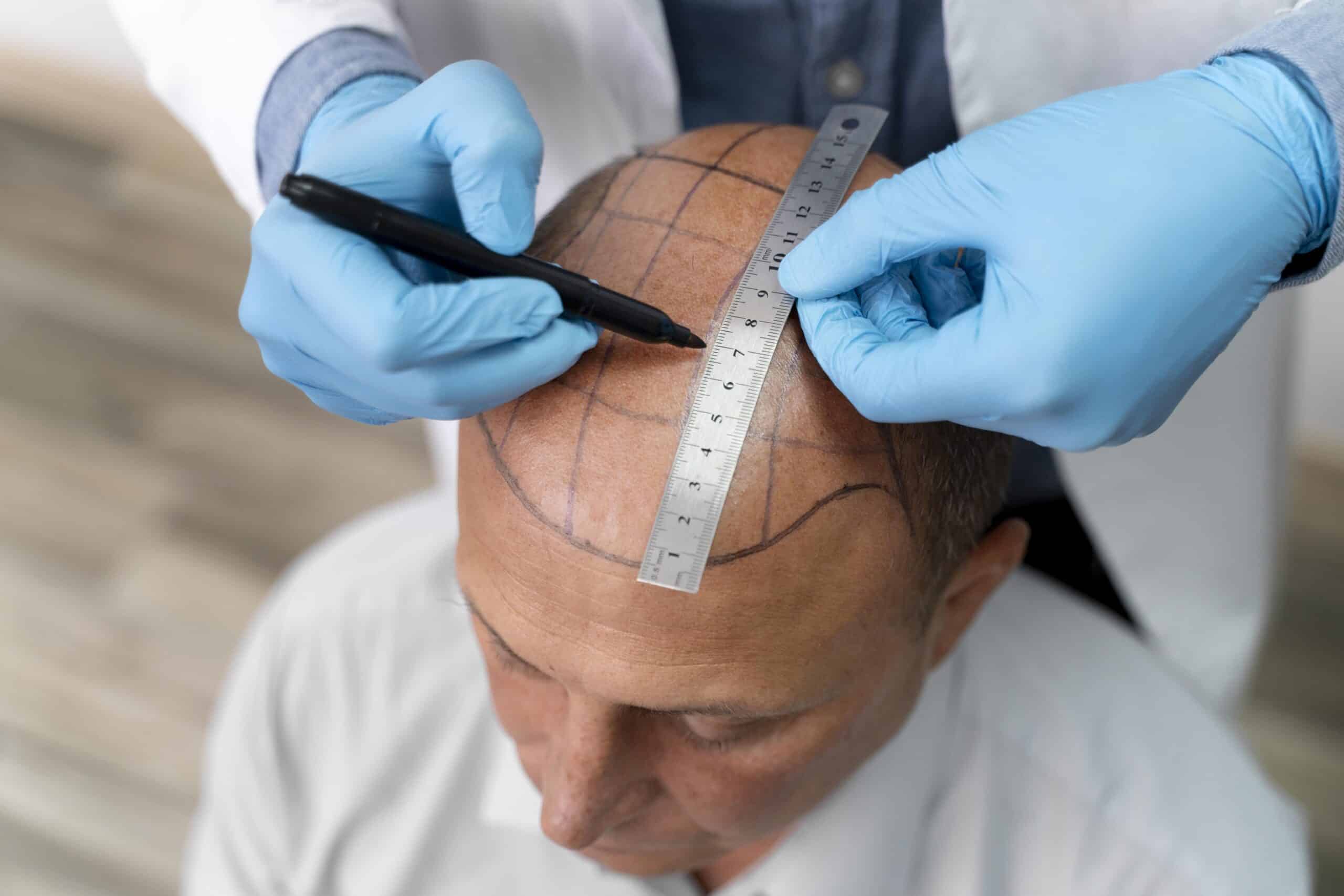
Hairline design is the artistic and medical process of planning where transplanted hair follicles will be placed to create a natural-appearing frontal edge that complements facial features and ages gracefully over time.
The hairline acts as the frame for your entire face. Unlike simply filling in bald areas, hairline design requires understanding how natural hair grows, where follicles should transition from forehead to scalp, and how to create the subtle randomness that makes transplanted hair undetectable. This process combines medical expertise with artistic vision.
A poorly designed hairline remains the most visible sign of an unnatural hair transplant. Even with thousands of perfectly healthy grafts, an overly straight line, incorrect positioning, or wrong graft angles will produce results that appear artificial. Conversely, a well-designed hairline with fewer grafts can deliver exceptionally natural outcomes.
Why Hairline Design Matters More Than Graft Count
The success of a hair transplant depends more on proper hairline design than on the total number of grafts transplanted, according to experienced hair restoration surgeons worldwide.
Many patients focus primarily on graft counts when researching hair transplants. While graft quantity affects coverage and density, the design determines whether results look natural or artificial. A transplant with 3,000 grafts and poor design will always look worse than 2,000 grafts with expert design. This is why surgeon skill and experience matter significantly.
The ISHRS has emphasized that hairline design requires understanding five essential components: feathered anterior edges, age-appropriate positioning, natural frontal-temporal angles, deliberate irregularity, and proper graft selection. Clinics that rush through design consultations or use template approaches often produce results that require costly corrections later.
Key Principles of Natural Hairline Design
A natural hairline follows specific anatomical principles: the “rule of thirds” for facial proportions, gradual density transitions, micro-irregularity at the front edge, and hair angles of 15-20 degrees at the frontal margin.
Facial Proportions and the Rule of Thirds
The classic approach divides the face into three equal vertical sections: from chin to nose base, from nose base to eyebrow arch, and from eyebrow arch to the central hairline point. This proportion creates visual harmony, though individual anatomy always takes precedence.
For most patients, the central hairline point sits approximately 7-8 cm above the glabella (the area between the eyebrows). Placing the hairline too low creates an unnatural youthful appearance that becomes increasingly obvious with age. Positioning too high leaves an overly exposed forehead.
Hair Growth Direction and Angles
Natural frontal hair exits the scalp at acute angles between 15-20 degrees, pointing forward toward the nose. At the temples, hair direction shifts downward. Surgeons must replicate these angles precisely during graft placement, or hair will stand up unnaturally rather than laying flat against the scalp.
The direction and angle of each graft determine how hair falls and how it can be styled. Incorrect angulation is one of the most common errors in hair transplantation and one of the hardest to correct after the fact.
Male vs Female Hairline Design
Male hairlines typically feature an “M” shape with frontotemporal recession at approximately 8 cm above the eyebrows, while female hairlines sit lower at around 5.5-6.5 cm with a rounded or “U” shape and minimal temple recession.
Male Hairline Characteristics
The mature male hairline naturally recedes slightly at the temples, creating the characteristic “M” pattern. This recession is located vertically above the outer corner of the eye (lateral canthus). Attempting to eliminate this natural temple recession often produces a “helmet” appearance that looks artificial.
A well-designed male hairline includes:
- Central position 7-8 cm above the glabella
- Moderate frontotemporal recession
- M-shaped overall contour
- Forward-pointing hair direction at 15-20 degrees
- Gradual density increase from front to mid-scalp
Female Hairline Characteristics
Female hairlines differ significantly from male patterns. Women typically have lower hairlines with rounded or oval contours and minimal temple recession. The frontotemporal angles are softer and more closed compared to the angular male pattern.
Research published in aesthetic surgery journals found that the average distance from mid-eyebrow to frontal hairline measures approximately 5.5 cm in women compared to 6.5 cm or more in men. Female hairline design emphasizes:
- Lower overall position
- Rounded “U” shape rather than “M” shape
- Minimal or absent frontotemporal recession
- Softer, more gradual transitions
- Sometimes includes a widow’s peak
The Feathering Zone and Single-Hair Grafts
The feathering zone consists of the front 1-2 cm of the hairline where surgeons place exclusively single-hair grafts at irregular intervals to create a soft, natural transition from forehead skin to denser hair coverage.
Why Single-Hair Grafts Matter
Natural hairlines do not begin with thick, multi-hair clumps. Instead, the very front edge features fine, single hairs that gradually give way to denser growth behind them. Placing 2-hair or 3-hair grafts at the leading edge creates an instantly recognizable “pluggy” appearance that marks the transplant as artificial.
According to surgical best practices referenced by leading hair restoration surgeons, single-hair grafts should comprise the entire first 1 cm of the hairline. These fine grafts create a feathered appearance that mimics how natural hair grows.
The Brick-Laying Technique
Rather than placing grafts in straight rows, experienced surgeons use staggered patterns similar to how bricks are laid. This “brick-laying” technique prevents the linear appearance of older transplant methods and creates natural-looking density distribution.
The feathering zone serves as the transition between forehead and dense hair. Without proper feathering, even well-positioned hairlines appear artificial because the contrast between bald skin and thick hair is too abrupt.
Density Gradient Planning
The density of transplanted hair should increase gradually as you move back from the hairline edge. The very front row contains approximately 20-25 grafts per square centimeter using exclusively single-hair follicular units. Behind this, density increases to 35-45 grafts per square centimeter with a mix of single and double-hair units.
This graduated density approach mimics natural hair growth patterns. Native hairlines don’t maintain uniform density—they’re sparse at the very edge and progressively thicker further back. Surgeons who place uniform density throughout create an unnatural appearance that’s immediately recognizable.
Hair Caliber Considerations
Hair thickness (caliber) affects how density translates to visible coverage. Patients with fine, thin hair require more grafts to achieve equivalent visual density compared to those with thick, coarse hair. Similarly, curly or wavy hair provides more coverage per graft than straight hair because the curves create natural volume.
Experienced surgeons assess hair caliber during consultation and adjust density planning accordingly. A patient with very fine hair might need 45-50 grafts per square centimeter in the mid-scalp zone, while someone with thick hair achieves similar coverage with 35-40 grafts.
How Surgeons Create Natural Irregularity
Natural hairlines are never perfectly straight or symmetrical—they contain subtle peaks, valleys, and micro-variations that skilled surgeons must deliberately recreate to achieve undetectable results.
Deliberate Asymmetry
Research published in the Journal of Craniofacial Surgery (2025) found that natural male hairlines exhibit a predominant rightward skew in hair direction, consistent with clockwise hair whorl patterns. This means perfectly symmetrical hairline designs may actually look less natural than slightly asymmetric ones.
Surgeons create natural irregularity by:
- Varying the depth of the hairline at different points
- Creating micro-peaks and valleys along the front edge
- Adjusting density slightly between left and right sides
- Incorporating subtle randomness in graft spacing
Avoiding the “Helmet” Look
The most common criticism of poor hairline design is the “helmet” or “doll’s hair” appearance—a perfectly straight, uniform line that could never occur naturally. This results from template-based approaches that ignore individual anatomy.
Correcting an overly straight hairline often requires laser hair removal to create a new, more natural edge before adding additional grafts. Prevention through proper initial design is always preferable to revision procedures.
Expert Insight
“Natural asymmetry in hairline direction—particularly the predominant rightward skew consistent with clockwise whorl patterns—should be incorporated into hairline design. Perfectly symmetrical designs may actually appear less natural.”
— Journal of Craniofacial Surgery, Natural Asymmetry in Hair Growth Direction (2025)
Age-Appropriate Hairline Positioning
Hairline design must account for the patient’s current age, expected future hair loss progression, and available donor hair supply to ensure results remain natural-looking for decades rather than years.
The Problem with Aggressive Hairlines
A 30-year-old patient may want to recreate their teenage hairline, but experienced surgeons understand why this produces poor long-term outcomes. As natural hair continues to thin behind an overly low transplanted hairline, the contrast becomes increasingly obvious. The transplanted hair remains permanently in place while surrounding hair recedes.
According to guidance from hair restoration specialists, hairlines designed for patients in their 30s-40s should be positioned with future hair loss in mind. A slightly higher, more conservative position today will blend naturally with expected changes over the following decades.
Donor Hair Conservation
Donor hair from the occipital region (back of the head) is a finite resource. Aggressive hairline designs consume grafts that might be needed for future procedures as hair loss progresses. Experienced surgeons balance current aesthetic goals against long-term planning to avoid the “doughnut” effect—dense transplanted hair surrounded by thinning native hair.
Conservative positioning ensures patients maintain natural-appearing results at ages 50, 60, and beyond, rather than requiring multiple revision procedures.
Expert Insight
“The best hairline design is one that no one notices—it simply looks like it’s always been there. We plan for 20 years, not 2 years, which means designing a hairline that will age naturally with the patient.”
— ISHRS Clinical Guidelines, Hair Transplant Forum International 2024
Common Hairline Design Mistakes to Avoid
The most common hairline design errors include positioning too low, creating overly straight lines, ignoring frontotemporal angles, using multi-hair grafts at the front edge, and failing to match natural hair growth direction.
Mistakes Made by Inexperienced Surgeons
Hairline Too Low: Recreating a juvenile hairline ignores natural aging and creates an artificial appearance as surrounding hair continues to thin. A 35-year-old with the hairline of a 17-year-old will look increasingly unnatural with each passing year.
Perfectly Straight Lines: Natural hairlines contain irregularity. A ruler-straight edge immediately signals surgical intervention. This is particularly common in “hair mill” clinics that process high patient volumes with template-based approaches.
Missing Temple Recession: In male patients, eliminating natural frontotemporal recession creates a feminized appearance that looks unnatural. Most mature men have some degree of temple recession, and transplants should incorporate rather than eliminate this characteristic.
Wrong Graft Placement: Using 2-3 hair grafts at the very front edge produces visible “plugs” rather than a feathered transition. This remains the most common error and the hardest to correct without laser removal.
Incorrect Angles: Hair that stands up rather than laying flat indicates improper angulation during graft placement. Grafts placed perpendicular to the scalp create a “toothbrush” appearance that cannot be corrected without removing the misplaced grafts.
Ignoring Hair Characteristics: Fine, light-colored hair requires different design approaches than thick, dark hair. Surgeons who use identical techniques for all patients produce inconsistent results.
Overly Dense Frontal Zone: Placing maximum density at the very front consumes grafts needed for behind the hairline and creates an unnatural “wall” of hair. Natural hairlines are less dense at the front edge.
Red Flags When Choosing a Clinic
Patients should be cautious of clinics that:
- Use template designs without individual assessment
- Promise to recreate “any hairline you want” without discussing limitations
- Delegate hairline design to technicians rather than surgeons
- Cannot show before-and-after photos specifically demonstrating hairline work
- Rush through design consultations
According to ISHRS recommendations, patients should ask prospective surgeons specifically about their hairline design philosophy and request to see close-up photographs of previous work.
How This Applies in Turkey
International hairline design principles from ISHRS and leading medical institutions apply equally at Turkey’s JCI-accredited hair transplant facilities, where experienced surgeons follow the same standards as American and European clinics.
The key difference between Turkey and Western countries is cost, not quality. Hairline design requires the same artistic skill and medical training regardless of geographic location. Turkey’s leading clinics employ surgeons who personally design each hairline during consultation and supervise all aspects of the procedure.
Why Turkey Offers Better Value
Turkey’s cost advantage stems from lower operating costs, favorable currency exchange rates, and government support for medical tourism—not lower quality. The country performs approximately 60% of all international hair transplant procedures, giving surgeons extensive experience with diverse patient populations and hair types.
Hair transplant including expert hairline design costs €2,500-€4,500 all-inclusive in Turkey, compared to £7,000-£15,000 in the UK and $12,000-$20,000 in the USA—representing 60-75% savings. Turkish packages typically include surgeon consultation, hairline design, the procedure itself, accommodation, transfers, and post-operative care.
What’s Included in Turkish Packages
Quality Turkish clinics offer comprehensive hair transplant packages covering:
- Pre-operative blood tests and health screening
- Personal surgeon consultation and hairline design session
- The hair transplant procedure with all necessary grafts
- Local anesthesia and sedation options
- Post-operative medications and care products
- 3-4 nights hotel accommodation
- Airport and clinic transfers
- Follow-up consultations (often available remotely)
This all-inclusive approach means patients know their total cost upfront with no hidden fees for individual grafts or additional services.
At Carely Clinic in Istanbul, hairline design consultations are performed by board-certified surgeons at JCI-accredited partner hospitals. Each patient receives an individualized design that accounts for facial proportions, hair characteristics, age, and future hair loss expectations. Learn more about Hair Transplant at Carely Clinic.
Hairline Transplant Recovery Timeline
Full hairline transplant results take 12-18 months to develop, with transplanted grafts shedding within 2-4 weeks, new growth beginning at month 3-4, and final density and maturation completing by month 12-14.
Week 1-2: Immediate Healing
The first two weeks focus on protecting newly placed grafts. Scabbing forms around each graft site and begins falling off naturally around days 7-10. Swelling may affect the forehead and eye area, typically peaking around day 3 and resolving within a week.
Patients can return to desk work within 2-3 days but should avoid strenuous activity for two weeks. The transplanted hairline is visible but will change significantly over the coming months.
Weeks 2-4: Shock Loss Phase
Between weeks 2-4, most patients experience “shock loss”—the shedding of transplanted hair shafts. This is normal and expected. Approximately 70-80% of transplanted hairs will fall out during this phase. The follicles remain intact beneath the scalp and will produce new growth.
Months 3-6: Early Growth
New hair begins emerging around month 3, with approximately 30% visible by month 4 and 50-60% by month 6. Early growth often appears thin, wispy, and may have a slightly curly texture that differs from the patient’s native hair.
Months 6-12: Maturation
The most significant improvement occurs between months 6-12. Hair shafts thicken, darken, and normalize in texture. Coverage reaches approximately 80% by month 9 and 90-100% by month 12.
Months 12-18: Final Results
Final results are typically visible by 12 months for frontal hairline work, though crown and mid-scalp areas may continue improving until 18 months. Hair can be cut, styled, and treated exactly like native hair.