
Quick Summary
Gastric sleeve surgery has a mortality rate of 0.08% and major complication rate of 2-3% at accredited centers, making it one of the safest bariatric procedures available.
According to ASMBS data, the most common complications include staple line leaks (0.3-1.2%), bleeding (1-6%), GERD (10-30% new-onset), and nutritional deficiencies developing over time without proper supplementation.
This guide covers early and late complications, warning signs to recognize, risk factors, treatment options, and how to minimize your complication risk through proper preparation and follow-up care.
Why Trust This Guide
This comprehensive guide draws from peer-reviewed research published in Surgery for Obesity and Related Diseases, Obesity Surgery, and guidelines from the American Society for Metabolic and Bariatric Surgery (ASMBS) and the International Federation for Surgery of Obesity (IFSO).
Our clinical team combines evidence-based medicine with practical experience treating international patients. We provide balanced, accurate information about both benefits and risks to help you make informed decisions about your weight loss journey.
Understanding Gastric Sleeve Safety
Gastric sleeve surgery has a mortality rate of 0.08% and overall complication rate of 2-10% at accredited centers, making it as safe as gallbladder removal surgery.
The procedure has become the most performed bariatric surgery worldwide, representing approximately 65% of all weight loss surgeries. This widespread adoption reflects both its effectiveness—patients typically lose 60-70% of excess weight—and its favorable safety profile compared to more complex procedures.
Understanding potential complications doesn’t mean the surgery is dangerous. Rather, awareness helps you recognize warning signs early, follow post-operative instructions properly, and seek timely medical attention if needed. Most complications are manageable when detected promptly.
How Complication Rates Compare
Research from the Cleveland Clinic comparing over 2,400 patients found that gastric sleeve had the lowest complication and reoperation rates among common bariatric procedures. The reoperation rate was just 1.5% for sleeve gastrectomy compared to 7.7% for gastric bypass and 15.3% for gastric banding.
A 2021 propensity-matched analysis published in the International Journal of Obesity examined 30-day outcomes and found complication rates of 6.1-7.3% for sleeve gastrectomy—statistically similar to gastric bypass at 7.9%. The study found no significant mortality difference between procedures.
Early Complications (Within 30 Days)
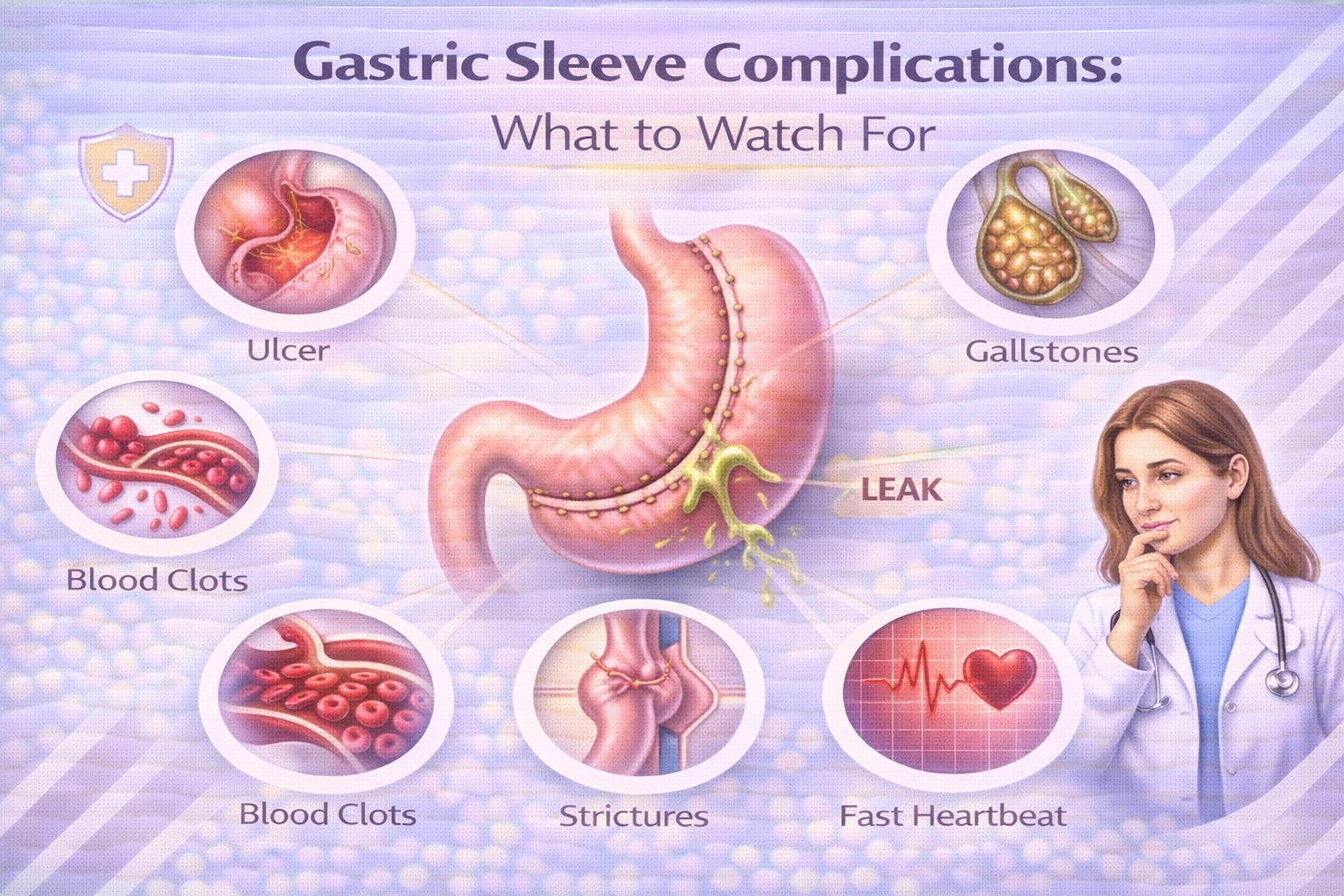
Early complications including leaks (0.3-1.2%), bleeding (1-6%), and blood clots (0.28-0.44%) typically occur within 30 days and require prompt medical attention for best outcomes.
Recognizing these complications quickly significantly improves outcomes and reduces the risk of serious consequences. Most early complications are manageable when detected and treated promptly at qualified facilities.
Staple Line Leak
Staple line leaks occur in 0.3-1.2% of gastric sleeve patients and represent the most serious early complication, typically appearing 5-14 days after surgery when initial healing is incomplete.
A leak happens when stomach contents escape through a gap in the staple line that was used to create the sleeve. Approximately 75-85% of leaks occur at the proximal (upper) portion of the stomach near the gastroesophageal junction, where the tissue is thinner and blood supply more limited.
The timing of leaks follows predictable patterns. Mechanical causes from stapler issues typically appear within 2 days, while ischemic causes from reduced blood flow usually manifest 5-6 days after surgery. Patients who develop leaks typically present around day 5-14 post-operatively.
Symptoms to watch for:
- Fever above 38°C (100.4°F)
- Heart rate persistently above 120 beats per minute
- Severe abdominal or left shoulder pain
- Breathing difficulty
- Feeling “washed out” or generally unwell
Treatment options include:
- Conservative management with IV antibiotics and drainage for contained leaks
- Endoscopic stenting to cover the leak site (success rates up to 80%)
- Endoscopic clipping or vacuum therapy
- Surgical intervention for severe or unresponsive cases
Expert Insight
“Fever and tachycardia are the two most important clinical signs in detecting gastric leaks and should never be neglected. Early detection is associated with better outcomes.”
— World Journal of Gastroenterology, 2014
Postoperative Bleeding
Bleeding after gastric sleeve occurs in 1-6% of patients, with most cases presenting within the first 48 hours after surgery and manageable through conservative treatment.
The sleeve gastrectomy involves the longest staple line of any bariatric procedure, running along the entire length of the stomach. Bleeding can occur along this staple line or from divided blood vessels including branches of the gastroepiploic and short gastric arteries.
Bleeding presents in two forms: extraluminal (outside the stomach, into the abdominal cavity) and intraluminal (inside the sleeve). Extraluminal bleeding causes abdominal distension and pain, while intraluminal bleeding may present as bloody vomit or dark stools.
Risk factors for bleeding include:
- Antiplatelet medications (aspirin, clopidogrel)
- Anticoagulant therapy
- Chronic kidney disease
- Type 2 diabetes
Management approaches:
Research from the Korean Society of Metabolic and Bariatric Surgery found that approximately 47% of bleeding cases can be managed conservatively with monitoring and blood transfusion if needed. The remaining cases may require endoscopic intervention or surgical re-exploration to achieve hemostasis.
Studies show that early surgical re-exploration, rather than prolonged conservative management, can prevent secondary complications. One study found that 50% of patients managed conservatively for bleeding developed infected hematomas, with some progressing to late leaks.
Venous Thromboembolism (Blood Clots)
Blood clots occur in approximately 0.28-0.44% of gastric sleeve patients, with highest risk during the first 30 days after surgery, though events can occur months later.
Venous thromboembolism (VTE) includes deep vein thrombosis (DVT)—clots forming in leg veins—and pulmonary embolism (PE)—when clots travel to the lungs. PE represents one of the potential causes of mortality after bariatric surgery, though rates remain below 1%.
A national study of over 600,000 bariatric patients found that 33.3% of VTE events were pulmonary embolism alone, 59.5% were DVT requiring intervention, and 7.2% experienced both conditions simultaneously.
Prevention protocols include:
- Early mobilization after surgery
- Compression stockings or sequential compression devices
- Blood thinner medications (typically low-molecular-weight heparin)
- Adequate hydration
Interestingly, long-term research shows that bariatric surgery actually reduces VTE risk over time. A Kaiser Permanente study found that surgical patients had 48% lower VTE risk at one year and 41% lower risk at five years compared to non-surgical patients, likely due to sustained weight loss.
Late Complications (After 30 Days)
GERD (10-30%), nutritional deficiencies (30-50% long-term), strictures (0.6-3.5%), and weight regain (13-30%) represent the main late complications developing months to years after gastric sleeve surgery.
These complications often relate to anatomical changes, nutritional status, or the body’s adaptation to the modified digestive system. Regular follow-up and adherence to supplementation protocols minimize long-term risks.
Gastroesophageal Reflux Disease (GERD)
New-onset GERD occurs in 10-30% of gastric sleeve patients, with some studies reporting rates as high as 35%, making it the most common long-term complication requiring ongoing management.
The gastric sleeve creates a high-pressure system within the reduced stomach. UCLA Health explains that this significantly higher pressure can push gastric contents and acid into the esophagus, causing reflux symptoms. The procedure also disrupts the angle of His—an anatomical feature that helps prevent reflux—contributing to the problem.
The relationship between sleeve gastrectomy and GERD is complex. Some patients with pre-existing mild reflux improve after surgery due to weight loss reducing abdominal pressure. However, others develop new symptoms or experience worsening of existing reflux.
Long-term concerns include:
- Barrett’s esophagus (precancerous changes to esophageal lining)
- Esophageal strictures
- Chronic medication dependence
- In rare cases, esophageal adenocarcinoma
According to IFSO position statements, patients should undergo upper endoscopy one year after surgery and every 2-3 years thereafter to monitor for complications.
Treatment progression:
- Lifestyle modifications (small meals, avoiding late eating)
- Proton pump inhibitors (PPIs)
- Higher-dose PPI therapy if symptoms persist
- Conversion to gastric bypass for refractory cases (9-13% of patients according to randomized trials with 5-10 year follow-up)
Conversion to Roux-en-Y gastric bypass effectively treats GERD, with long-term data showing more than 90% of patients achieve resolution of symptoms after revision surgery.
Gastric Stricture/Stenosis
Sleeve stenosis (narrowing) occurs in approximately 0.6-3.5% of patients, typically at the incisura angularis (the natural bend in the stomach), causing difficulty eating and persistent vomiting.
Strictures can present acutely due to postoperative tissue swelling or develop chronically from scar tissue formation. Most symptomatic stenoses occur within the first three months after surgery.
Symptoms include:
- Difficulty swallowing (dysphagia)
- Nausea and vomiting after eating
- Food intolerance
- Prolonged feeling of fullness
Diagnostic workup:
- Barium swallow study to visualize the narrowing
- Upper endoscopy (gold standard) to directly assess the stenosis
Treatment options:
A systematic review found that 68% of patients respond to initial non-invasive medical management, 82% to endoscopic treatment, and 75% to surgical intervention when needed.
Endoscopic balloon dilation achieves clinical success in approximately 66.7% of patients with gastric stenosis. Pneumatic balloon dilation has the highest success rate among endoscopic approaches. For refractory cases, conversion to gastric bypass remains an effective surgical option.
Nutritional Deficiencies
Nutritional deficiencies affect the majority of gastric sleeve patients long-term, with iron deficiency reaching 30-43% and vitamin B12 deficiency reaching 11-17% at six years post-surgery without adequate supplementation.
Contrary to initial beliefs, gastric sleeve produces similar rates of long-term nutritional deficiencies as gastric bypass, despite maintaining intact intestinal anatomy. The mechanisms include reduced gastric acid production (impairing iron and B12 absorption), decreased intrinsic factor secretion, and reduced food intake.
A six-year follow-up study found the following deficiency progression:
| Nutrient | Pre-Surgery | 6 Years Post-Surgery |
|---|---|---|
| Anemia | 17.2% | 36.7% |
| Ferritin deficiency | 5.3% | 43.3% |
| Vitamin B12 | 3.8% | 11.7% |
| Vitamin D | Common | Improved with supplementation |
Key deficiencies and consequences:
- Iron: Fatigue, weakness, anemia
- Vitamin B12: Neurological symptoms, fatigue, cognitive changes, anemia
- Vitamin D: Bone health issues, increased fracture risk
- Thiamine (B1): In severe cases, Wernicke encephalopathy (confusion, vision problems, coordination issues)
Prevention requires:
- Daily multivitamin supplementation (specialized bariatric formulations recommended)
- Additional vitamin B12 (sublingual or injections)
- Calcium with vitamin D
- Iron supplementation, particularly for menstruating women
- Regular blood monitoring every 3-6 months initially, then annually
Research shows that patients using specialized bariatric multivitamins have significantly higher nutrient levels and fewer deficiencies compared to those using standard multivitamins or no supplementation.
Weight Regain
Weight regain affects 13-30% of gastric sleeve patients over the long term, with some studies reporting rates up to 75.6% at six years, though most patients maintain significant net weight loss.
Weight regain typically begins between years 1-3 after surgery and can continue progressively. The causes are multifactorial, including:
- Gradual stomach dilation over time
- Residual fundus (gastric tissue not removed during initial surgery)
- Dietary non-compliance
- Reduced physical activity
- Hormonal and metabolic adaptations
Research using CT volumetry has documented mean gastric volume increases from 108 ml immediately post-surgery to 250 ml at 24-36 months, demonstrating physiologic adaptation of the sleeve.
Prevention strategies:
- Maintaining high protein intake (80-100 grams daily)
- Regular physical activity
- Behavioral support and counseling
- Regular follow-up with bariatric team
- Food journaling
Revision options when needed:
- Re-sleeve gastrectomy (if large residual fundus identified)
- Conversion to Roux-en-Y gastric bypass (40-70% excess weight loss expected)
- Conversion to one-anastomosis gastric bypass (50-85% excess weight loss)
- Duodenal switch
- Endoscopic revision procedures
According to the German Bariatric Surgery Registry, approximately 7.9% of sleeve gastrectomy patients require revision surgery, with weight regain and worsening comorbidities being the most common indications.
Warning Signs That Require Immediate Attention
Seek emergency care for severe chest pain, difficulty breathing, high fever with confusion, rapid heart rate above 120 bpm, uncontrolled bleeding, or severe abdominal pain after gastric sleeve surgery.
Early recognition of warning signs enables prompt treatment and prevents serious complications. Contact your surgical team immediately if you experience concerning symptoms during recovery or months after surgery.
Immediate Emergency (Call Emergency Services)
- Severe chest pain or difficulty breathing (possible pulmonary embolism)
- Signs of severe infection: high fever, confusion, rapid heart rate
- Uncontrolled bleeding: bloody vomit or significant bloody/black stools
- Severe abdominal pain with rigid abdomen
Urgent Medical Attention (Within 24 Hours)
- Fever above 38°C (100.4°F)
- Persistent heart rate above 100-120 beats per minute
- Inability to keep any fluids down for more than 24 hours
- Pain that’s getting progressively worse
- Redness, swelling, or drainage from incision sites
- Left shoulder pain (can indicate irritation from internal leak)
Prompt Medical Evaluation (Within Days)
- Progressive difficulty swallowing
- Persistent nausea and vomiting beyond expected recovery
- Signs of dehydration (dark urine, dizziness, dry mouth)
- Leg swelling, redness, or pain (possible blood clot)
- New or worsening heartburn not responding to medication
Expert Insight
“The earliest symptoms of gastric sleeve leak often appear subtly before becoming severe. A sudden heart rate over 120 beats per minute combined with fever and worsening pain is one of the most reliable warning combinations.”
— Journal of Metabolic and Bariatric Surgery, 2022
Risk Factors That Increase Complication Rates
BMI above 50, sleep apnea, previous blood clots, smoking, diabetes, and revision surgery significantly increase complication risk according to ASMBS data and large-scale bariatric surgery studies.
Understanding your personal risk profile helps you and your surgical team take appropriate precautions. High-volume surgeons and JCI-accredited facilities help mitigate these risks through specialized protocols.
Patient-Related Risk Factors
Higher BMI: Patients with BMI above 50 face increased surgical complexity and higher complication rates. Studies show that patients with BMI under 40 achieve better weight loss outcomes and experience fewer complications.
Medical comorbidities:
- Sleep apnea (increases VTE risk)
- Type 2 diabetes
- Previous deep vein thrombosis or pulmonary embolism
- Chronic kidney disease
- Immunosuppressive conditions
Age: Advanced age correlates with increased risk, though gastric sleeve remains safe for appropriately selected older patients.
Smoking: Active smoking significantly increases leak risk, impairs wound healing, and increases stricture formation. Most programs require smoking cessation 4-6 weeks before surgery.
Previous abdominal surgery: Prior operations create adhesions that increase surgical difficulty and operative time.
Procedure-Related Factors
Bougie size: Smaller bougie sizes (under 40 French) may increase leak rates while providing potentially better weight loss. Most surgeons use 36-40 French bougies to balance safety and effectiveness.
Surgeon experience and volume: High-volume surgeons (over 200 cases annually) demonstrate lower complication rates. Turkish bariatric surgeons often perform 300-500 procedures annually, building significant expertise.
Revision surgery: Revision procedures carry higher complication rates than primary surgery due to scar tissue, altered anatomy, and typically more complex medical histories.
How to Minimize Your Risk
Complete pre-operative evaluations, follow the liver-shrinking diet, stop smoking 4-6 weeks before surgery, strictly follow post-operative diet progression, and attend all follow-up appointments to minimize complication risk.
Proper preparation and adherence to post-operative guidelines prevent most complications. Lifelong vitamin supplementation and regular monitoring ensure long-term health after surgery.
Before Surgery
Complete all pre-operative evaluations: Comprehensive assessment by your surgical team—including nutritional evaluation, psychological screening, and cardiac clearance when indicated—identifies and addresses risk factors before surgery.
Follow the pre-operative diet: The 2-4 week liver-shrinking diet reduces liver size, improving surgical access and reducing operative time. Studies show this correlates with lower complication rates.
Stop smoking: Cessation at least 4 weeks before surgery (6 weeks preferred) allows tissue healing capacity to normalize.
Optimize medical conditions: Work with your medical team to achieve best possible control of diabetes, blood pressure, and other conditions before surgery.
Lose weight if possible: Even modest pre-operative weight loss improves surgical outcomes.
After Surgery
Follow your diet progression strictly: The staged diet (clear liquids → full liquids → pureed → soft → regular) allows your staple line to heal. Advancing too quickly increases leak and complication risk.
Stay hydrated: Dehydration is the most common reason for early readmission. Aim for 64+ ounces of fluids daily, sipping continuously.
Mobilize early: Getting up and moving within hours of surgery and walking regularly thereafter dramatically reduces blood clot risk.
Take prescribed medications: This includes blood thinners (usually for 2-4 weeks), acid-reducing medications, and any other prescribed medications.
Attend all follow-up appointments: Regular monitoring catches developing complications early and allows timely intervention.
Commit to lifelong vitamin supplementation: Nutritional deficiencies develop gradually without supplementation. Consider this a permanent lifestyle change.
Report concerning symptoms immediately: Don’t dismiss symptoms as “normal recovery.” When in doubt, contact your surgical team.
How This Applies in Turkey
Turkey’s JCI-accredited facilities follow identical ASMBS and IFSO protocols as Western institutions, offering gastric sleeve for €3,500-€5,500 compared to $15,000-$25,000 in the USA—60-75% savings.
International patients typically complete the entire process within 7-10 days, compared to months of waiting in countries with insurance requirements. High surgeon volumes (300-500+ cases annually) contribute to excellent outcomes.
The key differences are cost and accessibility. Gastric sleeve surgery in Turkey costs €3,500-€5,500 compared to $15,000-$25,000 in the USA and £10,000-£15,000 in the UK—representing 60-75% savings. International patients typically complete the entire process within 7-10 days, compared to months of waiting in countries with insurance requirements.
Turkey has become a leading destination for bariatric surgery, with several factors contributing to low complication rates:
- High surgeon volume (300-500+ cases annually)
- JCI-accredited facilities meeting international safety standards
- Comprehensive pre-operative evaluation protocols
- 24/7 post-operative monitoring during hospital stay
- Structured follow-up programs for international patients
At Carely Clinic in Istanbul, gastric sleeve surgery is performed by board-certified bariatric surgeons at JCI-accredited partner hospitals. Packages include all pre-operative testing, surgery, hospital stay, medications, airport transfers, and dedicated patient coordination throughout your journey.
Learn more about Gastric Sleeve Surgery at Carely Clinic.
Complications Comparison Table
| Complication | Incidence Rate | Timing | Key Symptoms | Primary Treatment |
|---|---|---|---|---|
| Staple Line Leak | 0.3-1.2% | Days 5-14 | Fever, rapid heart rate, severe pain | Drainage, antibiotics, endoscopic stenting |
| Bleeding | 1-6% | First 48 hours | Bloody vomit, dark stools, dizziness | Conservative management or surgical hemostasis |
| Blood Clots (VTE) | 0.28-0.44% | First 30 days (highest) | Leg swelling/pain, shortness of breath | Anticoagulation therapy |
| GERD (New-Onset) | 10-30% | Months to years | Heartburn, regurgitation, difficulty swallowing | PPIs; bypass conversion if refractory |
| Stricture/Stenosis | 0.6-3.5% | First 3 months | Vomiting, difficulty eating, food intolerance | Endoscopic balloon dilation |
| Nutritional Deficiencies | 30-50% (long-term) | Years 1-6+ | Fatigue, hair loss, neurological symptoms | Lifelong supplementation |
| Weight Regain | 13-30% | Years 2-6+ | Gradual weight increase, increased hunger | Lifestyle modification; revision surgery if needed |
Frequently Asked Questions
What is the most dangerous complication of gastric sleeve surgery?
Staple line leak is the most serious complication, occurring in 0.3-1.2% of patients. Early detection and treatment prevent severe infection, with most leaks resolving completely.
How common is death from gastric sleeve surgery?
The mortality rate is 0.08% (8 per 10,000 procedures) according to ASMBS, comparable to gallbladder removal and lower than many common surgeries.
When should I go to the ER after gastric sleeve surgery?
Seek emergency care for severe chest pain, difficulty breathing, high fever with confusion, uncontrolled bleeding, bloody vomit, severe abdominal pain, or inability to keep fluids down.
Can gastric sleeve complications be reversed?
Most complications are treatable. Leaks heal with intervention, strictures respond to dilation, and GERD responds to medication or revision surgery. The sleeve itself cannot be undone.
How long after surgery can complications occur?
Early complications occur within 30 days, with leaks most common days 5-14. Late complications like GERD, nutritional deficiencies, and weight regain develop months to years later.
Does gastric sleeve cause acid reflux?
Approximately 10-30% develop new-onset GERD after surgery. The sleeve’s high-pressure system and disrupted angle of His contribute to reflux. Hiatal hernia repair reduces risk.
What percentage of gastric sleeve patients have complications?
Overall complication rates range from 2-10% depending on definitions. Major complications requiring intervention occur in 2-3% at accredited, high-volume centers. Most patients recover without significant issues.
How can I prevent nutritional deficiencies after surgery?
Take specialized bariatric multivitamins daily for life, plus B12, calcium with vitamin D, and iron. Regular blood monitoring every 3-6 months initially, then annually detects deficiencies early.
Is revision surgery common after gastric sleeve?
Approximately 7.9% require revision surgery according to German Bariatric Surgery Registry. Common reasons include weight regain and severe GERD. Revision options include gastric bypass or duodenal switch.
What makes some patients higher risk for complications?
BMI above 50, previous blood clots, sleep apnea, smoking, diabetes, revision surgery, advanced age, and male gender increase risk. Pre-operative evaluation identifies these for appropriate precautions.
How long do I need to take vitamins after gastric sleeve?
Vitamin supplementation is lifelong. Nutritional deficiencies develop years after surgery even with normal initial levels. Consider supplementation a permanent lifestyle change, not a temporary measure.
Can I have another surgery if gastric sleeve fails?
Yes. Revision options include gastric bypass (most common), one-anastomosis bypass, duodenal switch, re-sleeve, or endoscopic procedures. Success rates for revision surgery range from 60-80%.
Conclusion
Gastric sleeve surgery maintains an excellent safety profile with mortality rates of 0.08% and major complication rates of 2-3% at accredited centers—comparable to common procedures like gallbladder removal. While complications can occur, understanding warning signs and maintaining proper follow-up care enables early detection and successful treatment in the vast majority of cases.
The key takeaways from this guide include: leaks and bleeding are rare but require immediate attention if symptoms develop; GERD affects 10-30% of patients and requires monitoring; nutritional supplementation is a lifelong commitment; and weight regain can be prevented with proper lifestyle maintenance.
Individual requirements and outcomes vary. This guide provides general information based on international guidelines and peer-reviewed research. Consult qualified medical professionals for personalized advice based on your specific health situation.
If you’re considering gastric sleeve surgery or have questions about potential complications, our bariatric team provides comprehensive consultations to assess your individual risk profile and develop a personalized surgical plan. Contact Carely Clinic to learn more about our approach to safe, effective bariatric surgery.