
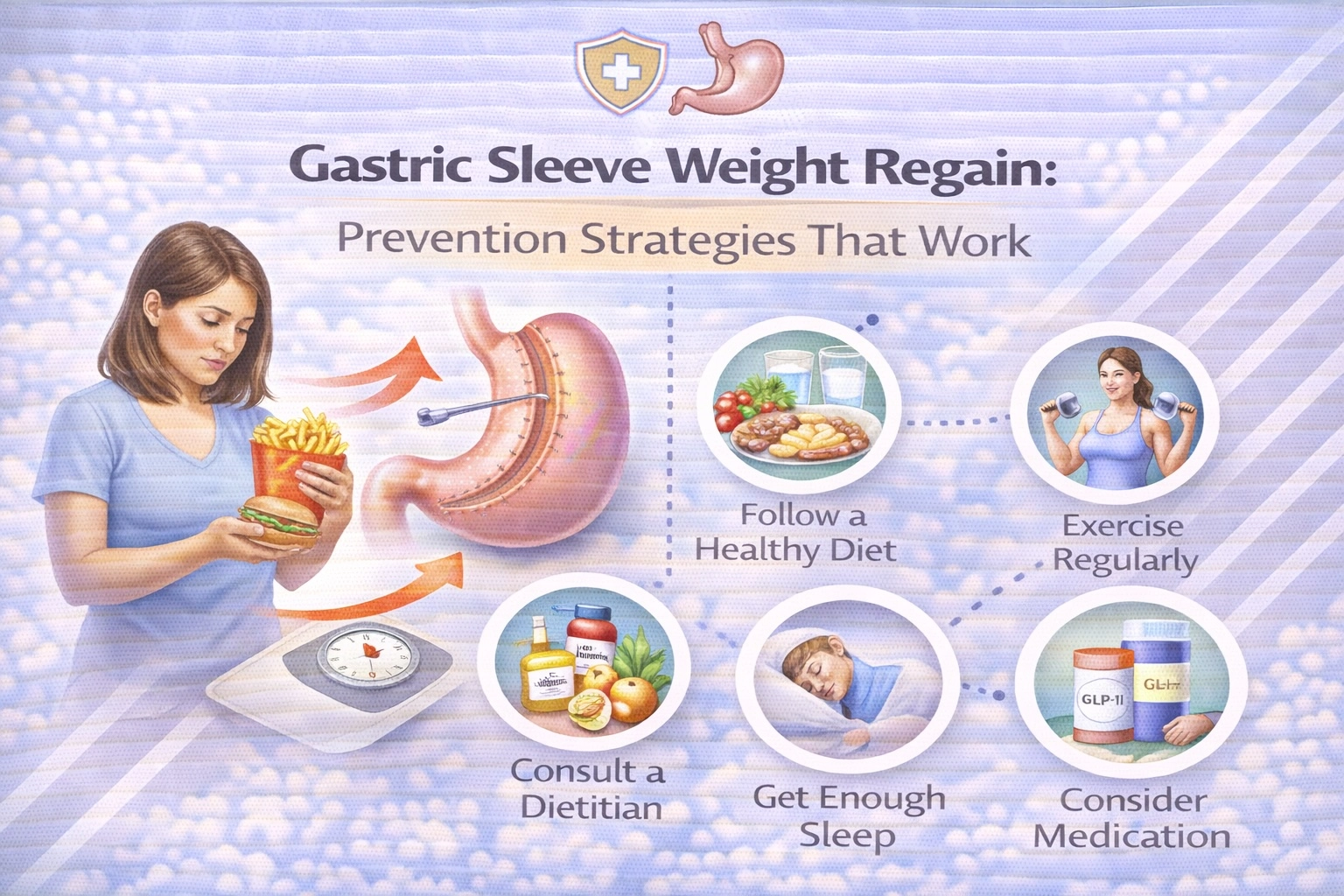
Quick Summary
Weight regain after gastric sleeve affects 20–35% of patients within five years. According to Obesity Surgery research, the most common causes include maladaptive eating behaviors, stomach stretching from overeating, and reduced follow-up engagement.
This guide covers evidence-based prevention strategies: nutritional protocols with 60–100 grams protein daily, exercise requirements, psychological support, GLP-1 medications producing 10–13% weight loss, and revision surgery options when conservative measures prove insufficient for managing regain.
Why Trust This Guide
This content draws from peer-reviewed research published in Obesity Surgery, Surgery for Obesity and Related Diseases, and guidelines from the American Society for Metabolic and Bariatric Surgery (ASMBS), International Federation for Surgery of Obesity and Metabolic Disorders (IFSO), and Cleveland Clinic bariatric specialists.
Carely Clinic’s medical team combines this evidence base with clinical experience treating thousands of international bariatric patients. Our commitment is providing accurate, balanced information that helps patients make informed decisions about their long-term weight management journey.
How Common Is Weight Regain After Gastric Sleeve?
Weight regain affects 20–35% of gastric sleeve patients within five years, with rates reaching 75% at six years using broader definitions, according to systematic reviews in Obesity Surgery.
Understanding these statistics requires context about how researchers define weight regain. Some studies count any weight gain above the lowest post-operative point, while others require regaining more than 10% of lost weight or BMI increases exceeding 5 kg/m². A 2024 longitudinal study in Obesity Research & Clinical Practice found weight recurrence prevalence ranging from 13.5% to 35.5% depending on the definition applied.
The timeline matters significantly. Research indicates the critical period for weight regain typically begins between the first and third years after surgery. A prospective study following 782 gastric bypass patients found weight regain became statistically significant within 48 months post-surgery. For sleeve gastrectomy specifically, patients who gained weight during the second year after surgery demonstrated significantly worse long-term outcomes compared to those who maintained or continued losing weight.
Despite these statistics, it’s important to recognize that weight regain is neither inevitable nor irreversible. Patients who engage actively with prevention strategies, maintain follow-up appointments, and address problems early typically achieve better long-term outcomes. The goal isn’t preventing every pound of fluctuation—small variations are normal—but rather avoiding clinically significant regain that impacts health outcomes and quality of life.
What Causes Weight Regain After Sleeve Gastrectomy?
Maladaptive eating behaviors like grazing and loss-of-control eating, reduced physical activity, hormonal changes, and inadequate follow-up engagement cause most weight regain, according to Obesity Surgery research.
Behavioral factors represent the largest category of weight regain causes. Cleveland Clinic bariatric specialists identify several problematic eating patterns: binge eating, eating even when feeling full, continuous eating throughout the day, and gravitating toward high-calorie foods. These behaviors often develop gradually as patients become more comfortable with food tolerance and less vigilant about portion control.
Physiological changes also contribute. The ghrelin reduction that suppresses hunger after sleeve gastrectomy typically lasts approximately two to three years. After this period, the small intestine begins adapting and producing some ghrelin itself, meaning hunger signals gradually return. This biological reality makes sustained behavioral changes even more critical for long-term success.
Anatomical factors include potential stomach dilation over time. While the sleeve is constructed to be durable and restrictive, consistent overeating can gradually stretch the stomach pouch. UCLA Health identifies large remnant stomach size and gradual volume increase as contributing factors to weight regain and inadequate weight loss.
Psychological factors play a substantial role that patients often underestimate. Research links weight regain to depression, emotional eating, night eating patterns, and inadequate social support. Stress levels correlate positively with weight regain, while strong social support networks correlate with better weight maintenance outcomes.
Finally, reduced engagement with the bariatric team contributes significantly. Patients who miss follow-up appointments, skip nutritional counseling, and discontinue support group participation demonstrate higher rates of weight regain compared to those maintaining active engagement with their care teams.
Can Your Stomach Stretch After Gastric Sleeve?
Yes, the stomach can stretch after gastric sleeve, though significant permanent stretching requires consistent overeating over months or years rather than occasional dietary lapses, per academic medical centers.
Understanding the anatomy helps clarify this concern. During sleeve gastrectomy, surgeons remove approximately 75–85% of the stomach, including the greater curvature and fundus. The remaining stomach forms a banana-shaped tube calibrated using a bougie (sizing device) typically ranging from 32 to 40 French. The stomach walls contain folds called gastric rugae that naturally allow some expansion during eating—this is normal physiology rather than problematic stretching.
The distinction between natural and problematic stretching is crucial. Immediately after surgery, the stomach capacity ranges from approximately 2 to 4 tablespoons. Over the first year, capacity gradually increases to approximately 4 to 8 ounces as post-operative swelling resolves and tissues heal. This expected adaptation doesn’t constitute harmful stretching. Problematic stretching occurs when patients consistently override fullness signals, eat excessively large portions repeatedly, or develop grazing habits that keep the stomach continuously expanded.
Research from the Sleeve Clinic in Toronto notes that while stomach stretching is theoretically possible, combing through the research literature, there is no evidence that the stomach stretches significantly after a properly constructed gastric sleeve. Many patients interpret improved food tolerance over time as stomach stretching when the reality involves learning to push boundaries and adaptation of gastric emptying rates.
Prevention strategies include eating slowly and stopping when comfortably satisfied (not stuffed), avoiding beverages during meals (which can overfill the stomach without providing satiety signals), limiting carbonated beverages, and maintaining mindful eating practices. Occasional overeating—such as during special occasions—doesn’t cause permanent stretching, but making overeating a daily habit creates cumulative effects.
Dietary Strategies to Prevent Weight Regain
Consuming 60–100 grams protein daily, eating small frequent meals, avoiding high-calorie processed foods, and maintaining 64+ ounces water daily prevents weight regain, per UCLA Health bariatric guidelines.
Protein prioritization forms the foundation of post-bariatric nutrition. Most bariatric programs recommend 60–80 grams of protein daily for gastric sleeve patients, with some specialists recommending 70–100 grams depending on individual factors including body size and activity level. Protein supports muscle preservation during weight loss, promotes satiety between meals, and aids tissue healing. High-quality sources include lean meats (chicken, turkey, fish), eggs, Greek yogurt, cottage cheese, legumes, and protein supplements when needed.
Meal structure matters as much as content. Eating 3–5 small meals daily rather than 2–3 larger meals helps maintain consistent energy levels and prevents the extreme hunger that triggers overeating. Each meal should center around protein first, followed by vegetables, with limited complex carbohydrates consumed last. This eating order ensures essential nutrients are consumed even when small stomach capacity limits total intake.
Specific foods to limit or avoid include added sugars, refined carbohydrates, high-fat processed foods, and alcohol. These provide calories without meaningful nutrition and can trigger dumping syndrome in some patients. Sweet consumption and portion creep represent common pathways to weight regain, making ongoing vigilance necessary.
Hydration requires strategic timing. The goal of 64 ounces of water daily supports digestion, prevents constipation, and helps distinguish true hunger from thirst. However, drinking during meals can overfill the stomach and push food through faster, potentially increasing hunger sooner. Most programs recommend stopping fluids 30 minutes before meals and waiting 30–60 minutes after meals before drinking again.
Keeping a food journal helps identify problematic patterns before they become entrenched habits. Documenting nutrition intake allows patients and their care teams to spot triggers for unhealthy eating, track protein consumption, and make data-driven adjustments to dietary plans.
Exercise Requirements for Long-Term Success
Patients need 150 minutes weekly moderate aerobic exercise combined with strength training 2–3 days weekly to prevent weight regain and preserve muscle mass, per bariatric exercise guidelines.
Physical activity serves multiple functions beyond calorie burning. Exercise preserves lean muscle mass during weight loss, which is critical because muscle tissue burns more calories at rest than fat tissue. Patients who neglect physical activity often experience accelerated muscle loss, leading to metabolic slowdown and easier weight regain. Strength training specifically counteracts this effect by stimulating muscle protein synthesis.
The recommendation of 30 minutes of moderate exercise daily provides a practical framework. “Moderate” intensity means activities that elevate heart rate and breathing but still allow conversation—brisk walking, swimming, cycling, or dancing all qualify. Patients can accumulate this time in shorter segments (such as three 10-minute walks) if scheduling prevents longer continuous sessions.
Resistance training deserves equal emphasis. Bodyweight exercises, resistance bands, weight machines, or free weights all provide muscle-building stimulus. Even two sessions weekly targeting major muscle groups helps maintain metabolically active tissue and functional strength.
Exercise selection should match individual preferences and physical capabilities. The best exercise program is one patients will actually maintain long-term. Someone who hates running won’t sustain a running program regardless of its theoretical benefits. Walking, swimming, group fitness classes, recreational sports, or home workout videos all provide valid pathways to meeting activity goals.
Starting exercise after surgery requires patience and medical clearance. Most programs recommend beginning with gentle walking immediately post-operatively, gradually increasing intensity and duration over weeks to months. Patients should receive explicit clearance from their surgical team before beginning strenuous exercise, typically around 6–8 weeks post-surgery.
Psychological Support and Behavioral Strategies
Patients attending five or more support group meetings in the first year post-surgery demonstrate greater weight loss than those attending less frequently, according to behavioral intervention research.
Emotional eating represents one of the most challenging obstacles to weight maintenance. Many patients used food as a coping mechanism for stress, anxiety, boredom, or emotional pain before surgery. Surgery reduces stomach capacity but doesn’t address the underlying psychological patterns driving overconsumption. Without intervention, patients often find new ways to consume excess calories—such as grazing on small amounts throughout the day or choosing high-calorie liquid foods that bypass restriction.
Cognitive behavioral therapy (CBT) has demonstrated effectiveness for post-bariatric patients. An 8-week postoperative CBT-based intervention showed significant improvements in psychological well-being that persisted at least 3 months after the intervention ended. CBT techniques help patients identify thought patterns triggering unhealthy behaviors, develop alternative coping strategies, and build sustainable habits.
Support groups provide accountability, encouragement, and practical wisdom from others navigating similar challenges. Baptist Behavioral Health notes that regular participation in support groups significantly enhances long-term weight loss outcomes. Groups offer a community where patients can share struggles without judgment, celebrate victories, and learn strategies that worked for others.
Self-compassion correlates with better outcomes. Patients who practice self-compassion demonstrate enhanced eating behavior control and better quality of life after bariatric surgery. Conversely, harsh self-criticism after dietary lapses often triggers shame spirals that lead to further overeating. Learning to respond to setbacks with kindness and problem-solving rather than self-punishment supports sustained behavior change.
Recognizing the need for professional help is important. Signs that warrant seeking additional psychological support include persistent depression or anxiety, return of disordered eating patterns, significant emotional distress, relationship difficulties related to body changes, or substance use concerns. Bariatric programs typically maintain relationships with mental health professionals experienced in working with weight loss surgery patients.
The Role of Follow-Up Appointments
Regular follow-up appointments with bariatric teams improve weight maintenance and enable early intervention when problems develop, according to multiple observational studies in bariatric surgery literature.
Follow-up engagement tends to decline over time, creating a concerning pattern. Patients typically maintain good attendance during the first year when rapid changes require close monitoring. However, long-term attrition represents a continuous challenge, with many patients discontinuing regular visits once they feel stable. This disengagement often precedes weight regain, as patients lose accountability and miss opportunities for early intervention.
Standard follow-up schedules typically include visits at 1 month, 3 months, 6 months, and 12 months post-surgery, followed by annual visits thereafter. Some programs recommend more frequent contact during years 2–3 when weight regain risk increases. These appointments serve multiple purposes: monitoring nutritional status, tracking weight trends, screening for complications, adjusting supplement regimens, and providing behavioral reinforcement.
Nutritional monitoring at follow-up appointments can identify deficiencies before symptoms develop. Common post-sleeve deficiencies include vitamin B12, vitamin D, iron, and calcium. Regular laboratory testing allows proactive supplementation adjustments that prevent deficiency-related complications.
The bariatric team provides accountability that many patients need for sustained success. Knowing an appointment is scheduled creates motivation to maintain healthy behaviors. Conversely, patients who stop attending often report feeling disconnected from their weight loss journey and losing sight of goals that seemed clear immediately post-surgery.
Virtual follow-up options have expanded access for patients facing geographic or scheduling barriers. Telehealth visits, smartphone apps, and remote monitoring technologies allow continued engagement even when in-person visits aren’t feasible. Patients should discuss available options with their bariatric programs to maintain connection regardless of circumstances.
Weight Loss Medications After Bariatric Surgery
GLP-1 receptor agonists like semaglutide (Wegovy, Ozempic) produce approximately 10–13% total body weight loss at 12 months for post-bariatric weight regain, according to UT Southwestern Medical Center studies.
The emergence of highly effective anti-obesity medications has created new treatment options for post-bariatric weight regain. Previously, patients who regained significant weight faced limited choices—lifestyle intensification (often already maximized) or revision surgery (more invasive and higher risk). Now, medications provide an intermediate option that can reverse weight regain without additional surgery.
Semaglutide and liraglutide belong to the GLP-1 receptor agonist class, which mimics hormones that regulate appetite and satiety. Research comparing these medications in post-bariatric patients found semaglutide superior to liraglutide, with patients losing an average of 12.9% body weight versus 8.8% at 12 months. These results support using newer GLP-1 medications as first-line pharmacotherapy for post-surgical weight regain.
Safety data indicate these medications are well-tolerated in post-bariatric patients. Starting at standard low doses (0.25 mg weekly for semaglutide) and titrating upward as tolerated follows the same protocol used in non-surgical patients. Common side effects include nausea, which typically diminishes over time. Serious complications are rare.
Timing of medication initiation matters. Research suggests starting weight loss medication when patients hit a weight loss plateau—rather than waiting until significant regain occurs—may produce better outcomes. Some patients benefit from medication use as a maintenance tool rather than waiting for intervention after problems develop.
The decision to use medications should be individualized through discussion with bariatric specialists. Factors influencing this decision include the amount of regain, presence of metabolic comorbidities like diabetes, patient preferences, and insurance coverage considerations. Many patients find medications provide the additional support needed to recommit to dietary and exercise habits.
Revision Surgery Options for Weight Regain
Revision options include conversion to Roux-en-Y gastric bypass (30–70% excess weight loss), one-anastomosis gastric bypass (50–85% EWL), re-sleeve gastrectomy, and duodenal switch, according to UCLA Health.
Revision surgery represents a significant decision requiring careful evaluation. Patients considering revision should first ensure they’ve genuinely maximized non-surgical approaches—not just tried them briefly before abandoning efforts. Revision procedures carry higher complexity and risk than primary surgeries due to altered anatomy and scar tissue from the initial operation.
Conversion to Roux-en-Y gastric bypass is the most commonly performed revision procedure after sleeve gastrectomy. RYGB creates a small stomach pouch connected directly to the small intestine, bypassing most of the stomach and the first portion of the small intestine. For weight regain indications, patients can expect to lose 30–70% of excess weight following conversion. The procedure also adds a malabsorptive component that the sleeve lacks.
One-anastomosis gastric bypass (OAGB) offers an alternative with potentially greater weight loss. OAGB involves creating a longer gastric pouch with a single connection to the small intestine and a longer bypassed segment (150–200 cm) compared to standard RYGB (50 cm). Studies suggest weight loss with OAGB conversion may be slightly better than RYGB conversion, with 50–85% excess weight loss reported.
Duodenal switch procedures (including SADI-S) provide the most powerful weight loss but also require the most significant lifestyle adjustments. These procedures combine the sleeve with extensive intestinal bypass, resulting in both restriction and substantial malabsorption. Research suggests patients with revisional SADI-S achieve outcomes comparable to those having SADI-S as primary surgery, making it appropriate for patients with substantial regain requiring maximum intervention.
Endoscopic revision options provide less invasive alternatives for selected patients. Endoscopic sleeve gastroplasty (ESG) and transoral outlet reduction (TORe) use endoscopic techniques to reduce stomach volume without traditional surgery. These may be appropriate for patients with moderate regain who prefer avoiding another surgical procedure.
Candidate selection for revision surgery requires comprehensive evaluation including upper endoscopy to assess sleeve anatomy, nutritional evaluation to identify and correct deficiencies, psychological assessment to ensure realistic expectations and readiness for lifelong dietary changes, and medical clearance for surgical risk.
How This Applies in Turkey
ASMBS and IFSO international guidelines apply at Turkey’s JCI-accredited facilities, which follow identical clinical protocols and safety standards as American and European bariatric hospitals.
The primary differences are cost and accessibility. Gastric sleeve surgery in Turkey costs €2,600–€3,500 in all-inclusive packages compared to $15,000–$25,000 in the USA and £10,000–£15,000 in the UK—representing savings of 60–75%. These packages typically include pre-operative evaluations, surgery, hospital stay, hotel accommodation, airport transfers, and initial follow-up care.
Turkey has established itself as a global leader in medical tourism for bariatric surgery. Istanbul alone hosts over 60 JCI-accredited hospitals, and Turkish surgeons complete rigorous training programs equivalent to European and American standards. Many receive advanced fellowship training at institutions like the Cleveland Clinic and Mayo Clinic. High surgical volumes—with leading surgeons performing 300–500 procedures annually—correlate with lower complication rates according to outcomes research.
For patients experiencing weight regain after previous surgery, Turkish facilities offer comprehensive evaluation and treatment options including dietary counseling, medication management, and revision surgery when appropriate. The same JCI accreditation that ensures primary surgery quality applies equally to revision procedures.
At Carely Clinic in Istanbul, bariatric procedures are performed by board-certified surgeons at JCI-accredited partner hospitals. Packages include pre-operative specialist consultations (nutrition, psychology, internal medicine), surgery with advanced laparoscopic techniques, hospital stay with 24/7 nursing care, post-operative medications and supplements, hotel accommodation with companion, VIP transfers, and lifetime nutritionist support via WhatsApp for ongoing weight management guidance.
Learn more about Gastric Sleeve Surgery at Carely Clinic
Prevention Strategy Summary: gastric sleeve weight regain
| Strategy Category | Key Recommendations | Frequency/Target |
|---|---|---|
| Protein Intake | Prioritize lean proteins at every meal; use supplements if needed | 60–100 grams daily |
| Meal Structure | Small, frequent meals; protein first; limit processed foods and sugars | 3–5 meals daily |
| Hydration | Water and non-caloric beverages; avoid drinking with meals | 64+ ounces daily |
| Aerobic Exercise | Brisk walking, swimming, cycling, or equivalent moderate activity | 150 minutes weekly |
| Strength Training | Resistance exercises targeting major muscle groups | 2–3 sessions weekly |
| Follow-Up Care | Bariatric team appointments, lab monitoring, nutritional counseling | As scheduled, lifelong |
| Support Groups | Peer support meetings for accountability and shared experience | Monthly or more often |
| Food Journaling | Track intake to identify patterns and ensure nutritional targets | Daily or as needed |
| Mindful Eating | Eat slowly, recognize satiety signals, avoid distractions while eating | Every meal |
| Sleep | Adequate sleep supports hunger hormone regulation and recovery | 7–8 hours nightly |
Frequently Asked Questions
What percentage of gastric sleeve patients regain weight?
Approximately 20–35% of gastric sleeve patients experience significant weight regain within five years. The critical period begins between years 1–3 post-surgery when dietary habits relax and ghrelin suppression wanes.
How much weight regain is normal after gastric sleeve?
Weight fluctuations of 5–10 pounds are normal. Regain becomes clinically significant when patients regain more than 10–15% of maximum weight lost or experience BMI increases exceeding 5 kg/m².
Can I stretch my stomach back to its original size?
No, returning to original pre-surgical size is impossible. However, the stomach can gradually expand through consistent overeating over months. Following portion control guidelines prevents problematic stretching.
How can I restart weight loss after gastric sleeve?
Prioritize protein (60–100 grams daily), eat small frequent meals, eliminate processed foods and sugars, increase physical activity, and reengage with your bariatric team for accountability and guidance.
Can I take Ozempic or Wegovy after gastric sleeve surgery?
Yes, GLP-1 medications like semaglutide are safe and effective post-bariatric surgery, producing approximately 10–13% total body weight loss at 12 months. Discuss this option with your bariatric surgeon.
When should I consider revision surgery for weight regain?
Revision surgery is appropriate when conservative measures and medications fail to address significant regain (typically regaining more than 50% of lost weight) or obesity-related comorbidities return.
What foods should I avoid to prevent weight regain?
Avoid added sugars, sugary beverages, refined carbohydrates, high-fat processed foods, fried foods, and alcohol. Focus on lean proteins, vegetables, fruits, and whole grains in moderate portions.
How important is exercise for preventing weight regain?
Exercise is critical for long-term maintenance. Physical activity preserves muscle mass, supports calorie expenditure, reduces stress, and strongly correlates with successful weight maintenance in bariatric research.
Does my stomach naturally stretch over time after surgery?
Some capacity increase during the first year is normal as swelling resolves (from 2–4 tablespoons to 4–8 ounces). Problematic stretching only occurs with chronic overeating behaviors.
How often should I see my bariatric team after surgery?
Standard follow-up includes appointments at 1, 3, 6, and 12 months post-surgery, then annually. Laboratory testing should occur at least annually to monitor nutritional status.
Can psychological support really help prevent weight regain?
Yes, patients attending five or more support group meetings in the first year show significantly greater weight loss. Addressing emotional eating and developing healthy coping strategies improves long-term outcomes.
What are warning signs that I’m regaining weight?
Early warning signs include returning to old eating patterns, grazing behavior, decreased physical activity, skipping follow-up appointments, avoiding weighing yourself, and clothes fitting tighter. Address patterns early before significant regain occurs.
Conclusion
Weight regain after gastric sleeve surgery is common but not inevitable. Research shows that 20–35% of patients experience significant regain within five years, typically due to behavioral factors including maladaptive eating patterns, reduced physical activity, and decreased engagement with bariatric care teams. Understanding these causes empowers patients to implement targeted prevention strategies.
The foundation of prevention includes maintaining adequate protein intake (60–100 grams daily), following structured eating patterns with small frequent meals, engaging in regular physical activity (150 minutes aerobic plus strength training weekly), and staying connected with bariatric support systems through follow-up appointments and support groups. These strategies work synergistically—patients who implement all components demonstrate better outcomes than those focusing on individual elements.
For patients who do experience weight regain despite conservative efforts, effective interventions exist. GLP-1 medications like semaglutide offer a non-surgical option producing approximately 10–13% weight loss. Revision surgery procedures including conversion to gastric bypass or duodenal switch provide more definitive intervention when medications prove insufficient.
Individual requirements and outcomes vary. This guide provides general information based on international guidelines and published research. Consult qualified medical professionals for personalized advice regarding your specific situation.
If you’re experiencing weight regain concerns or considering bariatric surgery, Carely Clinic’s team provides comprehensive evaluation and individualized treatment planning. Our JCI-accredited facilities and experienced bariatric specialists support patients throughout their weight loss journey, from initial surgery through long-term maintenance.