
Quick Summary
The main difference between gastric sleeve and gastric balloon is permanence: gastric sleeve surgery permanently removes 75-80% of the stomach for 60-70% excess weight loss, while the gastric balloon is a temporary 6-month device achieving 10-15% total body weight loss.
According to 2022 ASMBS/IFSO guidelines, gastric sleeve is recommended for BMI ≥35, while gastric balloons suit BMI 30-40 patients seeking non-surgical options.
This guide compares eligibility criteria, weight loss results, safety profiles, recovery timelines, costs, and long-term outcomes for both procedures.
Why Trust This Guide
This comprehensive comparison is based on current clinical guidelines from the American Society for Metabolic and Bariatric Surgery (ASMBS), International Federation for the Surgery of Obesity and Metabolic Disorders (IFSO), and peer-reviewed research published in journals including Surgery for Obesity and Related Diseases and Obesity Surgery.
Carely Clinic’s bariatric team works exclusively with board-certified surgeons at JCI-accredited facilities, ensuring patients receive evidence-based care that meets international safety standards.
Quick Comparison Table: Gastric Sleeve vs Gastric Balloon
| Factor | Gastric Sleeve | Gastric Balloon |
|---|---|---|
| Procedure Type | Permanent surgical procedure | Temporary non-surgical device |
| BMI Requirement | ≥35 (or ≥30 with metabolic disease) | 30-40 |
| Average Weight Loss | 60-70% excess weight in 12-18 months | 10-15% total body weight in 6 months |
| Duration in Body | Permanent | 6-12 months |
| Hospital Stay | 1-2 nights | Same-day (outpatient) |
| Recovery Time | 2-4 weeks to return to work | 1-3 days |
| Anesthesia | General anesthesia | Mild sedation |
| Mortality Rate | 0.05-0.08% | 0.08% |
| Reversibility | Not reversible | Fully reversible |
| Cost in Turkey | €3,500-€5,500 | €1,600-€2,600 |
| Cost in USA | $15,000-$25,000 | $6,000-$12,000 |
| Cost in UK | £10,000-£15,000 | £3,000-£5,000 |
How Each Procedure Works
Gastric sleeve and gastric balloon both achieve weight loss by reducing stomach capacity, but they do so through fundamentally different mechanisms that affect both short-term outcomes and long-term results.
How Gastric Sleeve Surgery Works
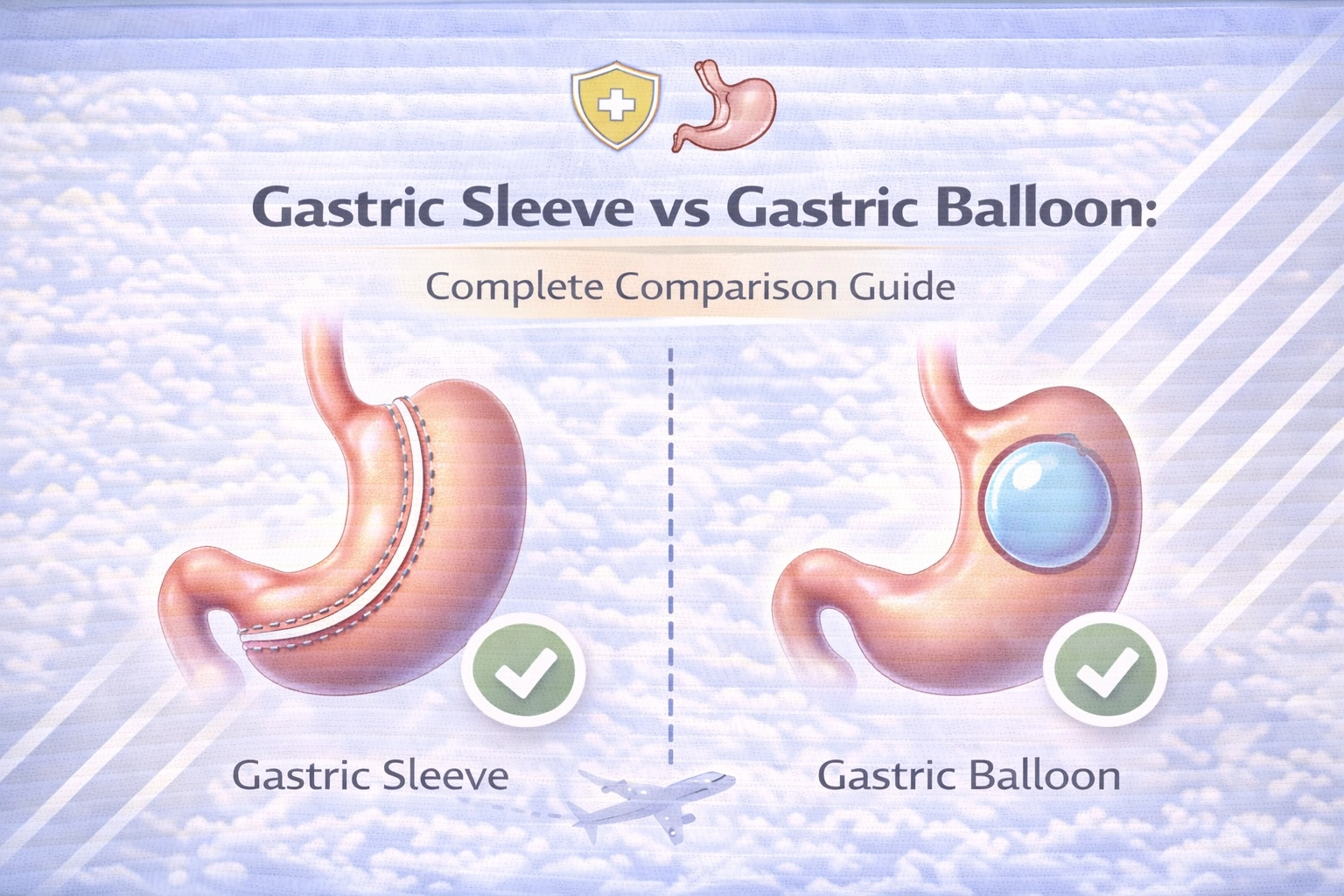
Gastric sleeve surgery permanently removes approximately 75-80% of the stomach through laparoscopic incisions, leaving a narrow banana-shaped tube called a “sleeve” that holds roughly 100-150ml of food.
The procedure typically takes 60-90 minutes under general anesthesia. Surgeons make 4-5 small incisions in the abdomen and use specialized staplers to remove the larger curved portion of the stomach. This portion includes the fundus, which produces most of the hunger hormone ghrelin.
Weight loss occurs through two mechanisms: the smaller stomach capacity restricts food intake, and the removal of ghrelin-producing tissue significantly reduces appetite. Most patients report feeling less hungry overall and becoming satisfied with much smaller portions.
The permanent nature of gastric sleeve means your anatomy changes forever. While the remaining stomach can stretch slightly over time, the procedure cannot be reversed, making commitment to lifestyle changes essential for long-term success.
Learn more about Gastric Sleeve in Turkey at Carely Clinic.
How Gastric Balloon Works
The gastric balloon is a temporary, non-surgical device placed inside the stomach through an endoscopic procedure lasting 20-30 minutes under mild sedation.
The deflated silicone balloon is inserted through the mouth using an endoscope and then filled with saline solution until it reaches approximately the size of a grapefruit. This occupies significant space in the stomach, creating an earlier feeling of fullness and reducing food intake capacity.
Unlike surgery, the balloon does not alter your anatomy. It works purely through mechanical restriction. The device remains in place for 6-12 months (depending on the type) before being deflated and removed through another endoscopic procedure. After removal, your stomach returns to its original size.
Weight loss with the balloon depends heavily on the behavioral changes you develop while it’s in place. The device serves as a training tool, helping patients learn portion control and healthier eating habits that ideally continue after removal.
Eligibility Requirements
Both procedures have specific eligibility criteria based on BMI, health status, and previous weight loss attempts. Understanding these requirements helps determine which option may be appropriate for your situation.
Gastric Sleeve Eligibility
According to 2022 ASMBS/IFSO guidelines, metabolic and bariatric surgery including gastric sleeve is recommended for individuals with BMI ≥35 regardless of presence, absence, or severity of comorbidities.
The updated guidelines also recommend gastric sleeve for patients with BMI 30-34.9 who have type 2 diabetes or other metabolic conditions, and it should be considered for those in this BMI range who have not achieved substantial weight loss through non-surgical methods.
Additional eligibility factors include being between ages 18-65 (with consideration for carefully selected patients outside this range), having attempted previous weight loss through diet and exercise, being psychologically prepared for permanent dietary changes, and having no contraindications to general anesthesia.
Certain conditions may disqualify candidates or require additional evaluation: active substance abuse, uncontrolled psychiatric conditions, inability to understand the procedure and its requirements, and some gastrointestinal conditions such as severe gastroesophageal reflux disease.
Gastric Balloon Eligibility
FDA-approved intragastric balloons are indicated for patients with BMI between 30 and 40 who have not achieved sustained weight loss through diet and exercise alone.
The balloon is particularly suitable for patients who prefer non-surgical approaches, those who do not meet criteria for bariatric surgery, individuals needing to lose weight before another surgical procedure, and patients with BMI slightly below surgical thresholds who want medical intervention.
Contraindications for gastric balloon include previous gastric or esophageal surgery, large hiatal hernia, inflammatory bowel disease, coagulopathy or anticoagulant use, pregnancy or planned pregnancy within six months, and certain psychiatric conditions or substance abuse disorders.
The balloon can also serve as a “bridge” procedure for super-obese patients (BMI >50) to reduce surgical risks before undergoing bariatric surgery.
| Criterion | Gastric Sleeve | Gastric Balloon |
|---|---|---|
| Primary BMI Range | ≥35 kg/m² | 30-40 kg/m² |
| Lower BMI with Conditions | 30-34.9 with metabolic disease | 27-30 (off-label) |
| Age Range | 18-65 (typical) | 18-65 |
| Prior Weight Loss Attempts | Required | Required |
| Previous Gastric Surgery | Requires evaluation | Contraindicated |
Weight Loss Results Compared
Weight loss outcomes differ substantially between these procedures, with gastric sleeve producing significantly greater and more durable results than gastric balloon.
Gastric Sleeve Weight Loss Results
Most patients achieve 60-70% excess weight loss within 12-18 months following gastric sleeve surgery, with some studies reporting outcomes up to 80% excess weight loss in highly compliant patients.
The weight loss timeline typically follows a predictable pattern. During the first month, patients lose approximately 10-15% of excess weight, primarily due to the liquid diet and surgical recovery. By three months, average excess weight loss reaches 30-40%. At six months, most patients have lost 50-55% of excess weight, and by 12-18 months, the 60-70% milestone is typically achieved.
Long-term studies demonstrate that gastric sleeve produces durable results. Research published in Obesity Surgery shows that patients maintain approximately 55-60% excess weight loss at the five-year mark, though some weight regain (10-15%) is common and expected.
The hormonal changes from ghrelin reduction contribute significantly to sustained weight loss. Patients report decreased hunger, reduced food cravings, and improved satiety signals that persist years after surgery.
Gastric Balloon Weight Loss Results
Gastric balloon patients typically lose 10-15% of their total body weight or approximately 25-35% of their excess weight during the 6-month treatment period.
Clinical trials for the Orbera balloon system showed average weight loss of approximately 21-30 pounds over six months, with patients achieving 3.1 times more weight loss than diet and exercise alone. The Spatz3 12-month balloon has shown slightly higher results, with average total body weight loss of 15% or approximately 32 pounds.
Weight loss with the balloon occurs most rapidly in the first three months, with results plateauing as the body adapts to the device. A meta-analysis comparing intragastric balloons found mean total body weight loss of 10.35% at 12 months.
The critical challenge with gastric balloon is weight maintenance after removal. Studies indicate that 50-70% of patients experience some weight regain within the first year after balloon removal, with outcomes heavily dependent on sustained lifestyle changes. The balloon serves primarily as a behavioral training tool rather than a permanent solution.
Expert Insight
“Gastric balloon can jumpstart weight loss and help patients develop healthier eating habits, but long-term success requires continued dietary modifications and often pharmacotherapy or bariatric surgery for sustained results.”
— American Gastroenterological Association Clinical Practice Guidelines, 2021
Safety and Risks
Both procedures have established safety profiles, though their risk categories differ significantly due to the surgical versus non-surgical nature of each intervention.
Gastric Sleeve Safety Profile
Gastric sleeve is considered safe when performed at accredited centers, with a mortality rate of 0.05-0.08% according to pooled meta-analysis data covering over 3.6 million patients. This is comparable to or lower than common procedures like gallbladder removal and hip replacement.
The overall serious complication rate for gastric sleeve ranges from 2-3%, with the most common complications including staple line leak (1-3%), bleeding (1-2%), and stricture formation (0.5-1%). According to IFSO data, the overall complication rate for laparoscopic sleeve gastrectomy is 2.12%, lower than gastric bypass at 3.02%.
Short-term side effects are common but typically manageable: nausea and vomiting during dietary progression, acid reflux (15-20% of patients), temporary hair thinning during rapid weight loss phase, and nutritional deficiencies requiring lifelong supplementation.
Long-term risks include the potential development or worsening of gastroesophageal reflux disease (GERD), which occurs in approximately 15-20% of patients. Some patients may require conversion to gastric bypass to address persistent reflux symptoms.
Gastric Balloon Safety Profile
Gastric balloon complications are generally mild, though serious adverse events can occur. The mortality rate is approximately 0.08%, similar to gastric sleeve, with deaths primarily attributed to gastric perforation and aspiration-related complications.
Common side effects in the first week include nausea (55% of patients), abdominal pain (32%), and vomiting, which typically resolve as the body adapts. Approximately 4-7% of patients experience persistent symptoms requiring intervention, and early balloon removal due to intolerance occurs in roughly 4-6% of cases.
Serious but rare complications include gastric perforation (0.1%), balloon migration or rupture (1.4%), small bowel obstruction (0.3%), gastric ulceration (variable, higher with certain balloon types), and acute pancreatitis (reported in approximately 20-30 cases by the FDA through 2018).
The FDA has issued safety communications regarding liquid-filled balloons, noting potential risks of spontaneous hyperinflation and acute pancreatitis. Patients must be monitored throughout the treatment period and seek immediate care if experiencing severe abdominal pain, difficulty breathing, or signs of balloon dysfunction.
| Risk Factor | Gastric Sleeve | Gastric Balloon |
|---|---|---|
| Mortality Rate | 0.05-0.08% | 0.08% |
| Major Complication Rate | 2-3% | 3-6% |
| Early Removal/Reoperation | 1.5% | 4-6% |
| Nausea/Vomiting | Common first weeks | Very common (55%) |
| Long-term Monitoring | Annual follow-up recommended | Throughout 6-month placement |
Recovery Time
Recovery expectations differ dramatically between these procedures, with gastric balloon offering significantly faster return to normal activities.
Gastric Sleeve Recovery Timeline
Full recovery from gastric sleeve surgery takes approximately 4-6 weeks, though most patients return to daily activities much sooner. The recovery process follows distinct phases.
During the hospital stay of 1-2 nights, patients are monitored for complications and begin walking within hours of surgery to prevent blood clots. Pain is managed with medication and typically rates 5-7/10 initially, decreasing to 3-4/10 by day three.
In the first week at home, patients follow a clear liquid diet, take short walks multiple times daily, and manage surgical discomfort with prescribed medication. Driving is typically restricted while on narcotic pain medications.
By weeks two through four, most patients transition through pureed and soft foods, resume driving (if off pain medication), and can return to desk jobs. Physical restrictions include no lifting over 10-15 pounds and avoiding strenuous activity.
Return to work timing depends on job demands: desk work is typically possible within 1-2 weeks, active jobs requiring 3-4 weeks, and physical labor requiring 6-8 weeks. Full dietary recovery with solid foods occurs around weeks 5-6, and unrestricted exercise is typically cleared at 4-6 weeks.
Gastric Balloon Recovery Timeline
Gastric balloon recovery is remarkably quick due to its non-surgical nature. Most patients go home the same day and can return to normal activities within 1-3 days.
The procedure itself takes 20-30 minutes under mild sedation. Patients spend 1-2 hours in recovery before discharge with instructions for managing initial symptoms and dietary progression.
The first three to five days involve significant adjustment as the stomach adapts to the balloon. Patients commonly experience nausea, cramping, and discomfort during this period, managed with anti-nausea medication and a liquid diet. Most symptoms resolve within the first week.
By day three to seven, most patients feel well enough to return to work and resume normal activities without restriction. There are no lifting restrictions or exercise limitations, though strenuous activity should be approached gradually based on comfort level.
The 6-month treatment period requires ongoing dietary compliance and regular follow-up appointments, but daily life is minimally disrupted compared to surgical recovery.
Cost Comparison
Cost differences between gastric sleeve and gastric balloon are substantial, varying significantly by country and whether all-inclusive packages are available.
Gastric Sleeve Costs by Country
Gastric sleeve surgery in Turkey costs €3,500-€5,500 for all-inclusive packages, compared to $15,000-$25,000 in the USA and £10,000-£15,000 in the UK—representing savings of 60-75%.
The price differential reflects lower operational costs in Turkey, not lower quality. Turkish hospitals follow identical clinical protocols, use the same surgical equipment, and maintain JCI accreditation standards as Western facilities. All-inclusive packages typically cover hospital stay, surgeon fees, anesthesia, pre-operative testing, post-operative medications, accommodation, and airport transfers.
In the USA, costs vary significantly by state and insurance coverage. Self-pay patients often face $15,000-$25,000 out of pocket, though insurance may cover a portion if medical necessity criteria are met. The UK NHS rarely covers bariatric surgery except for specific circumstances, leaving most patients to pay privately at £10,000-£15,000.
Gastric Balloon Costs by Country
Gastric balloon in Turkey costs €1,600-€2,600, compared to $6,000-$12,000 in the USA and £3,000-£5,000 in the UK—savings of approximately 60-80%.
Insurance coverage for gastric balloon is rare in most countries, as the procedure is typically considered elective. Most patients pay out of pocket regardless of location, making Turkey’s lower pricing particularly attractive.
Package inclusions for gastric balloon typically cover the device itself, placement and removal procedures, consultation, and follow-up appointments. Some clinics also include nutritional counseling and behavioral support programs essential for maximizing results.
| Country | Gastric Sleeve | Gastric Balloon |
|---|---|---|
| Turkey | €3,500-€5,500 | €1,600-€2,600 |
| USA | $15,000-$25,000 | $6,000-$12,000 |
| UK | £10,000-£15,000 | £3,000-£5,000 |
| Germany | €6,000-€10,000 | €3,000-€4,500 |
| Savings in Turkey | 60-75% | 60-80% |
Who Should Choose Gastric Sleeve
Gastric sleeve is the better choice for patients seeking substantial, permanent weight loss with proven long-term outcomes and willing to commit to irreversible anatomical changes.
Choose Gastric Sleeve If:
You have significant obesity (BMI ≥35) or BMI 30-35 with metabolic conditions. The 2022 ASMBS/IFSO guidelines recommend gastric sleeve for these patients based on extensive evidence demonstrating superior outcomes compared to non-surgical interventions.
You need to lose 50+ pounds or more than 60% of your excess weight. Gastric sleeve’s average 60-70% excess weight loss far exceeds what gastric balloon can achieve, making it appropriate for substantial weight loss goals.
You have obesity-related health conditions requiring resolution. Gastric sleeve produces significant improvement or remission of type 2 diabetes, hypertension, sleep apnea, and other comorbidities at rates substantially higher than gastric balloon.
You’re committed to permanent lifestyle changes. The irreversible nature of gastric sleeve means patients must be psychologically prepared for lifelong dietary modifications, vitamin supplementation, and regular medical follow-up.
You’ve failed previous weight loss attempts including medications. Gastric sleeve is indicated for patients who have not achieved sustained weight loss through conservative measures, offering a more definitive intervention.
You can take 2-4 weeks off for recovery. Unlike gastric balloon, gastric sleeve requires a meaningful recovery period with activity restrictions before returning to normal life.
Who Should Choose Gastric Balloon
Gastric balloon is the better choice for patients seeking a temporary, non-surgical intervention for moderate weight loss or as a stepping stone to more definitive treatment.
Choose Gastric Balloon If:
You have lower BMI (30-40) and don’t qualify for or want surgery. Gastric balloon fills the gap between lifestyle interventions and bariatric surgery, offering medical intervention for patients in lower obesity classes.
You need to lose 20-40 pounds or 10-15% of your body weight. The balloon’s typical results match well with more moderate weight loss goals that don’t require surgical intervention.
You want a reversible, temporary option. If you’re uncertain about permanent changes or want to “test” weight loss before committing to surgery, the balloon’s temporary nature provides flexibility.
You cannot take extended time off work or have activity restrictions. With same-day discharge and 1-3 day recovery, gastric balloon minimally disrupts daily life and work schedules.
You’re preparing for another surgery requiring weight loss. Gastric balloon serves as effective “bridge therapy” for patients needing to reduce BMI before joint replacement, transplant, or other surgical procedures.
You want to avoid surgical risks entirely. Though not risk-free, gastric balloon avoids incisions, general anesthesia, and permanent anatomical changes associated with bariatric surgery.
You’re highly motivated for behavioral change. Success with gastric balloon depends heavily on developing lasting dietary habits during the 6-month treatment period, making patient commitment essential.
How This Applies in Turkey
International clinical guidelines from ASMBS and IFSO apply equally at Turkey’s JCI-accredited medical facilities, which follow identical protocols and safety standards as American and European hospitals.
The key advantages of choosing Turkey for either procedure include cost savings of 60-75% compared to the USA and UK, shorter waiting times (typically days versus months in public healthcare systems), and comprehensive all-inclusive packages that eliminate hidden costs and logistical concerns.
At Carely Clinic in Istanbul, both gastric sleeve and gastric balloon procedures are performed by board-certified bariatric surgeons at JCI-accredited partner hospitals. Gastric sleeve packages include 2-night hospital stay, pre-operative testing, post-operative medications, 5-night hotel accommodation, VIP airport transfers, and lifetime aftercare support.
International patients typically spend 5-7 days in Turkey for gastric sleeve or 2-3 days for gastric balloon, with remote follow-up continuing after returning home. Our multilingual patient coordinators guide you through every step from initial consultation to post-procedure recovery.
Learn more about Bariatric Surgery in Turkey at Carely Clinic or Gastric Balloon in Turkey at Carely Clinic.
Frequently Asked Questions
Which procedure produces more weight loss: gastric sleeve or gastric balloon?
Gastric sleeve produces 4-6 times more weight loss than gastric balloon, with 60-70% excess weight loss versus 10-15% total body weight loss. For a patient with 100 pounds to lose, gastric sleeve typically results in 60-70 pounds lost compared to 25-30 pounds with gastric balloon. The permanent nature of gastric sleeve versus the 6-month balloon placement contributes to these dramatically different outcomes.
Is gastric balloon safer than gastric sleeve surgery?
Both procedures have similar mortality rates of approximately 0.08%, making them equally safe in terms of life-threatening risks. Gastric balloon avoids surgical complications like staple line leaks but has higher intolerance rates requiring early removal in 4-6% of patients. Gastric sleeve involves surgical risks but benefits from extensive safety data across millions of procedures worldwide with complication rates of 2-3%.
How long does weight loss last after each procedure?
Gastric sleeve maintains 55-60% excess weight loss at five years post-surgery according to long-term studies published in Obesity Surgery. Gastric balloon results typically diminish after the 6-month removal, with 50-70% of patients experiencing weight regain within one year. The difference reflects gastric sleeve’s permanent anatomical changes versus the balloon’s temporary intervention requiring sustained behavioral modifications.
Can I have gastric sleeve after trying gastric balloon?
Yes, gastric balloon leaves no permanent anatomical changes, allowing you to pursue gastric sleeve or other bariatric surgery afterward. Many patients strategically use the balloon as a “bridge therapy” to reduce weight and surgical risks before undergoing sleeve gastrectomy. Your bariatric surgeon will evaluate your readiness based on weight loss achieved and commitment to post-surgical lifestyle requirements.
What BMI do I need for each procedure?
Gastric sleeve requires BMI ≥35 without comorbidities or BMI 30-34.9 with metabolic conditions according to 2022 ASMBS/IFSO guidelines. Gastric balloon is FDA-approved for BMI 30-40, with some clinics offering off-label treatment for BMI 27-30 patients. Your bariatric specialist evaluates your complete health profile including comorbidities, previous weight loss attempts, and psychological readiness beyond just BMI numbers.
How soon can I return to work after each procedure?
Gastric balloon patients return to work within 1-3 days with no activity restrictions or lifting limitations. Gastric sleeve patients typically return to desk work in 1-2 weeks, active jobs in 3-4 weeks, and physical labor requiring heavy lifting in 6-8 weeks. Recovery timeline depends on job demands, individual healing rate, and whether any post-operative complications develop.
Will I need to take vitamins after either procedure?
Gastric sleeve requires lifelong daily vitamin supplementation including multivitamins, B12, iron, calcium, and vitamin D due to reduced nutrient absorption. Gastric balloon may require temporary supplementation during the 6-month treatment period to compensate for reduced food intake. After balloon removal, most patients can meet nutritional needs through diet alone without continued supplementation requirements.
What happens if I can’t tolerate the gastric balloon?
Approximately 4-6% of patients require early balloon removal due to persistent nausea, vomiting, or severe abdominal pain that doesn’t resolve. The balloon is removed through a quick 20-minute endoscopic procedure identical to the placement process, with your stomach returning to normal immediately. You can then discuss alternative weight loss options including medication, different balloon types, or surgical procedures with your physician.
Is the gastric balloon procedure painful?
The placement procedure itself is not painful because patients receive mild sedation or light anesthesia during the 20-30 minute endoscopic insertion. However, the first 3-5 days after placement commonly involve significant discomfort including nausea, cramping, and abdominal pain as your stomach adjusts. Symptoms are managed with prescribed anti-nausea medication and pain relievers, typically resolving completely within one week.
Which procedure is better for type 2 diabetes?
Gastric sleeve produces diabetes remission rates of 40-80% within the first year, often allowing patients to reduce or eliminate medications. Gastric balloon may improve blood sugar control temporarily during the 6-month treatment but rarely produces complete diabetes remission due to modest weight loss. The hormonal changes from gastric sleeve, particularly ghrelin reduction, contribute to superior metabolic improvements beyond weight loss alone.
Can the gastric balloon burst inside my stomach?
Balloon rupture occurs in approximately 1-2% of cases, though modern balloons contain methylene blue dye that turns urine blue-green to alert patients immediately. Most deflated balloons pass naturally through the intestines within 24-72 hours without intervention. In rare cases (0.3%), the deflated balloon may cause intestinal obstruction requiring emergency endoscopic or surgical removal to prevent serious complications.
How much does each procedure cost in Turkey?
Gastric sleeve all-inclusive packages in Turkey cost €3,500-€5,500 compared to $15,000-$25,000 in the USA, representing 60-75% savings. Gastric balloon costs €1,600-€2,600 in Turkey versus $6,000-$12,000 in the USA, saving 60-80%. Turkish packages include hospital stay, surgeon fees, anesthesia, pre-operative testing, medications, accommodation, and VIP airport transfers with no hidden costs.
Conclusion
Gastric sleeve and gastric balloon serve different patient needs within the spectrum of weight loss interventions. Gastric sleeve offers permanent, substantial weight loss of 60-70% excess weight with proven long-term durability, making it ideal for patients with BMI ≥35 or significant obesity-related health conditions. Gastric balloon provides a temporary, non-surgical option achieving 10-15% total body weight loss, suited for patients with lower BMI seeking less invasive intervention or preparation for other procedures.
Your choice should be based on your BMI, weight loss goals, commitment to permanent lifestyle changes, tolerance for surgical versus non-surgical approaches, and timeline for recovery. Both procedures can be performed safely at accredited facilities in Turkey at 60-80% savings compared to Western countries, with outcomes matching international standards.
Disclaimer: Individual requirements and outcomes vary. This guide provides general information based on international clinical guidelines and should not replace consultation with qualified medical professionals. The right procedure depends on your complete health profile, which must be evaluated by a bariatric specialist.
Ready to explore which weight loss procedure is right for you? Contact Carely Clinic for a free consultation with our bariatric team to discuss your options and create a personalized treatment plan.