
Quick Summary
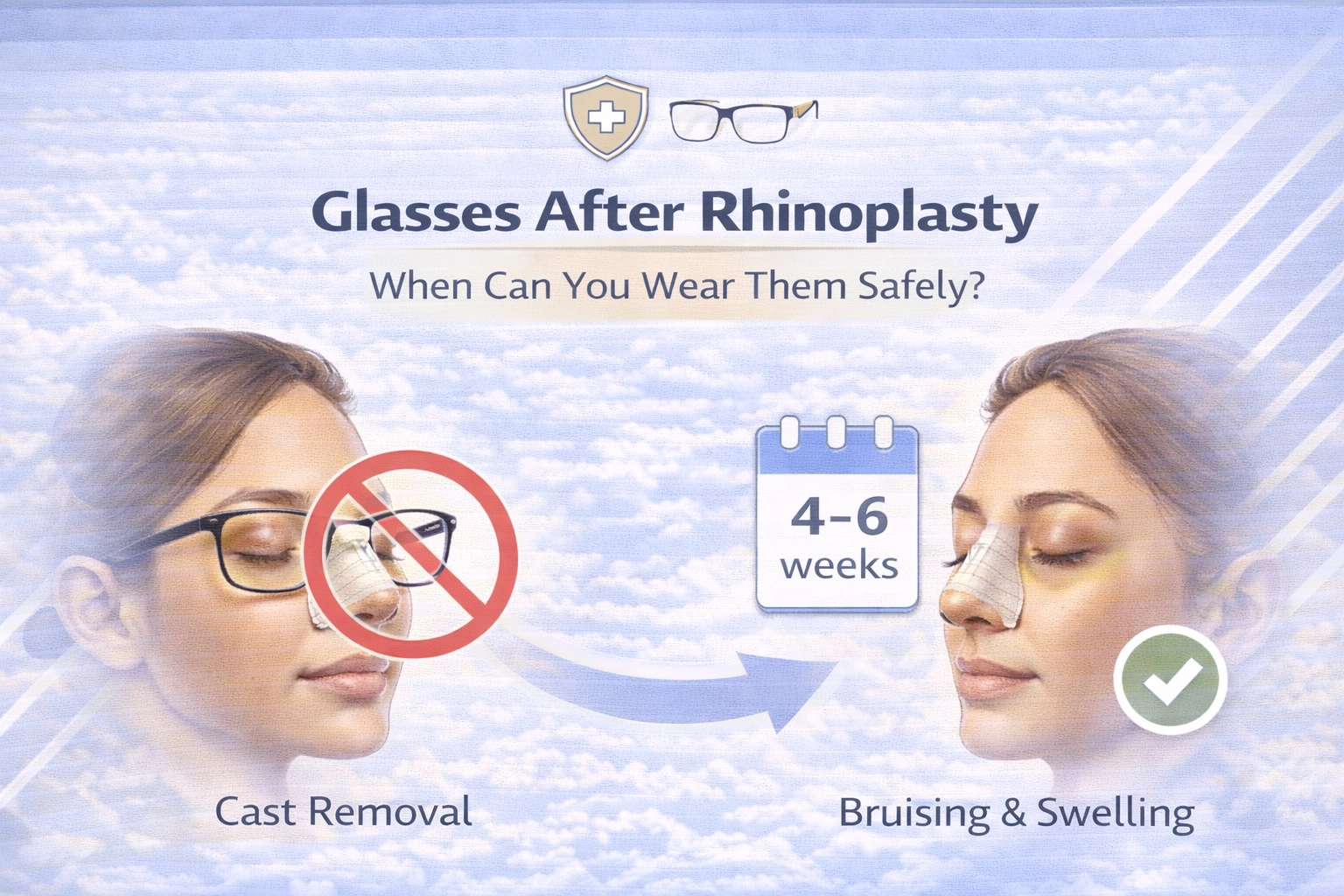
You should avoid wearing glasses directly on your nose for at least 4-6 weeks after rhinoplasty to prevent pressure on healing nasal bones and cartilage. During this time, contact lenses, forehead support straps, or cheek-resting glasses provide vision correction without risking your surgical results.
According to board-certified facial plastic surgeons, nasal bones typically require 6-8 weeks to fully heal, though the splint provides initial protection during the first week post-surgery.
This guide covers the complete timeline for wearing glasses after rhinoplasty, alternative vision solutions, risks of wearing glasses too early, and practical tips for protecting your results.
Why Trust This Guide
This article draws on current guidelines from the American Academy of Facial Plastic and Reconstructive Surgery (AAFPRS), peer-reviewed rhinoplasty research, and clinical recommendations from board-certified facial plastic surgeons specializing in nasal surgery.
Carely Clinic’s medical team has reviewed this content to ensure accuracy and alignment with international standards of care practiced at JCI-accredited facilities worldwide.
Why You Can’t Wear Glasses Immediately After Rhinoplasty
Traditional eyeglasses exert 15-30 grams of pressure directly on the nasal bridge—sufficient to shift healing bones, create permanent indentations, or compromise your surgical results during the critical post-operative period.
After rhinoplasty, your nasal bones and cartilage enter a delicate healing phase where even minimal pressure can influence the final outcome. During surgery, controlled osteotomies (precise bone cuts) often reposition nasal bones, leaving them mobile until proper healing occurs. The weight of glasses resting on this healing structure poses specific risks that surgeons universally warn against.
The nasal bones are non-weight-bearing structures that heal relatively quickly compared to larger bones, typically requiring 6-8 weeks to regain stability. However, during this vulnerable period, the repositioned bones can shift if exposed to consistent pressure from eyeglasses. This is why the American Academy of Facial Plastic and Reconstructive Surgery explicitly recommends avoiding excess pressure on the bridge of the nose during recovery.
Even lightweight glasses present concerns because they rest precisely where surgical modifications occur. The nasal bridge is often the primary focus of rhinoplasty procedures involving hump reduction or bone reshaping, making it particularly sensitive to external forces during healing.
Complete Timeline for Wearing Glasses After Rhinoplasty
Recovery from rhinoplasty follows predictable stages, with each phase presenting different considerations for glasses wearers. Understanding this timeline helps you plan alternatives and know when you can safely return to regular eyewear.
Week 1: Splint Protection Period
You can typically wear lightweight glasses over your nasal splint during the first week after surgery, as the rigid protective cast shields your healing bones from direct pressure.
During this initial phase, your nose will be protected by a nasal splint or cast that supports the new structure and reduces swelling. This splint provides a barrier between your glasses and the healing tissues beneath, allowing limited glasses use. However, surgeons recommend choosing the lightest frames possible and avoiding any situation where glasses might be bumped or shifted.
The splint typically remains in place for 5-7 days, during which swelling peaks within the first 72 hours before gradually subsiding. Many patients find this period manageable because the splint provides protection, though the swelling and congestion may make glasses uncomfortable regardless.
Weeks 2-4: Critical Healing Phase
Once the splint is removed, you must avoid placing any glasses directly on your nose for the next 3-5 weeks, as your nasal bones are healing but remain vulnerable to pressure-induced shifting.
This period represents the most critical time for protecting your results. The splint removal reveals your healing nose, but internal healing continues for months. Nasal bones are relatively stable 2-3 weeks after osteotomies, but facial plastic surgeons recommend avoiding nasal trauma for at least 6 weeks to ensure proper bone consolidation.
During weeks 2-4, you should exclusively use alternative vision solutions such as contact lenses, forehead support straps, or cheek-resting frames. Even brief periods of wearing traditional glasses can create problems during this vulnerable phase. The nasal bridge may appear healed externally while internal bone union continues developing beneath the surface.
Weeks 4-6: Gradual Stabilization
By weeks 4-6, nasal bone stability typically allows gradual reintroduction of lightweight glasses, though heavy frames and extended wear should still be avoided.
Most surgeons schedule follow-up appointments during this period to assess healing progress and advise on resuming glasses use. At this stage, the nasal structure has stabilized enough to support light pressure without compromising results, but caution remains important. Patients should start with brief periods of lightweight glasses wear and gradually increase duration.
The nasal tip often retains swelling longer than the bridge, but the bones supporting glasses have usually achieved sufficient strength for careful glasses use. Your surgeon’s specific recommendations should guide your timeline, as individual healing varies based on surgical technique and personal factors.
Weeks 6-12: Extended Healing
Between 6 weeks and 3 months, most patients can resume wearing regular glasses normally, though surgeons advise avoiding very heavy frames and monitoring for any discomfort or irritation.
By the 6-week mark, the nasal bones have typically gained enough stability for most patients to resume wearing glasses without special precautions. However, the complete healing process extends much longer, with subtle changes continuing for up to 12 months. The nasal tip remains the slowest area to heal, though it does not directly contact glasses.
Patients should still avoid situations where glasses might be struck or pushed forcefully against the nose, such as contact sports. Full return to normal activities, including wearing any style of glasses, typically occurs after 3 months, though some surgeons recommend caution with very heavy frames for up to 6 months.
3-12 Months: Final Results
From 3 months onward, you can typically wear any glasses style, though final rhinoplasty results may not be fully visible until 12 months post-surgery when all swelling has resolved.
The final result of rhinoplasty emerges gradually over the first year. While glasses restrictions end relatively early in recovery, patients should understand that their nose continues refining its appearance for many months. About 95% of swelling resolves by 6 months, with the remaining subtle changes occurring through the 12-month mark.
Patients with thicker nasal skin may experience prolonged swelling, potentially lasting 18 months. This does not affect glasses-wearing ability but should set expectations for when final cosmetic results become apparent.
Alternative Vision Solutions During Recovery
Multiple options exist for maintaining clear vision while protecting your healing nose, ranging from contact lenses to specialized post-surgical eyewear designed specifically for rhinoplasty patients.
Contact Lenses
Contact lenses provide the simplest solution during rhinoplasty recovery since they eliminate all pressure on the nose while offering complete vision correction.
For patients who already wear contacts, continuing this option after surgery requires minimal adjustment. Even non-regular contact lens users can often use daily disposable lenses during the recovery period, providing a convenient temporary solution. Most patients can resume contact lens use within a few days after surgery, though eye irritation from anesthesia or medications may require a brief waiting period.
Contact lenses work for both near and far vision correction, making them suitable for patients with various prescription needs. The only consideration is that inserting contacts requires some facial manipulation, which should be done carefully to avoid bumping the nose during the early recovery period.
Forehead Support Straps
Forehead suspension devices lift glasses away from the nose entirely by securing frames to the forehead with adhesive pads or adjustable headbands.
These specialized devices attach to your existing glasses and redirect their weight to your forehead rather than your nasal bridge. Available from medical suppliers and online retailers, forehead supports offer a practical solution for patients who cannot wear contacts or need their prescription glasses for work. The devices come in various styles, from discrete clear adhesive versions to more visible headband configurations.
Forehead supports allow patients to use their regular prescription lenses without purchasing new frames. While not fashionable for public appearances, they provide reliable vision correction during the recovery period when appearance concerns take a backseat to healing priorities.
Cheek-Resting Glasses
Post-surgical glasses with cheek pads instead of nose pads distribute weight to your cheekbones, completely bypassing the healing nasal bridge.
These specialty frames were designed specifically for rhinoplasty recovery and feature extended arms that rest on the malar eminences (cheekbones) rather than the nose. The design eliminates all pressure on the nasal structure while providing stable vision correction. Several manufacturers now produce these frames in various styles, including options that accommodate prescription lenses.
Cheek-resting glasses represent a more sophisticated solution than forehead supports, offering improved comfort and appearance for extended wear. They may be particularly valuable for patients requiring glasses throughout the workday who cannot use contacts.
Taping Method
Medical tape can suspend lightweight glasses from the forehead, preventing frames from resting on the nose while maintaining usable vision correction.
This DIY approach involves wrapping tape around the center portion of glasses, then extending tape strips to adhere to the forehead. While less elegant than commercial solutions, taping provides an immediately available option using supplies many patients already have at home. Surgeons often recommend this method for patients who need occasional glasses use during recovery.
The taping method works best with lightweight frames and for short-duration wear. Extended use may cause forehead skin irritation, and the tape requires periodic replacement. Patients should use medical-grade tape to minimize skin reactions.
Bridgeless Glasses
Rimless or frameless glasses with adjustable arms minimize bridge contact and distribute weight more evenly across multiple facial contact points.
While not completely eliminating nasal bridge contact, well-fitted bridgeless glasses significantly reduce pressure compared to traditional frames. The lenses connect via temple arms without a central bridge piece, though some nose contact typically remains necessary for stability. This option may be acceptable for late-recovery patients who need a more conventional appearance.
Bridgeless glasses should only be considered after discussing with your surgeon and typically not before the 4-6 week mark. They represent a transitional option between full restrictions and normal glasses use rather than an early recovery solution.
Risks of Wearing Glasses Too Early
Wearing glasses prematurely after rhinoplasty can cause complications ranging from minor cosmetic issues to problems requiring revision surgery.
Permanent Indentations
Continuous pressure from glasses on healing nasal skin and cartilage can create lasting depressions or marks that may require additional procedures to correct.
The healing nose is particularly susceptible to impression marks during the first 4-6 weeks. Unlike temporary marks that form on fully healed skin, indentations created during active healing can become permanent as tissue forms around the compressed area. These cosmetic defects may be subtle or significant depending on frame weight and wear duration.
Correcting permanent indentations typically requires revision rhinoplasty or injectable fillers, adding expense and additional recovery time. Prevention through proper glasses avoidance during the critical healing period remains far preferable to corrective intervention.
Bone Displacement
The most serious risk involves shifting of healing nasal bones, potentially altering surgical results and requiring revision rhinoplasty to correct.
After osteotomies, nasal bones can move if subjected to external pressure before proper healing occurs. This risk is highest during the first 2-3 weeks but remains relevant through 6 weeks post-surgery. Even relatively minor bone shifts can affect aesthetic outcomes, creating asymmetry or changing the nasal profile in unintended ways.
Significant bone displacement requires revision surgery to correct, typically delayed until 6-12 months after the primary procedure to allow complete initial healing. The revision adds surgical risk, cost, and recovery time that proper glasses avoidance would have prevented.
Cartilage Deformation
Pressure on healing cartilage, particularly in the mid-nasal region, can cause permanent shape changes affecting both appearance and potentially function.
Cartilage remodeling continues for months after rhinoplasty, making these tissues susceptible to pressure-induced changes. The upper lateral cartilages in the mid-vault region sit precisely where glasses rest, creating vulnerability to deformation. Unlike bone displacement that may be obvious, cartilage changes often manifest subtly over time.
Cartilage issues may affect nasal breathing as well as appearance if the deformation compromises the internal nasal valve. Functional problems add complexity to revision planning and underscore the importance of protecting the healing nose.
Delayed Healing
Even when not causing permanent damage, glasses pressure can extend swelling duration and delay the timeline for seeing final rhinoplasty results.
Chronic low-grade pressure irritates healing tissues, promoting inflammation and extending the swelling phase. Patients who ignore glasses restrictions may experience prolonged recovery with delayed resolution of post-surgical swelling. While this may not require surgical intervention, it extends the period of cosmetic adjustment and patient dissatisfaction.
How Different Rhinoplasty Types Affect Glasses Restrictions
The type of rhinoplasty you undergo influences glasses restrictions, with procedures involving bone work requiring longer avoidance periods than cartilage-only modifications.
Rhinoplasty with Osteotomies
Procedures involving bone cuts for bridge narrowing or straightening require the full 4-6 week glasses avoidance period due to bone healing requirements.
Osteotomies are among the most common rhinoplasty techniques, used to narrow wide nasal bridges, straighten crooked noses, or close “open roof” deformities after hump removal. These controlled bone fractures heal within 6-8 weeks but remain vulnerable to displacement during this period. Patients undergoing rhinoplasty with osteotomies face the strictest glasses restrictions.
The bone cuts typically occur at the junction between nasal bones and the maxilla, precisely where glasses rest. Any pressure on this area during healing risks shifting the repositioned bones. Surgeons treating these patients uniformly recommend 4-6 weeks minimum glasses avoidance.
Tip Rhinoplasty Only
Procedures addressing only the nasal tip may allow earlier glasses return since the nasal bridge bones remain intact and stable.
Tip rhinoplasty focuses on cartilage reshaping in the lower third of the nose without modifying the bony pyramid. Since glasses rest on the nasal bridge rather than the tip, some surgeons permit earlier glasses use for tip-only patients—potentially as early as 2 weeks post-surgery.
However, individual surgical approaches vary, and even tip procedures often involve work that extends into the mid-vault region. Patients should follow their specific surgeon’s recommendations rather than assuming shorter restrictions based on general categorizations.
Revision Rhinoplasty
Secondary rhinoplasty often involves more complex healing and may require extended glasses restrictions of 6-8 weeks or longer.
Revision cases frequently involve cartilage grafting, scar tissue management, and reconstruction of previously modified structures. The healing environment in revision surgery differs from primary rhinoplasty, often requiring extended protection periods. Some revision patients may need 8 weeks or more before resuming glasses wear.
The complexity of revision cases makes individualized guidance essential. Patients should discuss glasses timing specifically with their revision surgeon, as general guidelines may not apply to complex secondary procedures.
Septorhinoplasty
Combined septal and cosmetic rhinoplasty follows similar glasses restrictions to cosmetic-only procedures, typically requiring 4-6 weeks avoidance.
Septorhinoplasty addresses both functional and aesthetic concerns, combining septal correction with external nose reshaping. While the septal work occurs internally, the external modifications dictate glasses restrictions. Patients undergoing septorhinoplasty should follow the same 4-6 week timeline as cosmetic rhinoplasty patients.
The internal septal work does not directly affect glasses-related healing concerns, as the septum lies within the nasal cavity rather than beneath the bridge where glasses rest.
Tips for Transitioning Back to Regular Glasses
When your surgeon approves glasses use, gradual reintroduction with appropriate precautions helps ensure your results remain protected.
Start with Lightweight Frames
Begin with the lightest frames you own or consider purchasing titanium or flexible plastic frames specifically for the transition period.
Lightweight materials like titanium reduce pressure on the still-healing nasal bridge. Frames weighing under 20 grams are ideal for initial return to glasses wear. If your prescription lenses are heavy due to strong correction, consider polycarbonate or high-index materials that reduce lens weight.
The investment in lightweight frames during transition pays dividends in protecting your surgical investment. Many patients find these comfortable enough to continue using even after full healing.
Limit Initial Wear Duration
Begin with 1-2 hours of glasses wear and gradually increase duration over several days while monitoring for any discomfort or visible marks.
Even after receiving surgeon approval, a gradual approach prevents overloading the still-healing nasal bridge. Start with brief periods, perhaps during reading or computer work, then extend duration as tolerated. Any developing redness, indentations, or discomfort signals the need for continued restriction.
Keeping a log of wear times and any symptoms helps identify problems early. Most patients can increase to full-day wear within 1-2 weeks of initial reintroduction without issues.
Consider Adjustable Nose Pads
Glasses with adjustable silicone nose pads allow customization of fit to minimize pressure on specific healing areas.
Many glasses feature nose pads that can be adjusted by an optician or the wearer to redistribute pressure. Widening the pad spacing or angling them differently can reduce focal pressure points on the nasal bridge. This adjustment may make glasses comfortable earlier in recovery than would otherwise be possible.
A visit to your optician for professional adjustment is worthwhile before resuming glasses wear. They can optimize the fit for your healing nose and recommend any modifications to improve comfort.
Avoid Heavy Frames Long-Term
Even after full healing, consider whether your heavy fashion frames remain appropriate or if lighter alternatives would better protect your investment.
Rhinoplasty represents a significant investment in your appearance. Patients who habitually wear very heavy frames may want to reconsider this choice post-surgery. While fully healed noses can support normal glasses weight, minimizing chronic pressure remains sensible.
Fashion trends increasingly favor lighter frame styles, making this consideration practical as well as protective. Your surgeon or patient coordinator can advise on long-term eyewear considerations during follow-up appointments.
How This Applies in Turkey
International guidelines from the AAFPRS and board-certified facial plastic surgeons apply equally at Turkey’s JCI-accredited facilities, following the same post-operative protocols as American and European hospitals.
Turkey has emerged as a leading destination for rhinoplasty, with Istanbul surgeons performing among the highest volumes globally—often 200-400 procedures annually per surgeon according to 2025 clinic data. This extensive experience includes managing recovery for international patients who must follow post-operative restrictions including glasses avoidance during their stay and after returning home.
The cost advantage makes rhinoplasty in Turkey accessible to many patients. Rhinoplasty packages in Turkey range from €2,500-€4,500 compared to $9,000-$15,000 in the USA and £5,000-£10,000 in the UK—representing 50-70% savings while maintaining international quality standards. All-inclusive packages typically cover surgeon fees, anesthesia, facility use, hotel stays, and ground transportation.
At Carely Clinic in Istanbul, rhinoplasty is performed by board-certified surgeons at JCI-accredited partner hospitals. International patients receive detailed post-operative instructions including glasses restrictions, alternative vision solutions, and timeline guidance before returning home. Virtual follow-up consultations ensure proper monitoring throughout the 4-6 week restriction period and beyond.
Learn more about Rhinoplasty at Carely Clinic.
Summary Table
| Recovery Phase | Timeframe | Glasses Status | Recommended Alternatives |
|---|---|---|---|
| Splint Period | Days 1-7 | Lightweight glasses over splint OK | Contact lenses preferred |
| Critical Healing | Weeks 2-4 | No glasses on nose | Contacts, forehead straps, cheek pads |
| Stabilization | Weeks 4-6 | With surgeon approval only | Lightweight frames, brief wear |
| Extended Healing | Weeks 6-12 | Most glasses OK | Avoid very heavy frames |
| Full Recovery | 3-12 Months | Normal glasses use | Any style appropriate |
What to Expect: Timeline
Before Surgery
- 2-4 weeks before: Arrange alternative vision solutions (contacts, forehead straps, or cheek-pad glasses)
- 1 week before: Test contact lenses if you don’t usually wear them
- Day before: Prepare recovery space with vision alternatives accessible
Surgery Day
Your surgeon places a nasal splint that protects the nose during initial healing. Lightweight glasses can rest on this splint if needed.
Recovery
- Days 1-7: Splint provides protection; lightweight glasses over splint acceptable
- Day 5-7: Splint removal; glasses avoidance begins strictly
- Weeks 2-4: Use only alternative vision solutions; no nasal bridge contact
- Week 4-6: Surgeon assessment; possible gradual glasses reintroduction
- Week 6+: Most patients resume normal lightweight glasses use
- Month 3+: Full return to any glasses style
Expert Insight
“The nasal bones are non-weight-bearing and will continue to heal properly as long as they were lined up properly at surgery and a callus has formed. However, we ask rhinoplasty patients to avoid wearing glasses directly on the nose for at least 4-6 weeks to ensure the bones heal correctly.”
— Facial Plastic Surgery Associates, Clinical Guidelines
Frequently Asked Questions
Can I wear glasses over the nasal splint after rhinoplasty?
Yes, lightweight glasses can rest on the nasal splint during the first 5-7 days after surgery. The rigid splint protects healing bones from direct pressure, making this the only safe period for glasses-on-nose contact. Choose frames under 20 grams and avoid activities that might bump them.
How long do I have to avoid wearing glasses after a nose job?
You must avoid placing glasses on your nose for 4-6 weeks after rhinoplasty. This period allows nasal bones to heal completely after osteotomies, with stability typically achieved by week 6. Tip-only procedures may allow earlier return at 3-4 weeks, while revision cases often require 8 weeks.
What happens if I wear glasses too soon after rhinoplasty?
Wearing glasses during the first 4-6 weeks can permanently shift nasal bones, create lasting indentations in healing skin, or deform cartilage—complications requiring revision surgery to correct. Even brief wear during critical healing poses these risks, with bone displacement most likely in weeks 2-4 when bones are mobile but unprotected.
Can I wear sunglasses after rhinoplasty?
No, sunglasses require the same 4-6 week avoidance as prescription glasses since both rest on the nasal bridge. Use clip-on sunglasses with forehead support straps, or consider prescription sunglasses with cheek-pad frames designed for post-rhinoplasty use that redirect weight to cheekbones instead of your healing nose.
Are contact lenses safe after rhinoplasty?
Yes, contact lenses are safe and recommended 2-3 days after rhinoplasty, providing complete vision correction without any nasal pressure. They represent the simplest alternative for most patients. Temporary eye dryness from anesthesia may require waiting 3-5 days, so confirm timing with your surgeon at your first follow-up.
How do forehead eyeglass supports work?
Forehead supports attach to your existing glasses and use adhesive pads or elastic straps to suspend frames from your forehead, eliminating all nasal bridge contact. They cost $15-$40 online and work with any prescription glasses. While not fashionable, they provide reliable vision correction throughout the 4-6 week restriction period.
Will my glasses fit differently after rhinoplasty?
Yes, glasses may fit differently after rhinoplasty if the procedure changed your nasal bridge height or width. This occurs in approximately 60-70% of patients who undergo bridge modification. An optician can adjust nose pads or recommend new frames once you’ve healed, typically at the 3-month mark when final contours are visible.
Can wearing glasses after rhinoplasty cause permanent damage?
Yes, wearing glasses during the 4-6 week critical healing period can cause permanent bone displacement, cartilage deformation, or skin indentations requiring revision surgery to correct. The risk is highest in weeks 2-4 when nasal bones are mobile but unprotected. Following glasses restrictions protects your surgical investment and prevents $8,000-$15,000 revision costs.
When can I wear heavy-framed glasses after rhinoplasty?
Wait at least 3 months before wearing heavy frames (over 30 grams), with some surgeons recommending 6 months for fashion frames exceeding 40 grams. Start with lightweight titanium or flexible plastic frames under 20 grams at week 6. Gradual weight reintroduction protects your surgical results and prevents late-stage complications.
Should I get LASIK before rhinoplasty?
Schedule LASIK at least 3 months before rhinoplasty to eliminate glasses during recovery completely. This spacing allows full eye healing before nose surgery and removes all vision correction concerns during the 4-6 week glasses restriction period. Discuss timing with both surgeons to coordinate procedures safely and optimize recovery.
Do the same restrictions apply in Turkey as in the USA?
Yes, identical 4-6 week glasses restrictions apply worldwide because they’re based on nasal bone healing physiology, not geographic location. Board-certified surgeons at Turkey’s JCI-accredited facilities follow AAFPRS international guidelines, ensuring the same post-operative standards as American and European hospitals regardless of the 50-70% cost savings.
Can tape really hold my glasses up without touching my nose?
Yes, medical tape effectively suspends lightweight glasses (under 25 grams) from your forehead for 2-4 hours at a time. Wrap tape around the frame’s center, extend strips to your forehead, and replace every 4-6 hours to maintain adhesion. This works best for occasional use like reading or computer work, not all-day wear.
Conclusion
Proper glasses management after rhinoplasty requires patience but significantly impacts your surgical outcome. The 4-6 week avoidance period protects healing nasal bones and cartilage from pressure-induced complications that could require revision surgery to correct.
Multiple alternative vision solutions exist for this temporary period, including contact lenses for most patients, forehead support devices for those who cannot wear contacts, and specialty cheek-resting frames for extended wear needs. Planning these alternatives before surgery ensures you maintain clear vision while protecting your investment.
Your surgeon’s specific guidance should always take precedence over general timelines, as individual healing rates and surgical techniques may warrant modifications. Regular follow-up appointments allow your surgeon to assess healing progress and advise when glasses resumption is safe for your specific situation.
Individual recovery timelines vary based on surgical technique, healing characteristics, and procedure complexity. This guide provides general information based on international guidelines from board-certified facial plastic surgeons. Always consult your surgeon for personalized guidance regarding glasses restrictions and recovery expectations.