
Quick Summary
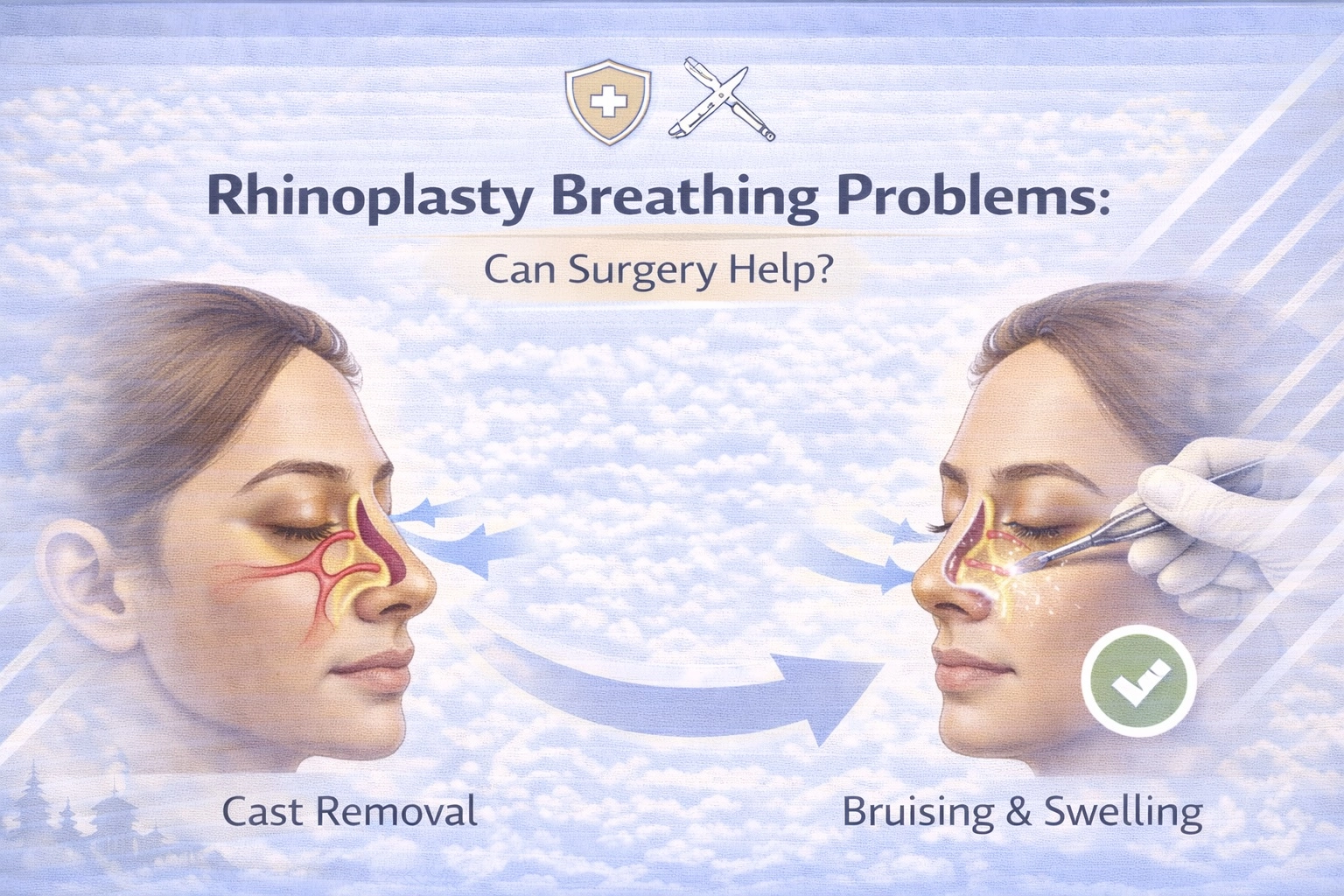
Functional rhinoplasty effectively improves breathing in 90-95% of patients by correcting structural issues such as deviated septum, nasal valve collapse, and enlarged turbinates. Studies report significant improvements in validated measures including NOSE scores and quality of life assessments, with breathing gains sustained at long-term follow-up.
According to the American Society of Plastic Surgeons (ASPS) and published clinical research, rhinoplasty addresses both aesthetic and functional objectives, with septoplasty achieving stable breathing improvements and high patient satisfaction rates.
This guide covers the causes of nasal breathing problems, surgical techniques that restore airflow, success rates with statistical evidence, recovery expectations, and how Turkey’s JCI-accredited facilities provide world-class functional rhinoplasty at significantly reduced costs.
Why Trust This Guide
This comprehensive guide draws upon peer-reviewed research published in journals including Surgery for Obesity and Related Diseases, Rhinology, and The Laryngoscope, along with clinical guidelines from the American Society of Plastic Surgeons (ASPS), the American Academy of Otolaryngology–Head and Neck Surgery (AAO-HNS), and validated patient outcome measures including the Nasal Obstruction Symptom Evaluation (NOSE) scale.
Our content reflects the expertise of board-certified surgeons who perform functional rhinoplasty at JCI-accredited facilities, ensuring accuracy in discussing surgical techniques, realistic outcome expectations, and evidence-based recovery guidance for international patients considering breathing improvement surgery.
Understanding rhinoplasty Breathing Problems
Chronic nasal obstruction affects quality of life through mouth breathing, dry oropharynx, nasal speech, disordered sleep, reduced lung volume, and overall decreased well-being. Understanding the underlying structural causes is essential for determining whether surgical intervention can help.
The nasal cavity serves vital functions beyond simple airflow. The internal structures warm and humidify inhaled air, filter allergens and germs, provide drainage, and enable the sense of smell. When structural abnormalities obstruct these passages, the consequences extend far beyond simple breathing difficulty.
Nasal obstruction can result from congenital factors present from birth, developmental changes during growth, or acquired conditions from trauma or previous surgeries. Many patients live with compromised breathing for years without realizing that surgical correction could dramatically improve their quality of life.
Expert Insight
“Rhinoplasty can be both aesthetic and functional. Addressing issues with the septum can improve airflow and appearance. Rhinoplasty is a procedure that attempts to strike a delicate balance between form and function.”
— American Society of Plastic Surgeons, 2024
What Causes Breathing Difficulties
Structural nasal obstruction stems from three primary anatomical problems: deviated septum, nasal valve dysfunction, and enlarged turbinates. Each condition requires specific surgical approaches for optimal correction.
Deviated Septum
A deviated nasal septum is the most common structural cause of breathing difficulty, affecting approximately 80% of the population to varying degrees. The septum is the cartilage and bone wall dividing the nose into right and left nasal cavities.
Studies show that while 80% of people have some degree of septal deviation, only about 20% experience symptoms significant enough to seek medical attention. When the deviation is severe, it can completely block airflow to one side, causing chronic congestion, recurrent sinus infections, nosebleeds, and sleep disturbances.
Septal deviation can be present at birth (congenital), develop during facial growth, or result from nasal trauma such as sports injuries or accidents. Research published in medical journals indicates that deviation rates range from 26% to 97% across different populations, depending on the severity threshold used for diagnosis.
Nasal Valve Collapse
The nasal valves represent the narrowest portions of the nasal airway and are critical for regulating airflow. The internal nasal valve, located where the upper lateral cartilages meet the septum, accounts for approximately 50% of total nasal airway resistance.
When nasal valves are weak, collapsed, or structurally narrow, they can obstruct breathing significantly—particularly during inspiration when negative pressure causes the sidewalls to collapse inward. This condition may be congenital or can develop after previous rhinoplasty surgery that inadvertently weakened supportive structures.
According to the American Academy of Otolaryngology–Head and Neck Surgery, nasal valve repair using cartilage grafting, suture suspension techniques, or implants can effectively stabilize the nasal valve and improve airflow.
Enlarged Turbinates
The inferior turbinates are bony structures covered with soft tissue that humidify and warm inhaled air. When turbinates become chronically enlarged (hypertrophic)—whether from allergies, chronic rhinitis, or environmental irritation—they can significantly obstruct the nasal passages.
The overall success rate for turbinate reduction surgery is approximately 82%, with patients experiencing improved nasal airflow and reduced chronic congestion. Various techniques including radiofrequency ablation, microdebrider-assisted turbinoplasty, and partial turbinectomy can address this condition.
Functional vs. Cosmetic Rhinoplasty
Functional rhinoplasty focuses primarily on improving nasal breathing by correcting structural abnormalities that impair airflow. Cosmetic rhinoplasty aims to enhance the external appearance of the nose. Many patients benefit from combining both approaches in a single procedure.
Functional Rhinoplasty
A functional rhinoplasty addresses internal structural issues affecting breathing capability. Common problems corrected include deviated septum, nasal valve collapse, enlarged turbinates, and other obstructions blocking normal airflow.
Symptoms indicating potential benefit from functional rhinoplasty include chronic nasal congestion, difficulty breathing through one or both nostrils, recurrent sinus infections, sleep disturbances due to nasal obstruction, and decreased quality of life from breathing difficulties.
Cosmetic Rhinoplasty
Cosmetic rhinoplasty primarily addresses external aesthetic concerns including nose size, shape, proportion, and symmetry. Goals may include reducing a bump on the bridge, refining the nasal tip, adjusting nostril width, or correcting asymmetry.
Importantly, changes to external nasal structures can also affect internal airflow—either positively or negatively. An experienced surgeon understands that form follows function and ensures cosmetic changes do not compromise breathing.
Combined Septorhinoplasty
Many patients benefit most from septorhinoplasty, which addresses both functional and cosmetic concerns in a single procedure. This combined approach reduces overall recovery time, minimizes costs compared to separate procedures, and ensures that internal function is integrated with external appearance.
Research indicates that 70% of patients seeking revision rhinoplasty do so primarily to improve breathing—highlighting the importance of addressing functional issues during the initial surgery.
Surgical Techniques for Breathing Improvement
Multiple evidence-based surgical techniques can restore nasal airflow, each targeting specific anatomical problems. Surgeons select appropriate methods based on individual patient anatomy and the underlying causes of obstruction.
Septoplasty
Septoplasty straightens a deviated septum by reshaping or repositioning the cartilage and bone that divide the nasal passages. This straightforward procedure typically takes 30-90 minutes and is performed on an outpatient basis.
Published studies report that septoplasty produces significant improvement in disease-specific quality of life, with 68-74% of patients experiencing improved nasal breathing at long-term follow-up. Success rates are approximately 70% according to meta-analyses of patient satisfaction outcomes.
The procedure involves making an incision inside the nose, elevating the mucous membrane covering the septum, removing or repositioning deviated cartilage and bone, and returning the membrane to position. No external incisions are required.
Spreader Grafts
Spreader grafts are cartilage grafts placed between the septum and upper lateral cartilages to widen the internal nasal valve and prevent collapse during inspiration. Since their introduction in the 1980s, spreader grafts have become standard treatment for internal nasal valve dysfunction.
Research demonstrates that spreader grafts improve both objective measures and subjective symptoms of nasal obstruction. One study found spreader grafts highly effective in 89% of patients with internal valve dysfunction, with patients reporting their nasal airway had essentially doubled in function.
Cartilage for spreader grafts is typically harvested from the septum itself, though ear cartilage or rib cartilage may be used when septal cartilage is insufficient.
Turbinate Reduction
Turbinate reduction decreases the size of enlarged inferior turbinates to improve airflow. Multiple techniques exist, each with specific advantages.
Radiofrequency ablation uses controlled energy to shrink turbinate tissue with minimal downtime, often performed in an office setting. Microdebrider-assisted turbinoplasty provides precise tissue removal while preserving the mucosal surface. Partial turbinectomy involves excising part of the turbinate and is reserved for severe cases.
Studies show significant improvement in nasal stuffiness, obstruction, and mouth breathing following turbinate reduction, with long-term benefits maintained for 36 months or longer in most patients.
Alar Batten Grafts
Alar batten grafts reinforce weak or collapsed lateral nasal walls and alar cartilages. These grafts are placed over areas that collapse during inspiration, providing structural support without changing the resting position of the valve.
Research reports that alar batten grafts improved nasal patency scores from 2.7 to 6.3 (on a 10-point scale), representing significant functional improvement for patients with dynamic nasal valve collapse.
Nasal Valve Repair
Comprehensive nasal valve repair may combine multiple techniques including spreader grafts, flaring sutures, and alar battens. The combination of spreader grafts and flaring sutures improved nasal cross-sectional area by 18.7% in cadaveric studies, with corresponding clinical improvements in breathing function.
Success Rates and Patient Outcomes
Functional rhinoplasty demonstrates high success rates across multiple validated outcome measures, with breathing improvements sustained at long-term follow-up.
Breathing Improvement Statistics
For patients undergoing functional rhinoplasty to improve breathing, 90-95% experience noticeable improvement in their breathing capability. Only 5-10% report no significant improvement, and less than 1% feel their breathing has worsened.
Septoplasty success rates are approximately 70% based on patient satisfaction measures, with NOSE scores showing significant reduction from preoperative levels. One study documented NOSE scores decreasing from 60.3 preoperatively to 32.9 at three months post-surgery—a clinically meaningful improvement.
Patient Satisfaction Data
Research involving the Rhinoplasty Outcome Evaluation demonstrates mean satisfaction scores of 79.5% following functional nasal surgery. Studies using the Glasgow Benefit Inventory show positive changes in quality of life across physical, psychological, and social domains.
The ASPS reports that septoplasty most often has stable results, with improvements including better breathing, reduced snoring, and better sleep maintained over time. Most patients who undergo functional rhinoplasty report the surgery benefited them overall.
Long-Term Outcomes
Long-term studies tracking patients for 2-3 years or longer confirm that breathing improvements persist, though some studies note gradual attenuation of benefits over extended periods. In one study, 68% of patients experienced improved nasal breathing 11 years postoperatively, with 56% satisfied with overall outcome.
Functional improvements from septorhinoplasty are considered permanent once healing is complete, typically by 6-12 months post-surgery.
Who Is a Good Candidate
Good candidates for functional rhinoplasty share specific characteristics related to their symptoms, health status, and expectations. A thorough evaluation determines whether surgery can address the underlying cause of breathing difficulty.
Ideal Candidate Characteristics
Patients most likely to benefit from functional rhinoplasty experience documented structural nasal obstruction causing breathing difficulty, have tried and failed conservative treatments such as nasal sprays and antihistamines, demonstrate positive response to the Cottle maneuver (manual widening of the nasal valve), are in good overall health without uncontrolled medical conditions, and have realistic expectations about surgical outcomes.
Qualifying Conditions
Common conditions addressed by functional rhinoplasty include deviated septum causing chronic unilateral or bilateral obstruction, nasal valve collapse confirmed by physical examination, turbinate hypertrophy unresponsive to medical management, post-traumatic nasal deformity affecting breathing, and prior rhinoplasty complications causing functional impairment.
Who Should Avoid Surgery
Patients should postpone or avoid surgery if they have active nasal infections or sinusitis, uncontrolled bleeding disorders, unrealistic expectations about outcomes, psychological instability, or active smoking (which impairs healing and increases complications).
Non-smokers are preferred candidates, as smoking interferes with the healing process and increases risk of complications. Most surgeons require patients to stop smoking at least 4 weeks before and after surgery.
Recovery Timeline for Breathing Improvement
Recovery from functional rhinoplasty follows a predictable timeline, with breathing improvements becoming progressively noticeable as swelling resolves over weeks to months.
Week 1: Immediate Post-Operative Period
The first week involves the most significant swelling and discomfort. Patients have nasal splints or packing in place, experience facial pressure and congestion, and breathe primarily through the mouth. Pain is typically mild to moderate and well-controlled with prescribed medications.
Splint removal occurs around day 5-7, at which point patients begin to notice some breathing improvement—though significant swelling still limits airflow. Bruising around the eyes typically peaks at 48-72 hours and begins fading.
Weeks 2-4: Early Recovery
By week two, most visible swelling and bruising have subsided sufficiently for patients to return to work and social activities. Nasal breathing begins returning, often feeling better than pre-surgery despite residual swelling.
Most patients return to desk work within 1-2 weeks. Physically demanding jobs require 3-4 weeks before resumption. Light exercise can typically resume after 2-3 weeks, though strenuous activity should wait until 4-6 weeks.
Months 1-3: Intermediate Healing
During this period, 85-90% of swelling resolves and breathing continues improving. The bridge and sides of the nose refine significantly, though the nasal tip—the slowest area to heal—may still appear slightly full.
Any numbness or stiffness in the nose typically improves during this phase. Patients can resume full exercise regimens and contact sports after 6 weeks, once tissues have adequately healed.
Months 3-12: Final Results
Residual swelling, particularly at the nasal tip, continues resolving gradually. By 6 months, approximately 95% of swelling has resolved; by 12 months, 97% or more. Final breathing function and nasal appearance are typically evident at the one-year mark.
Patients undergoing functional rhinoplasty for deviated septum correction often notice breathing improvements within 6 weeks, though optimal airflow develops as all swelling resolves.
Risks and Complications
Functional rhinoplasty carries risks common to all surgical procedures, though serious complications are uncommon when performed by experienced surgeons at accredited facilities.
Common Short-Term Effects
Expected temporary effects include swelling, bruising, nasal congestion, and mild discomfort during the first 1-2 weeks. Bloody or blood-tinged mucus discharge is normal for approximately 2 days, with a normal range of 1 day to 1 week. Temporary numbness of the nasal skin typically resolves within weeks to months.
Potential Complications
Complications requiring attention include bleeding (occurring in approximately 3-6% of patients), infection (0.4-12% depending on study), septal perforation (approximately 1%), persistent nasal obstruction, and asymmetry. In a large study of 5,639 septoplasty patients, the overall complication rate was 3.42%.
Rare but serious complications include CSF rhinorrhea, meningitis, and other intracranial complications—though these occur in less than 0.1% of cases when proper surgical technique is employed.
Revision Surgery Rates
Published revision rates for rhinoplasty range from 5% for simple tip rhinoplasty to 15.5% for complex revision cases. About 15% of rhinoplasty patients overall require follow-up revision surgery to make small adjustments. For purely functional surgery, revision needs are typically at the lower end of this range.
Risk factors for revision include previous nasal surgery or fracture, incomplete anatomical correction, and post-operative complications such as infection.
How This Applies in Turkey
International guidelines from the American Society of Plastic Surgeons, American Academy of Otolaryngology, and European surgical societies apply equally at Turkey’s JCI-accredited medical facilities. Turkish surgeons follow identical clinical protocols and safety standards as American and European institutions.
The key differences are cost and accessibility. Functional rhinoplasty in Turkey costs €2,500-€4,500 compared to $9,000-$18,000 in the USA and £6,500-£10,000 in the UK. International patients typically complete the entire process within 7-10 days, compared to weeks of waiting in countries with insurance-based healthcare systems.
At Carely Clinic in Istanbul, functional rhinoplasty and septorhinoplasty are performed by board-certified surgeons at JCI-accredited partner hospitals. All-inclusive packages cover surgery, anesthesia, hospital stay, medications, hotel accommodation (3-4 nights), and ground transportation—providing a stress-free experience for international patients. Learn more about Rhinoplasty at Carely Clinic.
Turkey’s surgeons perform exceptionally high volumes of rhinoplasty procedures—Istanbul alone handles the majority of Turkey’s estimated 83,000 annual rhinoplasties. This extensive experience, combined with surgeons trained in American and European institutions, produces outcomes matching or exceeding Western standards.
Cost Comparison by Country
| Country | Price Range | What’s Typically Included | Savings vs. USA |
|---|---|---|---|
| Turkey | €2,500–€4,500 | Surgery, hospital, hotel, transfers, follow-up | 60-75% |
| USA | $9,000–$18,000 | Surgery, facility, anesthesia (accommodation separate) | — |
| United Kingdom | £6,500–£10,000 | Surgery, facility, anesthesia (accommodation separate) | 30-45% |
| Canada | CAD 10,000–16,000 | Surgery, facility, follow-up (accommodation separate) | 25-40% |
| Australia | AUD 12,000–18,000 | Surgery, facility, anesthesia (accommodation separate) | 20-35% |
Why Turkey Costs Less
Lower rhinoplasty costs in Turkey reflect reduced operating expenses, favorable currency exchange rates, and government support for medical tourism—not lower quality. Turkish surgeons receive training from American and European institutions, many holding international certifications, and operate in hospitals meeting JCI accreditation standards.
All-inclusive packages eliminate hidden costs, providing transparency and convenience. Patients pay once for the entire service package and don’t need to organize logistics—only prepare for surgery.
Frequently Asked Questions
Can rhinoplasty actually fix breathing problems?
Yes, functional rhinoplasty improves breathing in 90-95% of patients. The surgery corrects structural issues including deviated septum, nasal valve collapse, and enlarged turbinates that block nasal airflow. Studies using the NOSE scale show significant symptom reduction from scores of 60.3 pre-surgery to 32.9 at three months post-surgery, representing clinically meaningful improvement.
How do I know if my breathing problem is structural or medical?
Structural breathing problems affect one side more than the other, worsen during physical activity, and don’t improve with decongestants or antihistamines. A positive Cottle maneuver—where gently pulling your cheek outward improves breathing—indicates structural valve dysfunction requiring surgery rather than medical treatment. Nasal endoscopy provides definitive diagnosis of structural versus inflammatory causes.
Is septoplasty the same as rhinoplasty?
No, septoplasty straightens the internal septum without changing external appearance, while rhinoplasty reshapes the outer nose structure. Septoplasty takes 30-90 minutes and focuses purely on breathing improvement. Septorhinoplasty combines both procedures in a single surgery, addressing internal breathing function and external appearance simultaneously, which reduces overall recovery time and costs.
Will my nose look different after functional rhinoplasty?
Purely functional rhinoplasty causes minimal visible change since it targets internal structures only. However, straightening a crooked septum that affects external alignment may create subtle appearance changes. Approximately 70% of patients seeking revision surgery do so primarily for breathing improvement, highlighting that function and appearance are interconnected. Surgeons can address both goals together.
How long does breathing improvement take after surgery?
Initial breathing improvement occurs within 2-3 weeks after splint removal and major swelling reduction. Progressive improvement continues over 3-6 months as residual internal swelling resolves completely. Final breathing function is achieved by 6-12 months post-surgery when all tissues have fully healed. Most patients notice their breathing is better than pre-surgery even at 2-3 weeks.
Is the procedure painful?
Post-operative discomfort resembles sinus infection pressure around the eyes and forehead rather than sharp pain. Pain levels are mild to moderate, typically rated 2-3 out of 10, and well-controlled with prescribed medications. Most discomfort resolves within the first 5-7 days. Patients describe pressure and congestion as the primary sensations rather than actual pain.
What is the success rate of septoplasty?
Septoplasty achieves approximately 70% success rate based on patient satisfaction measures. Studies show 68-74% of patients report improved nasal breathing at long-term follow-up extending to 11 years. NOSE scores demonstrate statistically significant improvement, decreasing from 14.9 pre-surgery to 7.9 post-surgery. The overall complication rate is low at 3.42% in large-scale studies.
Can breathing problems return after surgery?
Breathing improvements from septoplasty are generally permanent once healing completes at 6-12 months. However, turbinate hypertrophy in allergic patients may gradually recur over 3-5 years, potentially requiring repeat treatment. Approximately 15% of rhinoplasty patients overall need revision surgery, though purely functional cases have lower revision rates. Structural corrections to the septum and nasal valves remain stable long-term.
Does insurance cover functional rhinoplasty?
Functional rhinoplasty addressing documented breathing obstruction receives partial coverage (typically 30-50% of the septoplasty component) from many UK NHS and private insurance plans. Purely cosmetic rhinoplasty is rarely covered. Pre-authorization with medical documentation including Cottle test results should be submitted at least 60 days before surgery. Coverage varies significantly by insurance provider and country.
How is Turkey’s rhinoplasty quality compared to Western countries?
Turkey’s JCI-accredited hospitals achieve 85-90% patient satisfaction rates matching Western standards. Leading Turkish surgeons perform 200-400+ rhinoplasties annually—far exceeding typical Western volumes of 50-100 procedures yearly. Many trained at American and European institutions and hold international board certifications. Published complication rates at Turkish JCI facilities are comparable to or lower than Western averages.
What should I look for in a rhinoplasty surgeon?
Choose board-certified surgeons performing 100+ rhinoplasties annually with specific functional rhinoplasty experience. Review before-and-after photo portfolios showing cases similar to yours, particularly breathing correction results. Verify JCI or equivalent accreditation for the surgical facility. Check patient reviews and testimonials specifically mentioning breathing improvement outcomes. Surgeons should understand both nasal aesthetics and airflow mechanics.
When can I fly after rhinoplasty in Turkey?
Most international patients safely fly home 5-7 days after surgery once initial healing occurs and bleeding risk passes. Surgeons provide flight clearance based on individual recovery progress and absence of complications. Flying at 3-5 days is possible but 7-10 days allows more comfortable travel with reduced facial swelling and pressure sensitivity. Cabin pressure changes are generally safe after the first week.
Conclusion
Functional rhinoplasty offers proven, lasting solutions for patients suffering from structural nasal breathing problems. With 90-95% of patients experiencing meaningful improvement and approximately 70% reporting long-term satisfaction following septoplasty, surgical correction represents an effective option when conservative treatments fail.
Modern surgical techniques—including septoplasty, spreader grafts, turbinate reduction, and nasal valve repair—address specific anatomical causes of obstruction with established safety profiles and predictable outcomes. Recovery typically allows return to work within 1-2 weeks, with full breathing improvement developing over 3-6 months.
For international patients, Turkey provides access to these procedures at 60-75% lower cost than the USA or UK, performed by internationally trained surgeons at JCI-accredited facilities. All-inclusive packages eliminate logistical concerns, allowing patients to focus on their recovery and results.
Disclaimer: Individual requirements and outcomes vary. This guide provides general information based on international medical guidelines and published research. Consult qualified medical professionals for personalized evaluation and treatment recommendations.
Ready to breathe freely? Contact Carely Clinic to schedule a consultation with our experienced rhinoplasty specialists and discover how functional rhinoplasty can improve your quality of life.