
Quick Summary
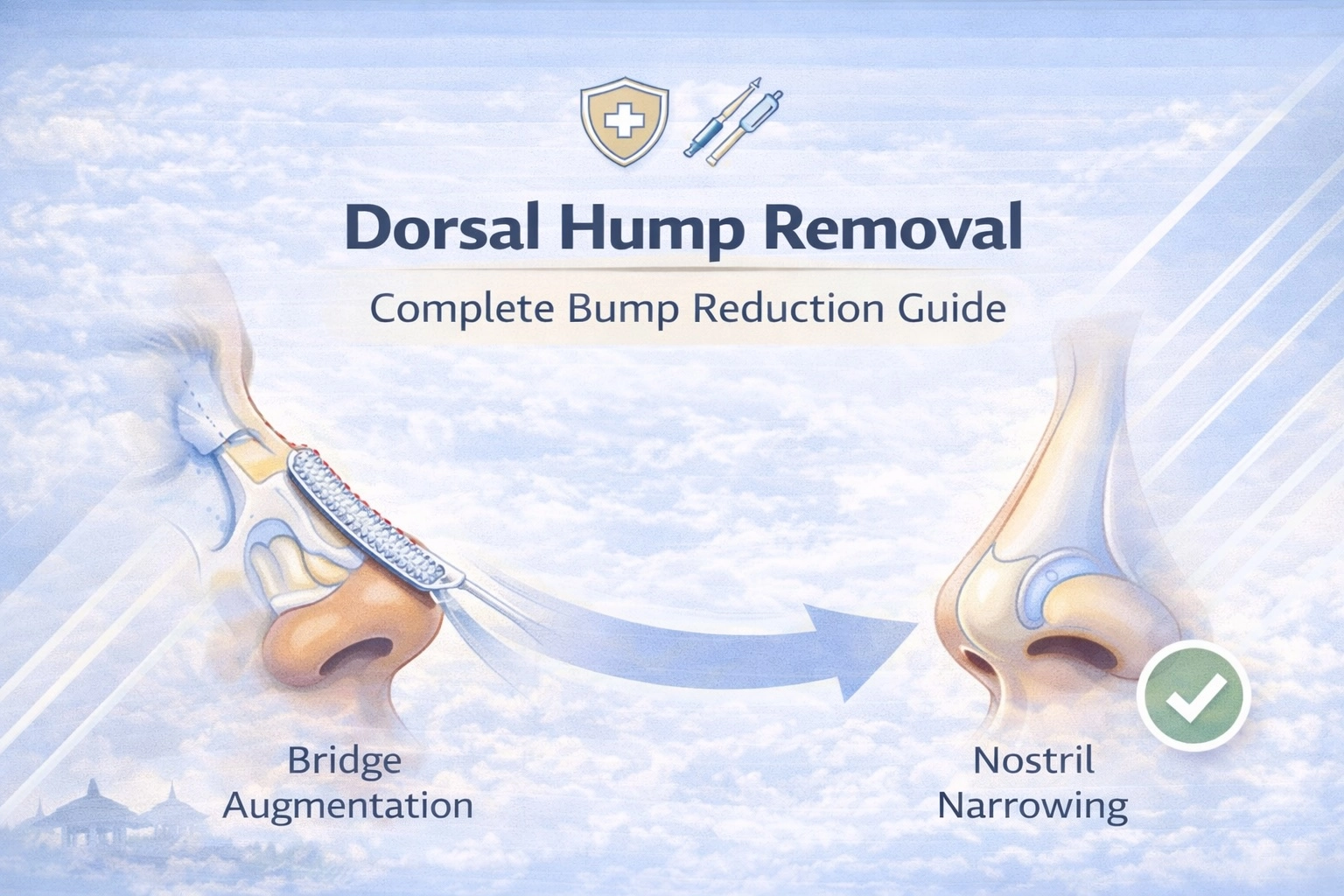
Dorsal hump removal is a rhinoplasty procedure that reshapes the nasal bridge by removing excess bone and cartilage, creating a smoother profile. The procedure takes 2-4 hours under general anesthesia, with most patients returning to work within 1-2 weeks.
According to the 2023 ISAPS Global Survey, rhinoplasty ranks among the top five surgical procedures worldwide, with over 1.1 million procedures performed annually. The major complication rate remains low at 0.7% when performed by board-certified surgeons at accredited facilities.
This guide covers surgical techniques, non-surgical alternatives, recovery timelines, costs by country, and what to expect throughout the dorsal hump removal process.
Why Trust This Guide
This content draws from peer-reviewed research published in journals including Facial Plastic Surgery & Aesthetic Medicine, European Archives of Otorhinolaryngology, and Aesthetic Surgery Journal. We reference current guidelines from the International Society of Aesthetic Plastic Surgery (ISAPS), American Society of Plastic Surgeons (ASPS), and clinical data from randomized controlled trials comparing rhinoplasty techniques.
Our editorial team collaborates with board-certified plastic surgeons who specialize in facial procedures. All medical claims are sourced from published clinical literature, and pricing data reflects verified 2024-2025 market information.
What Is a Dorsal Hump?
A dorsal hump is a visible bump on the nasal bridge composed of bone in the upper third and cartilage in the lower portion, creating a convex profile that many patients seek to correct through rhinoplasty surgery.
The nasal dorsum—the bridge of your nose—runs from between the eyes to the nasal tip. When this area has an irregular projection, it creates what appears as a “bump” or “hump” when viewed from the side. The structure consists of the nasal bones superiorly and the upper lateral cartilages inferiorly, meeting at the cartilaginous septum.
Unlike conditions such as a deviated septum, dorsal humps typically don’t affect breathing function. The concern is primarily aesthetic, though some patients report feeling self-conscious about their side profile. Dorsal hump removal remains one of the most common reasons patients pursue cosmetic rhinoplasty worldwide.
Causes of Dorsal Humps
Dorsal humps develop primarily through genetic inheritance, with trauma and age-related changes serving as secondary contributing factors in many cases.
Genetic Factors
The most common cause of dorsal humps is hereditary. If one or both parents have a prominent nasal bridge, offspring are more likely to develop similar features. Dorsal humps due to genetics rarely appear during childhood but typically become noticeable during puberty when the nose undergoes significant growth.
Certain ethnic backgrounds show higher prevalence of dorsal humps. Populations of Middle Eastern, Mediterranean, Eastern European, and Northern European descent more commonly exhibit prominent nasal bridges as a natural facial characteristic.
Trauma and Injury
Accidents, sports injuries, or physical trauma to the nose can result in dorsal hump formation. When the nose sustains impact, the bone and cartilage may heal unevenly, creating a visible bump. Even childhood trauma that wasn’t initially noticeable may become apparent during adolescent nasal development.
A broken nose that heals without proper realignment often results in callous formation that becomes more pronounced over time. The healing process can leave irregular bone deposits that create or exaggerate a dorsal hump.
Age-Related Changes
As facial features change with age, the cartilage and bone structure of the nose can shift. Skin elasticity loss may also make pre-existing dorsal humps appear more prominent. The nasal tip may droop with age, further emphasizing the appearance of a bump on the bridge.
Surgical Techniques for Dorsal Hump Removal
Component dorsal hump reduction using a stepwise approach represents the current gold standard, addressing bone and cartilage separately to preserve nasal function while achieving aesthetic improvement.
Modern rhinoplasty surgeons employ several techniques depending on hump size, patient anatomy, and whether functional concerns exist alongside cosmetic goals.
Open Rhinoplasty
Open rhinoplasty involves a small incision across the columella—the skin between the nostrils—providing the surgeon with direct visualization of nasal structures. This approach is preferred for larger dorsal humps or complex cases requiring precise cartilage manipulation.
The technique allows for accurate assessment of both bone and cartilage components. Surgeons can make incremental adjustments while directly observing how changes affect the nasal profile. The columellar scar typically heals to become nearly invisible within several months.
Closed Rhinoplasty
Closed rhinoplasty makes all incisions inside the nostrils, leaving no external scars. This approach works well for smaller dorsal humps and patients requiring less extensive reshaping.
Recovery may be slightly faster with closed rhinoplasty due to less tissue disruption. However, the surgeon has more limited visibility, making it better suited for straightforward corrections rather than complex reconstructions.
Component Hump Reduction Technique
The component dorsal hump reduction technique involves a five-step method: separation of upper lateral cartilages from the septum, incremental reduction of the septum proper, dorsal bony reduction, verification by palpation, and final modifications including spreader grafts or osteotomies if needed.
This approach treats nasal bones, septum, and upper lateral cartilages separately rather than removing the hump as a single unit. The technique minimizes risk of middle vault complications like the inverted-V deformity while preserving nasal valve function.
Preservation Rhinoplasty
A newer approach called preservation rhinoplasty (dorsal preservation) maintains the natural cartilaginous framework while lowering the entire dorsal profile. Rather than removing tissue, the technique repositions existing structures.
A 2024 randomized controlled trial published in European Archives of Otorhinolaryngology compared preservation rhinoplasty to conventional dorsal hump reduction in 50 patients. Both groups reported significantly higher satisfaction scores postoperatively, with no statistical difference between techniques in functional or aesthetic outcomes.
Osteotomies
After significant hump removal, an “open roof” deformity may occur where the nasal bones no longer meet at the midline. Osteotomies—controlled bone cuts—allow surgeons to reposition the nasal bones inward, closing the open roof and narrowing the bridge.
Lateral and medial osteotomies are performed using specialized instruments, either through external percutaneous approaches or internally. The technique choice affects postoperative swelling patterns and recovery timeline.
Ultrasonic (Piezoelectric) Rhinoplasty
Ultrasonic rhinoplasty uses piezoelectric technology to precisely sculpt bone without affecting surrounding soft tissues. The ultrasonic waves selectively cut bone while preserving blood vessels, nerves, and cartilage.
Benefits include reduced bruising, faster recovery, and more precise bone shaping compared to traditional rasps and osteotomes. However, the technology adds €200-€500 to procedure costs due to specialized equipment requirements.
Expert Insight
“Component hump reduction addressing bone and cartilage separately minimizes middle vault complications and preserves nasal valve function. The technique allows graduated correction while maintaining structural integrity.”
— Component Dorsal Hump Reduction Study, Plastic and Reconstructive Surgery Journal
Preparing for Dorsal Hump Rhinoplasty
Successful outcomes begin with thorough preparation. The weeks leading up to surgery significantly impact your experience and results.
Medical Evaluations
Before rhinoplasty, you’ll complete:
- Blood work including hemoglobin, electrolytes, and clotting function (INR)
- Medical history review and physical examination
- Nasal examination and photography for surgical planning
- Discussion of goals using computer imaging
Medications to Avoid
Stop the following 1-2 weeks before surgery as directed:
- Aspirin and aspirin-containing products
- NSAIDs (ibuprofen, naproxen, Advil, Motrin)
- Vitamin E supplements
- Fish oil and omega-3 supplements
- Herbal supplements including St. John’s Wort, ginkgo biloba, and garlic
Lifestyle Preparation
- Stop smoking: Nicotine impairs healing and increases complications. Quit at least 4-6 weeks before surgery.
- Avoid alcohol: Stop drinking 48 hours to one week before surgery to reduce bleeding risk.
- Eat well: A nutritious diet supports tissue repair and recovery.
- Arrange care: Have someone drive you home and stay with you for 24-48 hours post-surgery.
Day Before Surgery
- Prepare your recovery space with extra pillows for elevation
- Stock soft foods, lip balm, and saline spray
- Lay out loose, button-front clothing
- Shower and wash your hair (you may not be able to for several days)
- Fast after midnight—no food or water
Non-Surgical Alternatives
Non-surgical rhinoplasty uses dermal fillers to camouflage a dorsal hump by adding volume above and below the bump, creating a straighter profile without surgery—though the nose becomes slightly larger overall.
How Non-Surgical Rhinoplasty Works
Dermal fillers, typically hyaluronic acid products like Juvederm or Restylane, are injected into strategic areas around the hump. By filling the radix (the area above the bump) and the supratip (below the bump), the nasal bridge appears straight when viewed from the side.
The procedure takes 5-15 minutes, requires only topical anesthesia, and allows immediate return to normal activities. Results are visible immediately and last 12-18 months depending on the filler type and individual metabolism.
Limitations of Non-Surgical Options
While filler rhinoplasty offers a “preview” of surgical results, it has important limitations:
- The nose becomes larger, not smaller
- Results are temporary, requiring repeat treatments
- Cannot address functional concerns or breathing issues
- Limited effectiveness for large dorsal humps
- Risk of filler migration over time
- Rare but serious complications including vascular occlusion
A 10-year study analyzing 2,488 non-surgical rhinoplasty procedures found an overall complication rate of 7.6%, with serious complications like ischemia and necrosis occurring in 0.20% of cases.
For patients who want permanent reduction of their dorsal hump and a smaller overall nasal profile, surgical rhinoplasty remains the only option.
Is Dorsal Hump Removal Safe?
Dorsal hump rhinoplasty is considered safe with a major complication rate of 0.7% according to a study of 4,978 patients, making it comparable in risk profile to other commonly performed facial surgeries.
Complication Rates and Statistics
Research published in Aesthetic Surgery Journal analyzed rhinoplasty outcomes and found:
- Overall major complication rate: 0.7%
- Hematoma: 0.2%
- Infection: 0.2%
- Pulmonary complications: 0.1%
- Revision surgery rates: 5-15% depending on procedure complexity
The complication rate for rhinoplasty alone was 0.58%, increasing to 1.02% when combined with one additional procedure and 2.09% with two additional procedures. Age 40 years or above emerged as an independent risk factor, with a relative risk of 2.05 for complications.
Risk Factors
Certain factors increase surgical risk:
- Smoking: Nicotine constricts blood vessels and impairs healing
- Previous nasal surgery: Scar tissue makes revision more complex
- Age over 40: Slightly elevated complication risk
- Thick nasal skin: Longer swelling resolution, potentially obscuring results
- Unrealistic expectations: May lead to psychological dissatisfaction regardless of technical success
How to Minimize Risk
Patients can reduce complications by:
- Choosing a board-certified facial plastic surgeon or plastic surgeon with rhinoplasty experience
- Selecting an accredited surgical facility
- Disclosing complete medical history and medications
- Stopping smoking at least 4-6 weeks before surgery
- Avoiding blood-thinning medications and supplements as directed
- Following all pre-operative and post-operative instructions
Recovery Timeline
Most patients return to desk work within 1-2 weeks after dorsal hump rhinoplasty, with major swelling subsiding by 4-6 weeks and final results becoming apparent at 9-12 months post-surgery.
Week 1: Acute Recovery
The first week requires rest and elevation. Expect:
- Nasal splint and possible internal packing
- Peak swelling and bruising within 48-72 hours
- Moderate discomfort (typically 1-4 out of 10)
- Congestion and mouth breathing
- Oozing from nostrils (normal)
The splint is typically removed at day 5-7 during a follow-up appointment. This provides the first glimpse of your new nasal profile, though significant swelling remains.
Week 2: Early Healing
- Facial bruising begins fading
- Swelling noticeably decreases
- Most patients feel comfortable returning to work or social activities
- Stitches removed if not dissolvable
- Saline sprays may be approved to keep passages moist
Weeks 3-4: Transition Period
- Swelling continues subsiding, especially along the nasal bridge
- Most bruising resolved
- Nasal breathing improving
- Light activities and walking permitted
- Social confidence generally restored
Months 1-3: Progressive Refinement
By month three, approximately 80-85% of swelling has resolved. The nasal bridge definition becomes clearer, though the tip—which heals slowest—may still appear slightly puffy.
Patients can typically resume moderate exercise at 4-6 weeks, with contact sports and heavy lifting restricted until cleared by the surgeon.
Months 6-12: Final Results
Residual tip swelling gradually resolves. Patients with thicker skin may experience prolonged swelling up to 18 months. Final photographs are typically taken at the one-year mark to document results.
Tips for Optimal Recovery
Following these guidelines promotes faster healing and better outcomes:
- Keep your head elevated: Sleep with your head raised on 2-3 pillows for the first 2 weeks to minimize swelling.
- Apply cold compresses: Use around (not on) the nose during the first 48 hours to reduce swelling.
- Stay hydrated: Drink plenty of water to support tissue healing.
- Eat anti-inflammatory foods: Focus on fruits, vegetables, and lean proteins while avoiding salty foods that increase fluid retention.
- Avoid strenuous activity: No heavy lifting, bending, or vigorous exercise for 4-6 weeks.
- Don’t blow your nose: Sneeze with your mouth open for the first several weeks.
- Protect from sun: UV exposure can darken healing incisions; use SPF 30+ and wear hats.
- Attend follow-up appointments: Your surgeon monitors healing and addresses any concerns.
Expert Insight
“Patience is the most important factor in rhinoplasty recovery. The nasal tip takes longest to heal, with subtle refinements continuing for up to a year. Rushing activities or setting unrealistic timelines leads to unnecessary anxiety.”
— Facial Plastic Surgery & Aesthetic Medicine, 2024
What Results Can You Expect?
Dorsal hump rhinoplasty creates a smoother nasal bridge profile, with final contour becoming fully apparent 9-12 months after surgery once all swelling resolves.
Realistic Expectations
Modern rhinoplasty aims for natural-looking results that complement existing facial features. Surgeons use computer imaging during consultations to demonstrate potential outcomes, though actual results depend on individual anatomy, skin thickness, and healing characteristics.
A 2024 patient satisfaction analysis of 2,326 rhinoplasty patients found an overall satisfaction rate of 83.6%. Female patients reported higher satisfaction (87.6%) compared to male patients (56.1%). Functional improvement was reported by 59% of patients, cosmetic satisfaction by 63.2%, and psychological satisfaction by 70.9%.
Profile Preferences by Gender
Female patients typically desire a straight or slightly concave profile with a subtle break above the nasal tip, creating a refined appearance. Male patients generally prefer a straight dorsal line without scooping, maintaining a stronger profile.
The “ski slope” or excessively scooped appearance—once popular—is now considered unnatural by most rhinoplasty surgeons. Current techniques emphasize harmony with individual facial proportions.
Factors Affecting Outcomes
- Skin thickness: Thicker skin may obscure subtle definition; thinner skin shows every contour
- Cartilage quality: Weaker cartilage requires additional structural support
- Previous surgery: Revision cases are more complex with less predictable outcomes
- Realistic goals: Patients with achievable expectations report higher satisfaction
How This Applies in Turkey
International guidelines from ISAPS and ASPS apply at Turkey’s JCI-accredited medical facilities, with Turkish surgeons following identical clinical protocols and safety standards as American and European institutions.
Turkey ranks second globally for rhinoplasty volume, performing approximately 56,700 procedures in 2022—nearly double the United States and nine times the UK volume. This experience translates to refined surgical expertise across numerous specialized facilities.
The primary differences are cost and accessibility. Dorsal hump rhinoplasty in Turkey costs €2,500-€4,500 compared to $12,000-$24,000 in the USA and £10,000-£16,000 in the UK. International patients typically complete consultations, surgery, and initial recovery within 7-10 days.
At Carely Clinic in Istanbul, dorsal hump rhinoplasty is performed by board-certified surgeons at JCI-accredited partner hospitals. All-inclusive packages cover surgeon fees, anesthesia, hospital stay, 3-4 nights hotel accommodation, airport transfers, and post-operative medications. Learn more about Rhinoplasty at Carely Clinic.
Cost Comparison by Country
Dorsal hump rhinoplasty in Turkey costs €2,500-€4,500 all-inclusive compared to $12,000-$24,000 in the USA and £10,000-£16,000 in the UK—representing savings of 60-75% for equivalent quality care.
| Country | Price Range | What’s Typically Included |
|---|---|---|
| Turkey | €2,500 – €4,500 | Surgery, hospital, hotel, transfers, medications |
| USA | $12,000 – $24,000 | Surgeon fee only; anesthesia, facility extra |
| UK | £10,000 – £16,000 | Surgery and facility; aftercare may be extra |
| Canada | CAD 7,000 – 15,000 | Surgery, facility, follow-ups |
| Australia | AUD 9,000 – 13,000 | Surgeon fees, hospital, basic follow-up |
Why Turkey Costs Less
Turkey’s lower pricing reflects economic factors rather than reduced quality:
- Lower operational overhead and labor costs
- Government support for medical tourism infrastructure
- Competitive market dynamics among specialized clinics
- Favorable exchange rates for international patients
- High procedure volume enabling efficiency
What’s Included in Turkish Packages
All-inclusive rhinoplasty packages in Turkey typically cover:
- Board-certified surgeon’s fee
- Anesthesia and operating room
- Hospital or clinic stay
- Pre-operative tests and consultations
- 3-4 nights hotel accommodation
- Airport transfers and transportation
- Post-operative medications
- Follow-up appointments before departure
Hidden Costs to Consider
When comparing prices, account for:
- Travel and flights (typically €200-€500 from Europe)
- Extended stay if complications occur
- Follow-up care in home country
- Potential revision surgery costs
- Travel insurance
Frequently Asked Questions
Does dorsal hump removal hurt?
No, the procedure is performed under general anesthesia, so you experience no pain during surgery. Post-operative discomfort is typically mild to moderate, rated 1-4 out of 10 by most patients according to clinical pain scale assessments. This discomfort is well-controlled with prescribed pain medication for the first 3-5 days. Most patients describe the sensation as pressure or soreness rather than sharp pain, with significant improvement by the end of week one.
How long does dorsal hump rhinoplasty take?
Dorsal hump rhinoplasty takes 2-4 hours from anesthesia induction to completion, depending on surgical complexity. Simple hump reduction without additional nasal modifications typically requires 2-2.5 hours of operating time. Cases requiring osteotomies, spreader grafts, tip refinement, or septoplasty extend the procedure to 3-4 hours. Revision rhinoplasty involving scar tissue removal and structural reconstruction may require even longer surgical time for optimal outcomes.
Will I have visible scars?
Closed rhinoplasty leaves no visible external scars because all incisions are made inside the nostrils. Open rhinoplasty creates a small incision across the columella that typically heals to become virtually invisible within 3-6 months. The columellar scar appears as a thin white line that blends with natural skin creases. Proper post-operative wound care, sun protection, and silicone scar treatments accelerate fading and minimize scar visibility.
Can a dorsal hump grow back after surgery?
No, once bone and cartilage are surgically removed, the hump cannot biologically regrow. However, inadequate initial reduction may leave residual irregularities that become apparent after swelling resolves. Unexpected healing patterns, scar tissue formation, or new trauma could create the appearance of a recurrent bump. According to rhinoplasty outcome studies, revision rates range from 5-15% depending on procedure complexity, with most revisions addressing minor asymmetries rather than complete hump recurrence.
At what age can I have dorsal hump rhinoplasty?
Rhinoplasty is recommended once nasal growth is complete—typically around age 16 for females and 17 for males. Performing surgery before skeletal maturity risks poor outcomes as the nose continues developing. There is no upper age limit for healthy surgical candidates, though patients over 40 show slightly elevated complication risk with a relative risk of 2.05 according to large-scale studies. Mature adolescents require parental consent and psychological evaluation to ensure realistic expectations.
Will dorsal hump removal affect my breathing?
The dorsal hump itself rarely affects breathing because it’s external to the nasal airway. However, rhinoplasty techniques can be combined with functional procedures like septoplasty or nasal valve repair to improve airflow. Many patients report improved breathing after surgery when structural abnormalities are corrected simultaneously. If you have pre-existing breathing difficulties, inform your surgeon during consultation so functional improvements can be incorporated into your surgical plan for optimal respiratory and aesthetic outcomes.
How soon can I fly after rhinoplasty?
Most surgeons clear patients for short domestic flights 7-10 days after surgery once the splint is removed and initial healing is confirmed. Longer international flights may require waiting 2 weeks to minimize swelling from cabin pressure changes. Medical tourism patients planning rhinoplasty in Turkey should budget 7-10 days in-country for surgery, splint removal, and surgeon clearance. Cabin pressure doesn’t damage surgical work, but prolonged sitting and dehydration can increase facial swelling during early recovery.
Can I wear glasses after dorsal hump removal?
Glasses should not rest on the nasal bridge for 4-6 weeks after rhinoplasty to prevent indentation or displacement of healing bone and cartilage structures. During this period, tape glasses to your forehead using surgical tape, wear contact lenses if suitable, or use specialty glasses that suspend from the forehead without touching the nose. After 6 weeks, most surgeons permit gradual return to normal glasses wear as nasal structures have stabilized sufficiently to support lightweight frames.
Is non-surgical rhinoplasty a good alternative to surgery?
Non-surgical rhinoplasty with dermal fillers can camouflage small dorsal humps but cannot reduce nose size or remove the hump permanently. Results last 12-18 months depending on filler type and metabolism, requiring maintenance treatments every 1-2 years. While filler rhinoplasty offers a preview of surgical results with minimal downtime, it makes the nose slightly larger overall. For permanent dorsal hump removal and actual size reduction, surgical rhinoplasty remains the only effective option with lasting results.
How do I choose a qualified surgeon?
Look for board certification in plastic surgery or facial plastic surgery, specific rhinoplasty experience documented through before-and-after photos, and hospital privileges at accredited facilities. Review patient testimonials, verify credentials through national medical boards, and ensure transparent communication about realistic expectations during consultation. International patients should verify JCI accreditation for medical tourism facilities. Schedule consultations with multiple surgeons to compare approaches, assess rapport, and confirm the surgeon’s aesthetic aligns with your desired outcome before making your final decision.
What’s the difference between dorsal hump reduction and full rhinoplasty?
Dorsal hump reduction specifically addresses the bump on the nasal bridge without modifying other nasal features. Full rhinoplasty may also include tip refinement, nostril narrowing (alar base reduction), straightening a crooked nose, or functional improvements like septoplasty. Many patients combine hump reduction with other modifications for comprehensive nasal reshaping that balances the entire profile. Your surgeon will assess whether isolated hump removal achieves your goals or if additional refinements create better facial harmony and proportions.
Can I combine dorsal hump removal with other procedures?
Yes, dorsal hump rhinoplasty commonly combines with tip plasty, septoplasty for breathing improvement, or chin augmentation for enhanced profile balance. Combining procedures during one surgical session is safe when performed by experienced surgeons at accredited facilities. However, complication rates increase slightly from 0.58% for rhinoplasty alone to 1.02% with one additional procedure and 2.09% with two additional procedures according to large-scale outcome studies. Your surgeon will assess whether combining procedures is medically appropriate based on your health status and surgical complexity.
Conclusion
Dorsal hump rhinoplasty offers a permanent solution for patients seeking a smoother nasal profile. The procedure boasts a strong safety record with major complication rates below 1% at accredited facilities, and patient satisfaction rates exceeding 80% when performed by experienced surgeons.
Key considerations include understanding that final results take 9-12 months to fully manifest, choosing a board-certified surgeon with demonstrated rhinoplasty experience, and maintaining realistic expectations about achievable outcomes based on your individual anatomy.
Individual results and recovery timelines vary. This guide provides general information based on international guidelines and published research. Consult a qualified plastic surgeon for personalized assessment and recommendations specific to your situation.
Ready to explore dorsal hump rhinoplasty? Contact Carely Clinic for a complimentary consultation with our board-certified surgical team.
Medical Review: Dr. Aliraz Jahangirov