
Quick Summary:
Revision rhinoplasty corrects aesthetic or functional problems from a previous nose surgery, with success rates of 70-80% and patient satisfaction rates exceeding 85% at experienced centers.
According to ISAPS 2024 data, approximately 10-15% of primary rhinoplasty patients eventually seek revision surgery due to breathing difficulties, asymmetry, or dissatisfaction with results.
This guide covers why nose jobs fail, what revision surgery involves, recovery expectations, costs by country, and how to choose the right surgeon for this complex procedure.
Why Trust This Guide
This article synthesizes current evidence from the American Society of Plastic Surgeons (ASPS), International Society of Aesthetic Plastic Surgery (ISAPS), and peer-reviewed literature from Aesthetic Surgery Journal and Plastic and Reconstructive Surgery.
Carely Clinic’s editorial team works with board-certified facial plastic surgeons who specialize in revision rhinoplasty. Our commitment is providing balanced, evidence-based information to help you make informed decisions about secondary nose surgery.
What Is Revision Rhinoplasty?
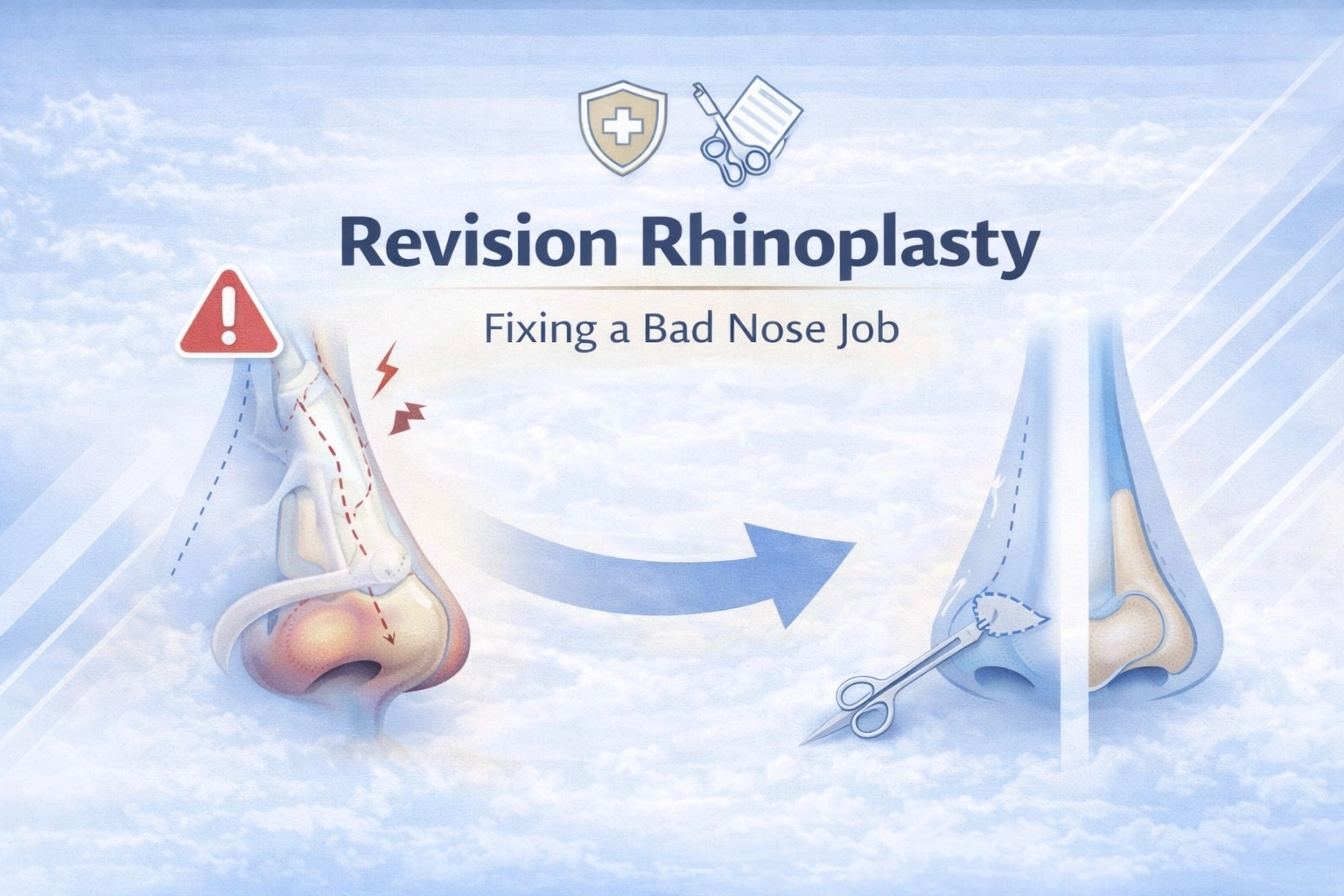
Revision rhinoplasty is a secondary surgical procedure that corrects aesthetic or functional problems resulting from a previous nose surgery, requiring specialized techniques to navigate scar tissue and altered nasal anatomy.
Also called secondary rhinoplasty, this procedure addresses issues that emerged after the initial surgery or concerns that weren’t adequately resolved. Unlike primary rhinoplasty, revision surgery involves working with tissues that have already been manipulated, often with reduced cartilage availability and compromised blood supply.
The procedure is widely considered the most challenging operation in facial plastic surgery. Surgeons must navigate through scar tissue, work with weakened structural support, and often rebuild the nasal framework using cartilage grafts from other parts of the body. The complexity stems from each patient presenting with unique anatomical changes based on their previous surgery.
Revision rhinoplasty can address both cosmetic dissatisfaction and functional problems like breathing difficulties. According to research published in Plastic and Reconstructive Surgery, almost two-thirds of revision patients have combined functional and aesthetic concerns, making a comprehensive surgical approach essential.
Why Do Nose Jobs Fail?
Primary rhinoplasty fails for multiple reasons including inadequate surgical technique, unpredictable healing, scar tissue formation, and unrealistic patient expectations, with revision rates typically ranging from 5-15%.
Understanding why initial nose surgeries don’t achieve desired results helps patients make better decisions about revision surgery. The causes generally fall into three categories: surgical factors, patient factors, and unpredictable healing responses.
Surgical Factors
Over-resection of cartilage or bone represents one of the most common technical errors. When surgeons remove too much structural support during the initial procedure, problems like collapsed nostrils, pinched tips, or saddle nose deformities can develop. These issues often require extensive reconstruction with cartilage grafts during revision surgery.
Failure to address functional concerns during cosmetic rhinoplasty also contributes to poor outcomes. Patients who had breathing problems before surgery may find them unchanged or worsened if septal deviations or nasal valve issues weren’t corrected. Research indicates that preoperative respiratory functional disorders significantly increase revision rates.
Inadequate surgical planning and poor communication between surgeon and patient lead to results that don’t match expectations. When cosmetic goals aren’t clearly established before surgery, patients may be technically satisfied but aesthetically disappointed.
Patient Factors
Certain anatomical characteristics make achieving optimal results more challenging. Patients with thick nasal skin, weak cartilage, or asymmetric structures face higher revision rates. A study in GMS Current Topics in Otorhinolaryngology identified that patients with a low radix, narrow cartilaginous dorsum, and underprojected tip were more frequently represented in revision cases.
Smoking significantly impairs healing and increases complication rates. Patients who continue smoking before or after rhinoplasty experience compromised blood supply to nasal tissues, leading to delayed healing and potential tissue death.
Unrealistic expectations, while not causing surgical failure, lead to patient dissatisfaction even when technically successful surgery is performed. Clear preoperative communication helps align expectations with achievable outcomes.
Unpredictable Healing
Even with optimal surgical technique, the body’s healing response can produce unexpected results. Scar tissue formation varies significantly between individuals and can alter nasal shape over months or years following surgery. Cartilage warping, graft absorption, and asymmetric tissue contraction can all change the final appearance from what was achieved in the operating room.
Expert Insight
“The risk of requiring another revision is significantly higher after secondary surgery—23.9% compared to 10.5% after primary rhinoplasty—highlighting the importance of choosing an experienced revision specialist.”
— Plastic and Reconstructive Surgery, 2021
Common Problems Revision Surgery Corrects
Revision rhinoplasty addresses six main categories of problems: breathing difficulties, asymmetry, pollybeak deformity, inverted-V deformity, over-rotated or under-rotated tips, and collapsed nasal structures.
Each problem requires specific surgical techniques and understanding what went wrong helps patients communicate effectively with their revision surgeon.
Breathing Difficulties
Functional problems rank among the most distressing outcomes of failed rhinoplasty. Nasal valve collapse, septal perforation, and worsened airway obstruction can significantly impact quality of life. Research indicates that reduction rhinoplasty can cause breathing disturbances in up to 70% of revision rhinoplasty patients.
Internal nasal valve collapse occurs when supporting cartilage is weakened or removed during primary surgery, causing the sidewalls to collapse inward during breathing. External valve collapse affects the nostrils, which may pinch closed with inhalation. Both conditions typically require cartilage grafts like alar batten grafts or spreader grafts to restore structural support.
Asymmetry and Crookedness
A crooked nose after surgery can result from uneven cartilage resection, asymmetric healing, or scar contracture pulling the nose in one direction. Sometimes, correcting one problem like removing a dorsal hump exposes underlying crookedness that wasn’t visible before.
Tip asymmetry—where one side of the nasal tip appears different from the other—develops from uneven healing, cartilage displacement, or technical errors during the initial surgery. Correction requires meticulous reshaping and sometimes cartilage grafting to achieve symmetry.
Pollybeak Deformity
Pollybeak deformity creates fullness above the nasal tip, giving a parrot-beak profile appearance. This common complication accounts for approximately 50% of revision rhinoplasty cases according to published literature.
The deformity develops from under-resection of the cartilaginous dorsum, over-resection of the bony dorsum, excessive scar tissue in the supratip area, or poor tip support allowing the tip to droop. Treatment depends on the cause—some cases require additional reduction while others need structural reinforcement.
Inverted-V Deformity
An inverted-V deformity appears as a shadow across the nasal bridge shaped like an upside-down V. This telltale sign of a bad nose job results from dorsal hump removal without proper support of the middle vault cartilages.
When surgeons reduce a bump and narrow the nose through osteotomies (controlled bone fractures) without adequately supporting the upper lateral cartilages, the middle portion of the bridge becomes pinched. Spreader grafts placed between the septum and upper lateral cartilages correct this problem while improving both appearance and airflow.
Tip Problems
Over-rotated tips give a “pig nose” appearance where the nose appears too short and turned up, showing too much nostril. This occurs when excessive cartilage is removed from the tip or when the tip is positioned too high.
Under-rotated or drooping tips hang down, often becoming more prominent with smiling. Inadequate tip support during primary surgery or excessive weakening of structural cartilage causes this problem.
Pinched tips result from over-aggressive narrowing of the tip cartilages, creating an unnatural, artificial appearance. Reconstruction typically requires cartilage grafts to restore natural width and projection.
Structural Collapse
Severe over-resection leads to nasal collapse—a flattened, saddled, or caved-in appearance. These cases require extensive reconstruction, often using rib cartilage to rebuild the entire nasal framework.
Success Rates and Statistics
Revision rhinoplasty achieves success rates of 70-80% according to comprehensive literature reviews, with patient satisfaction rates reaching 85% or higher when performed by experienced specialists.
Understanding realistic expectations requires examining the data on outcomes, complications, and patient satisfaction.
Revision Rates After Primary Rhinoplasty
Published studies report that 5-15% of primary rhinoplasty patients eventually seek revision surgery. The American Academy of Facial Plastic and Reconstructive Surgery (AAFPRS) notes that revision rates have increased in recent years, partly attributed to procedures performed by less experienced or unqualified practitioners.
According to ASPS 2024 statistics, rhinoplasty remains among the most popular facial cosmetic procedures in the United States, with steady demand despite the inherent complexity. Globally, ISAPS reports approximately 1 million rhinoplasty procedures performed annually by plastic surgeons.
Success and Satisfaction in Revision Surgery
A comprehensive literature review analyzing 24 studies found revision rhinoplasty success rates around 70-80%, lower than primary rhinoplasty but still achieving meaningful improvements for most patients. The complexity of working with previously operated tissue accounts for this difference.
Patient satisfaction rates in revision cases typically reach 85% or higher at specialized centers. Both cosmetic and functional outcomes improve for most patients, with studies showing significant enhancement in breathing function and aesthetic appearance.
Complication Rates
Common complications from revision rhinoplasty include bleeding, infection, and temporary nasal obstruction, though these are generally minor and manageable. Serious complications remain rare at accredited facilities with experienced surgeons.
The risk of needing additional revision surgery increases with each subsequent procedure. Research shows 23.9% of revision patients may need further correction compared to 10.5% after primary rhinoplasty. This highlights the importance of selecting a highly qualified surgeon for revision procedures.
| Statistic | Rate | Source |
|---|---|---|
| Primary rhinoplasty revision rate | 5-15% | Multiple studies |
| Revision rhinoplasty success rate | 70-80% | Literature review (24 studies) |
| Patient satisfaction after revision | 85%+ | Specialized centers |
| Risk of further revision after secondary surgery | 23.9% | Plastic and Reconstructive Surgery |
| Experienced surgeon revision request rate | <5% | Clinical data |
When Can You Have Revision Surgery?
Patients should wait at least 12-18 months after primary rhinoplasty before undergoing revision surgery to allow complete healing, swelling resolution, and accurate assessment of final results.
The Waiting Period
The waiting period isn’t arbitrary—it serves critical purposes in ensuring optimal revision outcomes. The nose continues changing for up to two years after initial surgery as swelling subsides, scar tissue matures, and tissues settle into their final position.
Operating too early risks several problems: the surgeon cannot accurately assess the extent of deformity while swelling persists; scar tissue hasn’t fully matured, making dissection more difficult; and adding surgical trauma to incompletely healed tissue can compromise blood supply and worsen outcomes.
When Earlier Intervention May Be Appropriate
In certain situations, surgeons may recommend earlier revision. Severe functional impairment preventing adequate breathing may warrant earlier intervention. Significant infection, graft displacement, or other acute complications require timely correction.
Minor touch-ups like steroid injections for scar tissue or small filler adjustments can sometimes be performed earlier than full surgical revision. Your surgeon will assess whether your specific situation qualifies for earlier intervention.
How to Know You’re Ready
Before pursuing revision surgery, ensure you’ve given adequate time for healing and have realistic expectations about achievable outcomes. Schedule a consultation with a revision specialist who can evaluate whether your concerns are addressable and recommend optimal timing.
Consider whether your dissatisfaction stems from the surgical result or unrealistic expectations. Psychological readiness matters—patients who have worked through disappointment from their first surgery and developed clear, achievable goals tend to have better outcomes.
The Revision Rhinoplasty Procedure
Revision rhinoplasty typically requires 2-4 hours under general anesthesia, uses an open approach in most cases, and frequently involves cartilage grafting to rebuild nasal structure.
Surgical Approaches
The open approach provides the best visualization for complex revision cases. An incision across the columella (the strip of tissue between the nostrils) allows the surgeon to lift the skin and directly see all nasal structures. While this creates a small external scar, it becomes virtually invisible within months for most patients.
The closed approach, performed entirely through internal incisions, may be suitable for minor revisions that don’t require extensive reconstruction. However, most revision cases benefit from the comprehensive access the open technique provides.
What Happens During Surgery
The procedure begins with careful dissection through scar tissue from previous surgery. This step requires patience and precision—rushed dissection can damage blood supply or remaining structural cartilage.
Once the surgeon exposes the nasal framework, they assess the extent of damage and execute the surgical plan. This may involve removing scar tissue, repositioning displaced cartilage, performing osteotomies to straighten crooked bones, and placing cartilage grafts to rebuild structure and contour.
The complexity varies dramatically between cases. Minor revisions addressing small asymmetries may take 90 minutes, while comprehensive reconstructions requiring rib cartilage harvest and complete framework rebuilding can extend to 4 hours or longer.
Anesthesia and Hospital Stay
Revision rhinoplasty is performed under general anesthesia for patient comfort and optimal surgical conditions. Most procedures are outpatient, with patients returning home the same day once they’ve recovered from anesthesia.
Some complex cases may require overnight observation, particularly when combined with other procedures or when extensive reconstruction is performed. Your surgeon will advise on the expected hospital stay based on your surgical plan.
Cartilage Grafting in Revision Surgery
Cartilage grafts are essential in most revision rhinoplasty cases, sourced from the septum, ear, or rib depending on availability and reconstruction needs.
Why Grafts Are Necessary
Primary rhinoplasty often depletes the natural cartilage supply, and revision surgery typically requires adding structure rather than removing tissue. Grafts rebuild weakened support, replace missing structures, camouflage irregularities, and improve both function and appearance.
Autologous grafts (from the patient’s own body) remain the gold standard because they integrate naturally, resist infection, and provide lasting results without the complications associated with synthetic implants.
Septal Cartilage
The nasal septum provides the ideal grafting material—it’s thin, flat, strong, and already located within the nose. Septal cartilage works well for spreader grafts, columellar struts, and tip support.
However, septal cartilage is often unavailable in revision cases. Previous surgery may have removed or damaged the septum, leaving insufficient tissue for reconstruction. When adequate septal cartilage remains, it should be utilized before seeking external donor sites.
Ear Cartilage
Ear (conchal) cartilage offers a viable alternative when septal cartilage is insufficient. Harvested from the curved portion of the ear bowl, it provides enough material for moderate reconstruction without visible deformity to the ear.
Ear cartilage works well for tip grafting and small structural supports. Its natural curvature makes it suitable for certain applications but limits its use for large structural grafts requiring flat, rigid support.
The harvest site heals well with minimal scarring, typically hidden within the natural ear crease. Patients experience mild discomfort for a few days and can usually sleep on the ear within two weeks.
Rib Cartilage
Rib cartilage provides abundant, strong grafting material for comprehensive reconstructions. Harvested from the lower rib cage, it offers enough tissue to rebuild an entire nasal framework if needed.
The advantages of rib cartilage include virtually unlimited supply, excellent strength for structural support, and the ability to carve custom grafts of any shape and size. It represents the best option for severely damaged noses requiring extensive reconstruction.
Concerns about rib cartilage include the additional surgical site with associated discomfort, risk of warping over time, and longer overall procedure. However, modern techniques minimize warping risk, and many patients report donor site discomfort is no worse than ear harvest.
Expert Insight
“Rib cartilage is an outstanding material in reconstructive rhinoplasty, especially in revision surgery when large amounts of tissue are required. This autologous material has a low rate of complications compared to homografts and alloplastic implants.”
— Acta Otorhinolaryngologica Italica (PMC review)
Recovery Timeline
Full recovery from revision rhinoplasty takes 12-18 months for final results to emerge, with most patients returning to work within 1-2 weeks and resuming normal activities at 4-6 weeks.
First Week
The initial recovery period requires rest and careful attention to post-operative instructions. Expect swelling, bruising around the eyes, nasal congestion, and mild discomfort that responds well to prescribed or over-the-counter pain medication.
A splint protects the nose during the first week and is typically removed at the one-week follow-up appointment. Nasal packing, if used, comes out within the first few days. Many patients describe the discomfort as pressure or congestion rather than pain.
During this time, keep your head elevated—including while sleeping—to minimize swelling. Avoid bending over, straining, or any activity that increases blood pressure to the face.
Weeks 2-4
Most visible bruising resolves within two weeks, allowing many patients to return to work and social activities. Swelling remains noticeable but improves daily. Breathing through the nose gradually improves as internal swelling decreases.
Continue avoiding strenuous activity, heavy lifting, and anything that could bump or injure the nose. Light walking is encouraged to promote circulation and reduce blood clot risk.
Months 1-3
By one month, approximately 80% of swelling has resolved and the nose’s general shape becomes visible. You can typically resume cardiovascular exercise at 3-4 weeks and weight training at 6 weeks, following your surgeon’s guidance.
Avoid wearing glasses resting on the nose bridge until your surgeon approves—usually around 6 weeks minimum. Nasal sensation gradually returns, though some numbness at the tip is normal and may persist for several months.
Months 3-12
Residual swelling, particularly at the nasal tip, continues resolving slowly. The tip is the last area to fully settle, and subtle refinements in shape continue throughout this period.
Revision rhinoplasty patients often experience slightly longer swelling duration than primary rhinoplasty patients due to increased scar tissue and tissue manipulation. Some patients see continued improvement through 18-24 months.
| Timeframe | Milestone | What to Expect |
|---|---|---|
| Day 1-3 | Peak swelling and bruising | Rest, head elevation, cold compresses to cheeks |
| Week 1 | Splint removal | First view of new shape; significant swelling remains |
| Week 2 | Bruising resolves | Most patients feel comfortable in public |
| Week 3-4 | Light exercise resumes | Improved breathing; swelling continues decreasing |
| Week 6 | Full activity resumes | Bones stable; glasses may be worn |
| Month 3 | Significant refinement visible | 80-90% of swelling resolved |
| Month 6-12 | Final tip refinement | Subtle improvements continue; final shape emerges |
| Month 12-18 | Complete healing | Final results achieved |
Revision Rhinoplasty Cost by Country
Revision rhinoplasty costs €3,600-€6,500 in Turkey compared to $8,000-$15,000 in the USA and £4,000-£8,000 in the UK, representing potential savings of 50-70%.
Why Costs Vary
Revision rhinoplasty consistently costs more than primary procedures due to increased complexity, longer operating times, and the specialized expertise required. The need for cartilage grafting—particularly rib cartilage harvest—adds additional time and skill requirements.
Geographic location dramatically affects pricing due to differences in overhead costs, surgeon fees, and healthcare system structures. Countries with lower operating costs can offer identical quality procedures at significantly reduced prices.
Cost Breakdown by Country
United States: $8,000-$15,000 or higher in major cities. Revision cases with rib cartilage can exceed $20,000. This typically includes surgeon fees, anesthesia, and facility costs but excludes preoperative testing and post-operative medications.
United Kingdom: £4,000-£8,000 at private clinics. Prices reflect surgeon experience and facility location, with London practices typically at the higher end. NHS rarely covers revision rhinoplasty unless for functional reasons.
Turkey: €3,600-€6,500 for comprehensive revision procedures at accredited facilities. All-inclusive packages typically cover surgery, hospital stay, hotel accommodation, airport transfers, and translation services.
Australia: AUD 10,000-20,000 with variations based on surgeon reputation and complexity.
What’s Included in Turkish Packages
Turkish medical tourism packages provide exceptional value by bundling services that would be charged separately in Western countries. Typical inclusions cover preoperative consultation and imaging, all surgical and anesthesia fees, one to two nights of hospital stay, 5-7 nights of hotel accommodation, airport transfers and local transportation, translation and patient coordination services, initial post-operative medications, and follow-up appointments before departure.
| Country | Price Range | What’s Typically Included |
|---|---|---|
| Turkey | €3,600-€6,500 | Surgery, hospital, hotel, transfers, aftercare |
| United Kingdom | £4,000-£8,000 | Surgery and facility fees only |
| United States | $8,000-$15,000+ | Surgery, anesthesia, facility (no extras) |
| Australia | AUD 10,000-20,000 | Surgery and basic facility fees |
How to Choose a Revision Rhinoplasty Surgeon
Select a board-certified facial plastic surgeon with specific revision rhinoplasty experience, extensive before/after photos of secondary cases, and hospital privileges at accredited facilities.
Board Certification Matters
Board certification ensures your surgeon completed rigorous training and passed comprehensive examinations. For revision rhinoplasty, look for certification from the American Board of Facial Plastic and Reconstructive Surgery (ABFPRS), American Board of Plastic Surgery (ABPS), American Board of Otolaryngology, or equivalent international boards.
Dual certification—for example, in both otolaryngology and facial plastic surgery—indicates specialized focus on facial procedures. Many leading revision rhinoplasty surgeons hold multiple certifications reflecting their comprehensive training.
Be aware that any licensed physician can legally perform cosmetic surgery, regardless of training. Board certification provides the minimum assurance of competency, though it doesn’t guarantee artistic skill or revision-specific expertise.
Experience Specific to Revision Surgery
Primary rhinoplasty expertise doesn’t automatically translate to revision proficiency. The procedures require different skill sets, and surgeons who rarely perform revisions may lack the judgment and technical abilities needed for complex reconstruction.
Ask prospective surgeons what percentage of their rhinoplasty practice involves revision cases. Leading revision specialists may dedicate 30-50% or more of their rhinoplasty practice to secondary surgery.
Inquire about specific experience with your type of problem. A surgeon excellent at correcting breathing issues may have less experience with complex tip reconstruction, or vice versa.
Evaluate Before/After Photos
A surgeon’s photo gallery reveals their aesthetic judgment and technical capabilities. Look specifically for revision cases similar to yours—patients who had your type of problem corrected.
Pay attention to natural-appearing results that complement facial features rather than obviously operated noses. Examine photos from multiple angles and at various healing stages.
Be cautious of galleries showing only “best case” results. A transparent surgeon will show a range of outcomes and discuss both successes and challenges.
Communication and Rapport
Revision rhinoplasty requires trust between patient and surgeon. During consultation, assess whether the surgeon listens to your concerns, explains the surgical plan clearly, and sets realistic expectations.
Ask about their approach to complications—what happens if results don’t meet expectations? Reputable surgeons have clear policies for addressing concerns and don’t become defensive about discussing revision possibilities.
How This Applies in Turkey
International rhinoplasty guidelines apply at Turkey’s JCI-accredited facilities, where board-certified surgeons perform revision procedures following identical protocols to American and European centers at 50-70% lower cost.
Turkey has earned its reputation as a leading destination for revision rhinoplasty through several factors. Turkish surgeons handle exceptionally high case volumes, with many performing hundreds of rhinoplasties annually. This volume creates deep expertise, particularly in ethnic rhinoplasty and complex revision cases.
The country holds the second-highest number of JCI-accredited hospitals globally, ensuring facilities meet rigorous international safety standards. Major cities like Istanbul, Ankara, and Izmir host world-class medical infrastructure with modern technology and experienced support staff.
Cost advantages stem from lower operating expenses and favorable exchange rates—not compromised quality. Surgeons train extensively, often completing fellowships in the United States or Europe before returning to practice. Many hold memberships in international organizations like ISAPS and maintain academic affiliations.
At Carely Clinic in Istanbul, revision rhinoplasty is performed by board-certified facial plastic surgeons at JCI-accredited partner hospitals. All-inclusive packages cover consultation, surgery, hospital stay, hotel accommodation, transfers, and aftercare. International patients typically complete the process within 7-10 days, with virtual follow-up continuing after return home.
Learn more about Revision Rhinoplasty at Carely Clinic.
Frequently Asked Questions
Is revision rhinoplasty more painful than the first surgery?
No, most patients report revision rhinoplasty causes less pain than their first surgery. Discomfort typically peaks within the first 2-3 days and responds well to over-the-counter or prescribed pain medication. Improved surgical techniques contribute to more comfortable recoveries.
How many times can you have revision rhinoplasty?
There is no absolute limit, but each surgery becomes more challenging due to scar tissue. Third and fourth revisions carry higher risks. Most surgeons prefer addressing all concerns in one comprehensive revision when possible.
Can revision rhinoplasty fix breathing problems caused by previous surgery?
Yes, functional improvement is a primary goal of most revision procedures. Surgeons correct nasal valve collapse, septal deviations, and airway obstructions using grafts. Two-thirds of revision patients address both functional and aesthetic concerns together.
Will my nose be more fragile after revision rhinoplasty?
No, properly performed revision surgery strengthens the nose by rebuilding structural support with cartilage grafts. Once fully recovered after 12-18 months, normal activities pose no special risk to your reconstructed nose.
How do I know if I need revision rhinoplasty or should wait longer?
Wait at least 12 months after primary rhinoplasty for swelling to fully resolve. If concerns persist after adequate healing, consult a revision specialist. They can assess whether surgery would improve your concerns or if more time is needed.
What if I’m unhappy with my revision rhinoplasty results?
Choosing an experienced specialist minimizes this risk. If concerns arise, discuss them at follow-up appointments. Minor issues may resolve with healing time; significant problems may require further intervention after waiting 12-18 months.
Is medical tourism safe for revision rhinoplasty?
Yes, when choosing JCI-accredited facilities with board-certified surgeons. Verify credentials, confirm complication protocols, and plan 7-10 days recovery before flying. Arrange follow-up care in your home country for long-term monitoring.
Can non-surgical rhinoplasty fix problems from previous surgery?
No, dermal fillers only address minor irregularities or asymmetries temporarily. They cannot correct structural problems, breathing issues, or significant deformities. For most revision concerns, surgical correction provides superior permanent results.
How long does revision rhinoplasty surgery take?
Procedure time ranges from 1.5-4 hours depending on complexity. Minor revisions take 90 minutes, while comprehensive reconstructions with rib cartilage harvest extend to 4+ hours. Your surgeon will estimate based on your specific needs.
Should I use the same surgeon for my revision?
This depends on your confidence and the cause of failure. If issues stem from unpredictable healing, continuing may work. For technical errors or complex problems, seek a revision specialist with specific secondary rhinoplasty expertise.
What questions should I ask during my revision rhinoplasty consultation?
Ask about revision-specific experience and annual case volume. Request before/after photos of similar cases. Understand the surgical plan, cartilage graft sources needed, complication rates, revision policies, and all costs including potential additional fees.
Conclusion
Revision rhinoplasty offers a path to correcting unsatisfactory results from previous nose surgery, with success rates of 70-80% and high patient satisfaction when performed by experienced specialists.
The procedure requires realistic expectations, patience during the 12-18 month healing process, and careful surgeon selection. Understanding why your first surgery didn’t achieve desired results helps communicate effectively with your revision surgeon and establishes appropriate goals.
Cost differences between countries make Turkey an attractive option for international patients, with savings of 50-70% compared to USA and UK pricing without compromising surgical quality at JCI-accredited facilities.
Disclaimer: Individual requirements and outcomes vary. This guide provides general information based on international guidelines and published research. Consult qualified medical professionals for personalized advice regarding your specific situation.
If you’re considering revision rhinoplasty to correct problems from previous surgery, our team can help you understand your options and connect you with experienced surgeons. Request a consultation to discuss your concerns and explore the path to achieving your desired results.